
The first Philippine product to receive a Geographical Indication seal

If you want to sip the best champagne in the world, you might go to Reims in the Champagne province of France. Same with sipping a Bordeaux in Bordeaux city. Or downing a tequila in Tequila, Mexico. Kampot Pepper is a great way to flavor your food in Kampot, Cambodia. Or how about sipping a morning Darjeeling Tea in Darjeeling, India? All of these products have a Geographic Indication seal. The GI seal can only go on products from a certain geographic location. It’s like an Intellectual Property and Quality Assurance stamp for producers from a certain region.
In the Philippines, only the Carabao mangoes from the island of Guimaras have a GI seal. Its mangoes have a sweetness level of 16-Brix and higher. They’re even served at state functions at Buckingham Palace. That good? No, that great!
My search for the world’s sweetest mangoes
Guimaras Island is in the Western Visayas of the Philippines. It’s in the Panay Gulf between the islands of Panay and Negros. With a population of around 192,000 living within 604 square kilometers, it’s not a big island.

Since mangoes are among my favorite fruits, traveling to taste the world’s best mangoes at the source made sense to me. As I was already in Iloilo on Panay Island, a short boat ride away, I couldn’t – and didn’t – resist the chance to visit Guimaras Island.

My wife and I, along with our car and driver, took a 15-minute ferry ride from Iloilo’s port across the Ilo-Ilo Strait to Jordan Port in Guimaras. Guimaras isn’t just an island. It’s a province too.
Not just Mangoes


While mangoes got us here, we wanted to see more than mangoes! First stop, the appropriately named “Smallest Plaza,” which was…small. In fact, at 200 to 300 square meters or so, it’s the smallest plaza in the Philippines. The statue at the center of it is of Philippine national hero Dr. Jose Rizal. I wasn’t sure of the significance of the mannequins wearing Roman centurion gear at the plaza.


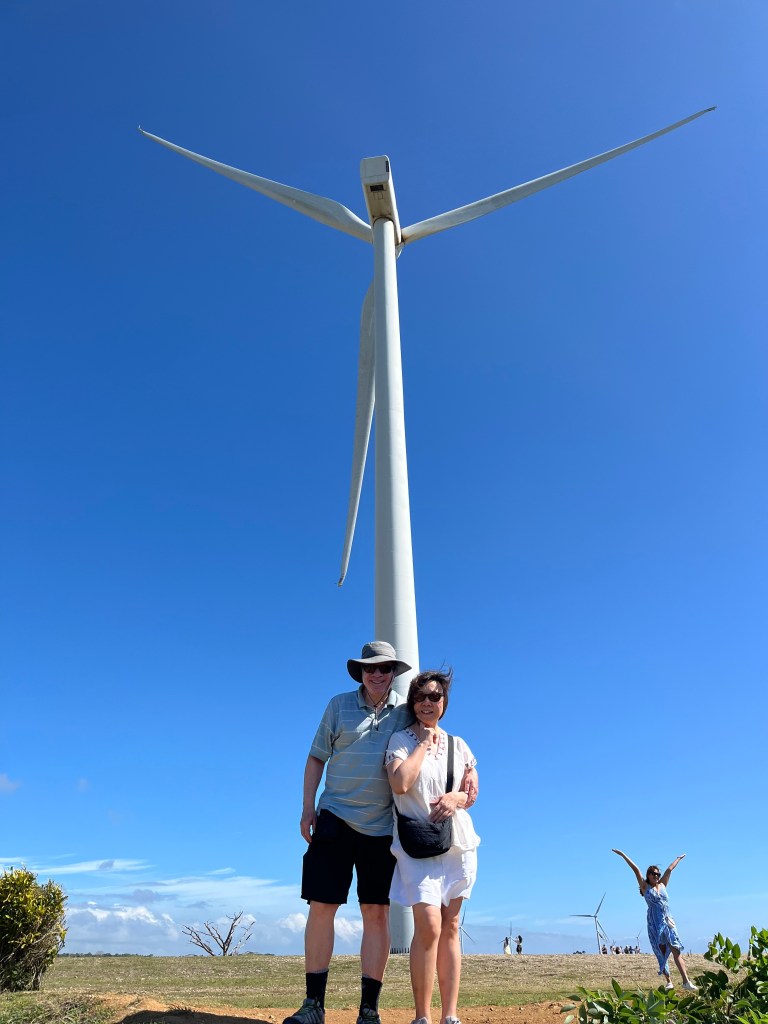
We visited massive wind turbines at the top of the highest hill on the island, which were impressive in size and in their delivery of pollution-free energy. And we stopped to see the serene Our Lady of the Philippines Trappist Monastery and bought some cookies at their gift shop.

But Mangoes were what we were here for


As mangoes were what we were here for, we visited the expansive Oro Verde mango orchard. From saplings to mature trees, the orchard had it all.


We then stopped at the Guimaras National Crop Research Development and Production Support Center. We strolled past buildings that housed research facilities and a nursery of young mango trees and crates filled with mangoes. It was clear that they were taking great care of their mangoes. At another stop nearby, we saw mangoes individually wrapped in paper on trees to make sure they were just right when they were harvested, just ripe.


California Resort and Luscious Water Everywhere


After a morning spent sightseeing, we then went to Raymen’s Restaurant for a fresh-from-the-boat fish lunch with eggplant and green beans and a Mango Shake. We then spent the rest of the afternoon islet hopping from one stunningly beautiful small island to another, with stops in between to enjoy the tiny, soft sand beaches and water at a perfect temperature. Idyllic doesn’t begin to describe it. At Natago Beach Resort, I spent some time soaking in the lusciously pristine water. I’ve been to the Philippines more than two dozen times, and this was one of the most tranquil experiences that I’ve had in the country.


Mango Cheesecake before leaving the island
Before leaving the island, and it was time for a merienda, my wife and I indulged in Mango Cheesecake and a Mango Latte at the cozy Mango Island Café.

So how did the mangoes taste?
For dinner that night, my wife and I had two mangoes apiece. That was all. Sweet, filling, flavor jumping from every bite onto every taste bud. Yes, Guimaras mangoes are the Champagne of Mangoes. And they made for a great dinner too.


Leave a Reply