Tikal: Ruins of an ancient Maya kingdom

I’ve wanted to visit Tikal for decades. When I lived in Asia for 27 years, it was always too far away — until I moved back to this hemisphere. The city started its journey in 700 BC and built its monumental temple complex, Acropolis del Norte, by 200 BC. By 250 AD, Tikal was the center of power in the Maya world, which was spread throughout Central America into Mexico. Its population peaked at 100,000 in the mid-6th century before its mysterious collapse around 900 AD. The 10,000 buildings over 30 square kilometers on the site started to succumb to the jungle and decay until a Guatemalan government expedition discovered the site in 1848. Even today, much of it remains untouched, buried, and covered in jungle. If the mystery and magic of ancient ruins are your thing, this site will send chills down your spine.
Screams of Howler Monkeys

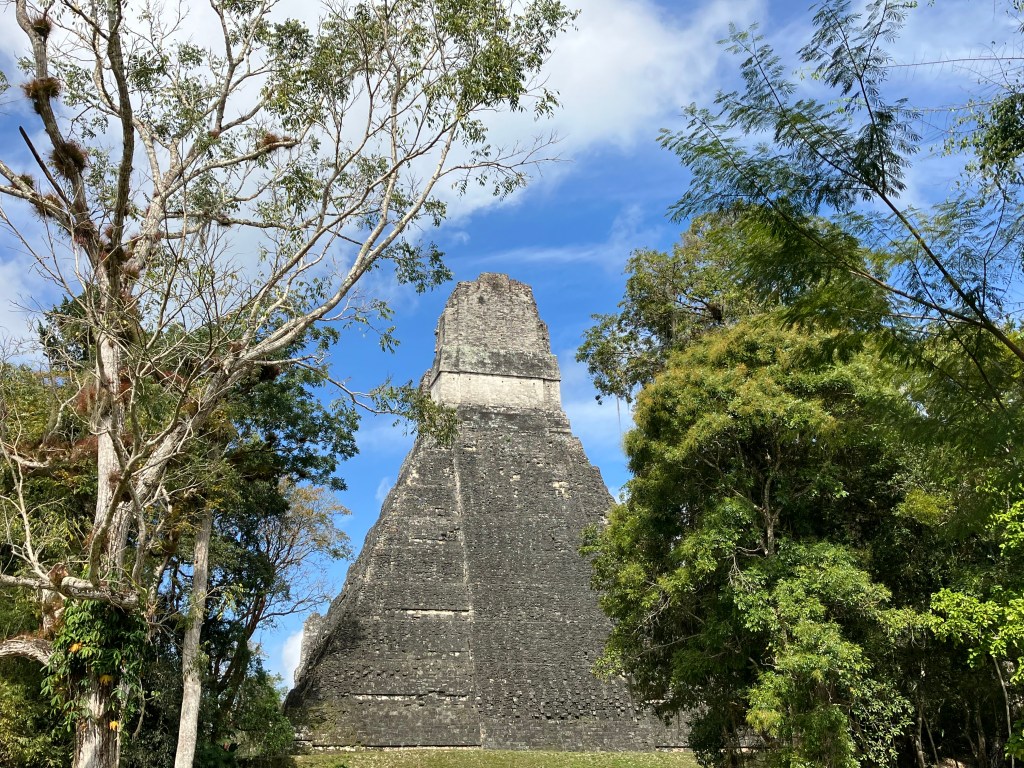
When our van drove through the gates of the park, we were greeted by the piercing screams and grunts of howler monkeys. Howler monkeys can make sounds that travel miles, at up to 140 decibels. It’s a piercing and unnerving sound. It’s also a little like entering a Jurassic Park movie.
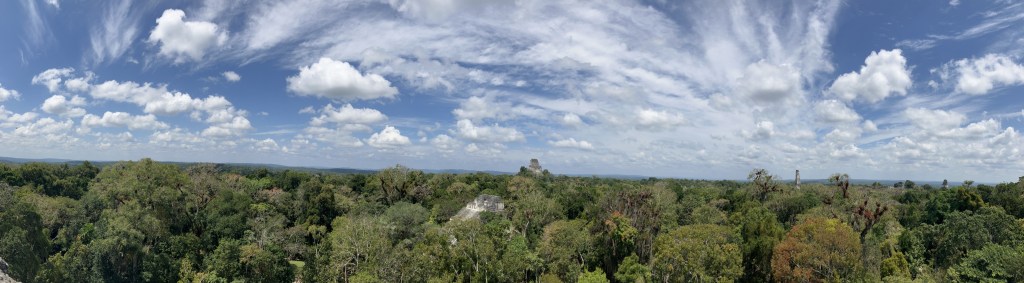
Because of the relative lack of tourists, it’s easy to soak in the atmosphere of this UNESCO Heritage Site, explore the ruins without crowds at all, and in some places without people at all.

Gran Plaza at heart of UNESCO Heritage Site

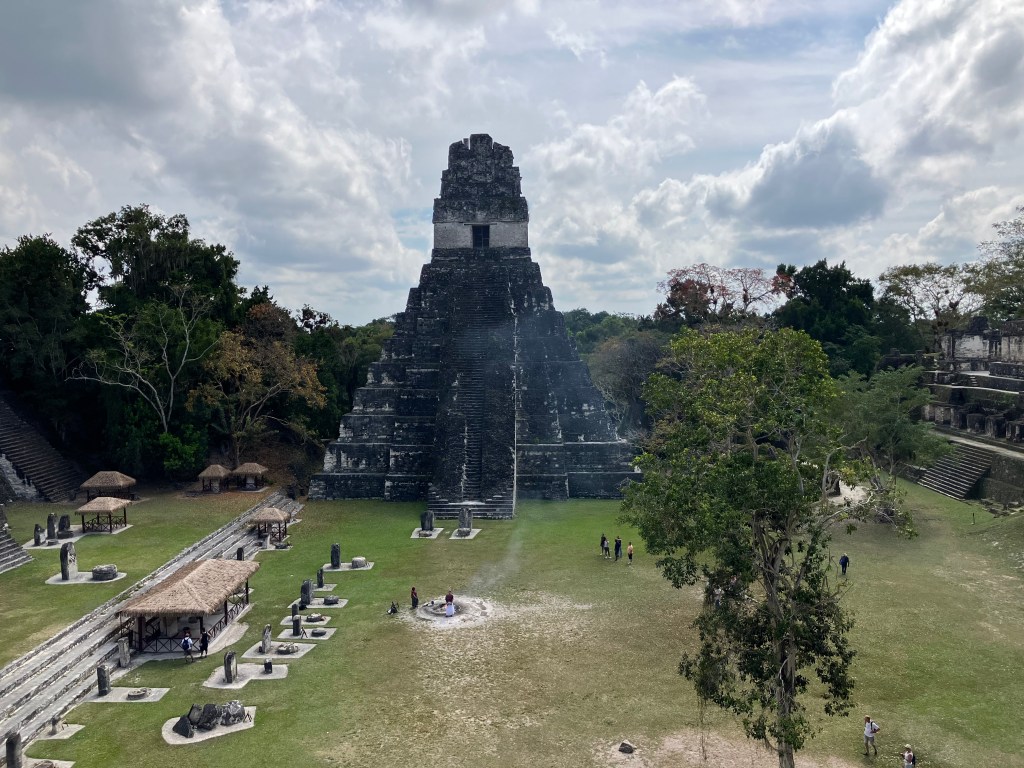
I felt a sense of anticipation when I approached the towering pyramids of the Gran Plaza. The Temple of the Grand Jaguar (Templo I), where King Ah Cacao is supposedly buried beneath layers of the pyramid, faces the Temple of the Masks (Templo 2). I climbed the Temple of the Masks for a view of the Gran Plaza, the Temple of the Grand Jaguar, and the Acropolis Central, a warren of ruined palaces, courtyards. This complex was completed between 740 AD and 800 AD. Between the chirping of the birds, the distant screams of howler monkeys, a languid breeze drying my sweat, I settled in to absorb and observe. In the plaza, a local woman was performing a Maya ceremony at a fire pit with a Caucasian woman. Their solitary intensity permeated the scene.

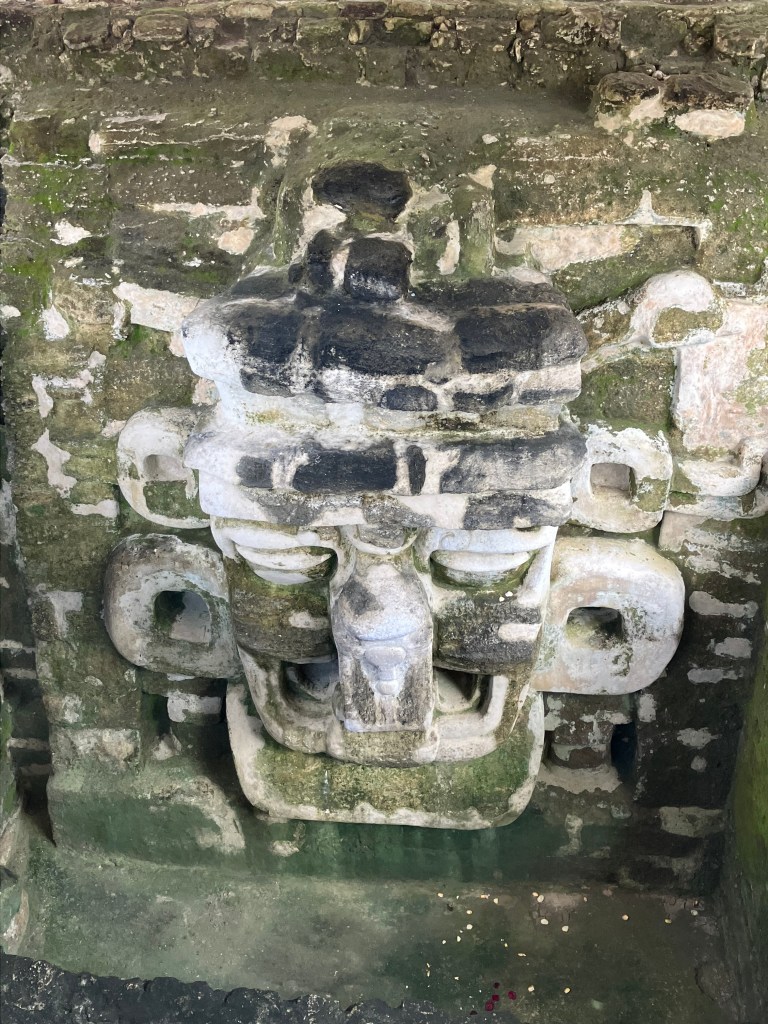
At the Acropolis Del Norte was a monumental carved stone mask that glowered from a wall. It was over three meters high. It provided a sense of the drive and ambition that fueled the growth of this civilization. I could easily see the citizens of this Maya city intimidated when they stood in front of it.
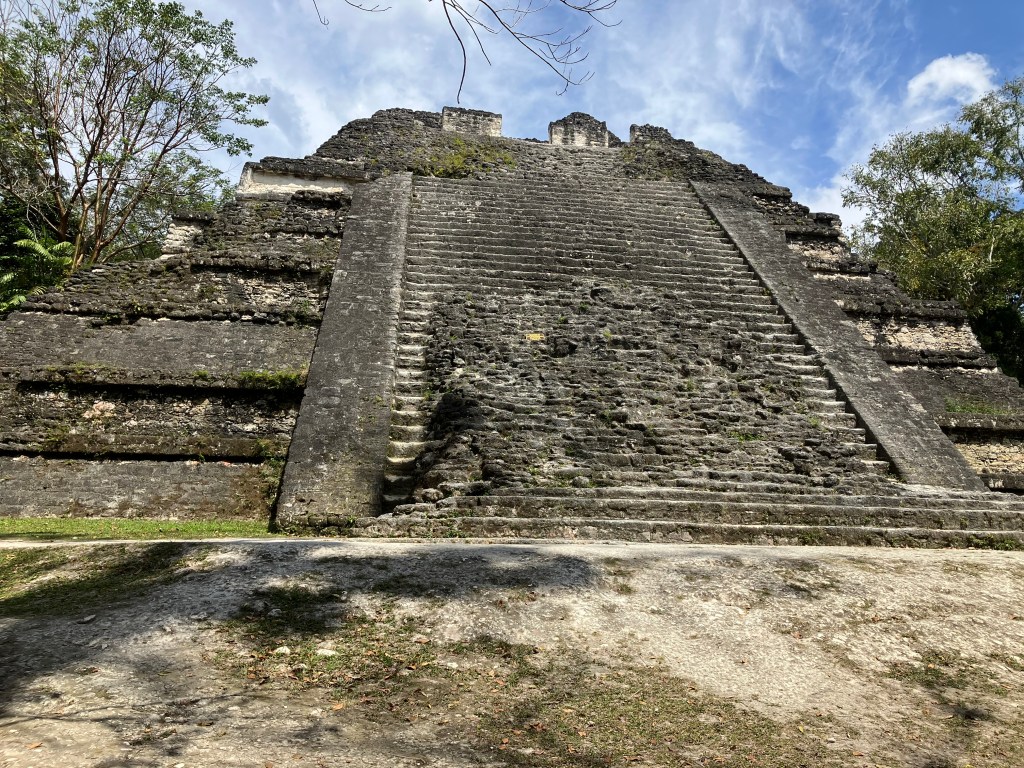
South of the Gran Plaza, I turned a corner on a forest path and saw Templo V emerge as a solitary temple, sentinel-like, dominating the foliage around it. It was built between the 7th and 8th centuries AD and is 57 meters high. The chance to see a structure without crowds gave me a chance to feel its majesty — and to wonder what it was like with crowds of the apex of the city’s power.

Entering the Mundo Perdido, the Lost World
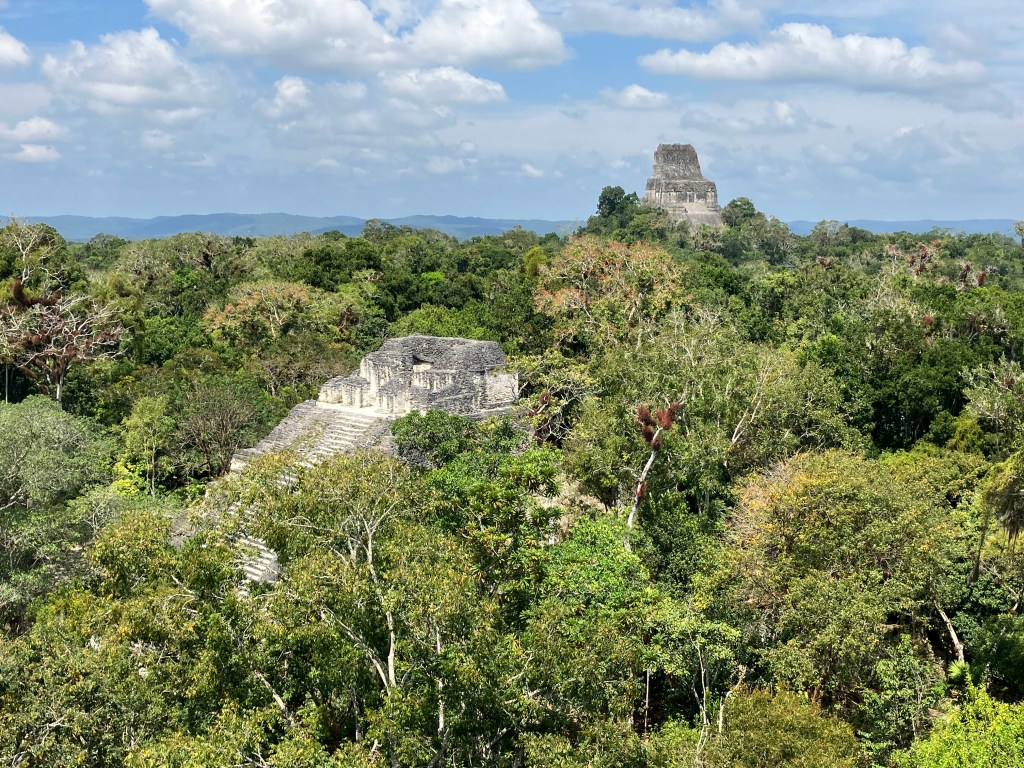
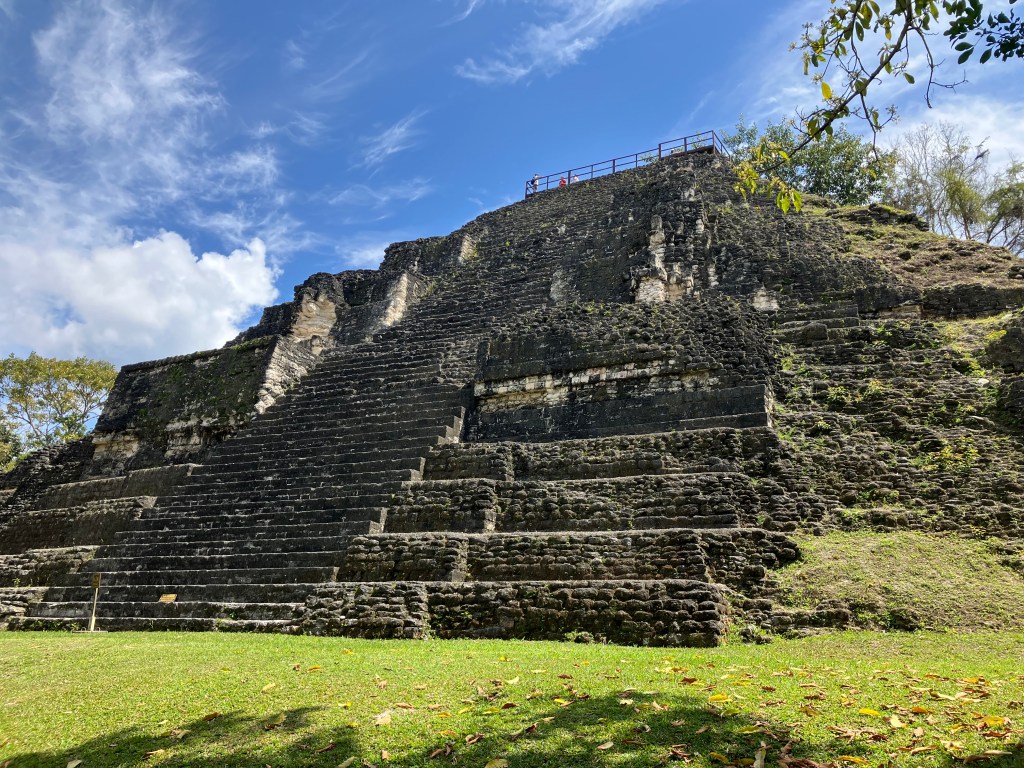
From there, I walked to the Mundo Perdido, the Lost World. A few dozen structures surrounded a huge pyramid, 32 meters high and 80 meters around the base. I climbed to the top for a stunning view of the ruins. Nearby was Templo IV, at 65 meters the highest temple in Tikal and the second highest pre-Columbian building the Western Hemisphere after La Danta in the ruins at El Mirador.

Tikal is well-explored, with widely visited ruins. But there are other Maya ruins in Guatemala, more remote, very difficult to reach. El Mirador, also located in the El Peten province of Guatemala, can be reached via a 5-day, 83-kilometer hike through jungle. Or, if money is no object via helicopter from Flores. El Mirador is more expansive than Tikal, across a larger area, with larger pyramids. Historically, it is considered the most important Preclassic period ruins. Tikal’s ruins, in contrast, span from the Preclassic to Classic to Postclassic periods.


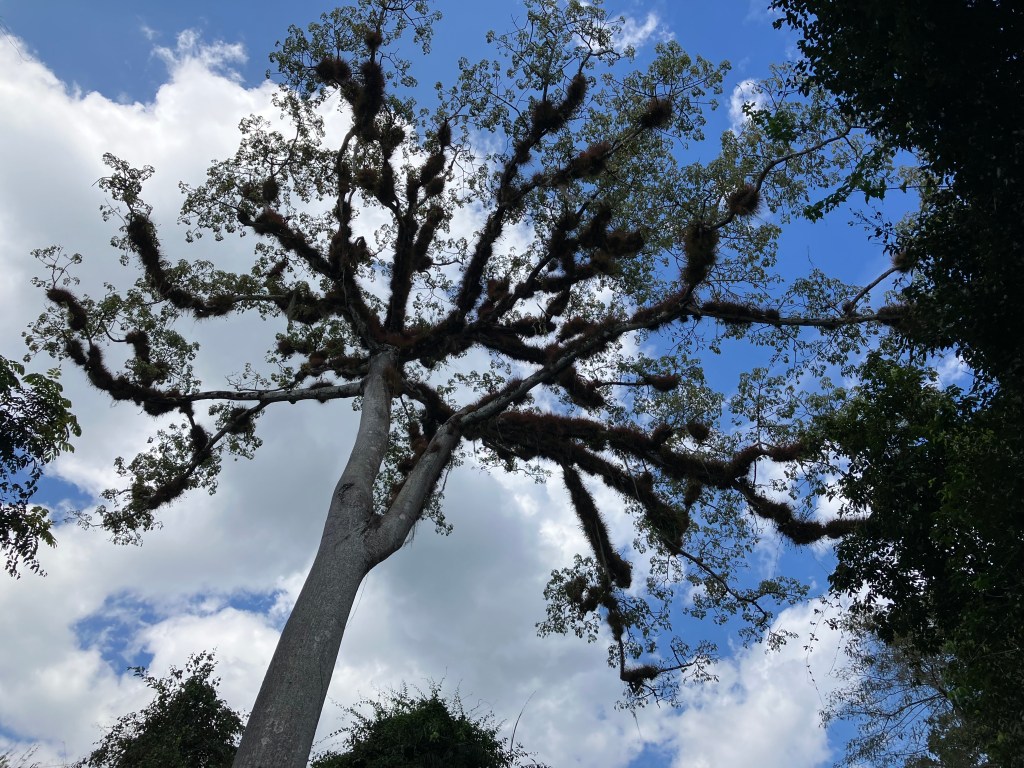
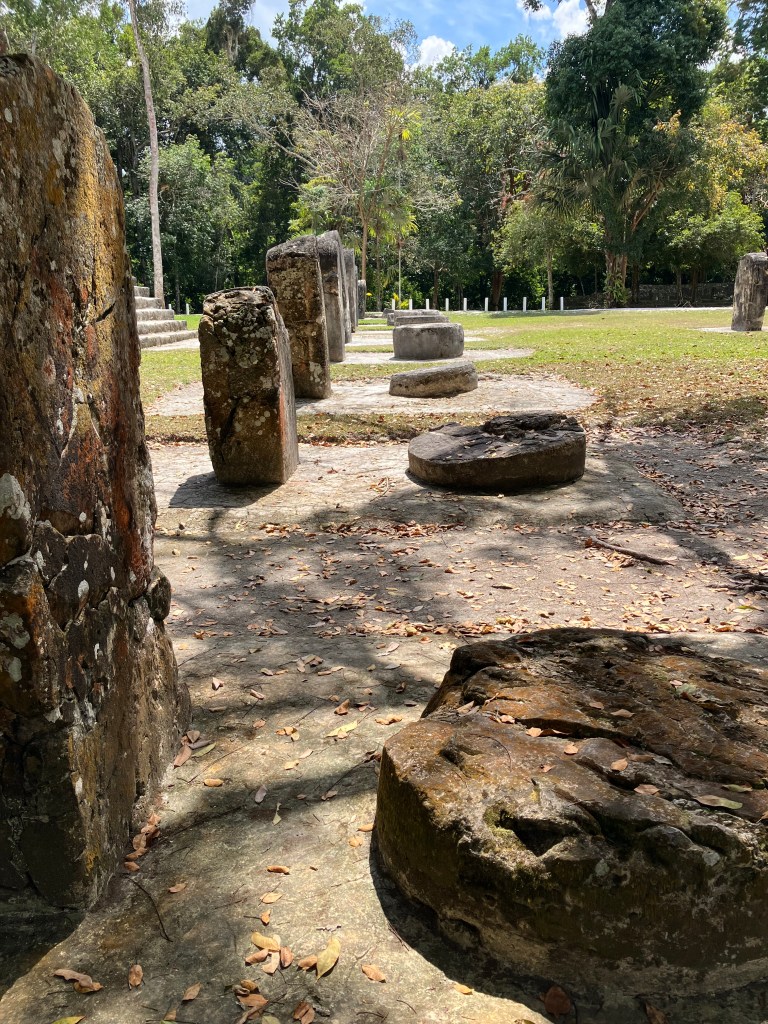
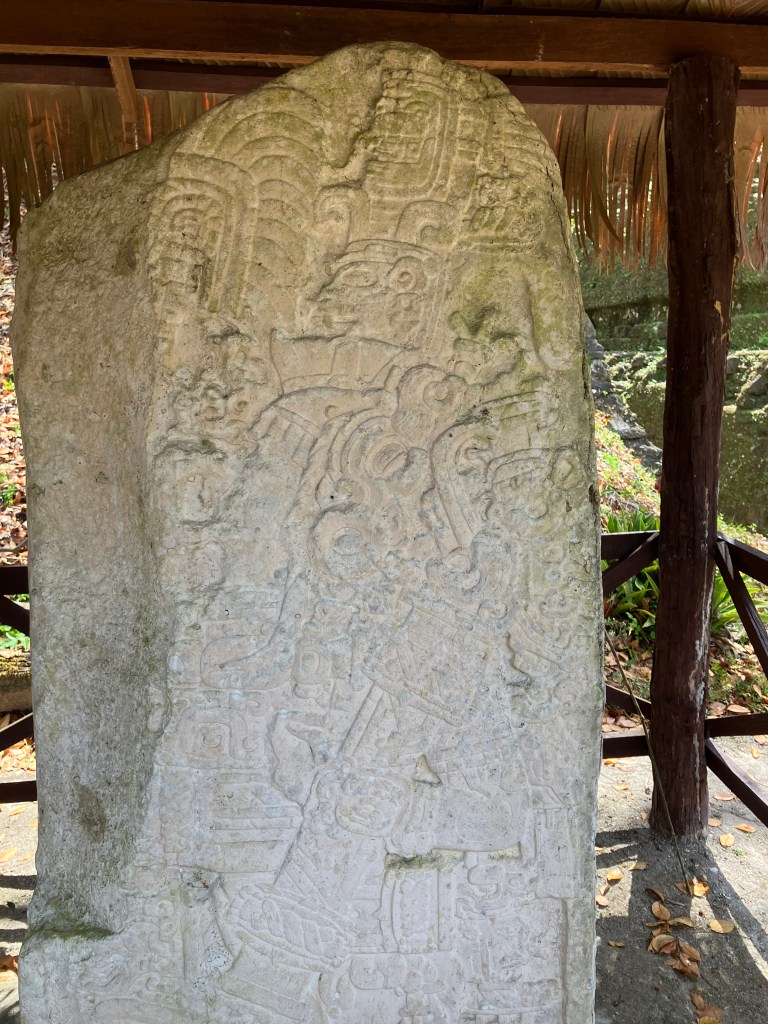
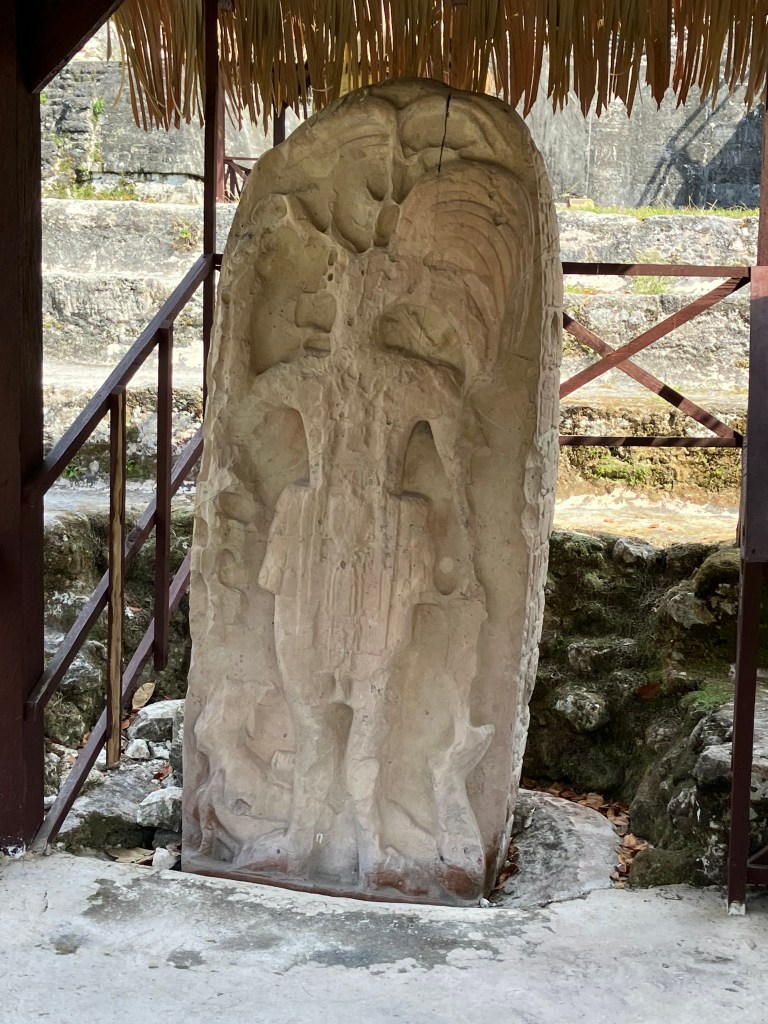
I came across a line of stone stela with indecipherable writing and reliefs that had been worn down with time. Above them loomed a ceiba tree, the Maya tree of life. But the life that was lived here has long since disappeared. The rulers that reigned here had fearsome names: Dark Sun, Moon Double Comb, Yax Kin to name a few. Their power was absolute until time and the tides of history swept their civilization away, where you needed machetes, shovels, and pickaxes to uncover it.
Birdlife overtakes human civilization
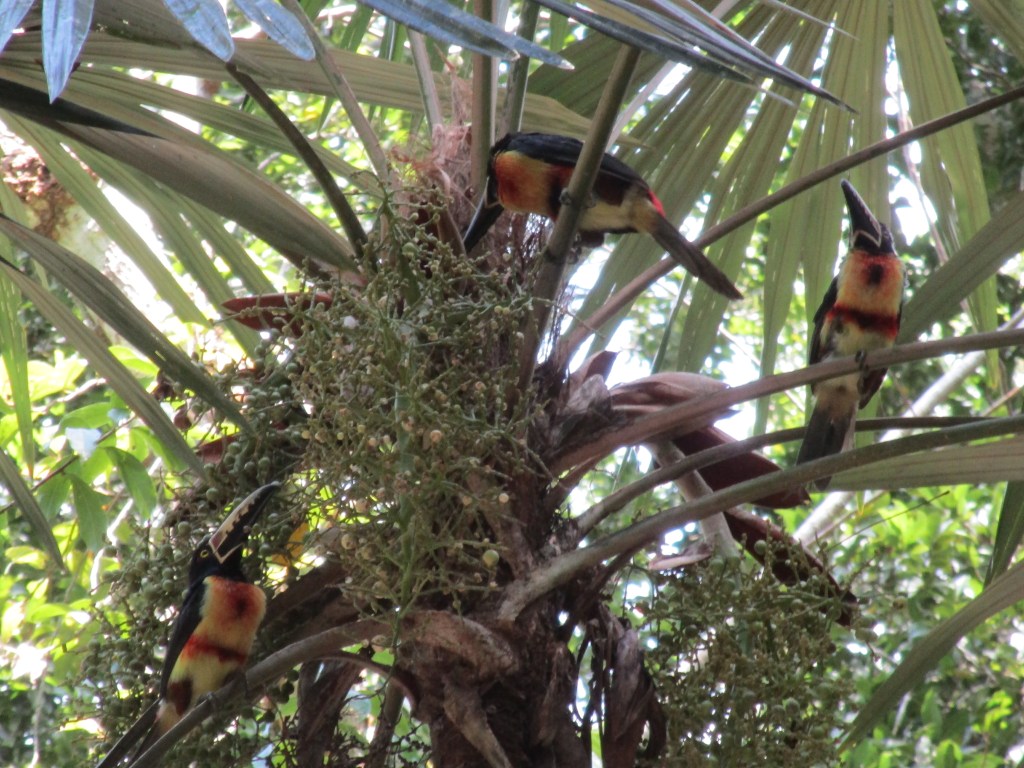
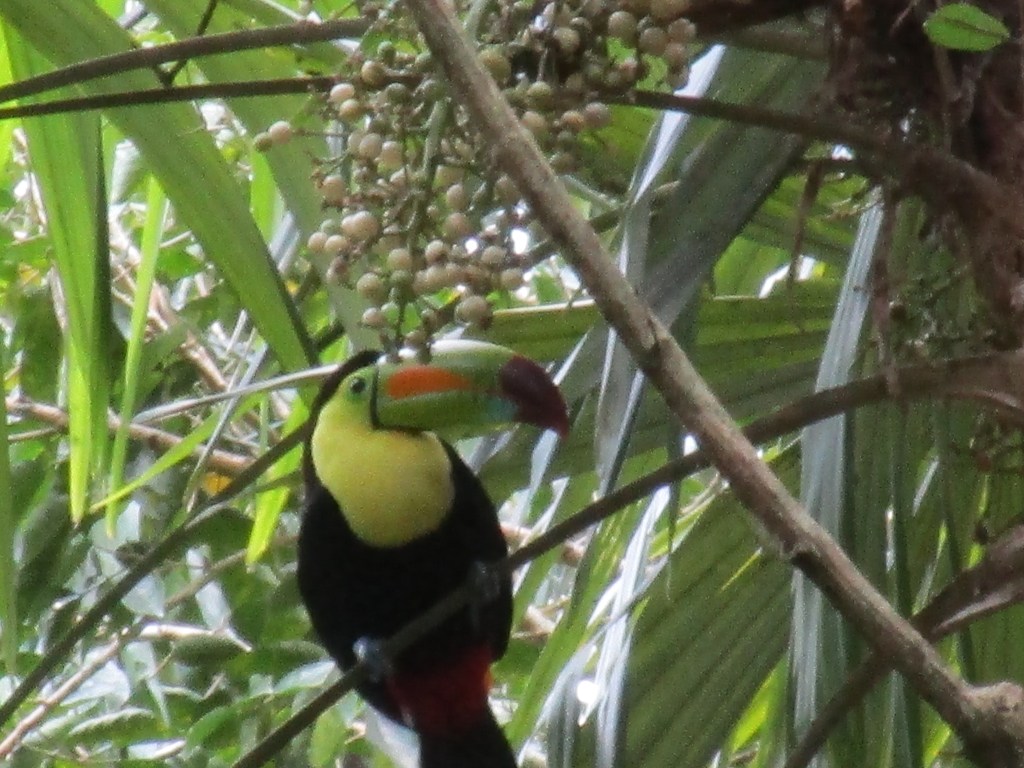

My visit ended by focusing on the rich birdlife and their incessant chirping amidst the distant screams of the howler monkeys. Toucans, Ocellated turkeys, parrots, shrikes, herons, and the woodpeckers who left ravaged trees and trunks in their wake. Underfoot, I watched to avoid streams of relentlessly marching army ants. Humanity might have been the dominant force here once, but nature was now. As I passed through the pyramid-shaped archway on my way out of the park, I brought with me thoughts of how Tikal stretched over 1,000 years with wars that were devilish and a civilization that reached a divine peak — for a time. Just a time.


 Maybe Next Trip
Leave a comment