
Lake Atitlan: Three volcanoes and a deep, deep blue lake
Maya tradition alive today
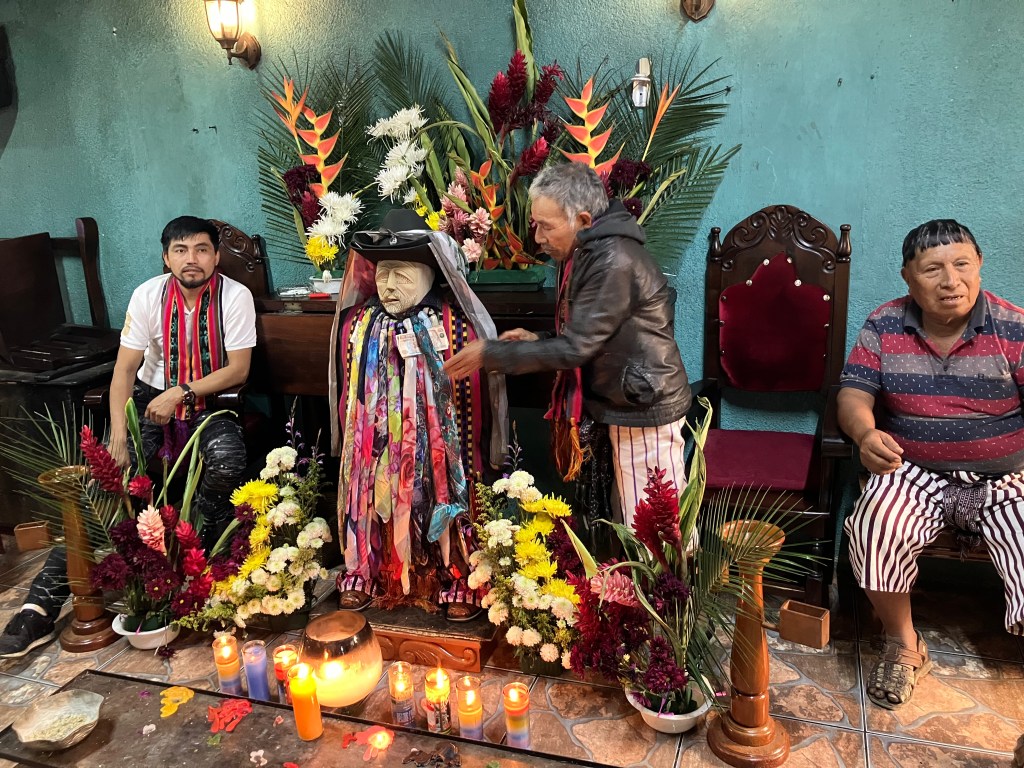
In the town of Santiago Atitlan, the guide led me down steep, narrow streets, looking furtively to see if we were being followed. No, it wasn’t a secret assignation we were going to, but it was the location of a discrete brotherhood: the confradia of Maximon. The confradia, brotherhood, looks after the Maya deity, Maximon. We slipped unnoticed into a nondescript building and entered a long, narrow room on the right side.
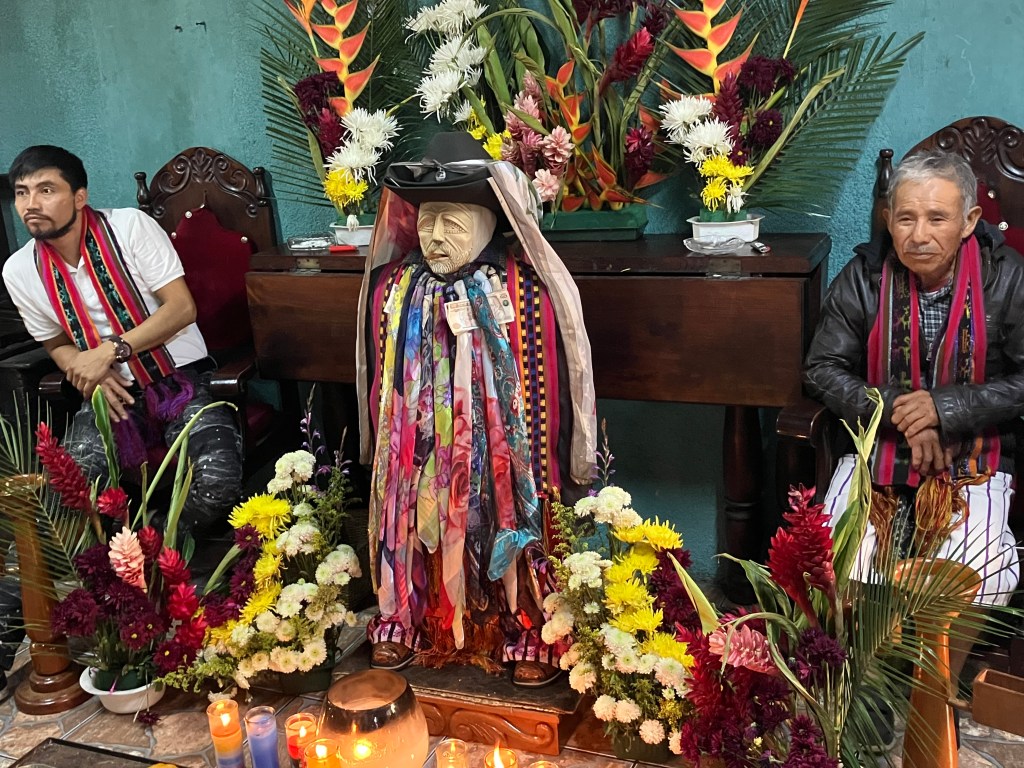
Inside, three men were tending to a nearly life-sized wooden effigy of Maximon, draped in layers of scarves, a hat with a scarf laying over it, and a cigarette butt gripped between his lips. The attendants from the confradia tended to him like a beloved uncle. Flowers flanked and were behind Maximon. A dozen lit candles were in front of him, melted and hardened wax staining the floor. I gave a donation, which was silently slipped beneath a scarf.
Syncretism is the amalgamation of different religions and Maximon is an example of this. He is a Maya deity who is the granter of all wishes — no matter what they are. As he is non-judgmental, disciples feel they can ask him anything. The Maya believe he is a descendant of a pre-Spanish God called Maam. The Catholics’ interpretation of him is a combination of the Catholic Saint Simon and maybe even Judas Iscariot.

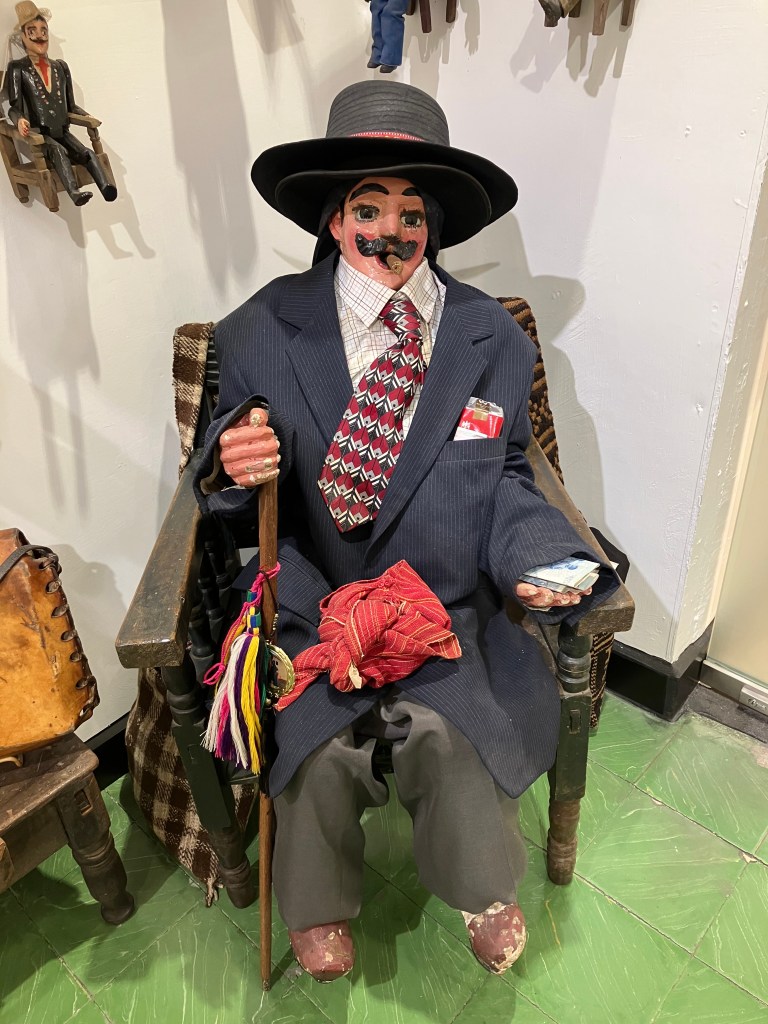
In antique shops, I saw depictions of Maximon for sale, wearing a suit, hat, sometimes sunglasses, and often a cigarette, sometimes a cigar, in his mouth.
In an adjoining room, I saw another effigy of Maximon laying in a brightly lit glass- enclosed casket with flowers in front of it. Well-wishers paid their solemn respects.

Every year the confradia secretly moves the effigy of Maximon to another location in the city. Visiting Maximon gave me an insight into the layers of spiritual belief in Guatemala.

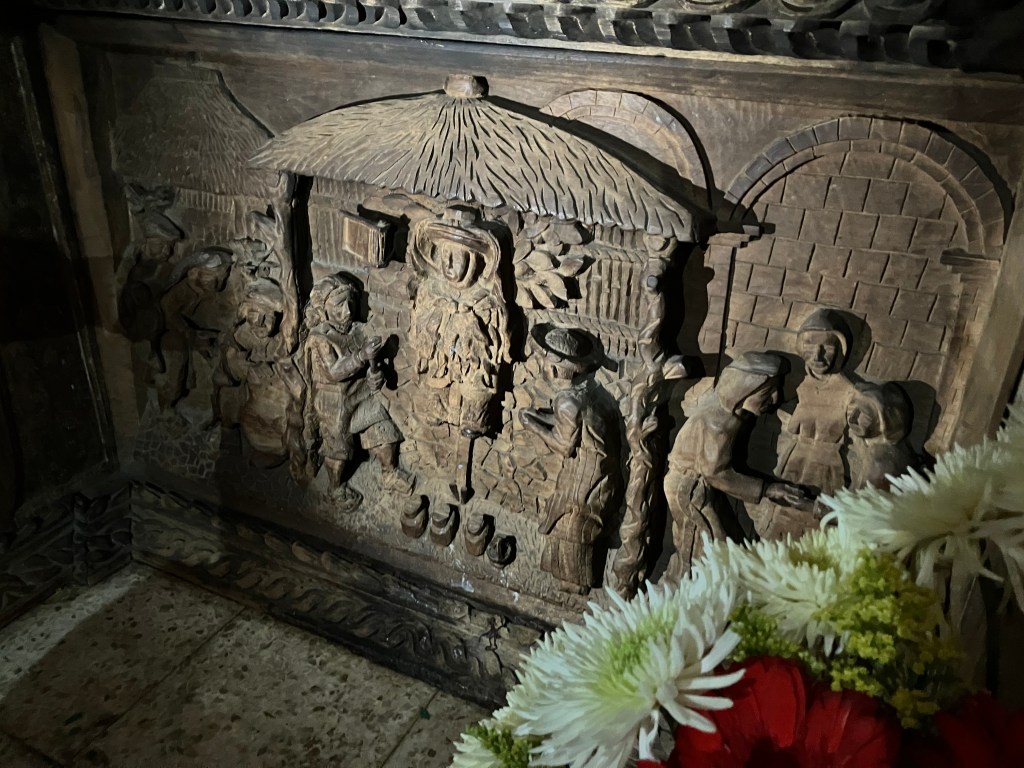
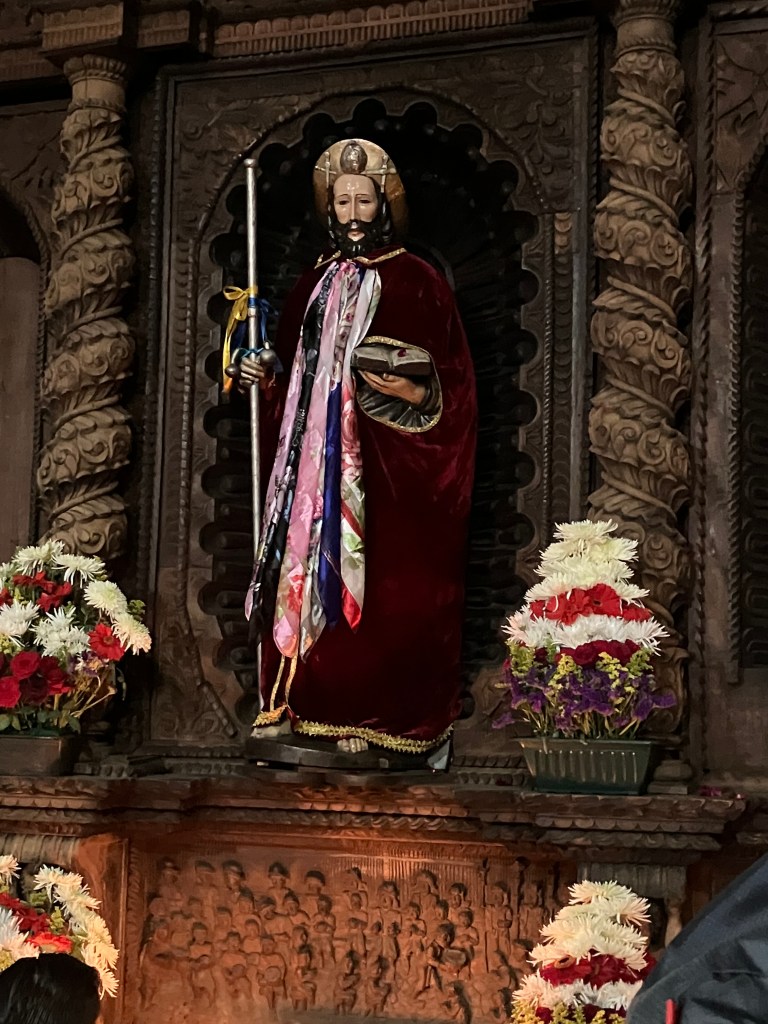
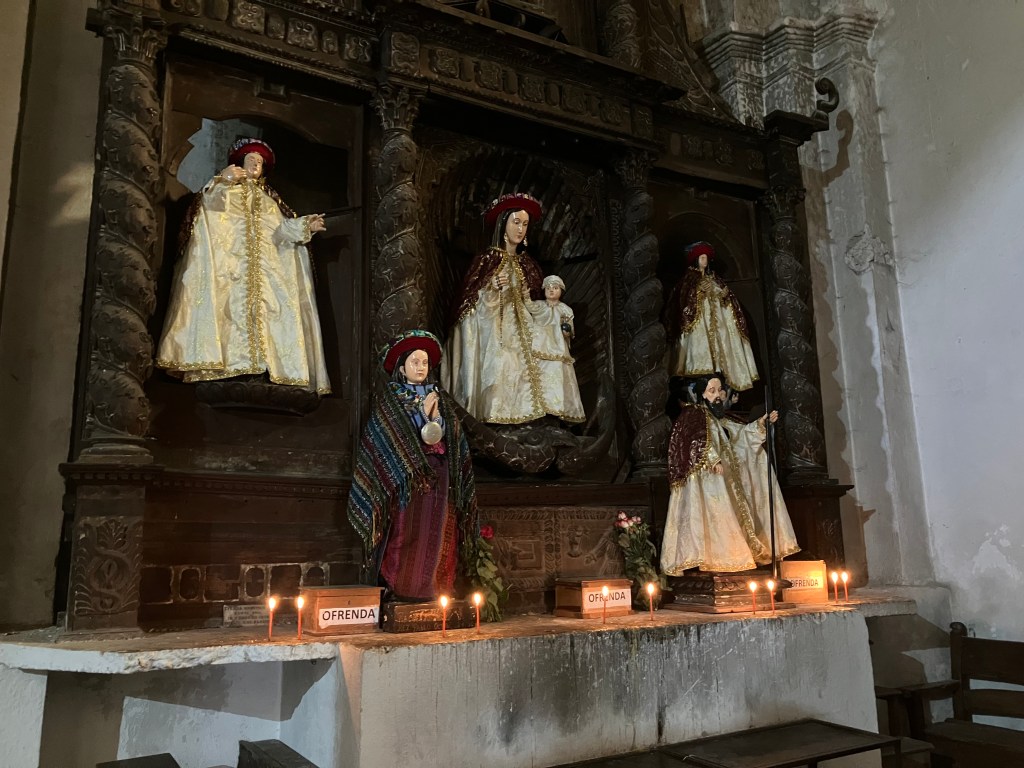
At the nearby mid-16th-century Iglesia Parroquial Santiago Apostol, I saw more examples of syncretism. Jesus laboring beneath a huge cross on a flower-covered platform is dark-skinned, like the indigenous people of Lake Atitlan. A statue of a saint inside the church is draped with layers of scarves just like the Maximon effigy I saw earlier. Along the walls is a wooden carving of Maximon, the Maya deity clearly displayed inside this Catholic church. Despite its age, the church is the dynamic center of the community, the saints in the church having new clothes made for them every year by local women.


When I visited, the church was draped in luxuriant purple fabric as part of the decorations for Easter. Before I left, I paid my respects at the shrine in the church to Father Stanley Francis Rother from Oklahoma, who was murdered by ultra-rightists in 1981, the Civil War in full swing then.



Digital nomad and party town


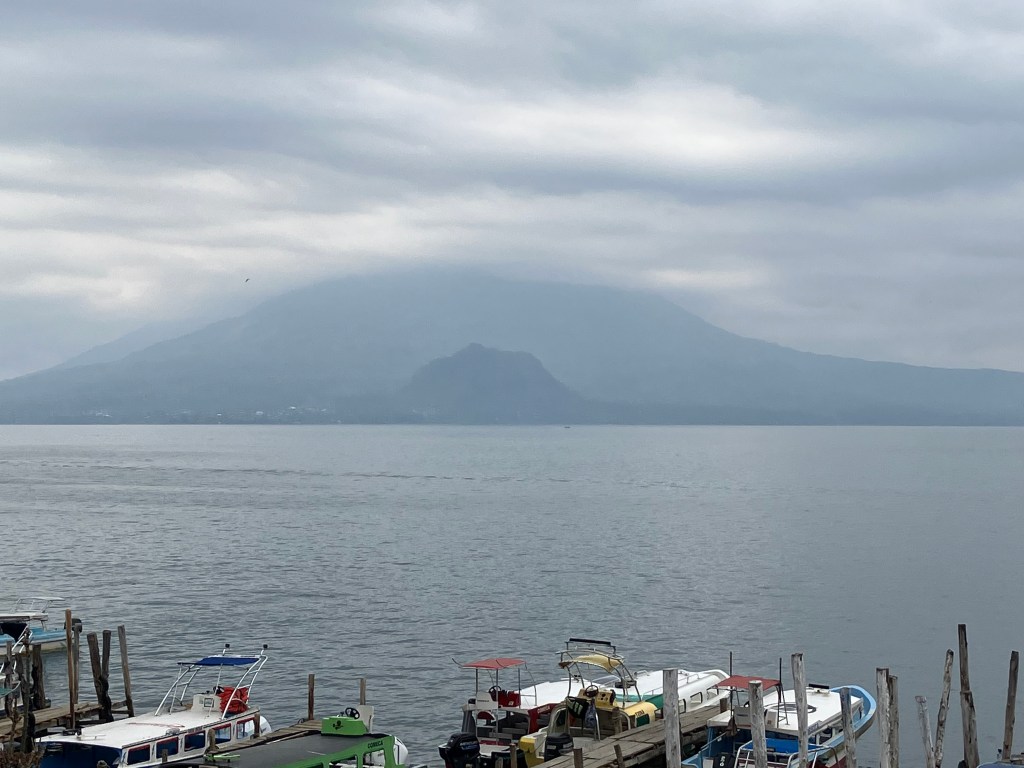
From Santiago Atitlan, I took a boat to San Pedro La Laguna. Lake Atitlan stretches 18 kilometers by 8 kilometers, drops as deep as 300 meters and is surrounded by three volcanoes: Volcan San Pedro, Volcan Atitlan, and Volcan Toliman. If Central America is the Earth’s ring finger, then Lake Atitlan is the polished sapphire that decorates it. The Spanish, under Pedro de Alvarado, colonized the area in 1524, allying with the Maya group Kaqchiquels against the Tz’utujils, then turning against Kaqchiquels in 1531 after they defeated the Tz’utujils. During the 1960-1996 Civil War, Lake Atitlan was a focus of the military as indigenous people comprised the majority of the rebels. It’s tragic, violent history is a startling contrast to the serene tranquility of today — and especially painful to comprehend after spending time with the warm, welcoming people of the lake.


San Pedro La Laguna has a reputation as a digital nomad and backpacker haven and something of a party town. When I visited a Western traveler was sprawled face down along the side of the road. Given that I was there in the early afternoon he didn’t just have a rough night, he must have had a rough morning too. No one bothered him and he seemed to be sleeping off whatever he was on peacefully. Nearby, I got a jolt from an espresso at a simple café that wasn’t notably appealing to Western tourists. I took a three-wheeler, a Guatemalan tuk-tuk, up the steep streets to an IMAX-like view of Lake Atitlan. The clouds were moving in, enveloping the landscape in a veil that gave the environment a mysterious aura.


Maya craft traditions alive today

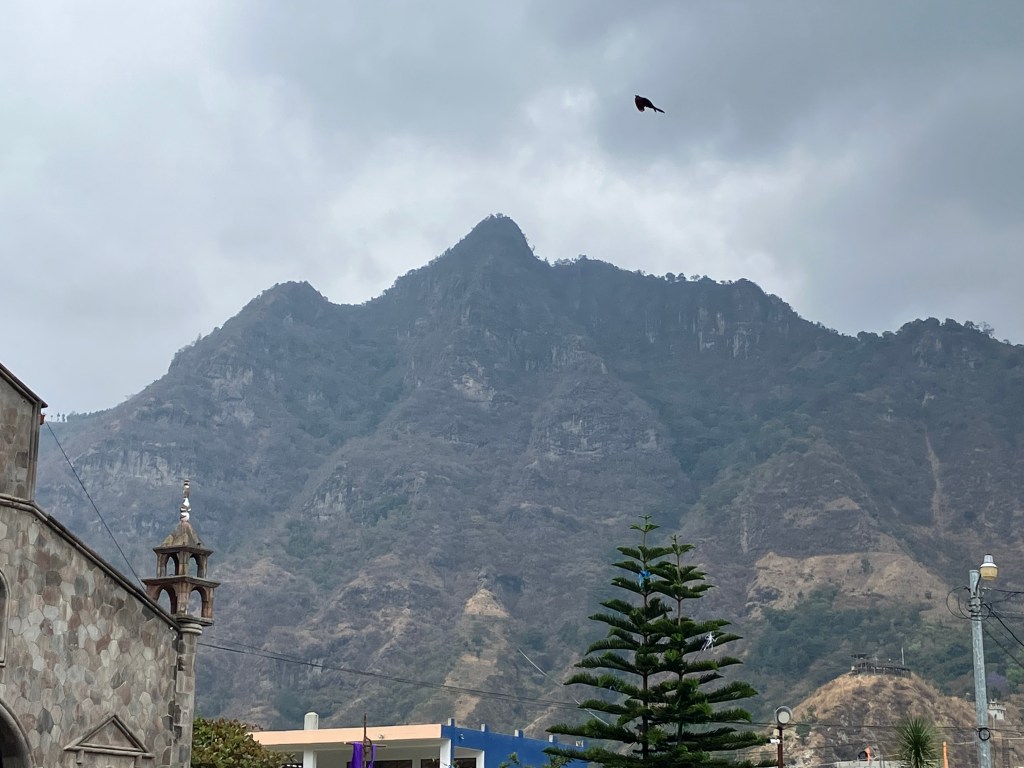
A boat zipped me over to San Juan La Laguna next. This village takes pride and its Tz’utujil Maya crafts. Visitors here seem keen to learn and give back by supporting the trades that fuel its economy: painters, weavers, coffee growers, fishermen, farmers. This village is also popular for its Spanish schools. Looming over the village in the Cristalina Hill, with a profile of a man.

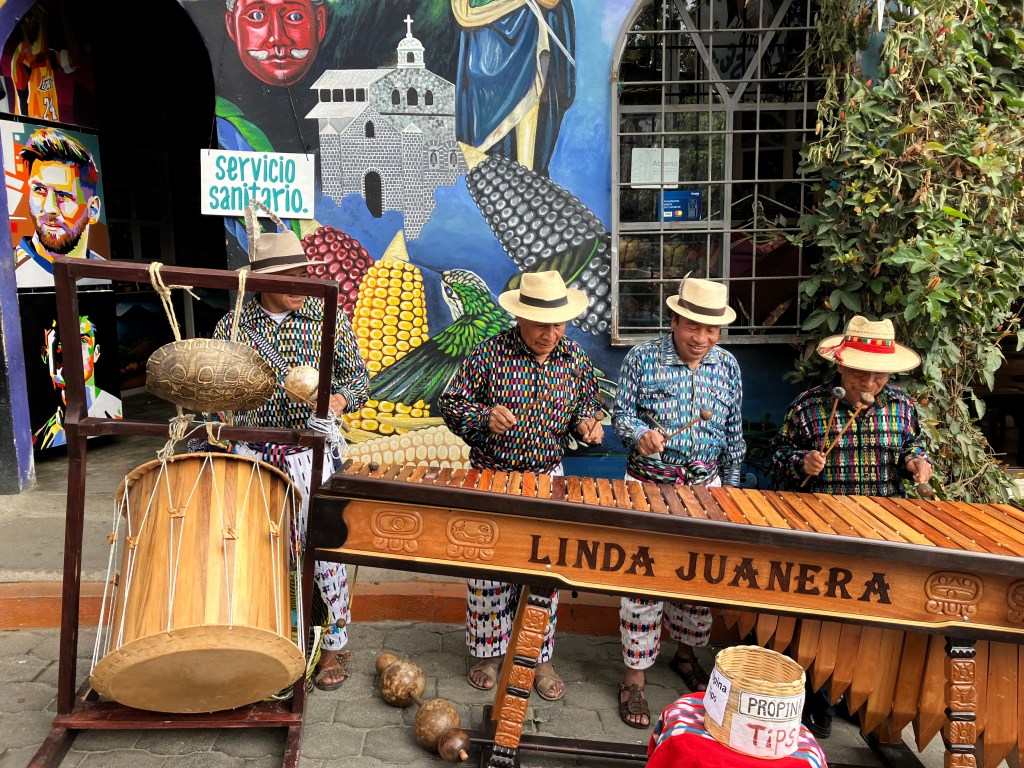
Upon walking away from the dock, I was greeted by a marimba band, three men tapping out a tune on a large marimba, a type of xylophone made of palo de hormigo, a type of wood, and pumpkins. A fourth man shook maracas filled with seeds. It was a joyful entrance to a lively village.
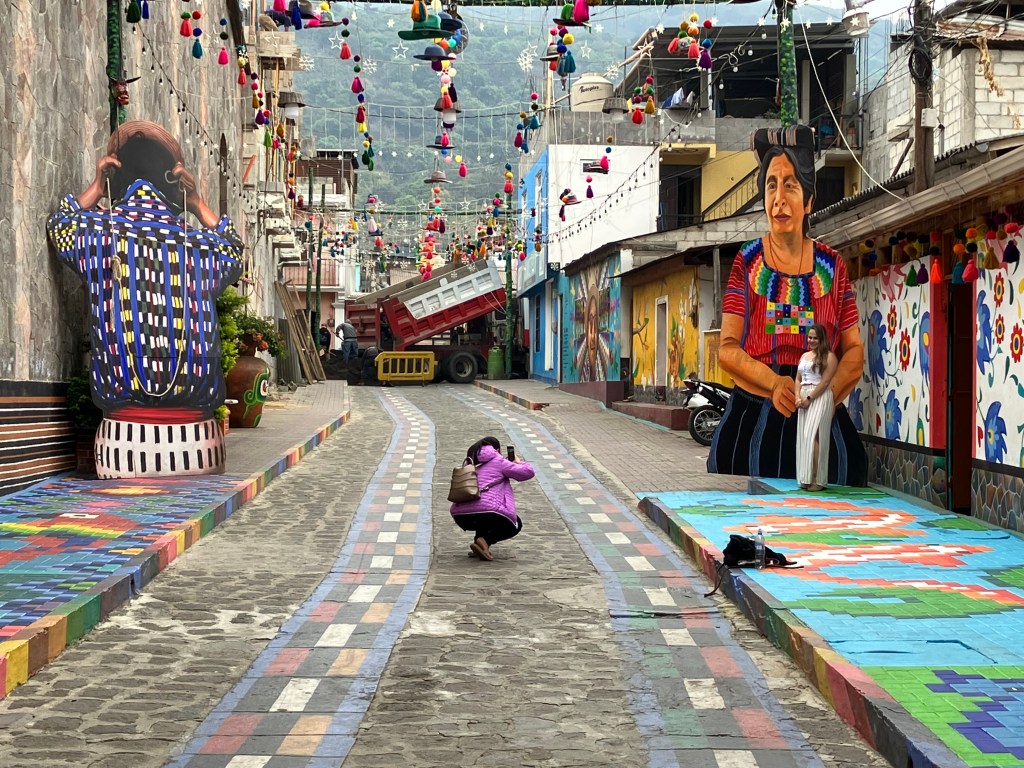
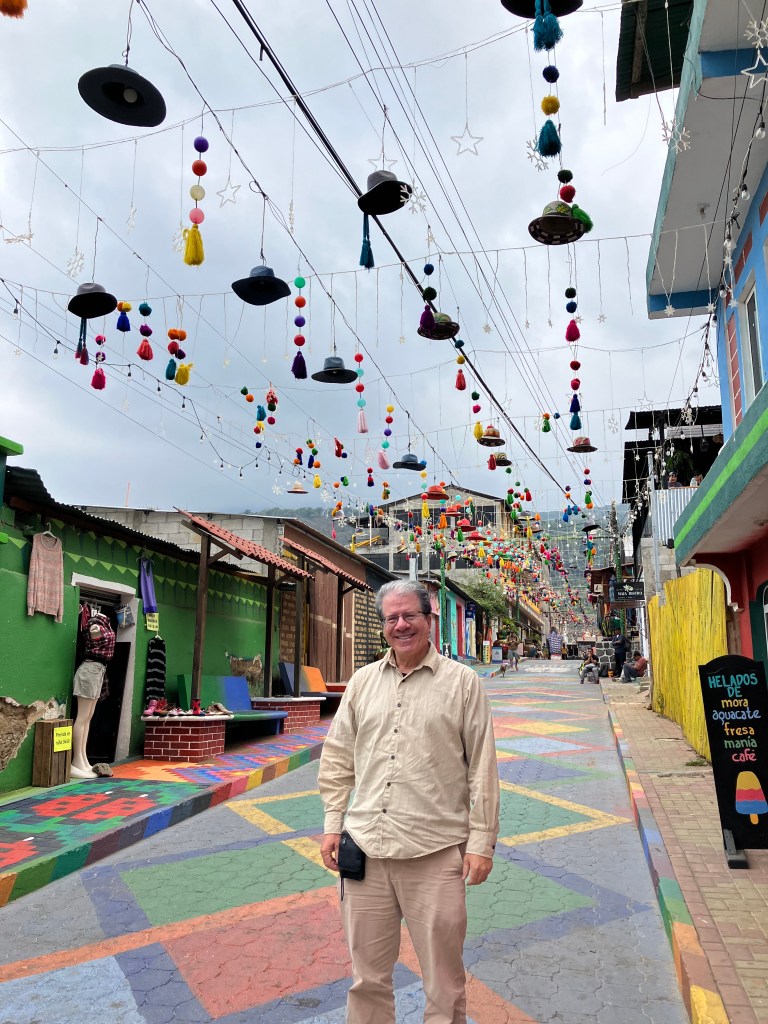
A decorative canopy of multi-colored umbrellas covered the street as it led upwards into the high reaches of the town. Walls were covered with bold murals depicting Tz’utujil Maya life: from Maya ancestors playing ball games to shamans to contemporary Tz’utujil playing music. There were even huge 3-D cut-outs of Maya at key junctures of the streets. The umbrellas give way to bowler hats and tassels overhead.

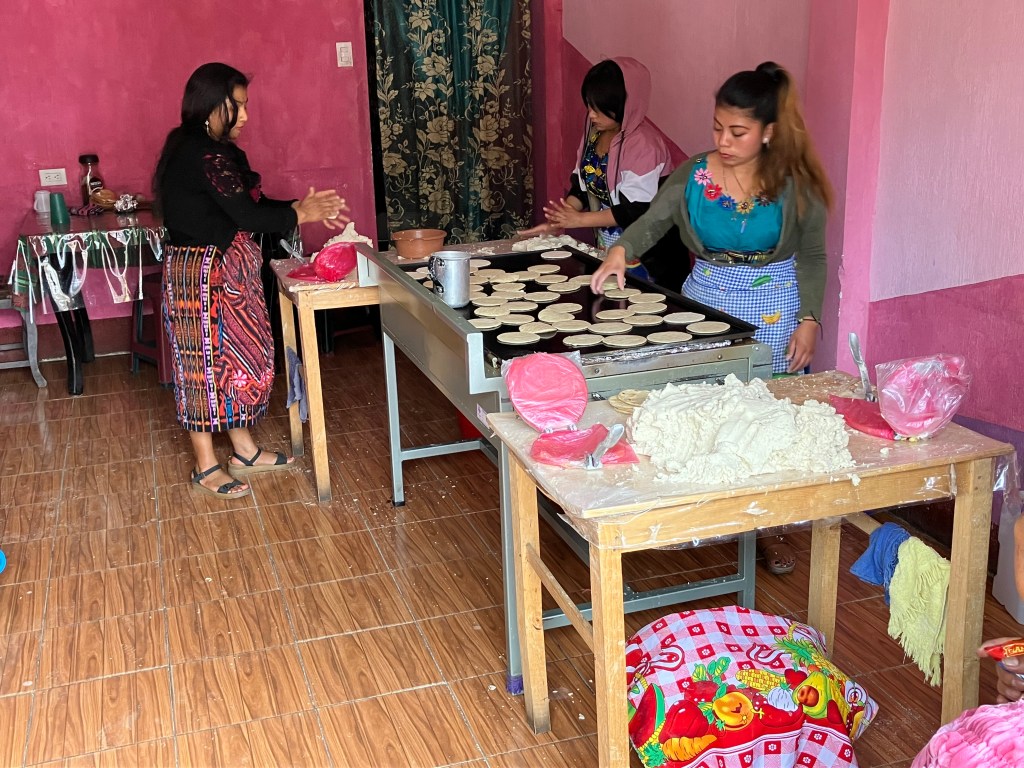
I visited a weaving cooperative and saw a demonstration on how they dye fabric before buying a multi-hued scarf there. I spent time watching a shop harvest honey from their beehives before buying a bottle of robust-tasting honey. I also visited galleries featuring Tz’utujil oil paintings, a primitivist style depicting Maya life. And around nearly every curve and corner, I could see women slapping and grilling corn tortillas, the scent wafting out onto the street, the sound a rhythmic, ambient beat.


My next stop was back where I started my journey on Lago de Atitlan, Panajachel, the largest and busiest of the towns on the lake. It’s the jumping off point for visits to the lake. For most travelers, including me, it’s really a transit point.
Lago de Atitlan is only around a 3-hour bus ride to Antigua, but it’s a journey to an indigenous Guatemala that is finally finding the peace it needs to provide a better future for its citizens and their centuries-old culture.
 Maybe Next Trip
Leave a comment