During a Taco Crawl in Mexico City’s Roma neighborhood, we came upon Carinita. Packed with the young, hip set that now defines the hood, Thai tacos were served in corn husks. Never heard of Thai tacos? Neither did I. But I’ll never forget them either, wolfing down a spicy one called Isaan. We had al pastor tacos at next stop Tacos los Alexis where the bill is provided in a miniature shopping card.
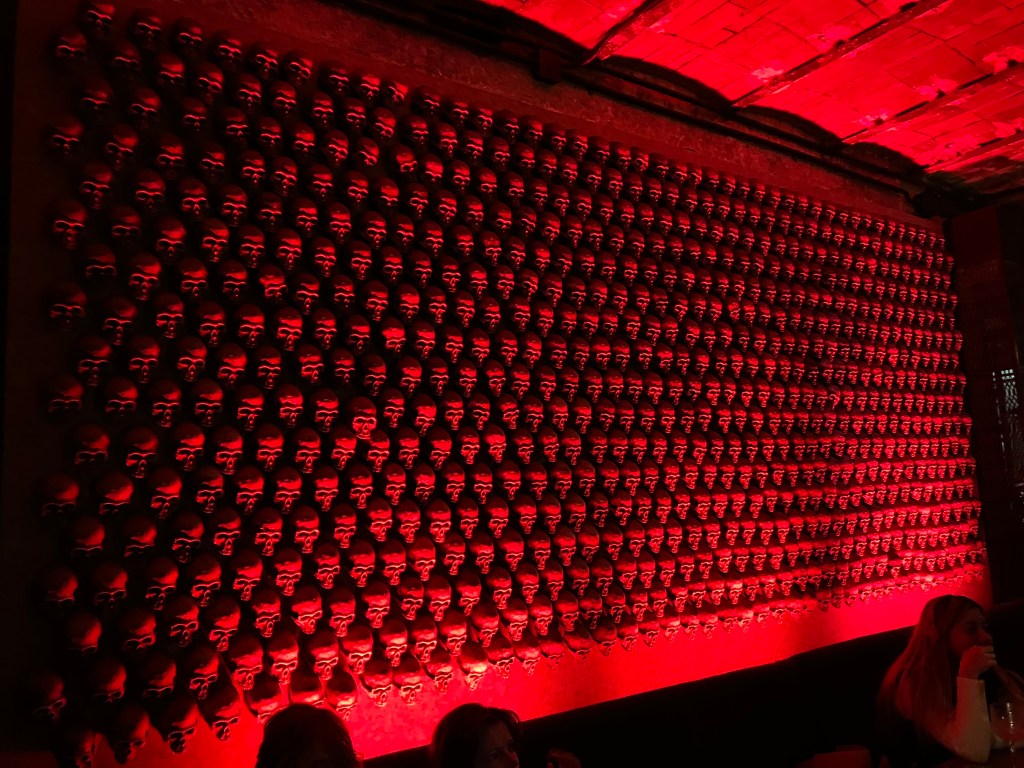
Roma, featured in the Oscar winning movie of the same name, is filled with restless humanity ebbing and flowing while scouting for restaurants, cafés, bars, and music clubs. A baroque mansion is converted into a bazaar. At Gin Gin, walls decorated with rows of skulls illuminated by red lighting, we downed mezcal spiked cocktails.
Pinnacle moment for the city
Mexico City is having its pinnacle moment. In November 2023 Time Out named it the number one city in the world for culture. Time Out also rated it the sixth best city in the world to visit in 2024. But it’s not just the foreign media that praise the city. Locals love it too, according to Time Out. 96% say they are happy living there. 94% say it’s easy to make friends. After my fourth visit there I’m a convert. Some cities are sonnets, other are short stories or a novel. Monumental, magical Mexico City is an all-engrossing trilogy.
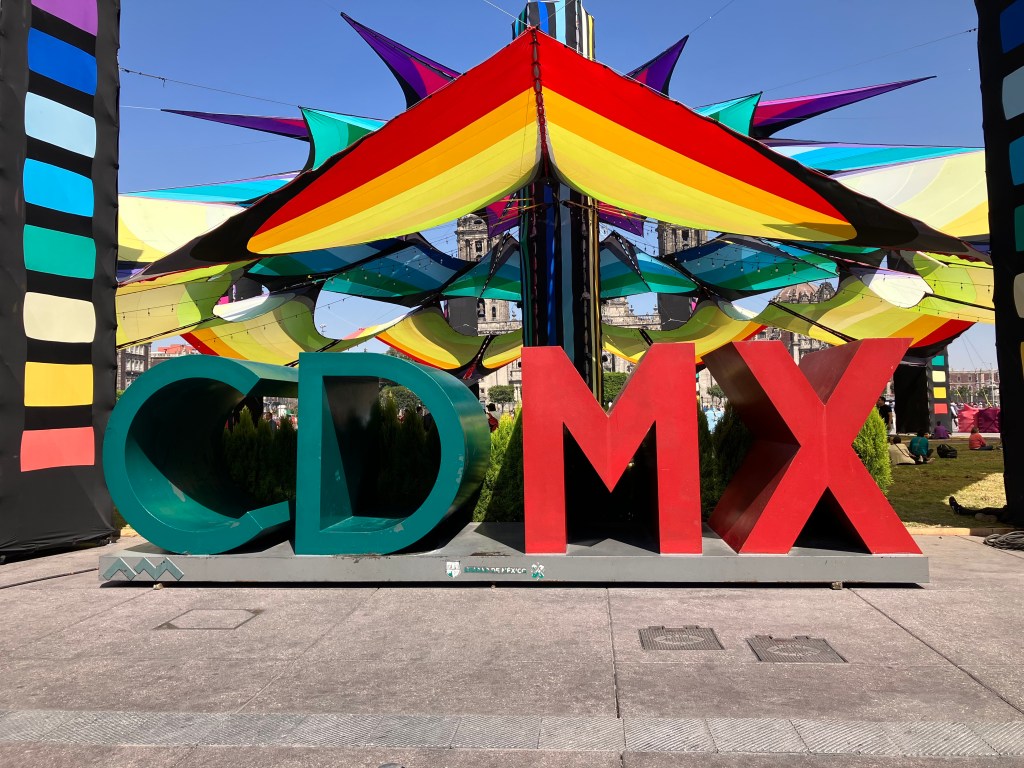
During the 1990s and early 2000s Mexico City was known for treacherous streets and unbreathable air. In 2001 the Washington Post ran an article titled, “A kidnapper around every corner.” Express kidnappings were common: tourists were grabbed and driven to ATMs around the city to withdraw cash or else. In 1992 the UN named it the world’s most polluted city. Now, according to Swiss company, IQAir, it’s ranked 917th. You may still be breathless here but because of the elevation. At 7,350 feet Mexico City, ringed by mountains and two volcanoes, is certainly high. Why did it improve so dramatically? Strong leadership by former mayor Claudia Sheinbaum and other civic leaders who transformed this maximum metropolis.
Colossus of the Americas
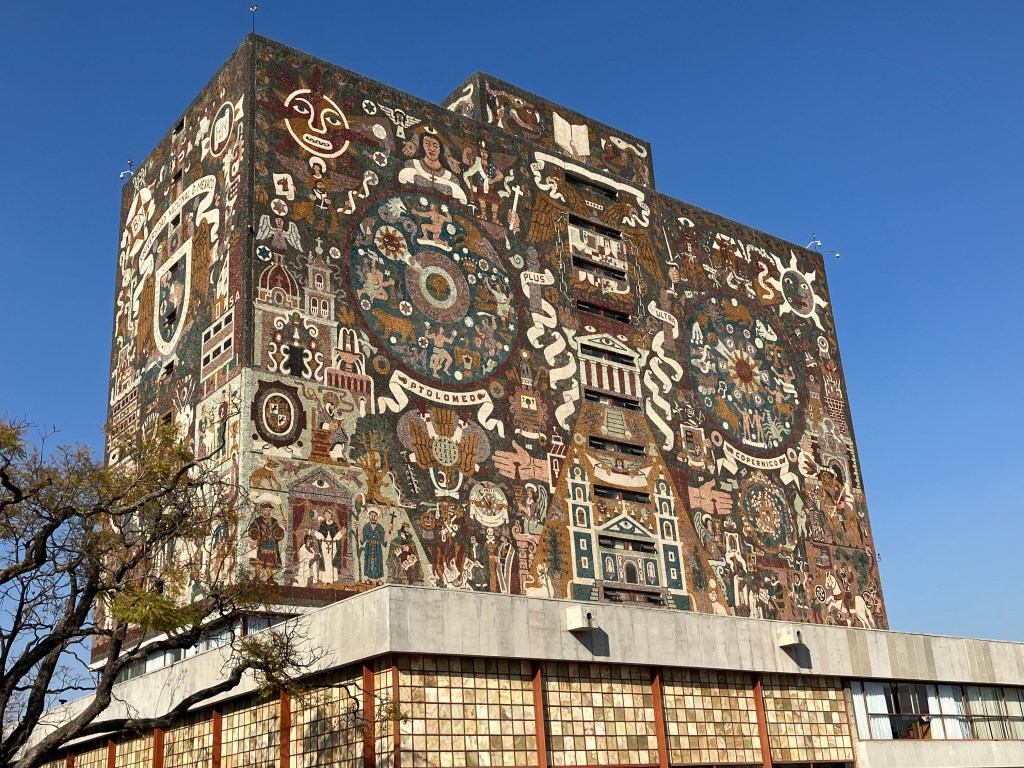
At 22.28 million people, second only to Sao Paulo in the Americas, the city is a colossus. The National Autonomous University of Mexico (UNAM) is the largest in the Americas with 373,000 students and 42,000 staff. Its public art work is also massive in scale, earning it a place on UNESCO’s World Heritage Sites in 2007. The ten-story high Biblioteca Central is a tapestry of mosaics depicting Aztec times and colonial history by artist Juan O’Gorman. Other colossal mosaic artworks on campus are from David Siqueiros and Francisco Eppens.
Altiplano Venice
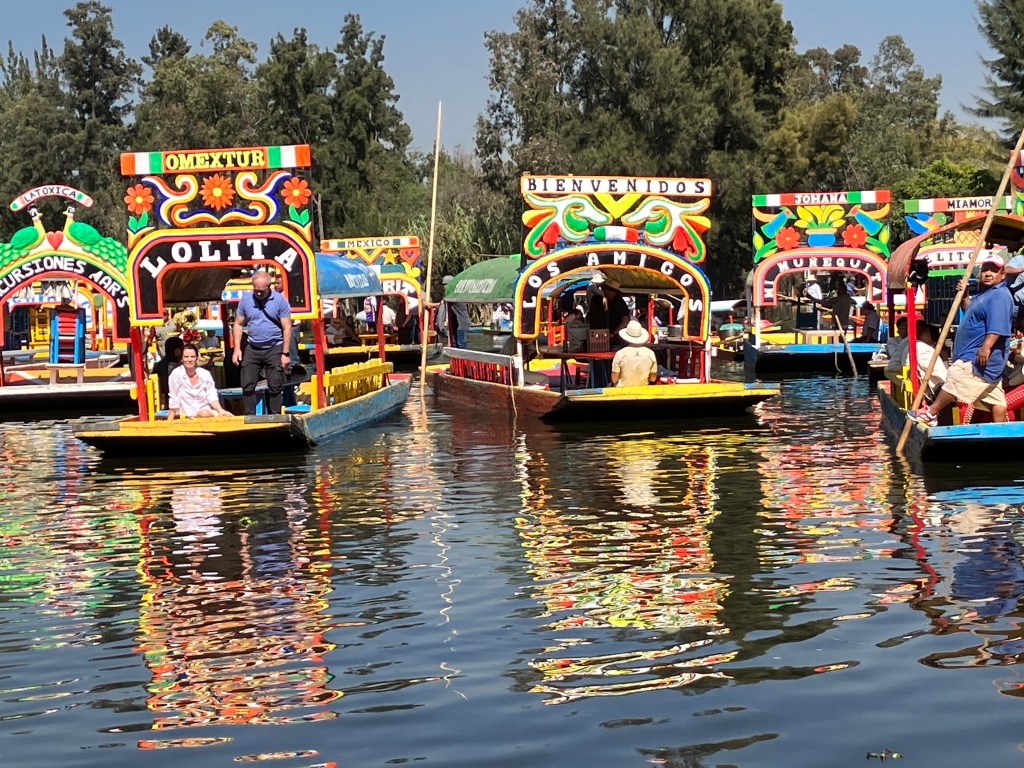
Other great cities are built on a river, lake, or seashore. While Mexico City was built on the drained Lake Texcoco, water is not the city’s defining element. But there is an exception, the canals at Xochimilco, originally built by the Aztecs. Located at the southern edge of the city, this UNESCO World Heritage Site is where families and friends rent trajineras, gondolas, and glide along canals amongst floating islands call chinampas while passing boats of mariachi bands playing music, and others selling cervezas and tamales or a traditional alcoholic drink called pulque. Poinsettias and marigolds thrive here. A creepy feature of these Venice-like canals are the dolls that are strung up on shacks and trees These pay homage to the Isle of the Dolls where Don Julian Santana Berrera hung a multitude of children’s dolls from trees, time and the elements disfiguring them.
History going back thousands of years
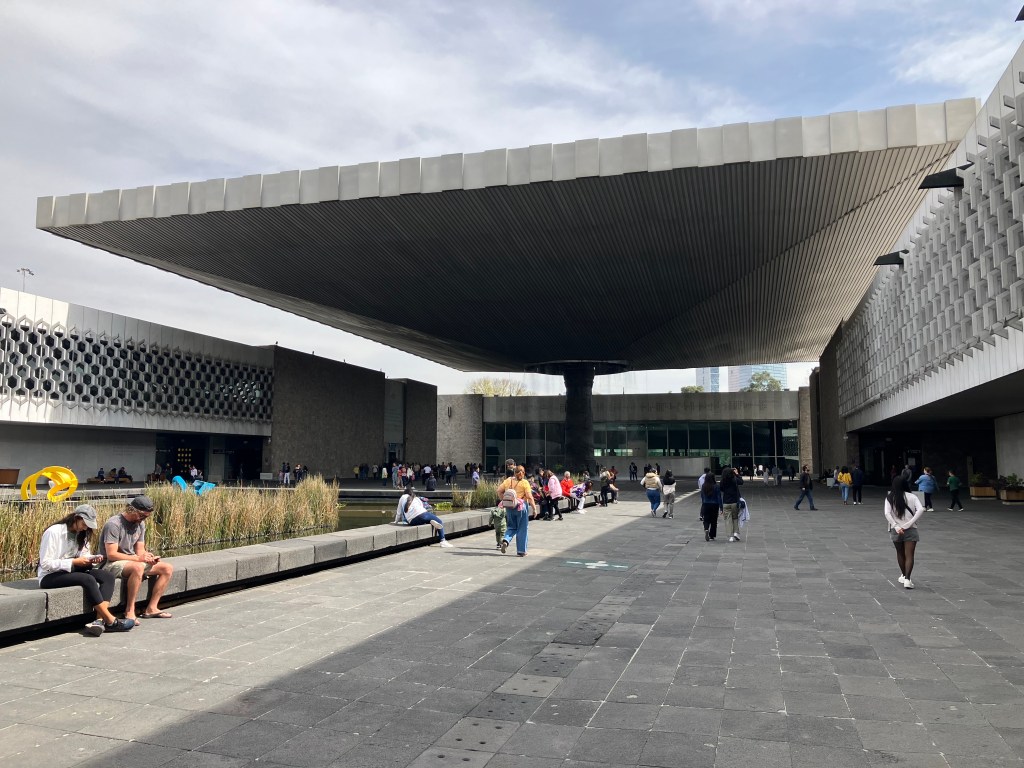
At the summit of Mexico City’s cultural offerings is the world famous Museo Nacional de Antropologia. Designed by architect Pedro Ramirez Vazquez and opened in 1964 it depicts Mexico’s history from pre-Hispanic times. From colossal Olmec heads weighing 20 tons to the replica of King Pakal’s tomb to the Aztec Sun Stone that is the symbol of Mexico, the museum takes hours to absorb. The central plaza is dominated by a monumental sculptured column with a gushing fountain of water and a huge concrete canopy that acts as an umbrella. In front of the museum indigenous Totonac twirl in a flying pattern from the top of a 30-meter pole to the sound of rhythmic music. This ritual dance is known as the Voladores de Papantla ceremony.


While the Museo Nacional de Antropologia depicts Mexico’s storied past, the Zocalo, also known as the Plaza de Constitucion has been the city’s and the country’s center of power since Aztec times. It is one of the world’s largest squares: 220 meters north to south, 240 meters east to west. The ceremonial center of the Aztec civilization was here: the Teocali of Tenochitlan. After defeating the Aztecs Cortes dismantled the Aztec pyramids and used the stones to pave the plaza and build the Metropolitan Cathedral. The baroque cathedral was built between 1573 and 1658, athough elements of the building were not completed until the end of the 18th century. Breathtaking in scale, it’s 109 meters long, 59 meters wide and 65 meters high. To get a sense of its majesty I went into the choir area and listened to its two massive organs being played during mass. The largest in the Americas, they were completed in 1736.
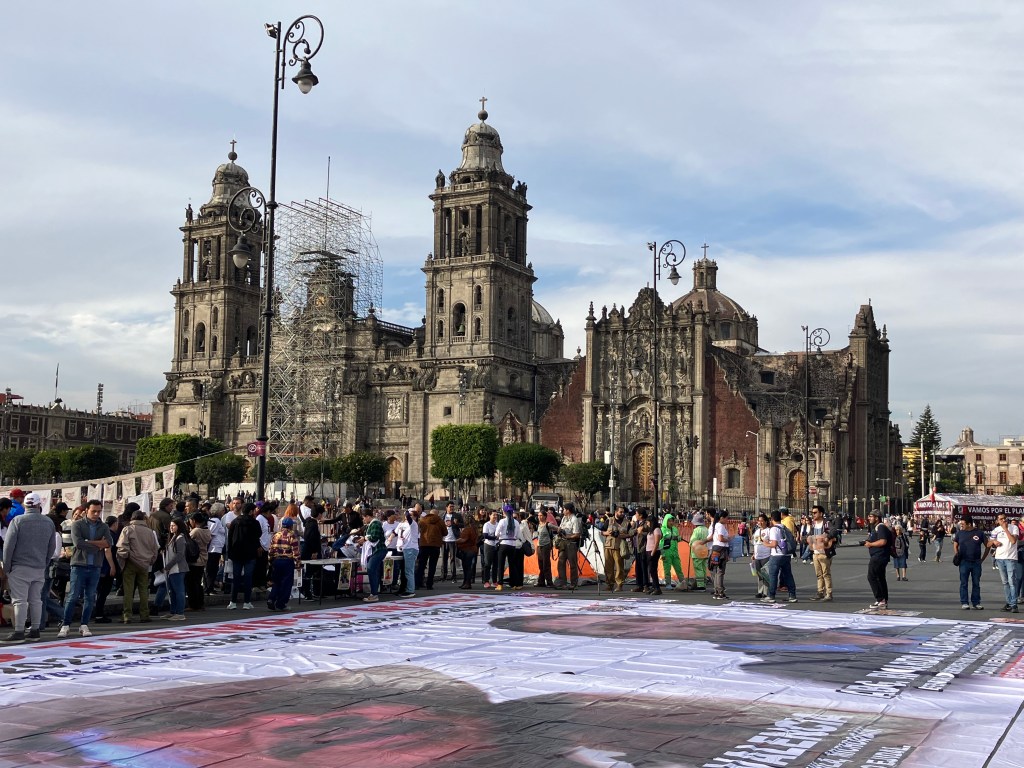
Near the cathedral is a line of people wating to be spiritually cleansed by Aztec shamans. The ceremony, known as limpia, included being rubbed with herbs and having a silver cup of smoke blown into your face. It ended with the haunting sound of a conch shell being blown.

Rivera’s murals depict Mexican history

The Palacio Nacional is opposite from the cathedral on the Zocalo. The Aztec emperor Moctezuma II occupied the first palace here, which Cortes replaced with a fortress. The Spanish crown took it over and transformed it into a palace the New Spain viceroys. After independence, the presidents of Mexico have lived here, including current the president. In the palace is a series of nine murals by Diego Rivera, painted between 1929 and 1951. The largest mural is The History of Mexico. Rivera commuted here from the Blue House, the home that he shared with Frida Kahlo in the Coyoacan neighborhood. Now a museum, it illustrates their life and trials together.
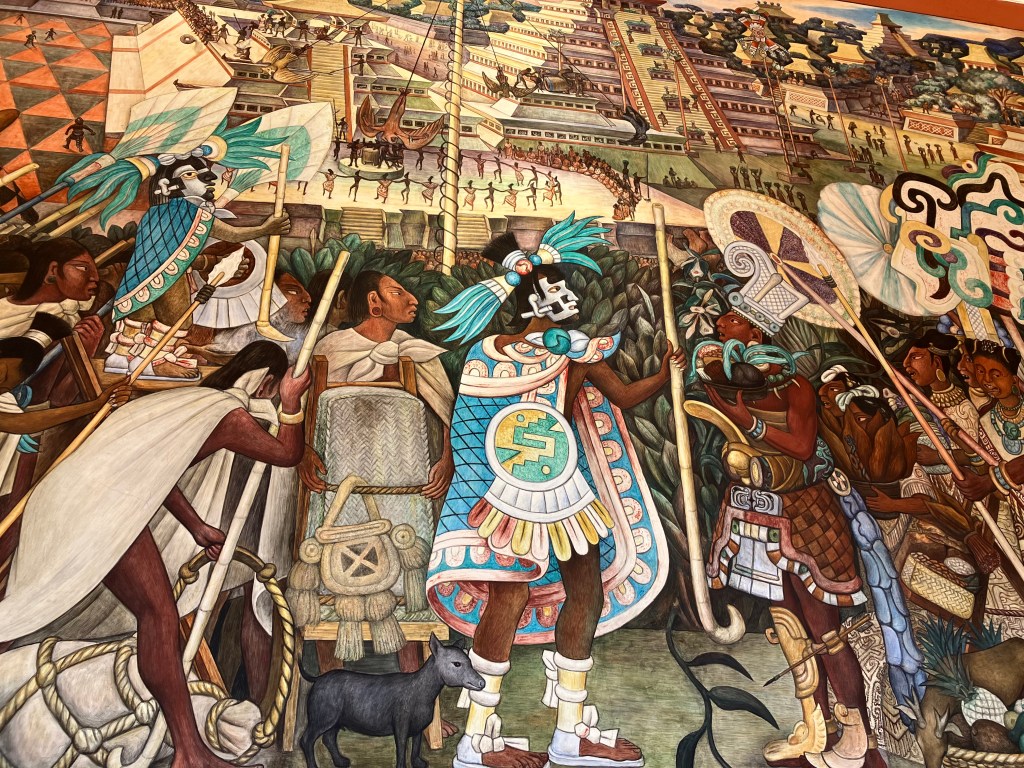
In the palace I passed through a cactus garden representing northern Mexico and tropical garden representing its south. In the symmetrical palace’s courtyard I climbed stairs to reach the murals. On my left is the entrance to the president’s residence. The palace allows only 240 visitors a day on free guided tours. On most days, the military closes the palace completely to visitors.

Mexico’s mural masters
At the nearby Palacio de Bellas Artes, started in 1905 but only completed in 1934, a delay caused by the Mexican Revolution, the floors are dominated by murals by Mexico’s most famous muralists: Diego Rivero, Rufino Tamayo, David Alfaro Siqueiros and Jose Clemente Orozco. Rivera’s “Man at the Crossorads” was originally painted at the Rockefeller Center in New York until Nelson Rockefeller ordered it painted over because it included flattering images of Lenin and a Soviet May Day parade.

Culinary art and lively nightlife
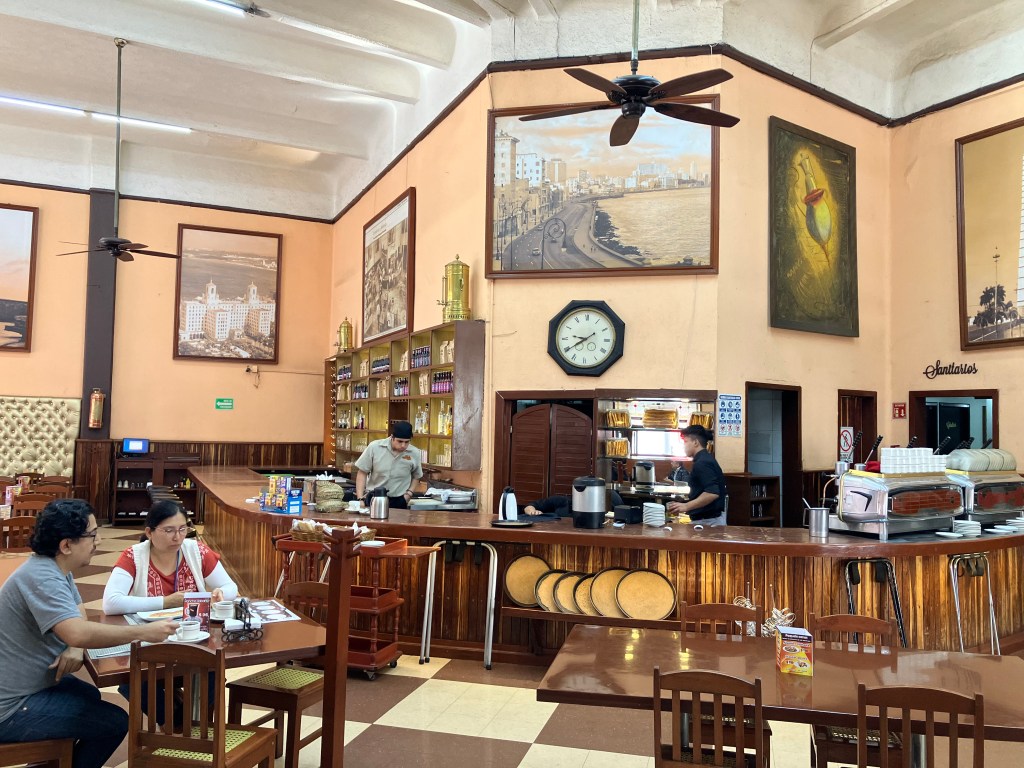
Mexico City isn’t all about museums. Cafes and bars, restaurants and music serenade the senses. Opened in 1952 the Café La Habana with its sepia toned colour scheme, was a favorite haunt of Fidel Castro and Che Guevara as they planned the Cuban Revolution. Nobel prize winning writers Gabriel Garcia Marquez and Octavio Paz socialized here. My son and I soaked in the atmosphere over hot chocolates.
The storied La Opera has been serving drinks and food to Mexico’s richest and most powerful since 1876. Revolutionary Pancho Villa fired a bullet into the ceiling in protest against the plutocrats who congregated here. The dictator Porfirio Diaz was a regular here as was Gabriel Garcia Marquez who once refused to autograph napkins for fans but later returned with autographed books for all of them.
Haute cuisine

Lately, Mexico City has become a mecca for haute cuisine with three of the world’s top 50 restaurants. Our most memorable meal was at Quintonil, ranked 9th in the World’s 50 Best Restaurants list. They take Mexican cuisine to new levels by relying on traditional ingredients like insects. Yes, insects. During our ten course tasting menu, my wife and I had ant larvae, agave worms, stink bugs, and grasshoppers. In some Mexican customs, the stink bug, jumil, represents the souls of dead relatives so eating them while alive is a traditional custom. The stink bugs we ate were definitely dead and thank god for that! The restaurant was intimate — only eleven tables and eight counter seats — with muted colours that didn’t detract from the vibrantly coloured dishes.

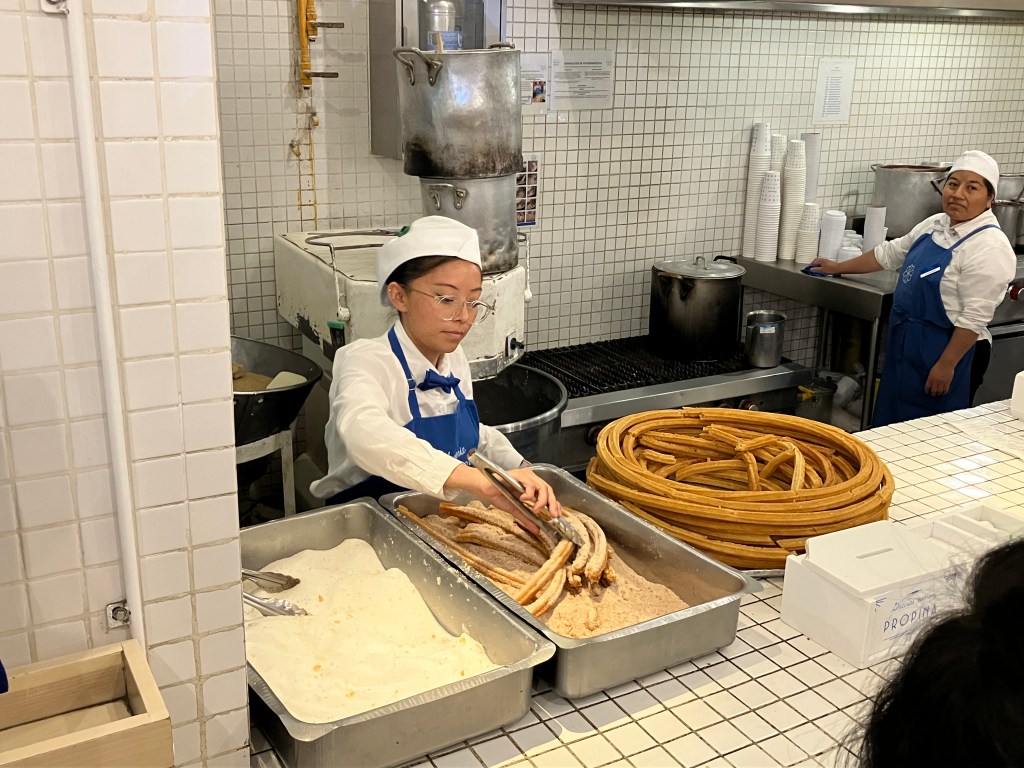
Our experience at the 49th ranked Rosetta was less sublime and more factory line. Given its fame, people crowded the entrance. Located in a magnificent mansion in the Roma neighborhood, they were eager to get a table, any table. At our meal I had white mole and fermented carrots as a starter and cacahuazintle corn cappellaci and brown butter as a main. The food was outstanding but the portions so miniscule, I felt like emulating Oliver Twist, “Please sir, can I have some more?” My family and I decided to finish our meal at Churreria El Moro, with abundant crispy churros dipped in chocolate sauce.

World’s Best Bars
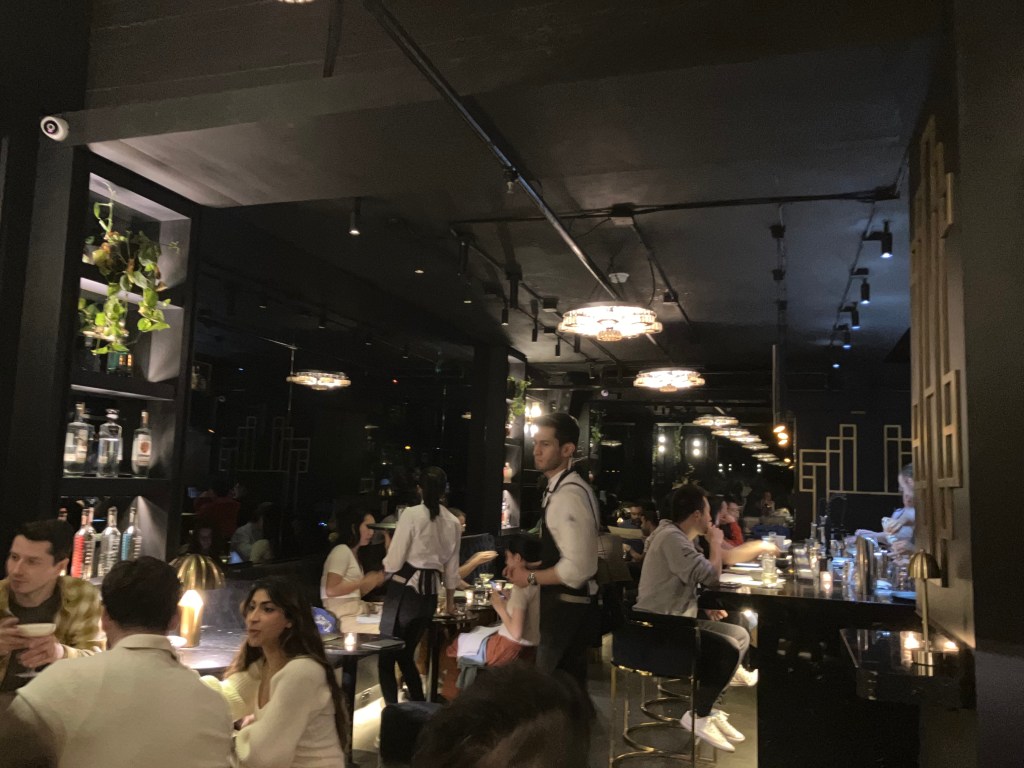
When it comes to the top 50 bars in the world, Mexico City has four of them. Our experience with two of the bars was like the restaurants, hit and miss. Handshake Speakeasy made it to Number 3 on the World’s 50 Best Bars list. Its staff stand in front of the office building where it’s located in the Colonia Juarez neighborhood, dealing with a crowd of those who have reservations and those who want to get them. My family and I and were led down stairs to a hidden entrance in the basement. Inside was a slick bar, with black sofas and shiny black surfaces on tables and counters. There was no bar counter. My son-in-law and I ordered the same drink, Salt and Pepper. Lost Explorer Espadin mezcal was combined with strawberry and Yellow Pepper Habanero. Both of us had the same puzzled expression on our face when tried it: we couldn’t taste nor feel the mezcal. My wife had better luck with the Matcha Dame Blanche which had Bombay Sapphire Gin with Matcha Tea, Greek Yogurt, and White Chocolate.
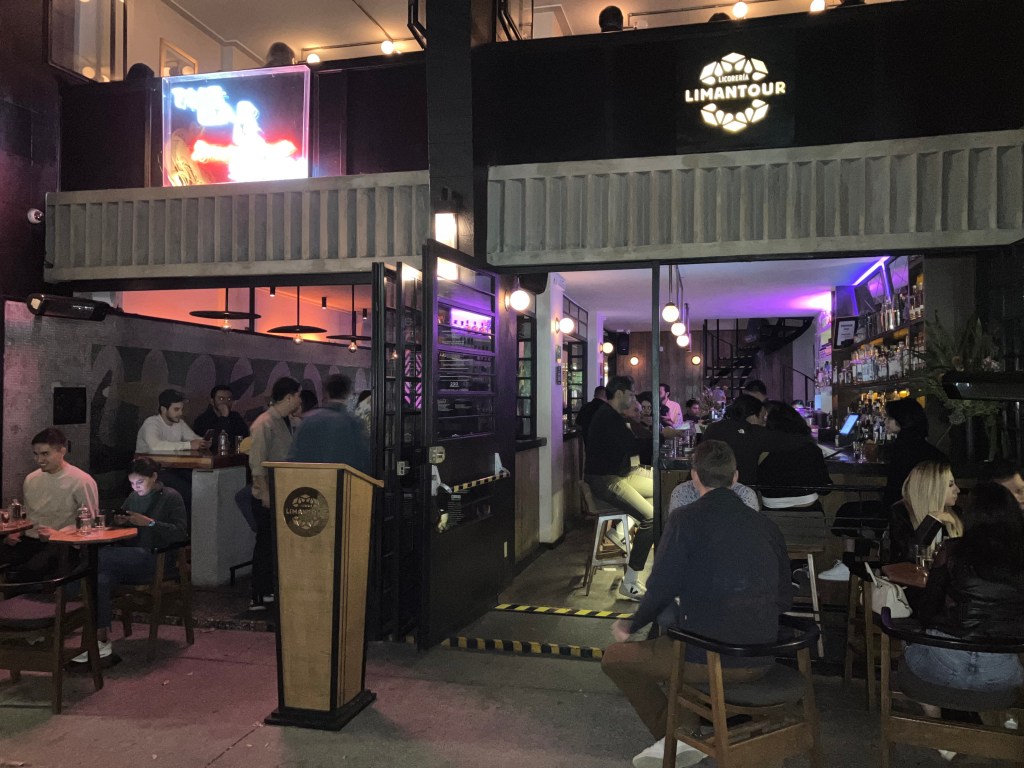
My wife and I also visited the 7th top ranked bar in the world, Licoreria Limantour — a boisterous bar in the Roma neighborhood with an outrageously tasty mezcal cocktail flavored with pineapple and bitters.
Zesty street life
But Mexico City isn’t all about fine art, fine dining and cocktails with recipes that would intimidate a PhD in chemistry. When my wife and I returned to our hotel after a couple of strong drinks at Licoreria Limantour we saw a large crowd of people dancing to a street band at the Alameda Park across from our hotel, Hilton Reforma. Some were great dancers, some weren’t. All of them were having an marvelous time. So with my hand out and my two left feet my wife and I took a twirl — terrible dancers having a terrific dance. That’s the real magic of Mexico City.

Where to stay:
Hilton Reforma for downtown’s buzz. AirBnbs in trendy Roma, La Condesa and Polanco neightborhoods.
Dining and bars:
Mux for Mexican cuisine in Roma; La Catrina churros in Centro Historico; El Morro Churerria in Roma; Baltra Bar in La Condesa.
Museums and art buying:
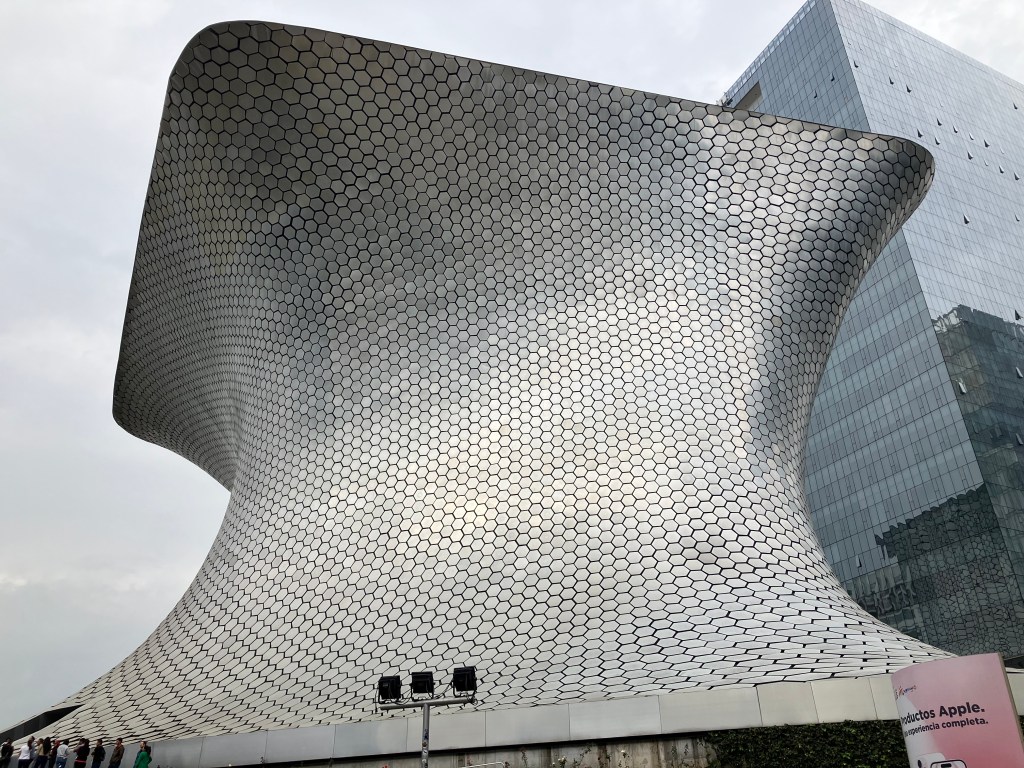
Soumaya Museum in Polanco. Buy art directly from artists at Jardin del Arte Sullivan on Sundays and San Angel Saturday Bazaar and Art Fair.

Where to donate:
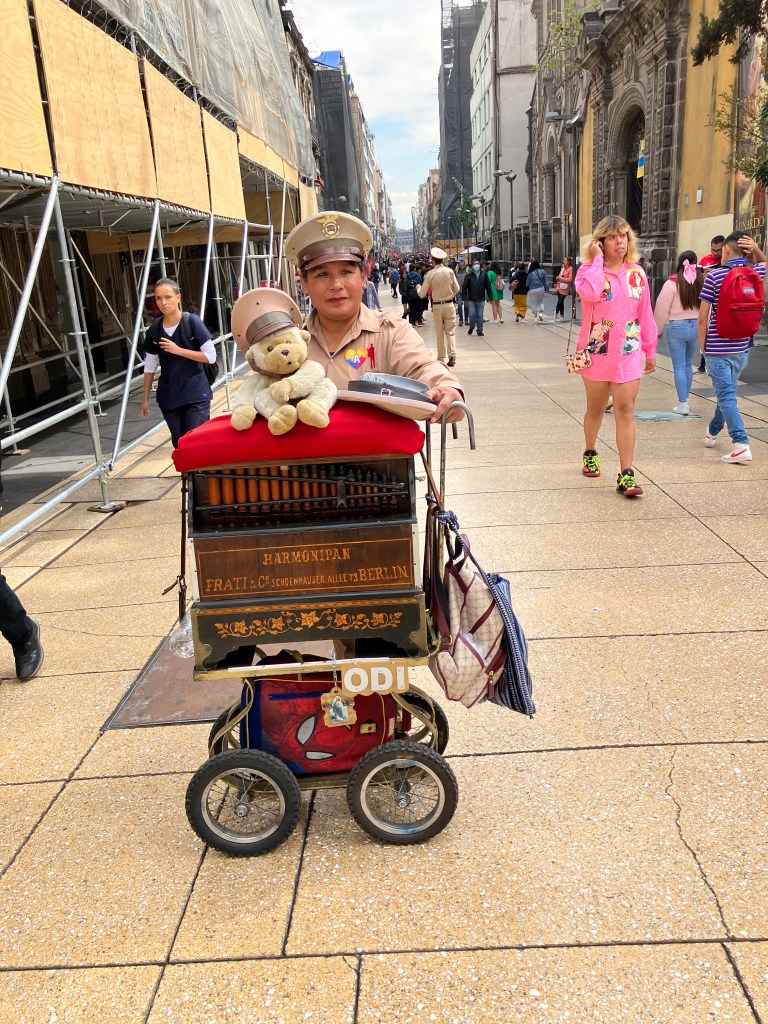
Salvation Army has staff playing organ grinders throughout the city.
Published in Asian Journeys magazine, April-May 2024
 Maybe Next Trip
Leave a comment