
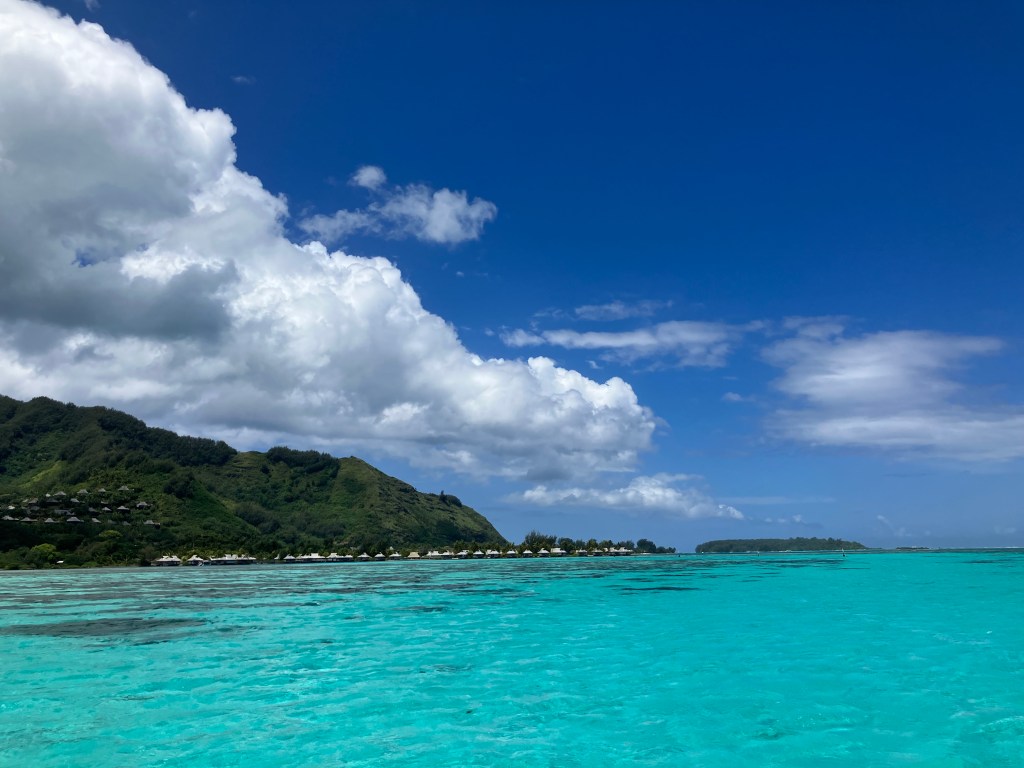
In the Inuit languages of Canada, Alaska and Greenland there are some seventy words to describe ice and snow. There’s nowhere near that number to describe the captivating shades of blue in French Polynesia but perhaps there should be.
Paradise found
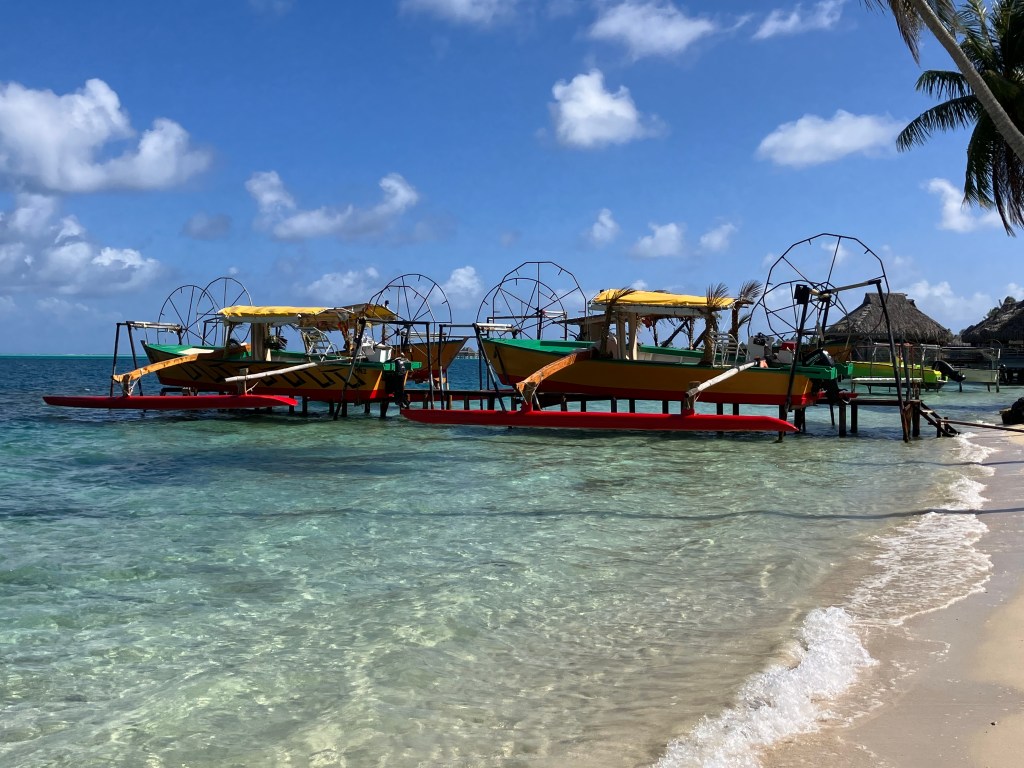
17th century poet John Milton wrote the poem Paradise Lost. Clearly, he hadn’t visited French Polynesia. On a snorkeling trip off the island of Moorea I sailed across an immense, placid lagoon of iridescent blue. Waves crash in frustration against the reef that protect the island from the ocean’s occasional fury. That sense of a tropical sanctuary has led to this part of the world being called, with justification, a paradise. While French Polynesia faces the same challenges as other modern societies, it’s certainly a paradise in many ways.
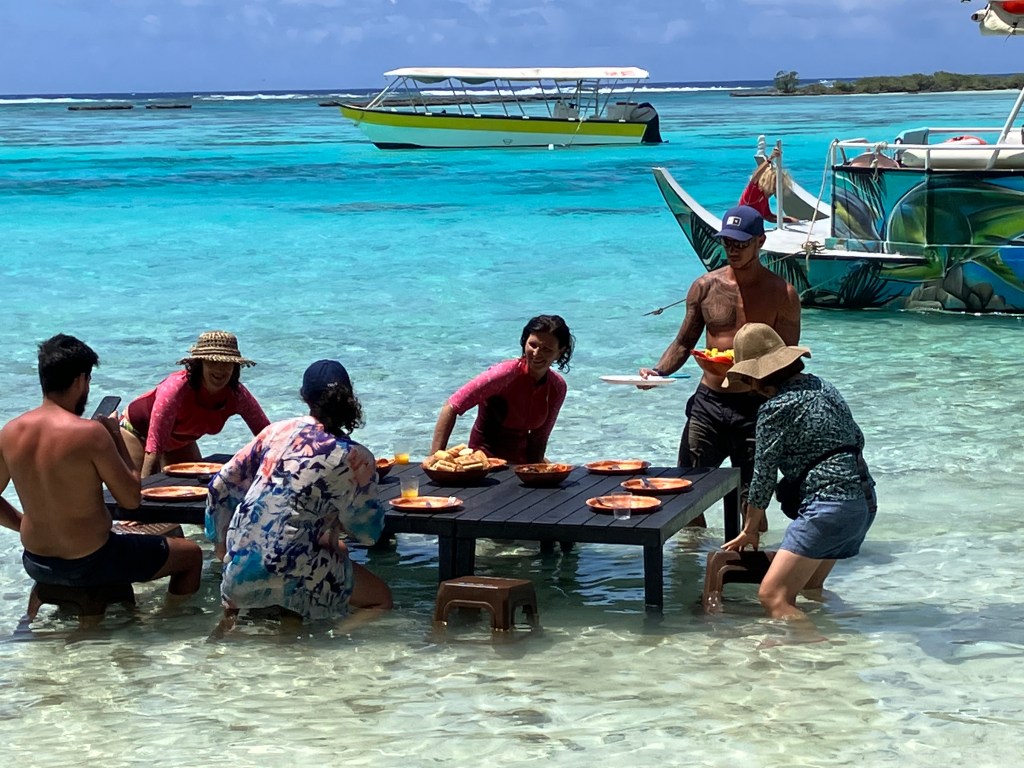
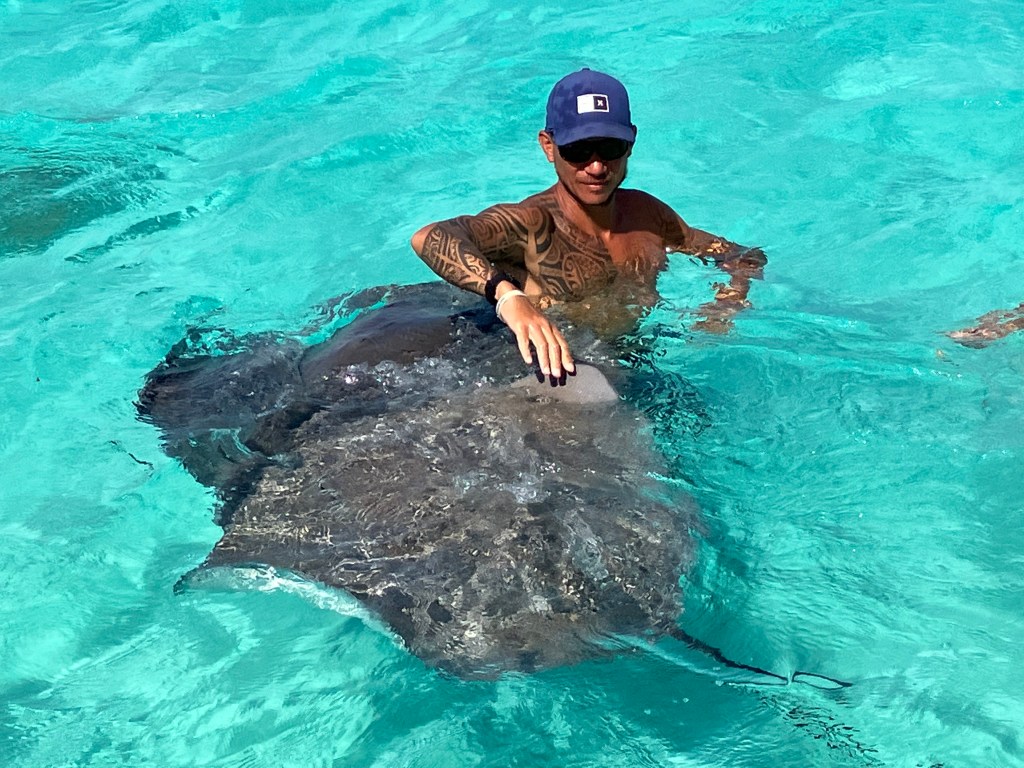
For lunch, our guide set up a picnic table in the water where he and his wife serve an assortment of freshly prepared seafood and salads. Our small group isn’t alone though. Dining with us are stingrays who rub up against our legs and happily eat whatever we give them in a mouth that is, unusually, on the side of an eye. That sense of harmony with nature persists with a swim later on with reef sharks and stingrays in deeper, crystalline water.
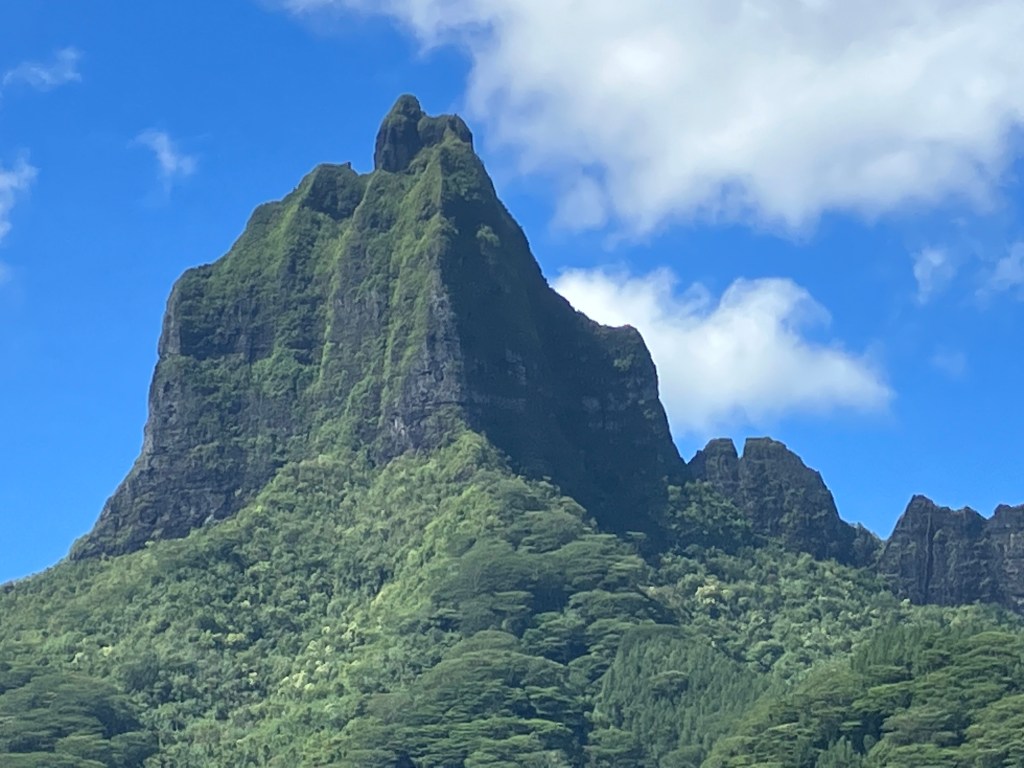
On the boat ride back to my hotel there is a sense of untouched nature in Moorea, a painterly palette created by malachite green peaks and valleys and the lagoon’s tranquil blues. No wonder Gauguin was inspired by this landscape.
Moorea, an island of 14,000 spread over 134 square kilometers, is part of the Society Islands, named after the Royal Society, which sponsored Captain James Cook’s first expedition to the islands in 1769. It was only on his third expedition in 1777 that he visited Moorea and Cook’s Bay, now called Paopao Bay.


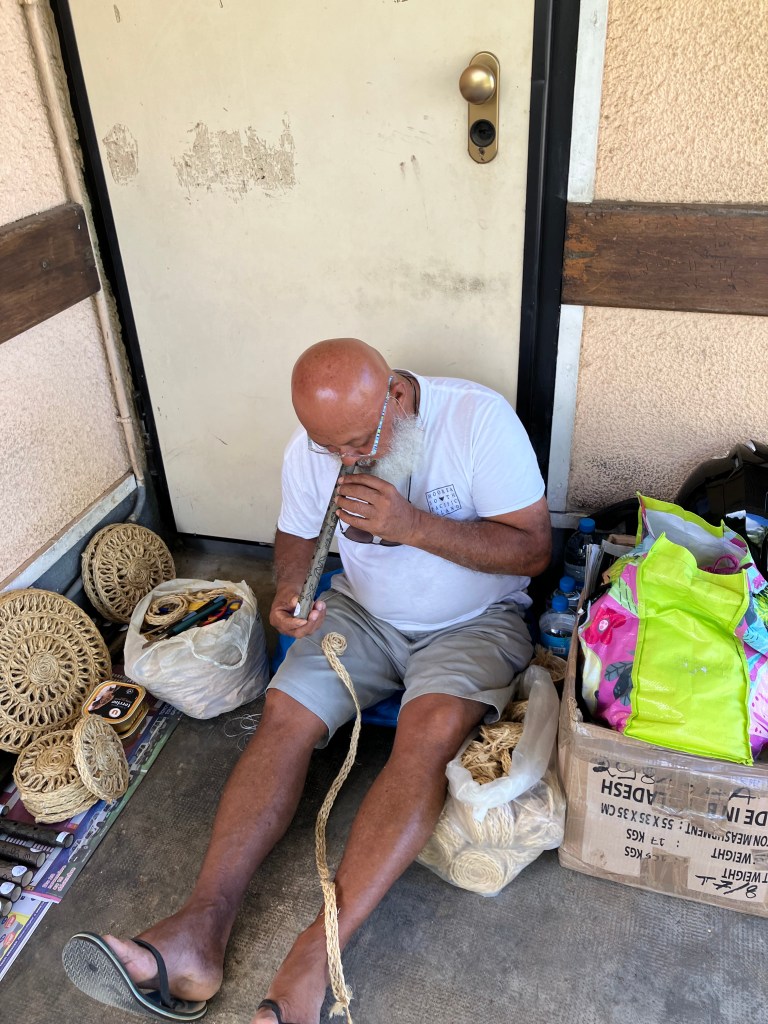
Our exploration the following day of Moorea’s inland reveals isolated villages and pineapple plantations abutting ragged peaks, the most striking of which are the 900- meter Mount Rotui and 1,200-meter Mount Tohiea. Workers, bent over, pluck ripe pineapples from the soil. A craftsman in the village of Maharepa demonstrates a nose flute and I promptly buy it – although whenever I try to play it, I sneeze. At the hotel that evening Polynesian dancers perform ancient island dances accompanied by musicians playing traditional instruments, the tunes somehow in sync with the waves lapping the nearby beach.

To return to Tahiti I take the almost hour long Aremiti ferry from Terevau village in Moorea to Papeete.

Territory’s capital fuses urban grit with colonial monuments and architecture
French Polynesia, a territory of France since 1880, is spread over 121 islands that cover an area, including ocean, of 5.3 million square kilometers, about the size of Europe. The population, though, is only about 280,000 people. It’s 6,000 kilometers from Australia; 7,500 from Chile; and 15,700 kilometers from Paris. The fastest way to fly to Tahiti from France is via Los Angeles.

Papeete, the capital, with a population of 137,000, has the only international airport. Despite its majestic South Seas location on the island of Tahiti, it drips with urban grit. French and Polynesia cultures mix both easily as well as uneasily in the city. The Notre Dame Cathedral, built in 1875, has a tall spire that towers over the city. Inside is a woodcarving of a Madonna and child with Polynesian features with the child holding a breadfruit. Bright murals enliven the city while buildings and monuments project French colonial rule. The streets are largely devoid of pedestrians.

At Place Tarahoi is the Assembly of French Polynesia, built in a style that pays homage to Polynesian architecture. The legislative arm of government, it has 57 members who are elected for 5 years. They, in turn, pass legislation and elect a President of French Polynesia for a four-year term.

Across from the Assembly is a monument to Pouvanaa a Oopa, a Tahitian politician who led the independence movement while he served in the Assembly from 1949 to 1958. He was imprisoned for eight years on an arson charge and spent a further fifteen in exile in France before being exonerated in 2018, 41 years after his death.

Just across from his monument are stone statues of Polynesian deities and the Residence of the High Commissioner of French Polynesia, the leading colonial official who is in charge of defence, foreign relations and justice.
On the main artery of Avenue Pouvanaa a Oopa is a simple stone monument to Charles de Gaulle and the residence of the President of French Polynesia. The gingerbread-style building, surrounded by palms and lush tropical landscaping, was formerly the French military’s Broche Barracks before being converted in 2000. Across the avenue is the War Memorial, built in 1928, honouring the Tahitian soldiers who died fighting for France in World War I.

Joie de Vivre in Papeete
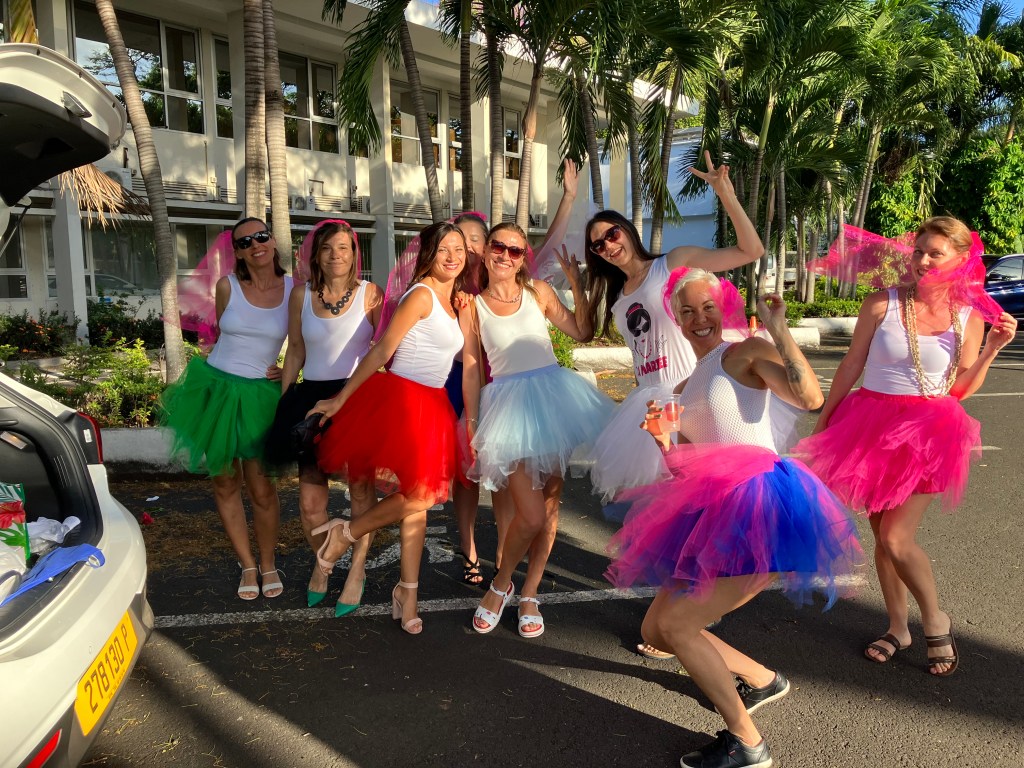
I stumbled upon a French bride and bridesmaids, bursting with energy, at the start of a big night out before the wedding the following day.. Along the pleasant waterfront promenade is a towering Christmas tree made from coconuts and shells and a reproduction of a huge double-hulled canoe that ancient Tahitians used to explore and populate the South Pacific, including Hawaii. The harbour is jammed with yachts of the ultrarich. Along the sidewalks downtown are sellers of flower leis, a fragrant kaleidoscope of colours to wear around your neck. Elsewhere are sellers of leis made of shells.

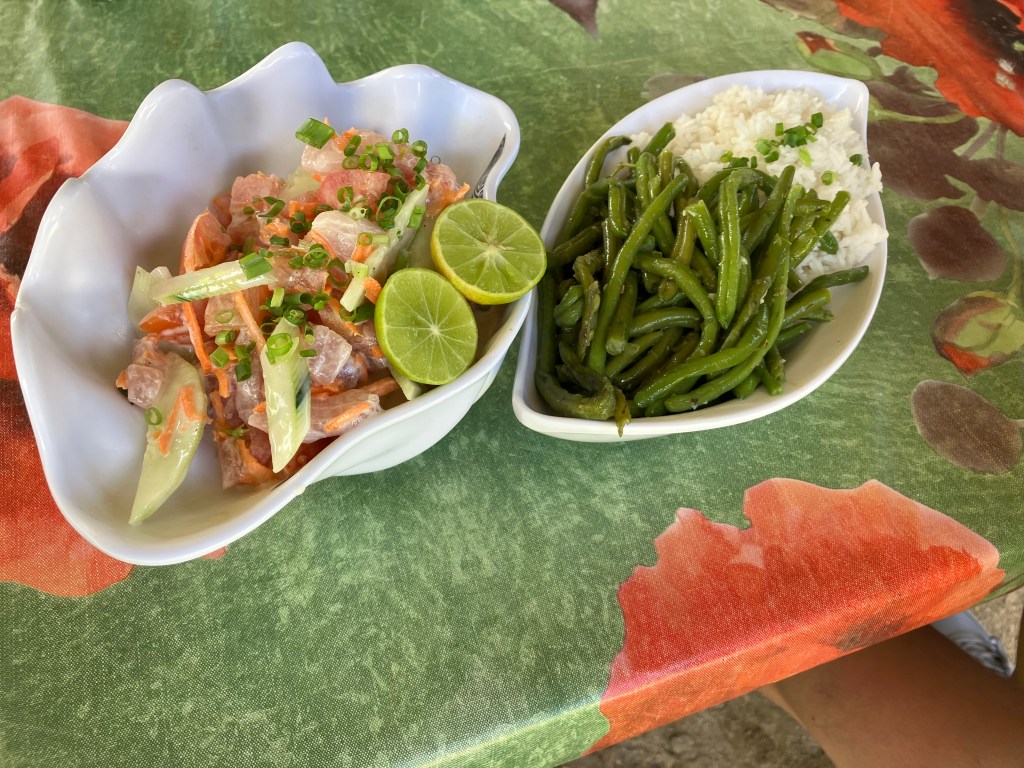
For dinner, one of the best deals in French Polynesia are the roulettes at the Papeete wharf. These food trucks with outdoor tables sell huge plates of fresh fish and rice for $20 and plenty of other dishes. Both the massive cranes of the wharf and the mountains of Moorea are visible from where you eat. While the tourists love the roulettes, so do the locals. It gives me a chance to break away from the tourist path to experience the convivial warmth of Tahitians.

Bucket List island that isn’t just a tick on a checklist
While Papeete shows that the magnificence of nature in French Polynesia can be somewhat undercut by the ministrations of man, my last stop in the territory is perhaps its most famous destination: Bora Bora.
French Polynesia is known as a ridiculously expensive travel destination. There are ways around it everywhere but as far I could tell not in Bora Bora. It’s a bucket list destination and knows it.
As I didn’t have time to take the seven hour ferry from Papeete to Bora Bora I took the 45 minute flight on an Air Tahiti ATR instead for around $400 round trip. At Bora Bora’s airport, a bag of Lay’s potato chips is about $9. A cheap hotel is easily more than $200 a night.
Made famous in James Michener’s novel Tales of the South Pacific, Bora Bora with a population of 10,000 is consistently rated as one of the top islands in the world to visit. During World War II, Bora Bora was a US military supply base known as Operation Bobcat, complete with an airfield and coastal batteries. The airfield is now the airport and the coastal guns are scattered around the island. The 6,000 American soldiers stationed here never saw action, dated Polynesian women and no doubt worked on their suntans while most of their comrades were fighting in brutal battles. When they returned home they spoke of their experiences and word of mouth made Bora Bora a catchphrase for an island paradise.

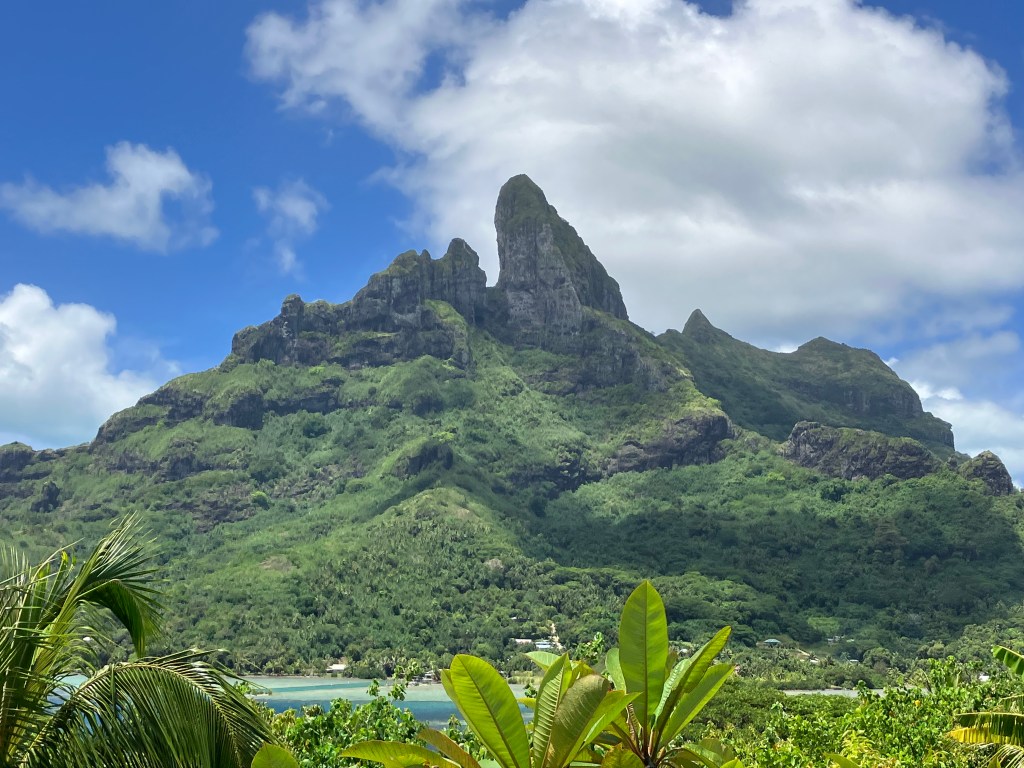
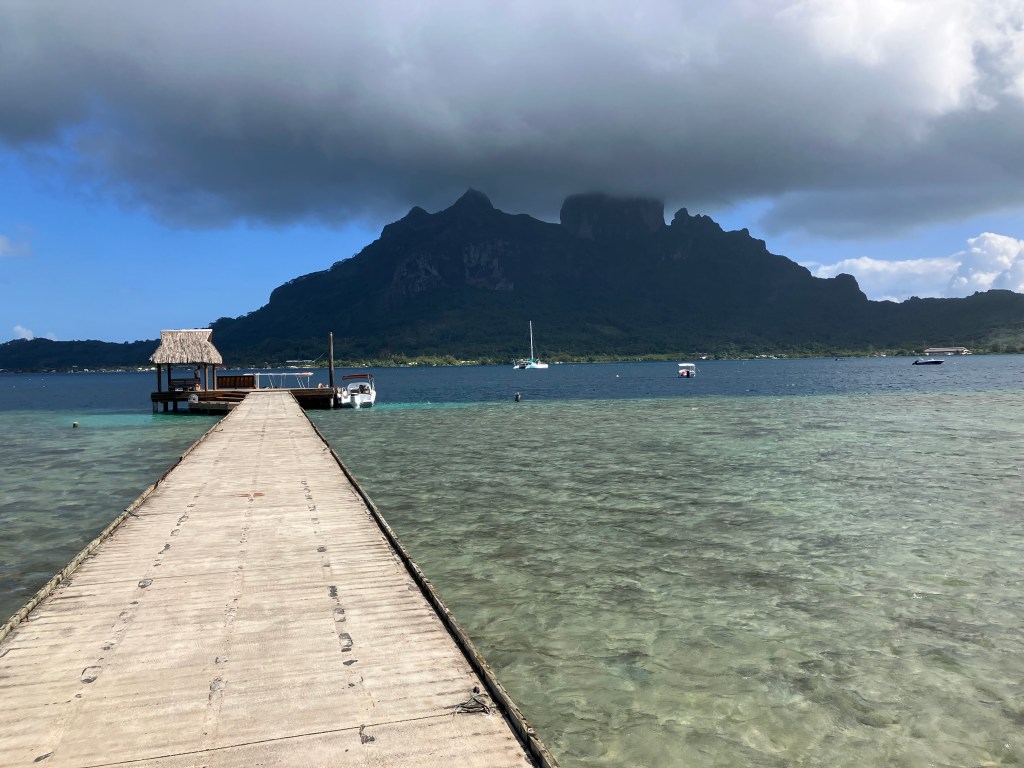
And it is. The 727-meter extinct volcano Mt. Otemanu at the center of the island has the shape of a sabretooth tiger fang from some angles. The lagoon wraps around the island like blanket of blue. The airport is on the islet of Motu Mute and from there I took a ferry ride to the main town of Vaitape.
Not doing much is as much as you should do

Not doing much of anything is the whole point of visiting Bora Bora. I stroll on the boardwalks of hotels with overwater bungalows; gaze at a menagerie of fish while my feet sink into the silky sand; visit the celebrity restaurant hangout of Bloody Mary’s. No celebrities, but plenty of tourists drinking and dining there at inflated prices on the chance that they might see one. A wooden tiki with a red elongated tongue seems to be mocking them. Sunsets are spent stepping away from a chilled glass of Tahitian Hinano beer at the Bora Bora Beach Club and wading into the pristine blue waters of Matira Beach and waiting, just waiting patiently, for the sun to set. Somehow that never gets boring or repetitive. If Bora Bora is a musical ensemble it would be a string quartet.

I realize by the end of my trip that unlike the Inuit peoples the Polynesians don’t need so many words to describe the overwhelming shades of blue that colour their seas and lands. After all, how can they invent so many words when the scenery leaves you speechless. French Polynesia is no perfect paradise but at times it comes close.
How to get there:
Air Tahiti Nui, a first rate airline, is the national carrier of French Polynesia. Its customer service staff are the friendliest and most helpful I’ve ever encountered.
Places to stay:
The hotels I stayed at are all excellent, though pricey. Hotel Maitai in Bora Bora is laid back and rustic with a great location near Matira Beach. Hotel Manava in Moorea is a polished French resort. Hotel Intercontinental in Tahiti has spectacular views of Moorea and its own lagoon.

Places to eat:
The roulettes at the Papeete wharf are affordable places to eat fresh food. Kaylakea Moz cafe in Moorea serves a huge portion of poisson cru for about $15. Bora Bora’s cafes serve pizzas and local fish at prices that don’t break the bank. Hotel restaurants are incredibly expensive. Unless you’re on a package tour it’s best to avoid them to stretch your dollars.
Tours:
Taxis and car rentals are very expensive. Tours are a more affordable way to see the sights. Moorea Seafari Cruises has an incredible full day snorkelling and boat tour. The captain is one of Tahiti’s leading singers.
Currency:
The currency is the French Pacific Franc. One USD is about 107 CFP.

Published in Asian Journeys magazine, August-September 2023
 Maybe Next Trip
Leave a comment