
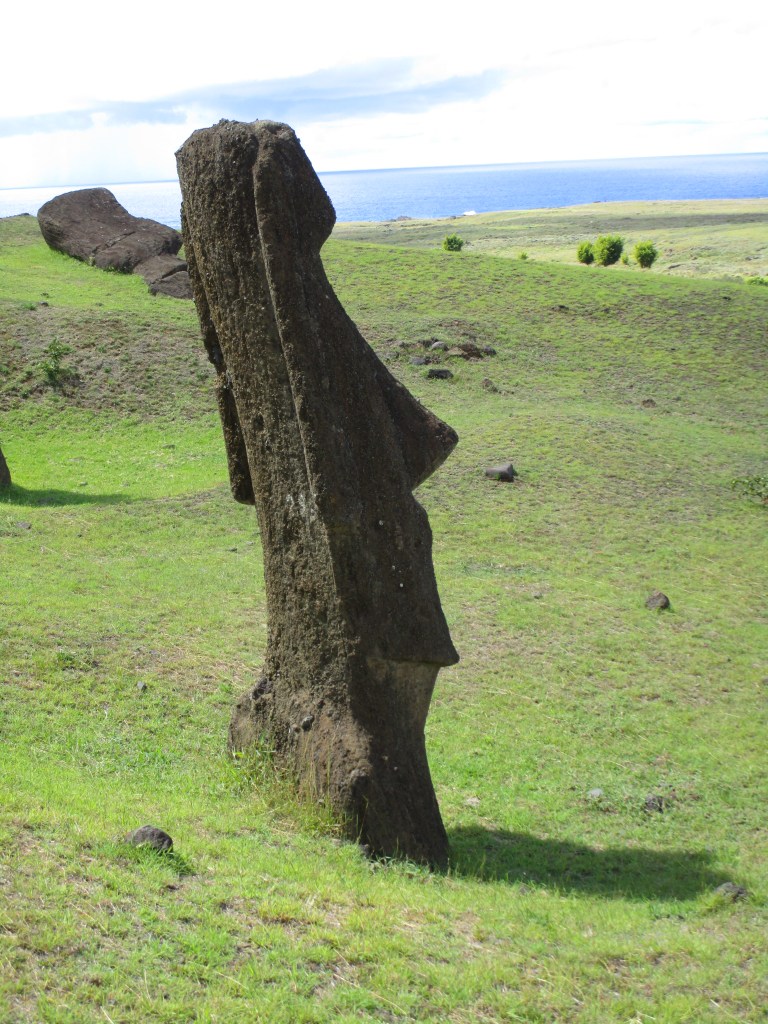
The first thing you notice about Easter Island’s moai, the iconic volcanic stone statues modeled after stern all seeing elders, is that they look inward. I was struck by that because they seem to stand sentry over the island and all the sentries that I have ever seen, in person, movies and artwork, always look outward. That’s because the threat is always from without. In the case of Easter Island, 2,075 kilometers from the nearest inhabited islands, Pitcairn, and one of the most isolated places on earth, there was no credible threat for centuries from the outside world. What ripped apart this remote outpost of humanity was tribal competition for scarce resources that led to grave civilization and moai toppling conflict. The wooden moai kavakava statues, with their emaciated bodies and visible ribcages, are an indication of this island’s traumatic past. What Easter Island’s moai seem to be telling us with silent, somewhat aloof gazes is that what ailed this idyllic land could be a harbinger for the rest of us. Literally, all of us.

Not Near Anywhere

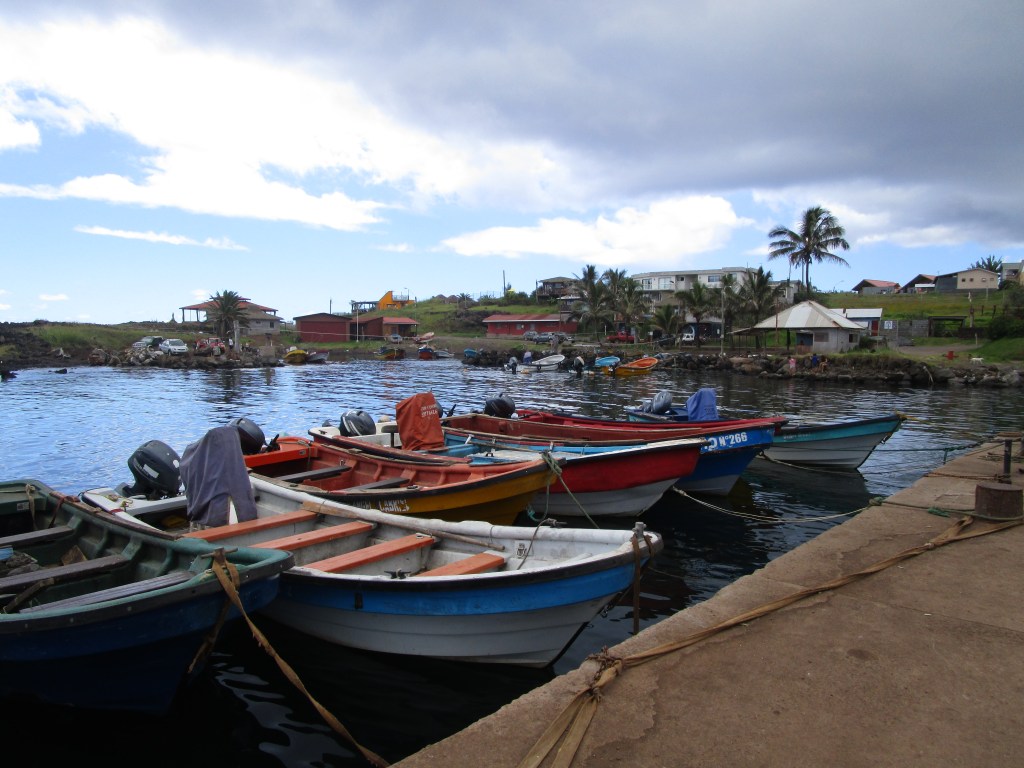
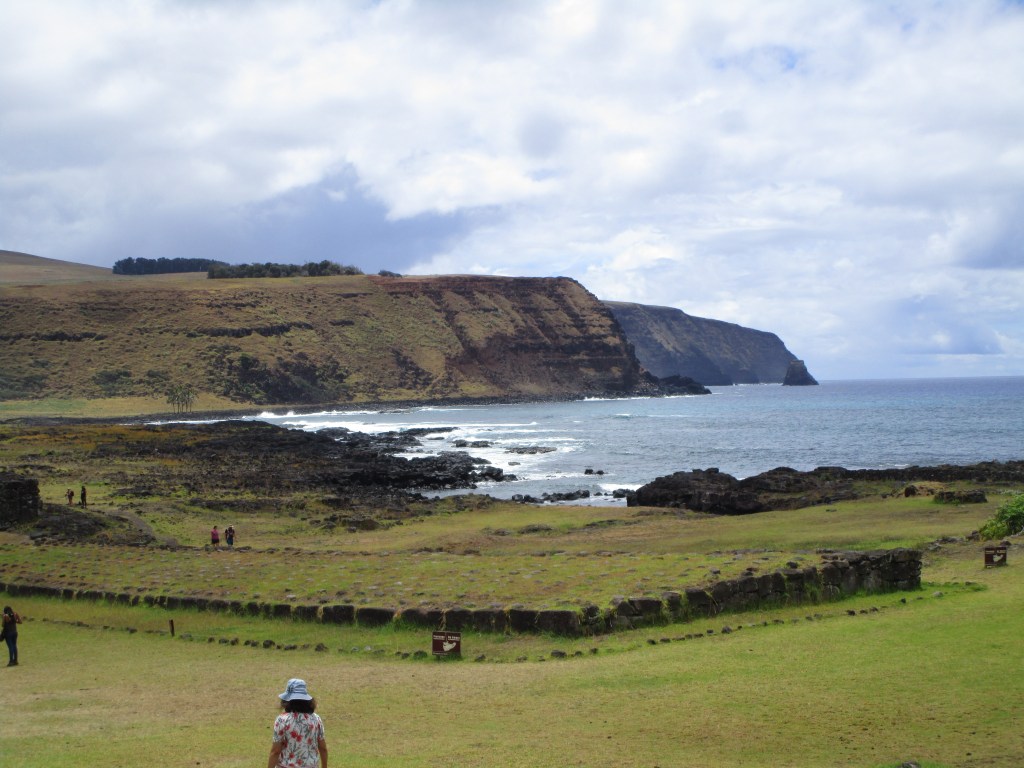
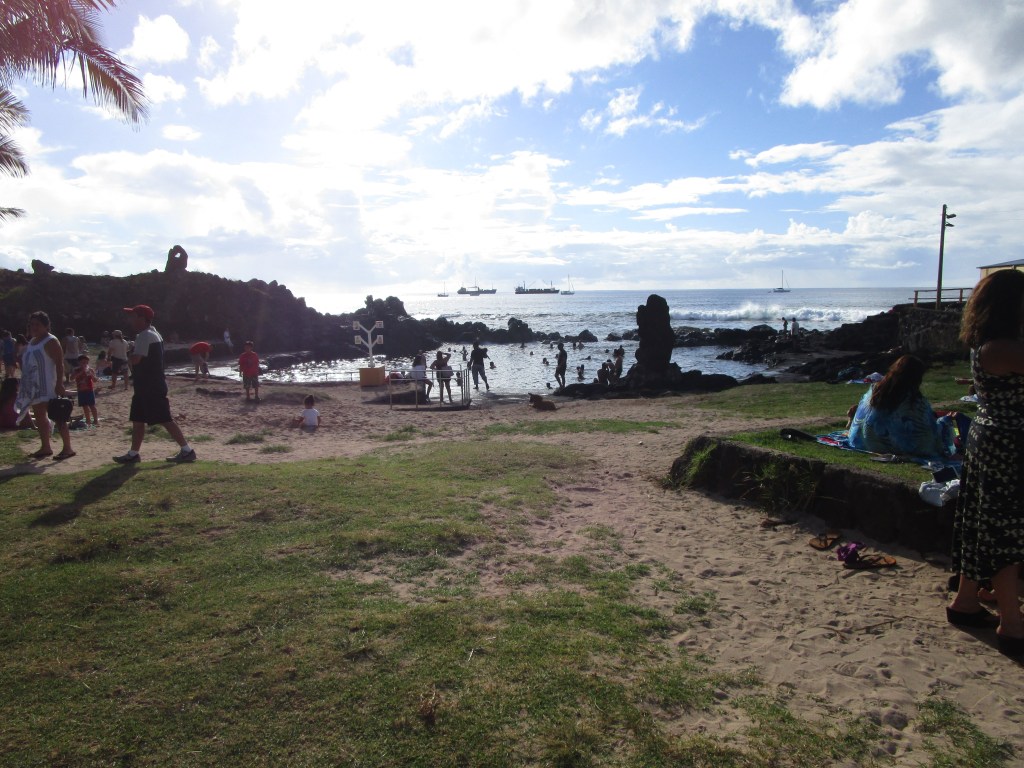
A UNESCO World Heritage site, Easter Island, a part of Chile, is so far from anywhere else that you have to really, really want to visit to get here. Only Latam Airlines flies there, landing at a runway that was built to accommodate the Space Shuttle in case of an emergency. The five-hour 3,756 kilometer flight from Santiago is over water, only water, once it leaves South America’s coast. The tropical triangular shaped island one fifth the size of Singapore, 22 kilometers long by 11 kilometers wide, with inactive volcanoes anchoring its three corners, sits serenely in what seems like an endless undulating azure ocean. Black volcanic cliffs drift downwards to rocky coasts and the lone powdery white sand beach, Playa Anakena, where moai turn their backs on bathers. With a population of about 7,000 and just one town, Hanga Roa, hugging a small harbor of fishing boats and a swimming area where children frolic in clear water, it really is a get away from it all destination in the most extreme sense. Internet connections, when available, are weak and slow at best. Disconnecting from the rest of the world though unclutters your mind to try and connect the dots in this mystic, mysterious land that poses far more questions than there are answers.

Ruinous Conflict
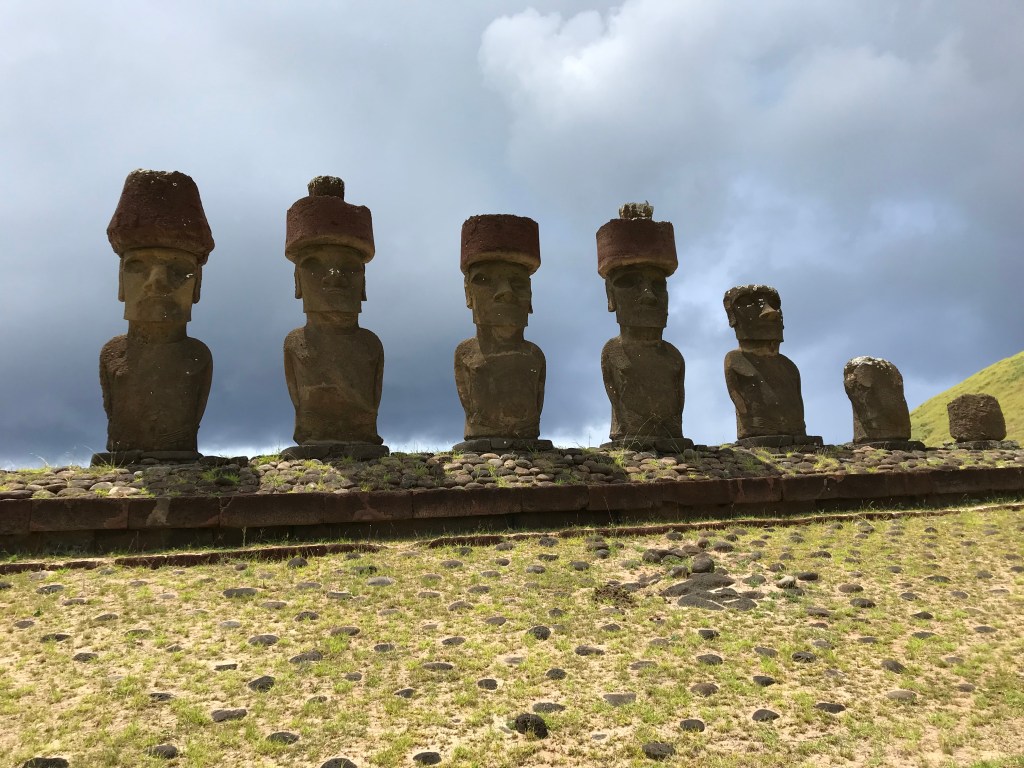
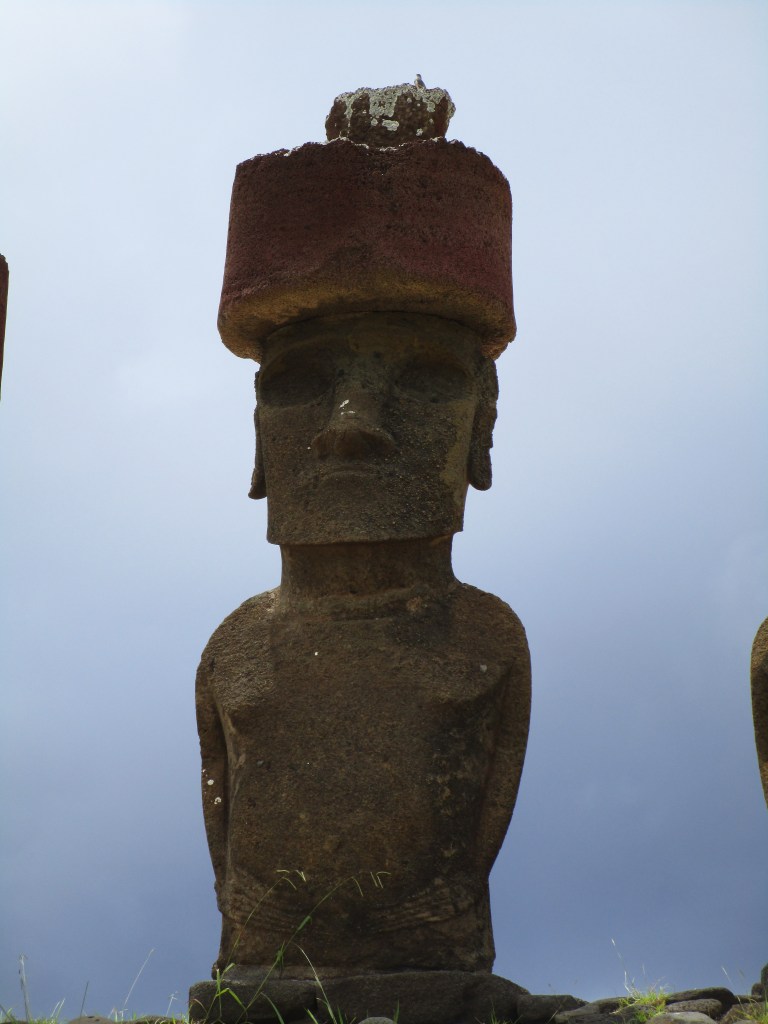
Known as Isla de Pascua among Chileans and Rapa Nui among the islanders, it was settled around the 5th century AD. No one is quite sure about the date though. Hotu Matu’a was the first leader of the Hanau Momoko people. Known as the “short ears,” they shared the island with the Hanau Eepe people, known as the “long ears.” After centuries of peaceful coexistence where they created the immense moai that they transported to huge ahus, or altars, where they were worshipped, a war of existential annihilation took place sometime between the 16th and 18th centuries. Did it occur because the island had been had been stripped of its economically important forests? Or, were too many people squeezed onto too small a land to support their population? No one really knows although there are plenty of theories. Moai were tipped onto their faces or backs, colossal rust-colored top knots known as pukao rolling away from the altars and sinking over time into the soil. Most of this conflict occurred before the arrival of the Europeans. It was known as the Huri Moai period.
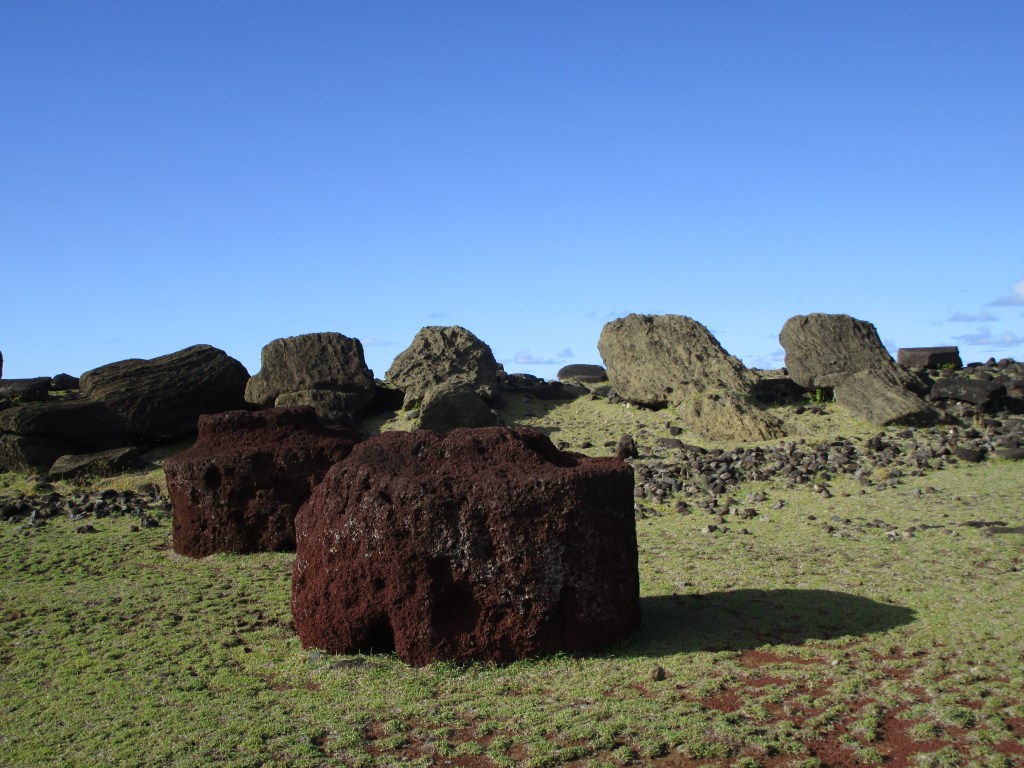
Dutch admiral Jacob Roggeveen named the island on Easter Sunday 1722 after landing there. Felipe Gonzalez de Haedo claimed it for Spain in 1770. In 1774 English Captain James Cook saw the similarities between Rapa Nui and the rest of Polynesia. He also reported on the toppled moai, damaged ahu and a people he felt were broken by a long, vicious conflict.
Birdman Cult
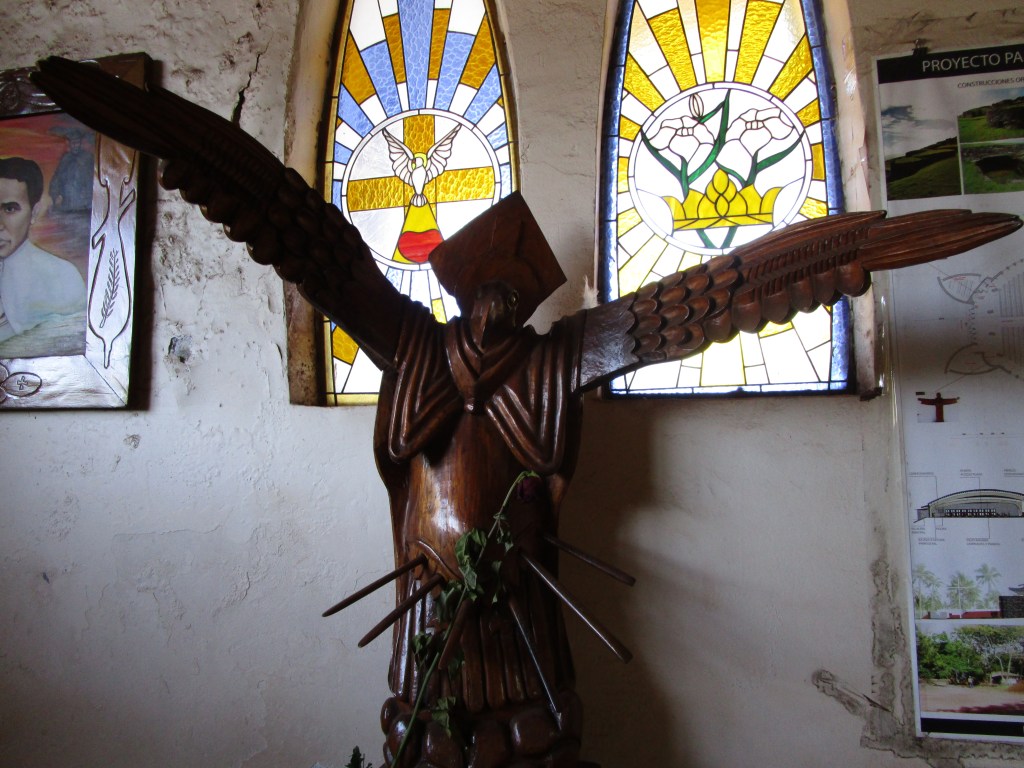
Cook observed that the moai, whose spiritual strength was derived from ancestor worship, had lost their power and were replaced by the Birdman cult. Every year at the cliff side settlement of Orongo, warriors climbed down a thousand foot drop and swam to a rocky outcrop called Moto Nui where they collected the first eggs of the season from the sooty tern. The first warrior to collect an egg then swim and climb back to Orongo was anointed the Birdman. He went into seclusion for a year and the tribe he came from was considered the most powerful during his reign. The annual egg collecting contest led to many deaths with warriors falling from cliffs or being attacked by sharks. In the early 1860s missionaries ended the cult.
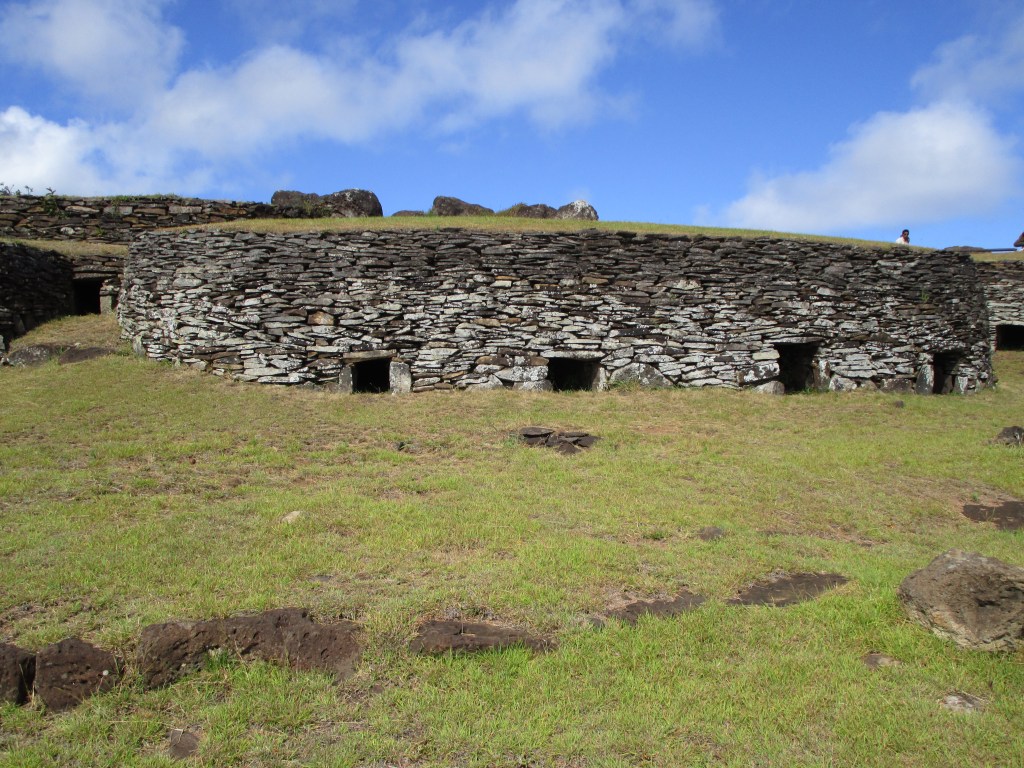
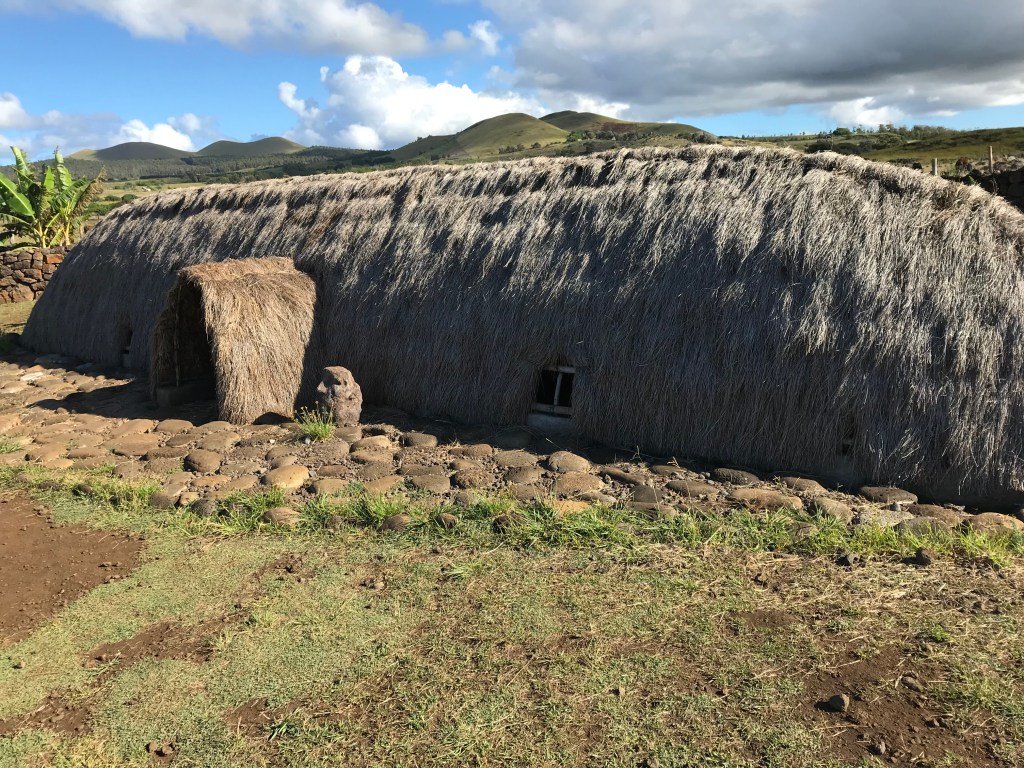
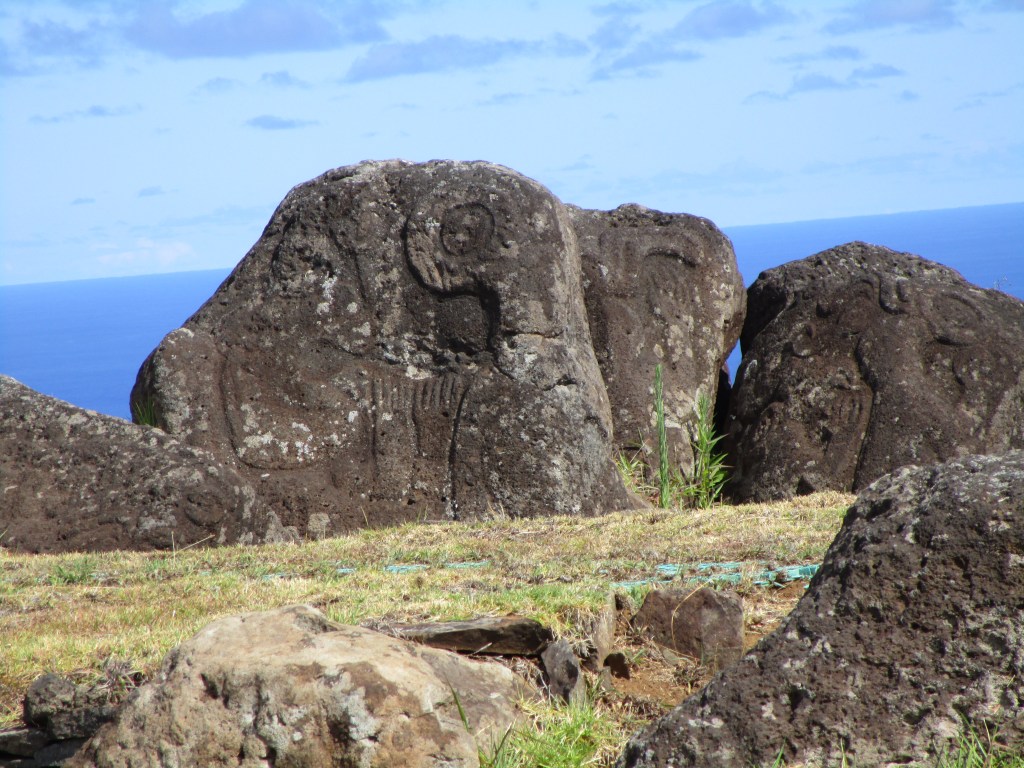
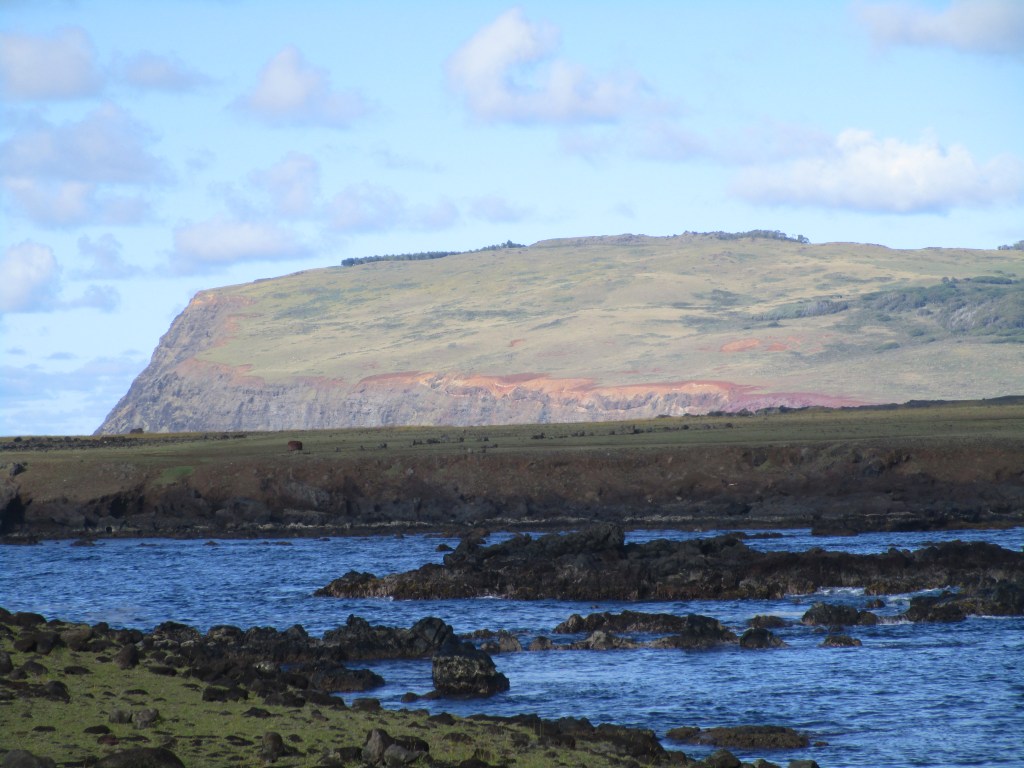
Today, the squat, elliptical-shaped stone dwellings of Orongo have been restored, clinging to the top of a wind whipped corner of the island’s largest volcano, Rano Kau. Petroglyphs of bird figures are on stones leading to the volcano and the obstacle course that the warriors had to traverse during the annual competition. The volcano’s crater is filled with murky water and tortora reeds, giving it a swampy look. It’s easy to see how this forbidding place imparted a sense of foreboding to those who didn’t participate in the annual competition. And those who did.

The island’s tragic history continued after the ending of the Birdman cult with a raid by Peruvian slave traders in 1862 followed by a smallpox epidemic that reduced the population to only 111 by 1877. Chile annexed the island in 1888.
Moai as Masters of Yesterday and Today

While the Birdman cult with its primary god of Makemake gave the islanders emotional and spiritual wings to escape from a war devastated land, it’s the moai that reminded them of their ancestry. And what went right. And what went wrong.

While moai can be seen all over the island, the ahus and the statues that stand or lay on them are primarily found along the coast. Access to the sea was a source of power for the ruling classes. In the site of Papa Vaka, petroglyphs of sea life such as tuna and sharks, as well as fishhooks and canoes, indicate how important the sea was to the Rapa Nui people and why locating moai near it mattered.

Those inward looking moai seemed to be supporting the temporal rules of their flesh and blood descendants. Their role was to visibly establish the ancestry of each tribe as well as to demonstrate the power and organizational skills of the tribe. Size equated with power. After all, if you wanted to go to war with a tribe, how confident would you be if you knew those moai had their back and not yours? And moai are intimidating in size. The average statue is four meters high and weighs thirteen tons. And they’re made of one piece of stone. Their heads, noses, ears and arms are proportionally too large, at times elongated, making them seem appear even larger. The statues generally only show the torso.
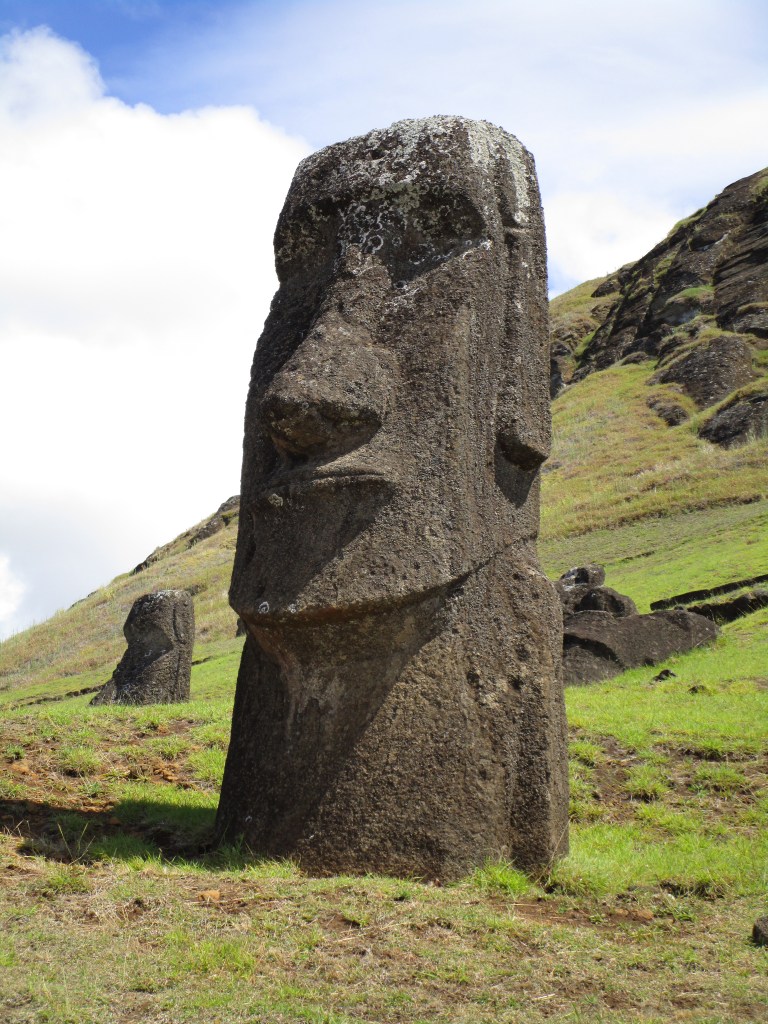
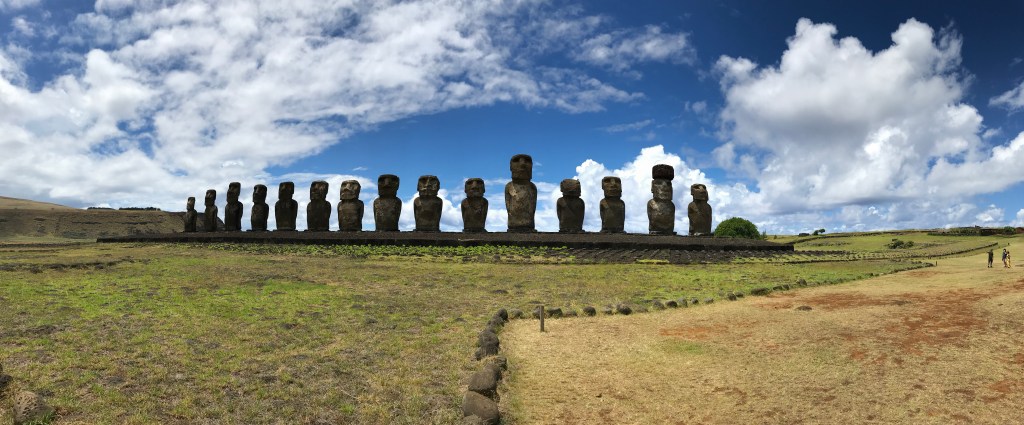
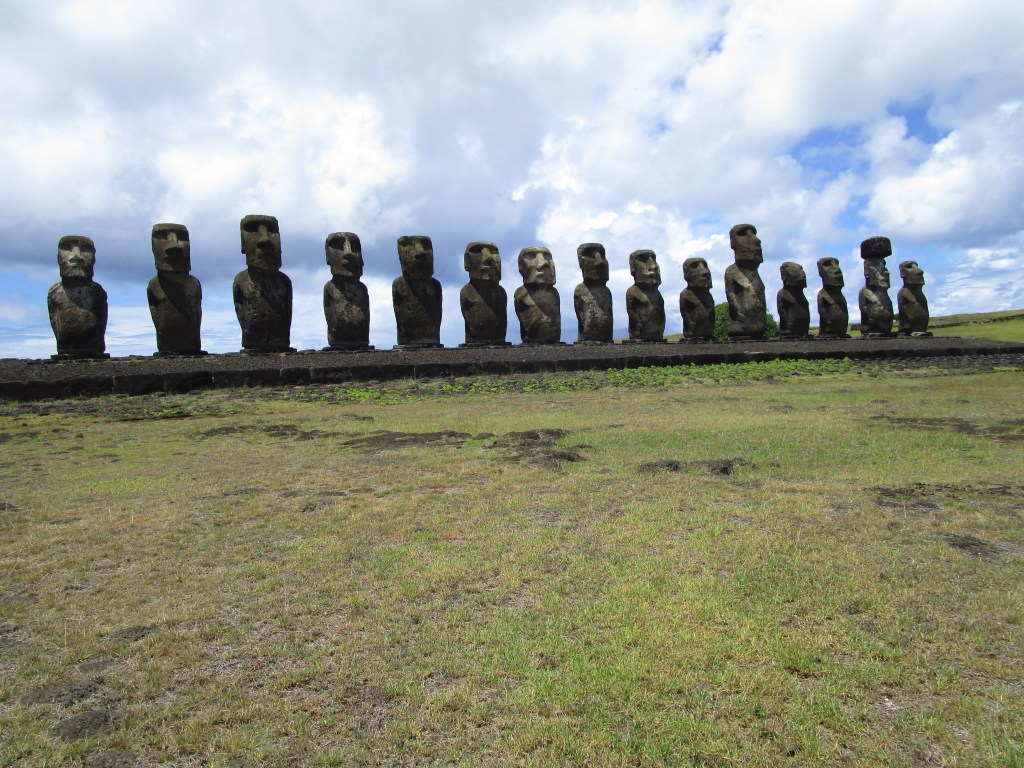
A site where the moai make you contemplate what really happened here is Ahu Tongariki, the island’s largest ahu, with fifteen imposing standing moai. They seem like a mini-army of not from this earth superheroes that dwarf you. Long, interlocking fingers etched into the stone at the bottom of the statues contribute to this otherworldly look. How could the civilization that produced this not exist anymore? Nearby, at the site of Te Pito Kura, is the largest moai ever moved. At nearly 80 tons and 10 meters in height with a pukao that weighs 12 tons, it was one of the last statues knocked down, which happened in the late 1830s. It lays face down in the ground as if it was pushed from behind.
South Seas’ Sphinxes
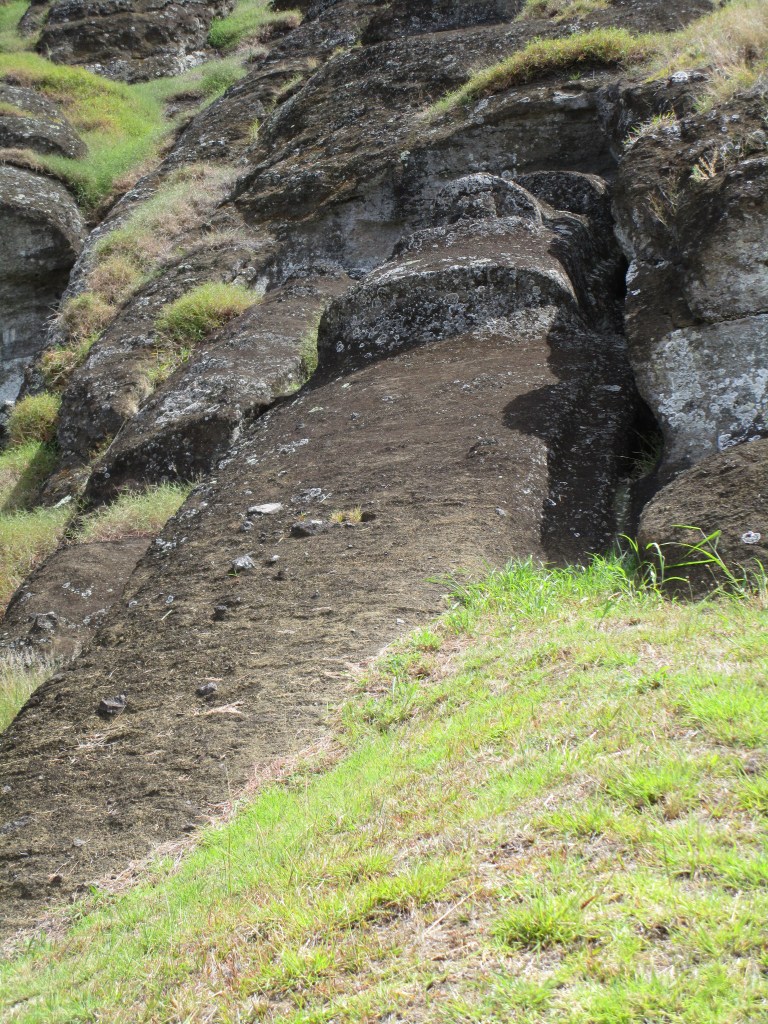
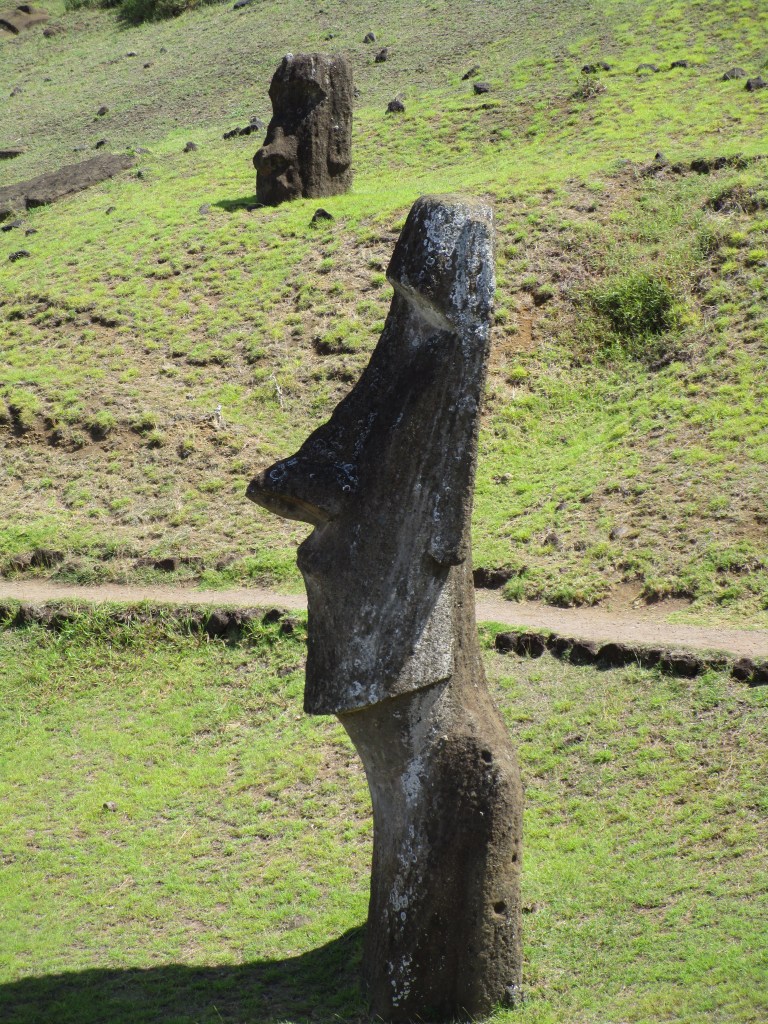
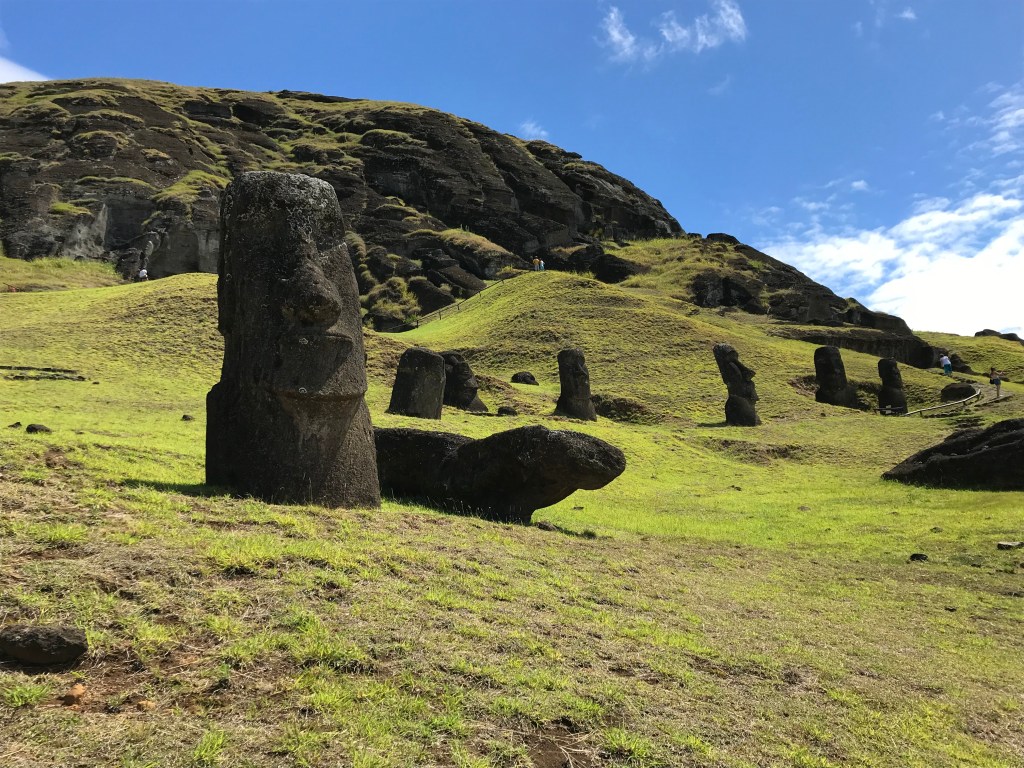
From both Ahu Tongariki and Te Pito Kura you can see the quarry workshop of Rano Raraku. Strolling over the grassy slopes of the huge site with its dozens of moai displayed in a haphazard way is to experience the center of religious megalithism in Polynesia. It’s a surreal place where the artistry and ambition of the island’s ancient inhabitants left an indelible mark on the island and the world. Each moai communicates an opaque, inscrutable sense of authority like South Seas Sphinxes. Visible too are moai that were left unfinished as they were being brought to life from the rock face. The largest of these unfinished moai is 21 meters high and estimated to weigh 270 tons. What stopped it from being moved? Size? Or, war?

And, of course, you can’t help asking the question that thousands before have: How did a low tech, small population of maybe 17,000 people move those colossal stone statues? Did they lay the statues on wooden sleds that were rolled on tree trunks? Is that why the moai backs are always straight and the island was stripped of its forests? Or did they “walk” them by moving each part of the statue bit by bit with ropes? The island isn’t flat which made getting them anywhere difficult no matter what technique they used. No one knows.
Where the Island’s History Began
After a day of visiting moai I ended up at the place where the island’s history began, the palm tree fringed beach where legendary founder Hanu Motu’a stepped ashore after a journey of thousands of miles over open ocean in a canoe. An ahu with five moai and another with one are at the edge of the beach, iridescent water lapping the shore behind them. Their presence conveys a haunting sense of the past that is ever present.
As I soaked in the ocean I wondered what was next for this island. Tourism was bringing wealth but also tensions. An estimated 100,000 tourists visit every year, which doesn’t sound like a lot until you realize that’s 14 times the size of the population. For a small island with little land to dispose of waste and a need to import much of its food, tourism helps many people. But not all.
The moai, impervious to the tourists who gape at them, seem to know that when resources are limited everyone must learn to live together. Or else, apocalyptic warfare can erupt. That happened before on Easter Island. And on an earth with diminishing resources, increasing population and pollution, it may happen to the world at large. Maybe that’s the real reason the moai turn their backs on the world. They don’t want to witness what may happen next.
It’s time to learn from Easter Island before it’s too late.
Travel Tips:
Seaview Restaurants:
As Easter Island is surrounded by ocean a great dining option is a meal with a seaview. Two restaurants that hit the spot are:
Au Bout du Monde: elegantly prepared seafood.
Restaurante Hani-Hani: a casual restaurant with innovative sushi and pizzas.
Where to Stay:
There are numerous good quality guest houses within the town of Hanga Roa. They are easily booked on Booking.com.

Permit:
While Easter Island is part of Chile, the Latam Airlines flights depart from Santiago airport’s international terminal. You have to fill out a Unique Entry Form to the island either online prior to flying or at the airport. It’s part of a 2018 policy instituted to manage the number of visitors to the island for a more sustainable environment. In addition to the form a return ticket and a confirmed accommodation on the island is necessary.
Admission to the Parque Nacional Rapa Nui:
You can purchase the ticket for the Parque Nacional Rapa Nui at the airport before you collect your bags. The ticket is USD80, good for ten days and gives you access to all of the sites on the island.
Getting there:
Only Latam Airlines flies to Easter Island from Santiago and Papeete, Tahiti. Some cruise ships also stop there.

Published in Asian Journeys magazine, April-May 2019
 Maybe Next Trip
Leave a comment