A trip to Jakarta is usually a chore. Traffic can be so bad that you’ll spend more time commuting to a sight than you did at the sight itself. With a little digging, though, the city has some one-of-a-kind cultural gems.
In Kota, also known as Old Batavia, are a number of museums in stolid Dutch colonial buildings better suited for northern European winters than the tropics. The Fatahillah, Shadow Puppet, and Ceramic museums all sit around a picaresque cobblestoned square where you can almost forget the jammed traffic in the streets around you. Two of the most engaging museums though are nearby and next to each other: The Bank of Indonesia and the Bank Mandiri museums.
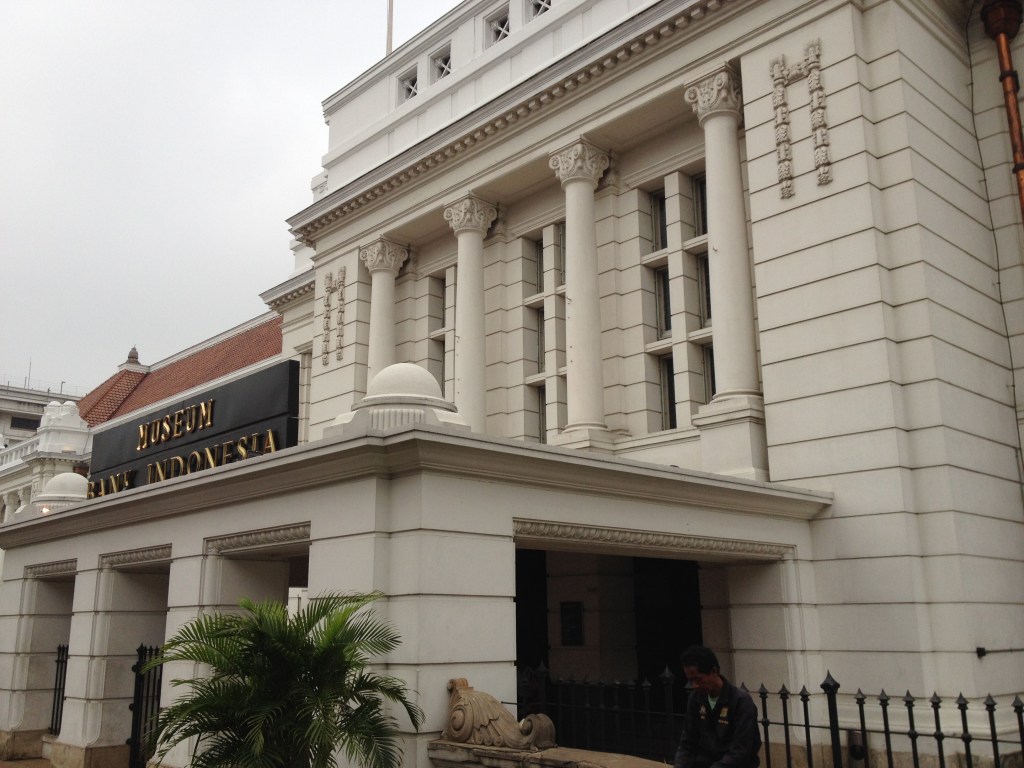
The Bank of Indonesia museum is the flashier of the two, with informative exhibits that underline its role as a pillar of a volatile ever-evolving society. After three years of meticulous restoration, it was opened July 2009.
MUSEUM WITHIN THE DE JAVASCHE BANK BUILDING
The museum sits within what was once the The De Javasche Bank. That bank, also known as the Bank of the East Indies, was founded in 1828 and moved into this building by Dutch architect Edward Cuypers, in 1909. As the colonial central bank it played a stabilizing role through the Japanese occupation, the 1945 declaration of independence until finally the Indonesia government nationalized the bank in 1953 and turned it into the Bank of Indonesia.
While the replacement of De Javascche Bank was a nationalist move, it is curious to note the original Bank of Indonesia logo was closely aligned with the De Javasche logo: the letter J was changed to the letter I without altering any other design elements. So much for continuity.
EARLY 20TH CENTURY DESIGN
For early 20th century design aficionados, the museum is a treat. The lobby has tiled azure pillars supporting a high vaulted ceiling. Through an archway is the old teller system. A bank customer would go into an enclosed room and do their transactions through a wire mesh.
The exhibits take you through Indonesia’s mercantile history. Life size mannequins of laborers loading sacks of spices for shipment to Europe for the VOC company; Dutch colonialists having dealings with pigtail wearing Chinese; even soldiers firing on the Japanese in a World War II scene. The message was clear: the bank and nation’s history are intertwined.
STACKS OF GOLD BULLION
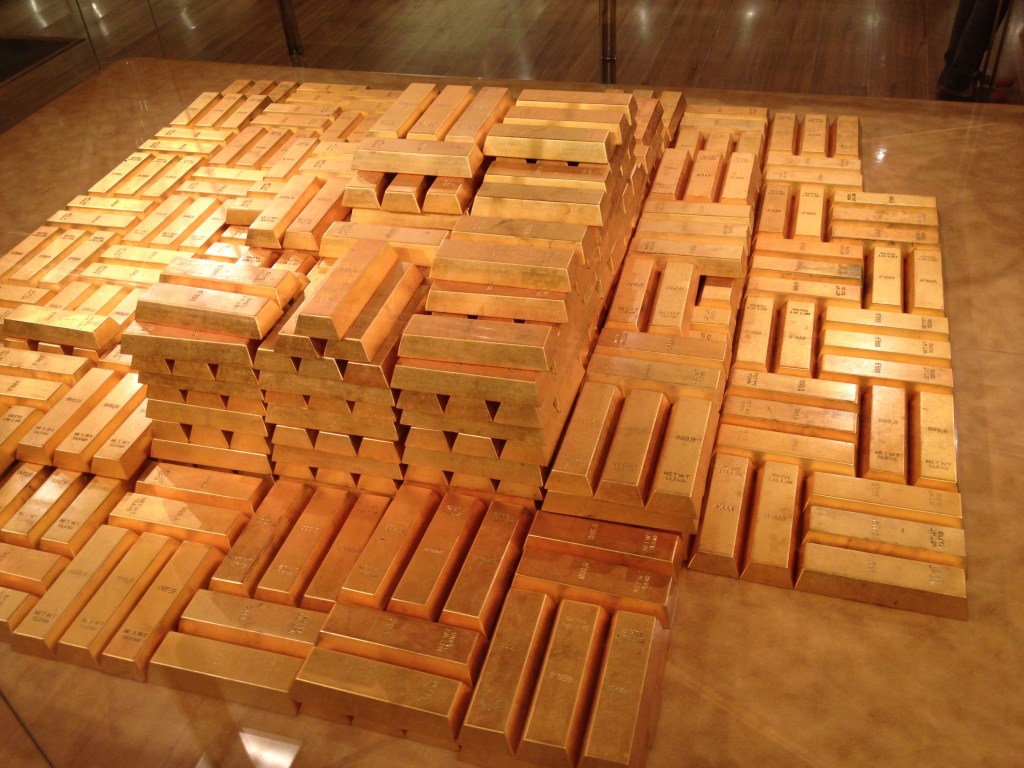
And, of course, no visit to a central bank is complete without seeing its gold bullion. Within a clear plexiglass enclosure are stacks of gold bricks. And nearby, inside a spacious walk-in vault, are displays of Indonesian money from the 14th century to the present.
While I like history, the restored to its original grandeur building was worth lingering in: the bank’s boardroom with its malachite green-tiled walls and intricate stained glass windows, a grandfather clock in the rear; the huge open-air courtyard covered in decorative tiles and potted trees surrounded by the bank’s white-colored pillars and covered interior walkways. The building projects the stability it sought to achieve.
BANKING IN THE 1930S
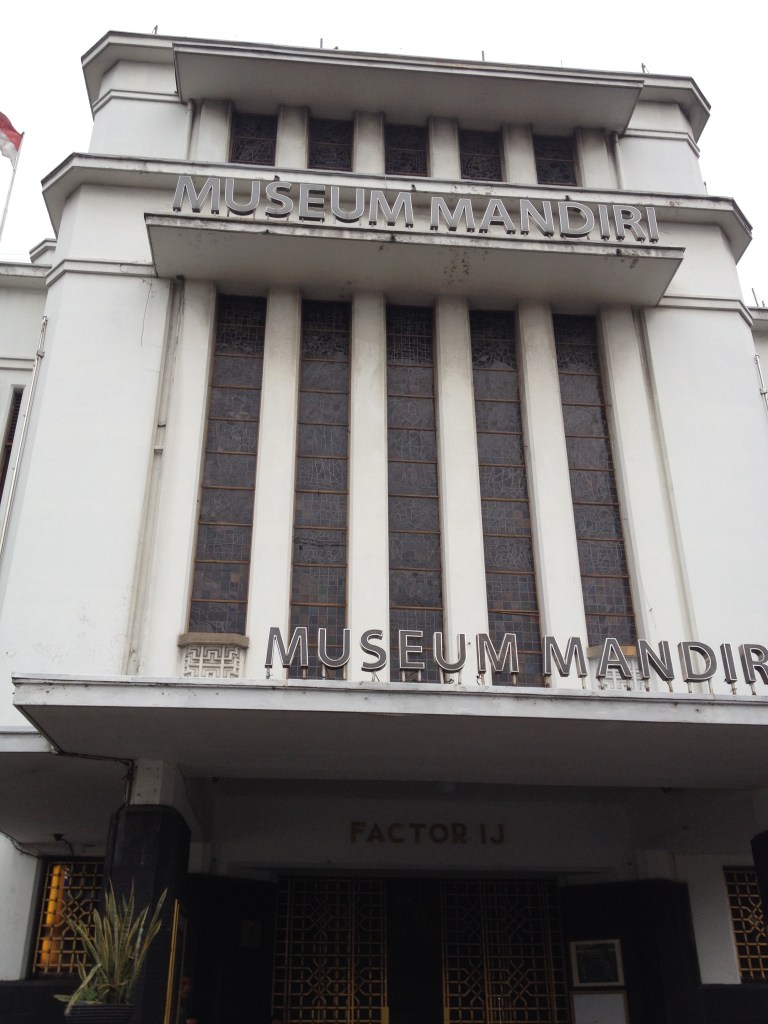
While the Bank of Indonesia museum projects a stolid national institution, the Bank Mandiri museum next door is more lively, a sort of this is how banking really was in the 1930s. The building originally was the Netherlands Trading Society. Designed by Dutch architects JJ de Bruyn, A.P. Smits and C van de Linde in an art deco style it was opened in 1933. The building was nationalized in 1960 to become part of the Bank Export Import Indonesia until finally through a series of mergers it became Bank Mandiri in 1999.
The museum has a cluttered hodgepodge collection with teletypes from various eras, paper shredders, logbooks, securities, antiquated computers, old currency, and colonial era antiques.
ART DECO AT ITS BEST
Fans of art deco will be delighted. As you walk in the massive building you see a 50-meter long polished counter where a lot of the bank business was conducted with customers. Behind the counter bank officers sat at elegant wooden desks on polished red-tiled floors. You can stroll amidst the exhibits and mannequins to get more of the bank experience. The walk-in vault in the basement was the highlight. There were walls lined with safe deposit boxes, and a mannequin bank officer and his female assistant going through a log book while soldiers in wide-rimmed hats stood nearby.
PANORAMA VS. NOSTALGIC SNAPSHOT
While the Bank of Indonesia museum is structured and organized as a panorama walk through history, Bank Mandiri is a snapshot focused on a nostalgic 1930s experience. Two sides of Indonesia banking: one depicting the nation’s history; the other it mercantile spirit. Both set in stunning architectural examples of the early and mid-twentieth century. A visit to both will give you a perspective of Jakarta that will be refreshing after a long bumper to bumper drive.
Published in the April-May 2015 issue of Asian Journeys magazine
 Maybe Next Trip
Leave a comment