
No, Christmas Island isn’t the suburb where Santa Claus lives. But he might consider vacationing there during the off season. Located 360 kilometers from Java, 1,400 kilometers from Australia, and just this side of nowhere, Christmas Island is as remote as they come. Named by Captain William Mynors on Christmas Day in 1643, this poodle-shaped island has been ruled by Britain, Singapore and now Australia. Once famous for its phosphate mining, now it is known mainly for its casino and its crabs.

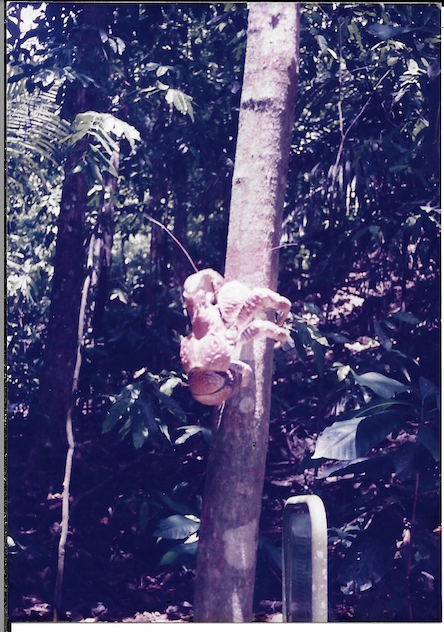
Last month, 140 million red crabs marched from the rainforest to the sea to mate. It’s the annual Indian Ocean equivalent of the wildebeest stampede on the great African savannah. The crabs have a certain cuddly quality, although you wouldn’t want to put them under the Christmas tree as a gift or tuck them into bed next to your kids at night.
On the bus ride from the airport to the island’s only resort, my four-year-old and I looked intently out the window for any sign of crawling life. We spotted a lonesome crab shortly after the bus left the airport. Then as the bus descended steeply down a road cut through the jungle, we started to see a lot of crabs – hundreds, not yet thousands – and crab carcasses. The smell of rotting crabs reached us in the bus. “Daddy, it stinks,” my daughter said. The jungle smelled more like a fish market at the end of the day. While the Australian government built crab tunnels – like cattle grids – so that crabs can get to the other side of the road in one piece, evidently not all the crabs decided to take the safe route.


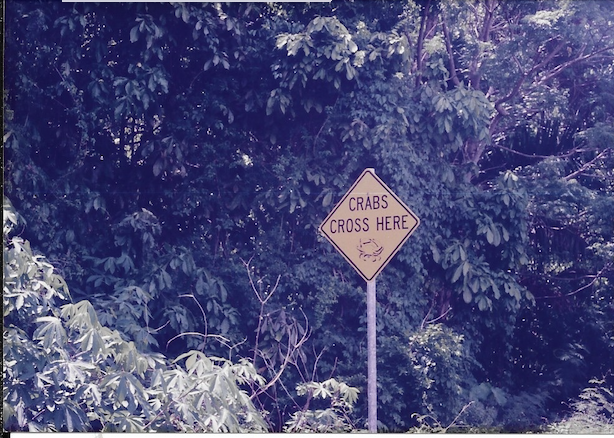
The Christmas Island red crab is not very big – about the size of a man’s fist – and covers about five feet a minute. No way they were going to get out of the way of an oncoming car or bus. A yellow warning sign that says, “Crabs cross here” could not prevent thousands of them from being smashed to smithereens. Although cars and buses really do try to avoid hitting them. For one thing, it’s not pleasant killing a crab. For another, the claws sometimes puncture tires. Try getting a new tire in the middle of the Indian Ocean.
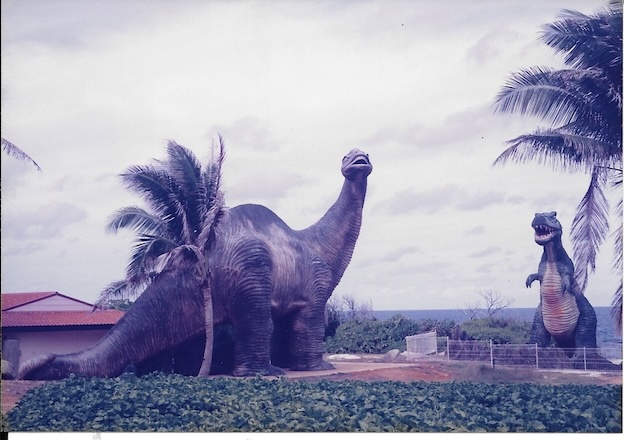
At the resort there was a smattering of crabs across the driveway, across the lawn, along the walkways. Crossing in front of you, crossing behind you. Squatting in front of doorways. Hovering around porches. The resort was a pleasant enough place, perched on limestone cliffs that took a non-stop battering from the sea. It even had a casino meant to attract Southeast Asian high-rollers. At the resort’s swimming pool, which had a white crab guard to keep the crabs from swimming with the guests, frigate birds were constantly dive bombing for a drink of chlorinated water. Away from the pool, near the ocean, were two life-size statues of dinosaurs – a brontosaurus and a tyrannosaurus. When the ocean swells hit the limestone cliffs surrounding the resort, the roar passed through the open mouths of the dinosaurs. Disney World it wasn’t.

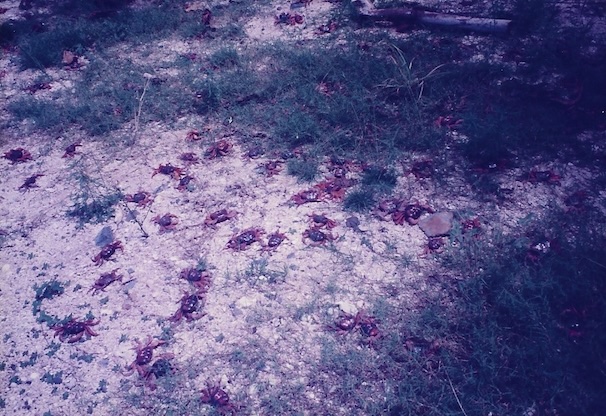
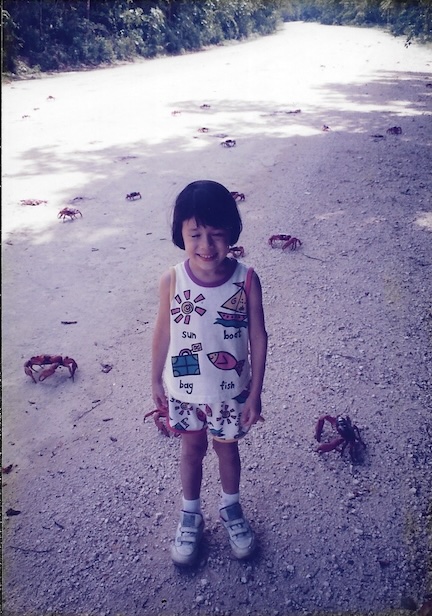
On a drive through the jungle-covered park that covers two-thirds of the island, we saw a large crab migration. We jumped out of the four-wheel drive to get amongst the crabs. They were everywhere, all over the road, swirling around our feet, carpeting the jungle floor, crawling over each other, fighting each other, even cannibalizing the carcasses of crabs that didn’t make it. My daughter stood in the middle of this moving red carpet and posed, smiling, for one of many photographs. “Daddy, the crabs are my friends,” she said, holding her wide smile effortlessly, as they moved harmlessly around her.
Santa may not call Christmas Island home. And he may not even vacation there. But for a little magic to stir a child’s heart, nothing beats the land of the crabs.
Published in The Asian Wall Street Journal, December 27, 1996
 Maybe Next Trip
Leave a comment