
If you’re in Miri, chances are you’re on the way to somewhere else. The second largest city in the Malaysian state of Sarawak, Miri is a crossroads and stopover destination. In my case we were heading to Mulu National Park from Singapore and needed to overnight there. But it’s also a good stopover if you’re driving from Kuching to Brunei. Miri is also popular with expats from Brunei who visit beachside hotels like the 5 star Marriott for the weekend with their families and a chance to drink some alcohol, which is not allowed back in Brunei.
Niah Caves for Rock Paintings or Bird’s Nest
But Miri is worth more than just an overnight or weekend stay. The Niah Caves are about an hour drive from the city. Human remains some 40,000 years old have been found there. It’s the oldest settlement in East Malaysia and Painted Cave has rock paintings over 1,200 years old. Bird’s Nest, that seriously expensive Chinese delicacy, is also harvested here from Swiftlet nests. So is bat guano. According to tradition, the local Penan tribe get to harvest the Bird’s Nest while the Iban the bat guano.
Lambir Hills National Park
Just 32 kilometres away is Lambir Hills National Park, a tropical rainforest with an astounding 237 different species of birds as well as wild pigs, gibbons, flying squirrels. There are great trails to get into the park’s terrain with its cooling waterfalls and bathing pools.
Birthplace of Malaysian Petroleum Industry
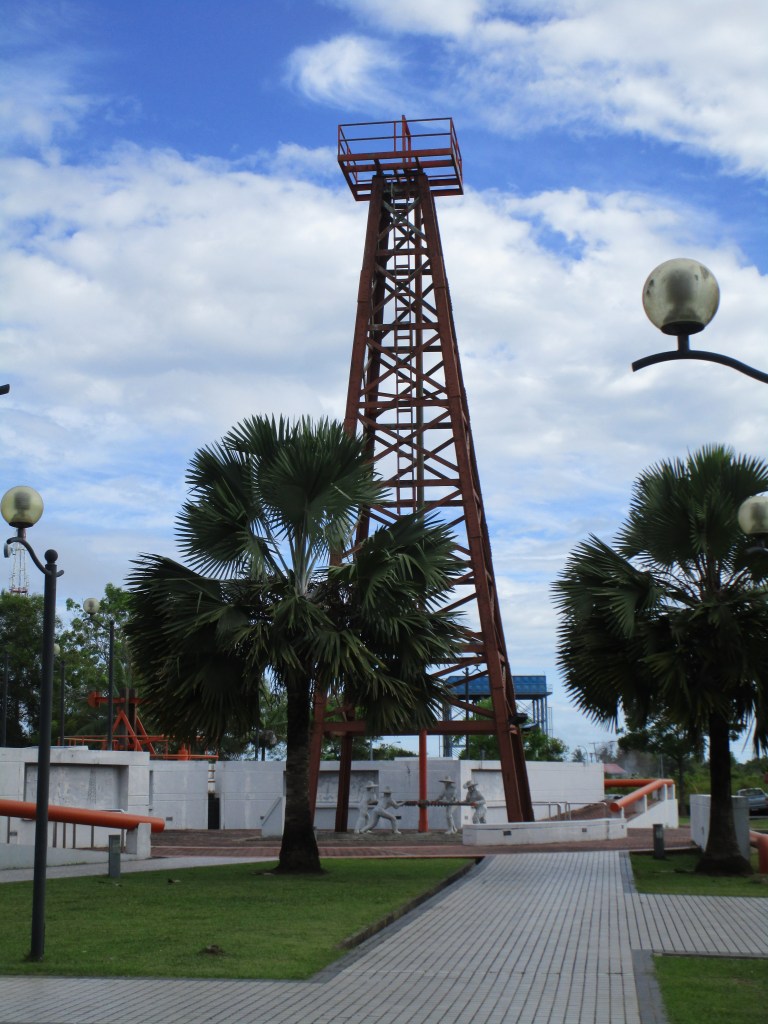
Miri is also where the Malaysian petroleum industry got its start, with the first well dug in 1910. The old derrick, called the Grand Old Lady, has been preserved. At its base are statues of Chinese labourers depicted as manually doing the drilling. Wrapped around it is a curving monument with panels describing the history of the industry in Miri. The sleek Petroleum museum just steps away is definitely pro-big oil and understandably so. The oil business built Miri and is its main income contributor. Opened in 2005 it goes in-depth into how the industry works, including a scale model of a drilling platform. When I visited there was an informative exhibit on the indigenous people in Sarawak. Outside the museum is a sweeping view of the city and the sea from its on the top of Canada Hill.
Ethnically Diverse
Of 27 ethnic groups in Sarawak, 19 are in Miri. Chinese is the largest followed by Iban, Malay and Melanau. The Miri Handicraft Centre showcases indigenous crafts including flutes, baskets, and kueh, a Malay dessert. It’s well a browse.
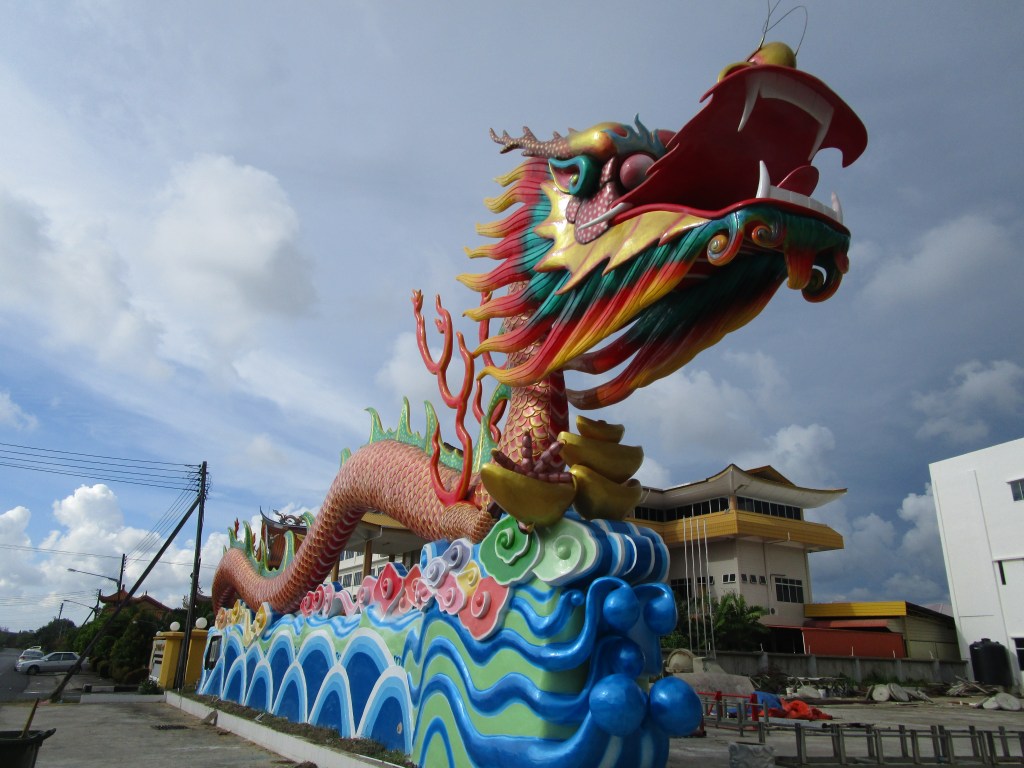
The San Ching Tian temple is the largest Taoist temple in Southeast Asia and well worth a look for its huge ceramic dragon.
Popular Dive Spot
Miri is popular dive spot with the Miri-Sibuti Coral Reefs National Park just off the coast at a depth of 7 to 30 metres. There are some wrecks that you can easily visit. It’s not as well known as other famous sites in Malaysian Borneo but you can quickly reach the park from Miri.
Why Seahorse City?
Why did I title the piece “Seahorse City”? Around the city are statues of seahorses: at a roundabout; a restaurant named Seahorse Bistro and a giant statue overlooking the sea. When I asked town’s people no one knew why the seahorse is such a commonly used symbol. But it is. So I thought, let’s call it Seahorse City. It has a nice ring to it. Especially for a nice stopover.
Published in Asian Journeys magazine, October-November 2015
 Maybe Next Trip