Tag: thailand

  • The Road to Myanmar’s Golden Heart

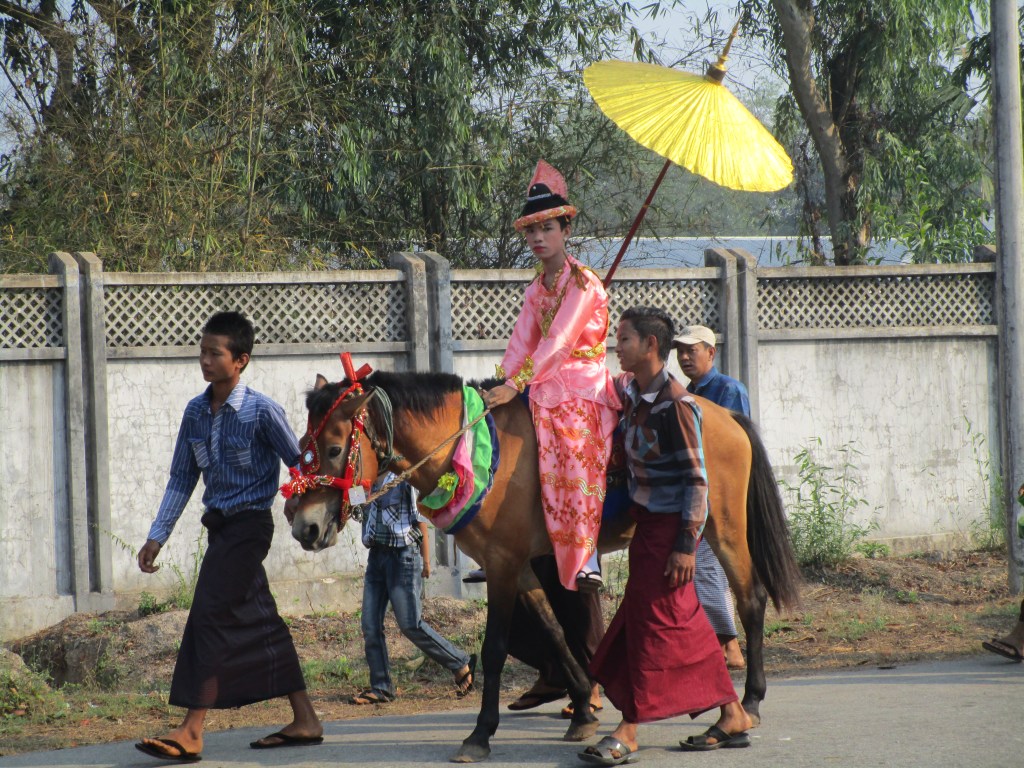
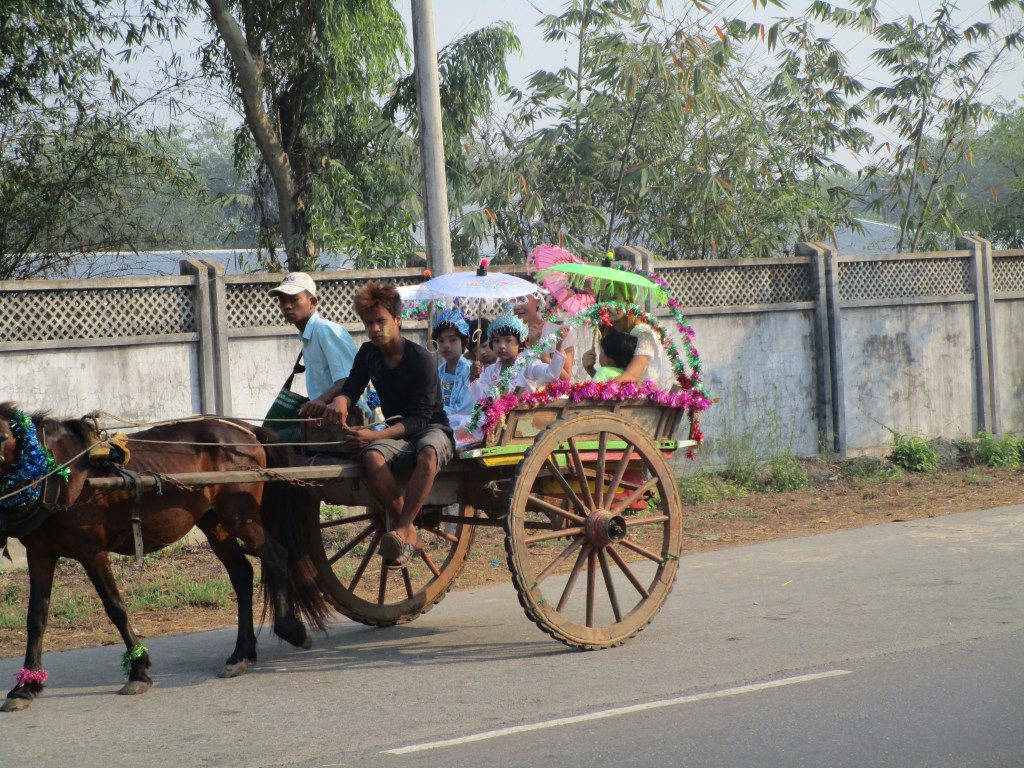
    I’ve been travelling to Myanmar since 1981 and it was quite unlike any procession I had ever seen: groups of men surrounding boys atop richly adorned horses and kept comfortable under the shade of golden parasols. The men, retainers more like, walked beside them in the baking March sun.  The boys wore lush embroidered silk outfits of pale pink or golden yellow, with headgear befitting a prince, while the men wore simple shirts and dark-patterned longyi.  Behind the boys were flower-bedecked horse carts carrying young girls under frilly parasols of pink, white, pale green. The procession stretched for hundreds of meters followed by a travelling band playing on a flatbed truck.
    BUDDHIST INITIATION RITES

    What my wife and I witnessed was part of the shinbyu, the initiation ceremony for monks that is a rite of passage for Buddhist boys in Myanmar. The first step is to re-enact the privileges of the Buddha as prince before he rejects the royal life in exchange for one of self-denial.

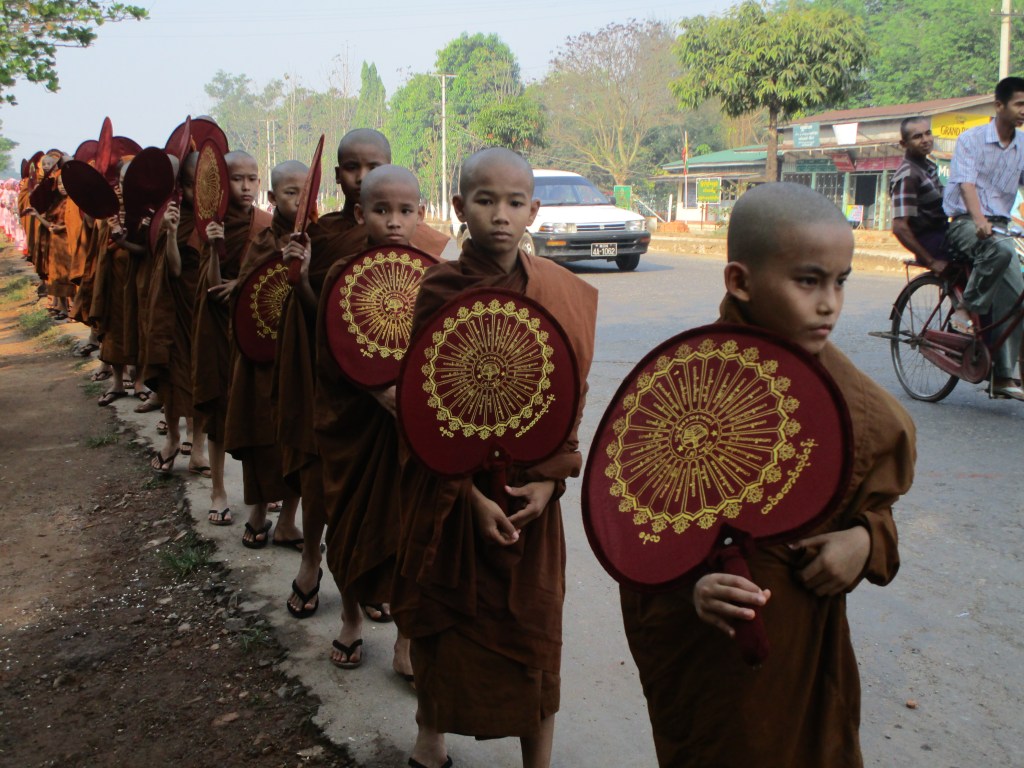
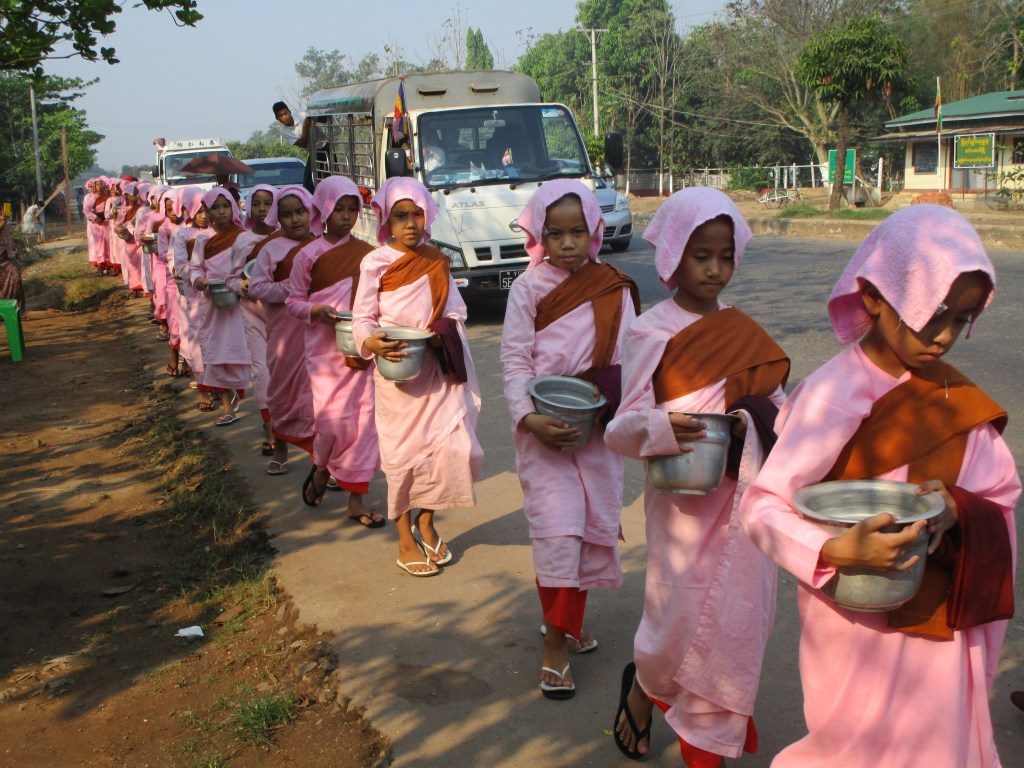
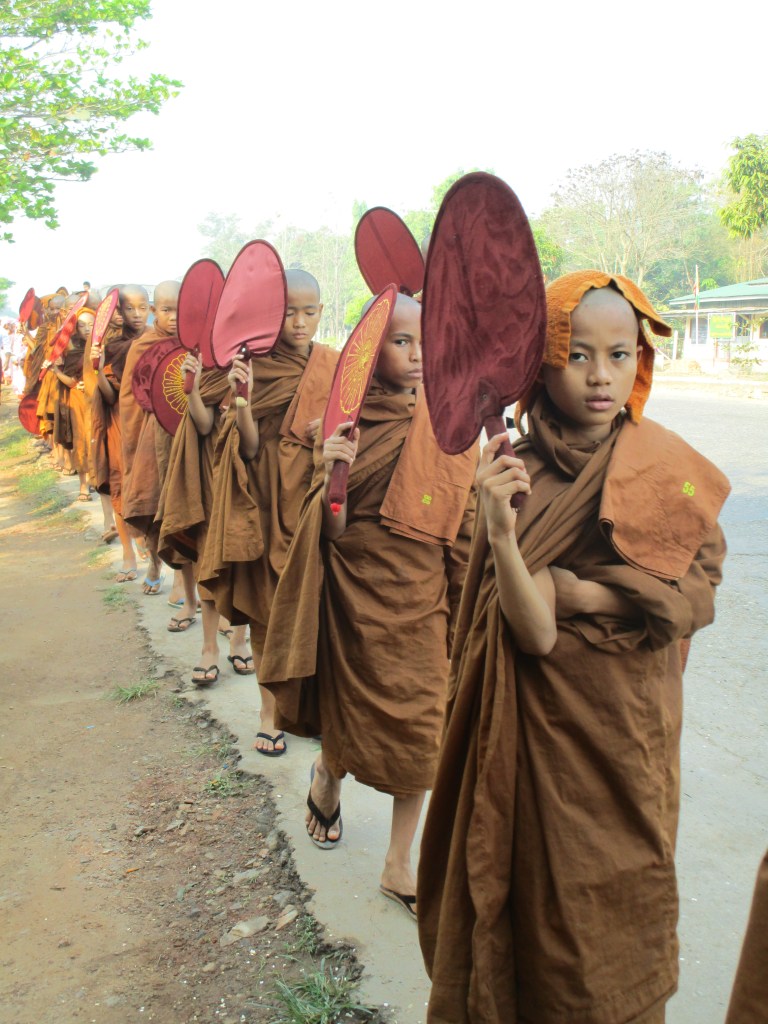
    Further down the road we saw boys who had already rejected their princely lives in favor of the simple existence of monks, their heads shaven, wearing plain brown robes and simple sandals, waving fans to cool themselves from the heat, temperatures above 30 C the day we saw them. Following them were dozens of girls in pale pink robes, carrying tin alms bowls, cloths draped over their heads to keep themselves cool.
    There were hundreds of boys and girls, all in a line, all along the road that stretched from the capital Yangon to the Golden Rock temple in the south of the country.

    The 210 kilometers from the traffic-clogged colonial-era city of Yangon to Golden Rock temple, also known as Kyaiktiyo Pagoda, is a journey to the golden heart of the country. Along the road I witnessed a microcosm of its spiritual side.

    HIGHEST PAGODA IN MYANMAR

    At Bago, the midway point, we visited the Shwemawdaw pagoda, the highest pagoda in Myanmar at 114 meters, higher even than the Shwedagon pagoda in Yangon. Also known as the Golden God pagoda it is over a thousand years old, and reportedly contains hair and tooth relics of the Buddha. The pagoda dominates Bago and the surrounding plains with its golden spire contrasting against an impossibly blue sky the day I saw it. A young monk struck an enormous bell with a large wooden stick. Worshippers spent time in contemplation near the pagoda, staying in the shade.
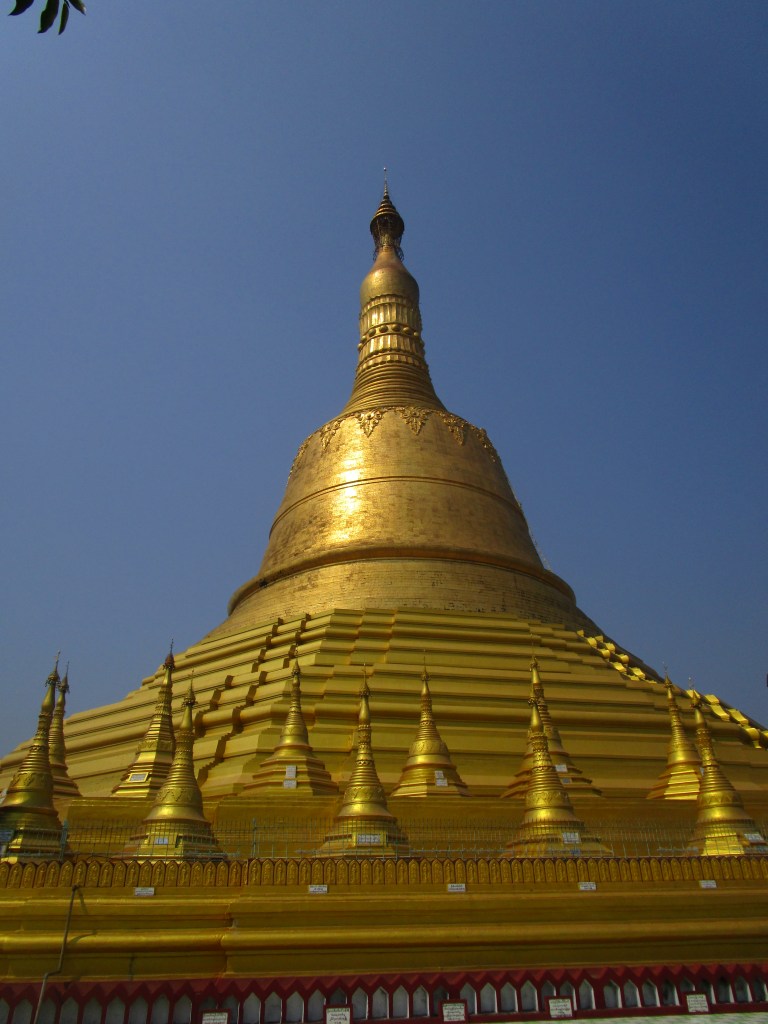
    One of the challenges of visiting Myanmar temples is enjoying them while walking barefoot on ground that can sometimes be achingly hot. During the March April hot season we employed a strategy of lingering in the shade, and moving fast when not.

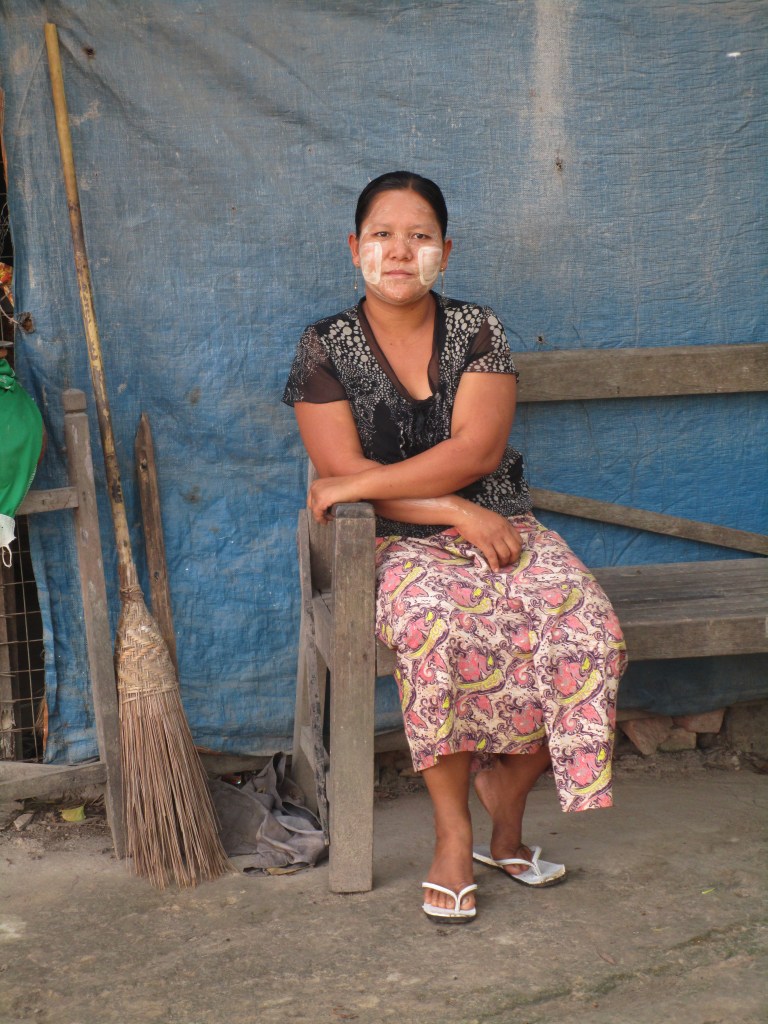
    As we left the pagoda via the covered walkway steps we saw iridescent green rice cakes for sale by a girl with a face thickly covered by thanaka, a yellowish sunscreen created by ground bark that looks somewhat like kabuki make-up.  There were hundreds of red bags of rice stacked on tables as donations to the temple. Just outside the pagoda I stopped by a woman with a cage of twittering sparrows. For less than a dollar, I bought three to release into the air. According to Buddhist belief, each bird you release earns you merit and symbolizes the letting go of your troubles. I’m not sure anyone’s troubles can so easily disappear but it did feel good letting the birds fly from my palms into freedom.

    SECOND LARGEST BUDDHA IN THE WORLD

    Nearby was the Shwethalyaung Buddha, which at a length of 55 meters and a height of 18 meters is the second largest Buddha in the world. Built in 994, its colossal size with an almost unreal serenity makes it a stop you want to spend time in. I wasn’t alone in feeling that way. Hundreds were there not just to look and move on but to stay and pray. Beneath the Buddha and along the temple’s wire enclosure were plaques with the names and amounts from donors all around the world.

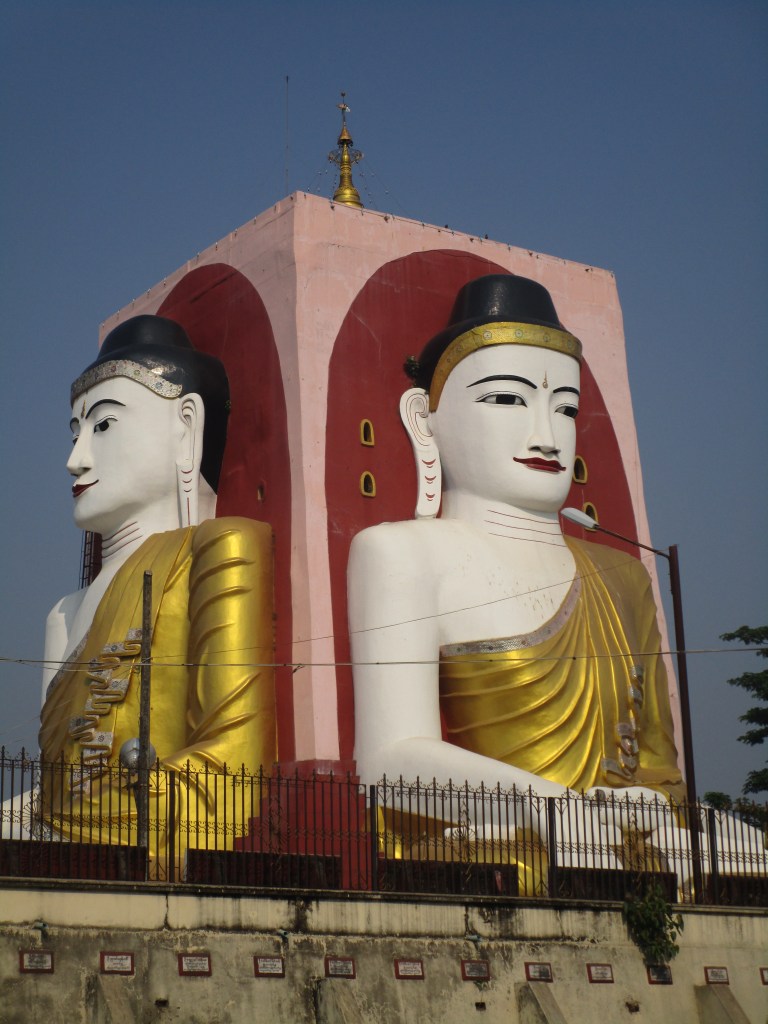
    Before leaving Bago, we stopped at the 27 meter high Kyaik Pun pagoda, where four gargantuan Buddha images sat ramrod straight against a massive square-shaped brick pillar. The pagoda was reportedly built by King Migadippa of Bago in the 7th century and renovated by King Dhammazedi in 1476. However, a folk story has it that it was originally built by four sisters vowing to be single. But the youngest one broke her vow. The statue of that sister is on the southwest corner where monsoon winds and rain regularly lash it. With alabaster white skin, glinting gold robes set against the ochre and faded pink of the pillar the four Buddhas looked like sentinels and must have conveyed how powerful the Mon kingdom was at its apex.
    LAST LEG TO GOLDEN ROCK

    To reach the Golden Rock temple we transferred at the town of Kim Pun from our van to a packed open-backed truck with seats in the back. For a little bit more you can ride up front with the driver. We decided to splurge! Each of the trucks had their own name. Ours was called Fuso Fighter.

    During the eleven-kilometer drive up on a steep, single lane road to an elevation of about 1,000 meters the drivers were quick to punch the accelerator or hit the brake! Lurching wildly from side to side I realized that having a bit of faith helped on this last leg of the journey.
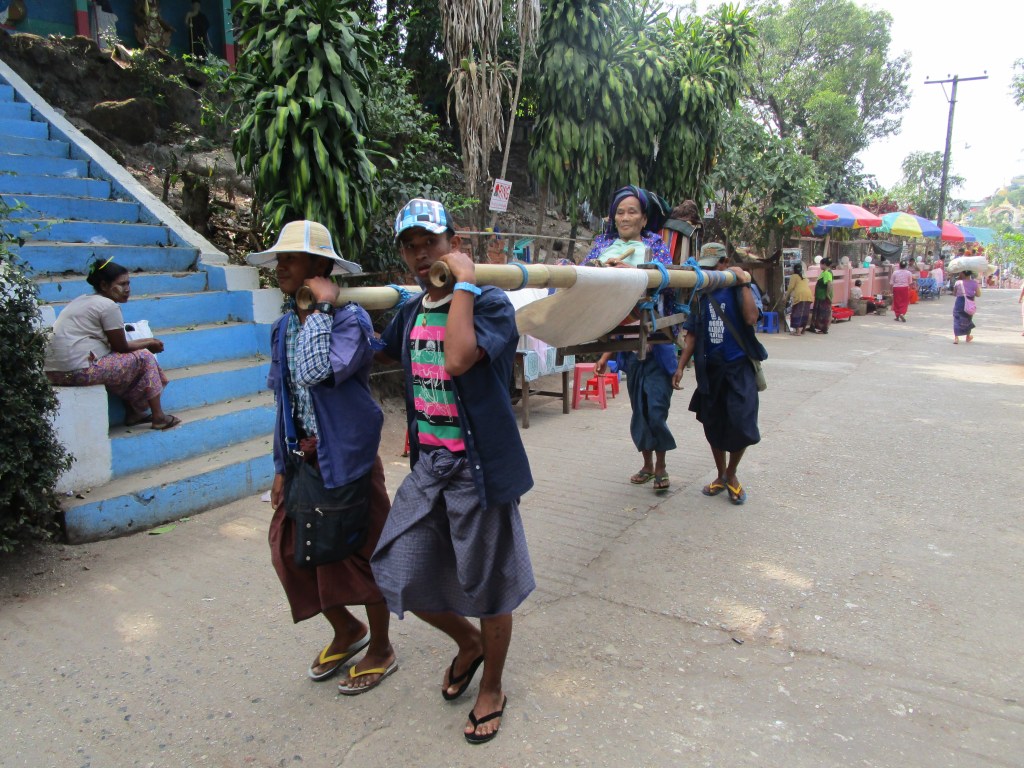
    At the top, we felt the buzz of anticipation from pilgrims and monks. Young men with baskets offered to carry the pilgrims’ belongings. For those in very poor shape, four young men would carry the pilgrims themselves on makeshift sedan chairs, a concoction of cloth with bamboo poles. The people in those certainly seemed comfortable. Most pilgrims just joined the quiet crowd making their way to the pagoda. Monks walked in a line with their alms bowls.
    Along the kilometer long path shops sold everything from bottles of herbal concoctions to freshly cooked dishes to musical instruments to amulets to gold leaf to paste on the Golden Rock itself.  For a thin filament of gold it’s about a dollar fifty.

    THIRD MOST IMPORTANT BUDDHIST PILGRIMAGE SITE IN MYANMAR
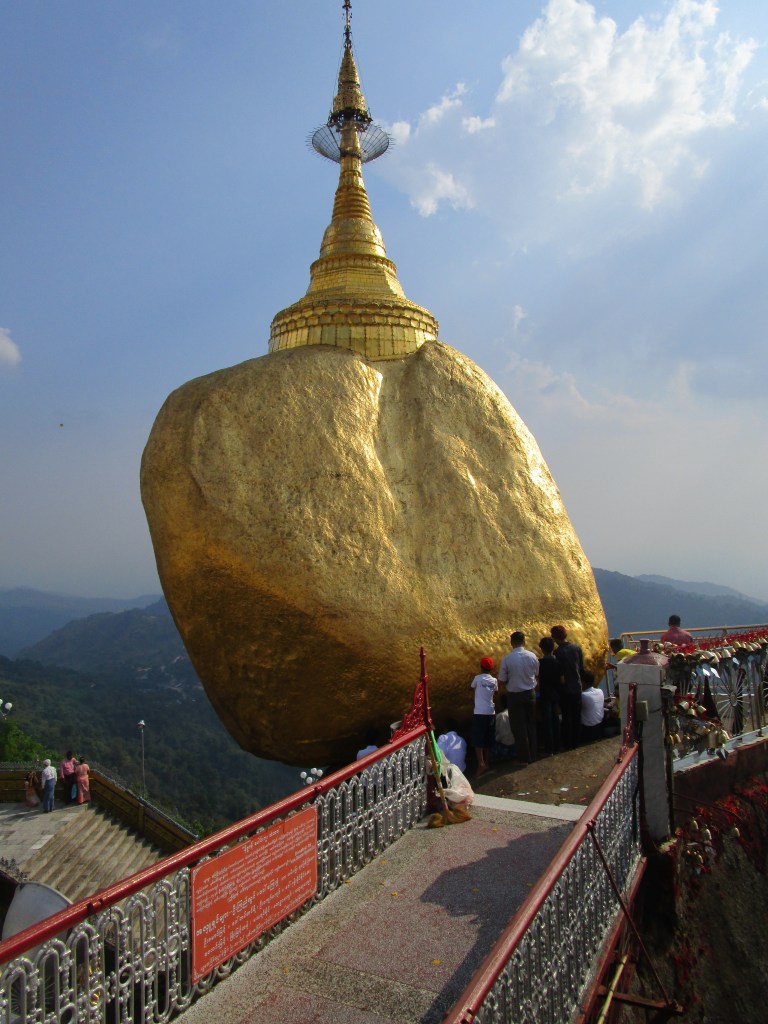
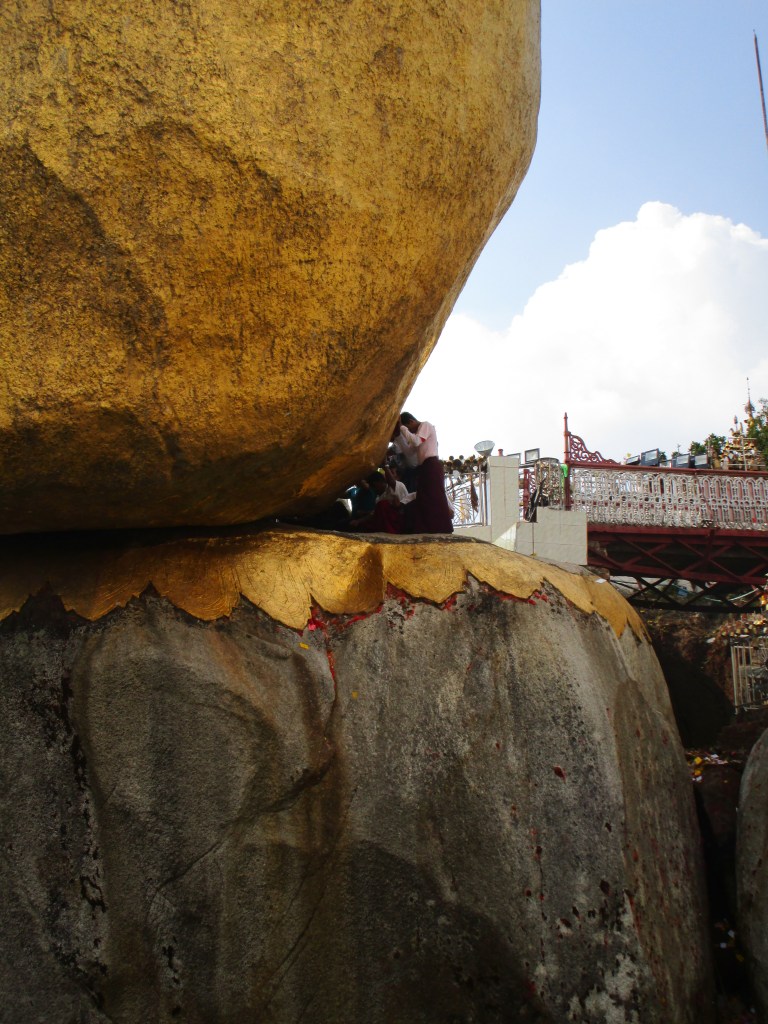
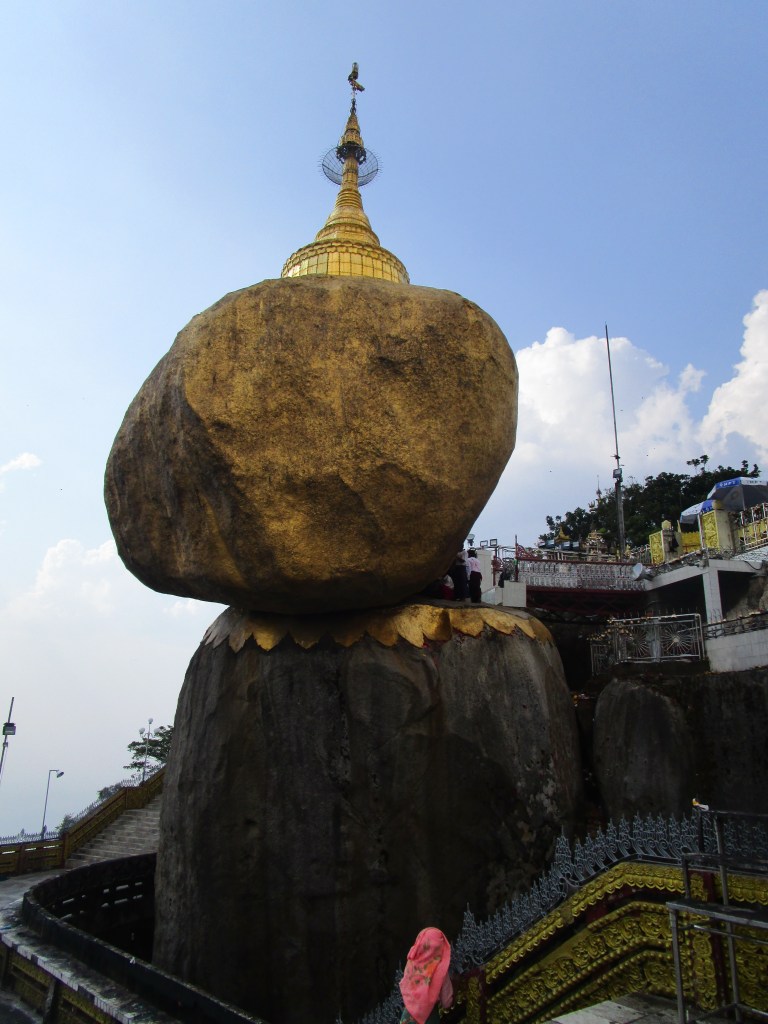
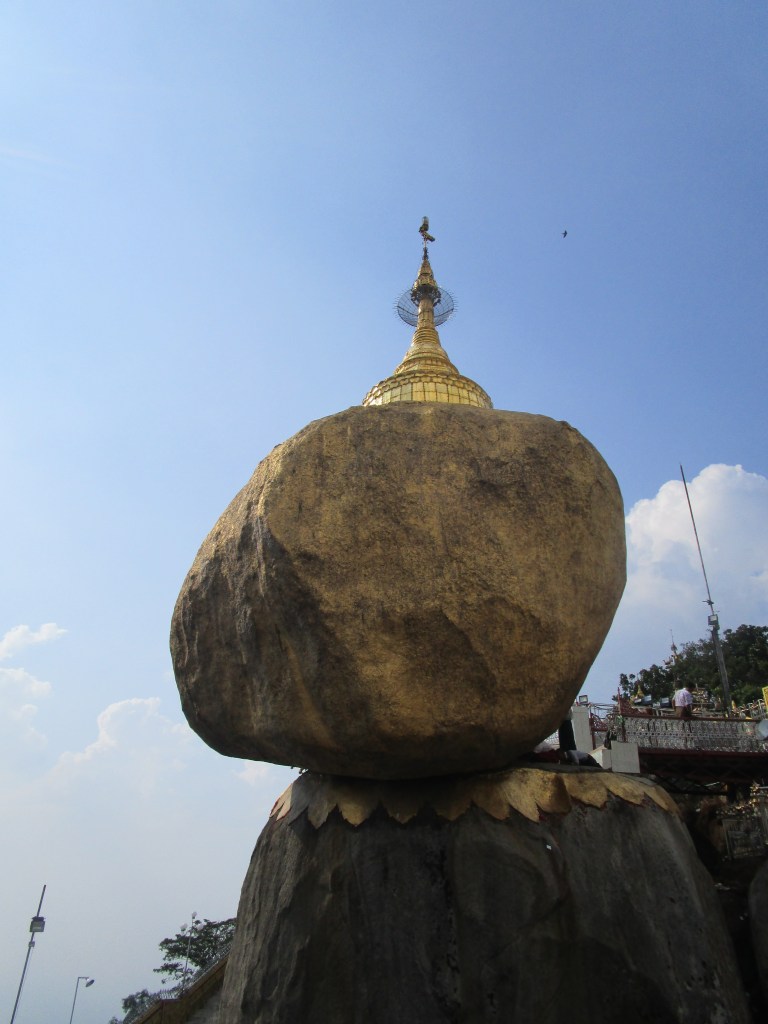
    The pagoda itself is small, about 6 meters in height. It sits on top of an enormous gold-covered granite boulder that looks like it’s just about to tip over and roll down the mountain. But it doesn’t fall, even though it’s nearly halfway off the ledge it has been on for eons and is some eight meters in height and 611 tons in weight. Legend has it that a hermit kept strands of the Buddha’s hair and then when he was dying, looked for a suitable place to hide it. He saw the loose boulder, Golden Rock, and built the small stupa on top where the strands of hair are kept inside. The pagoda was built in 574 BC.

    It is the third most important Buddhist pilgrimage site in Myanmar, after Shwe Dagon pagoda and Mahamuni pagoda in Mandalay.

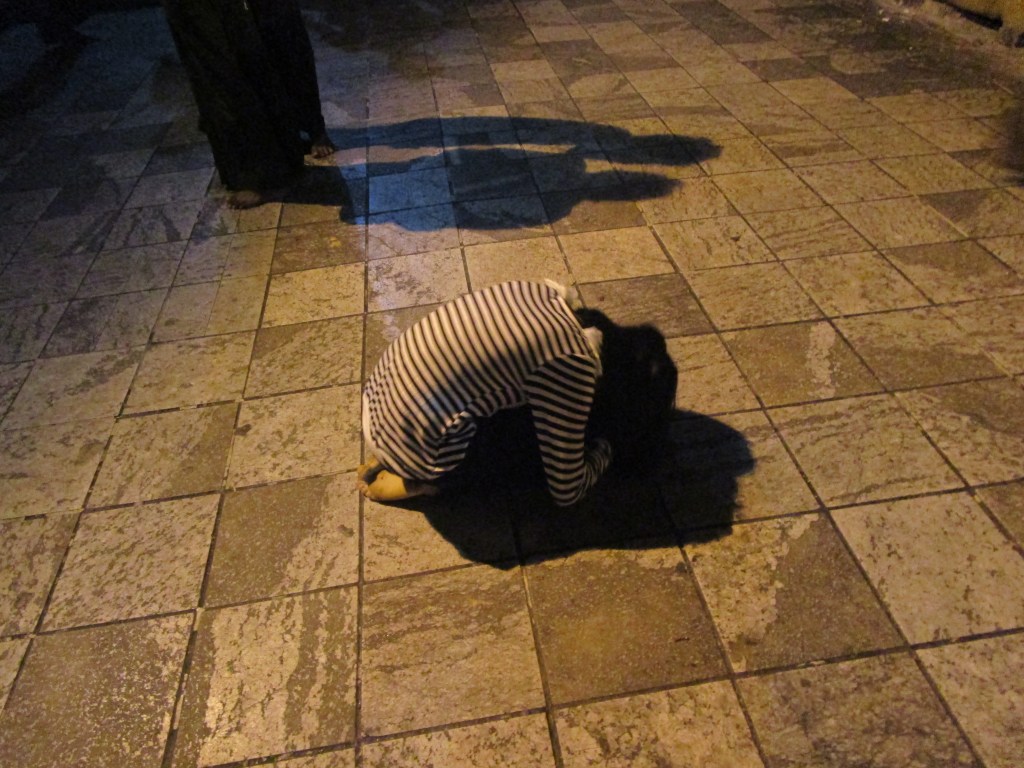
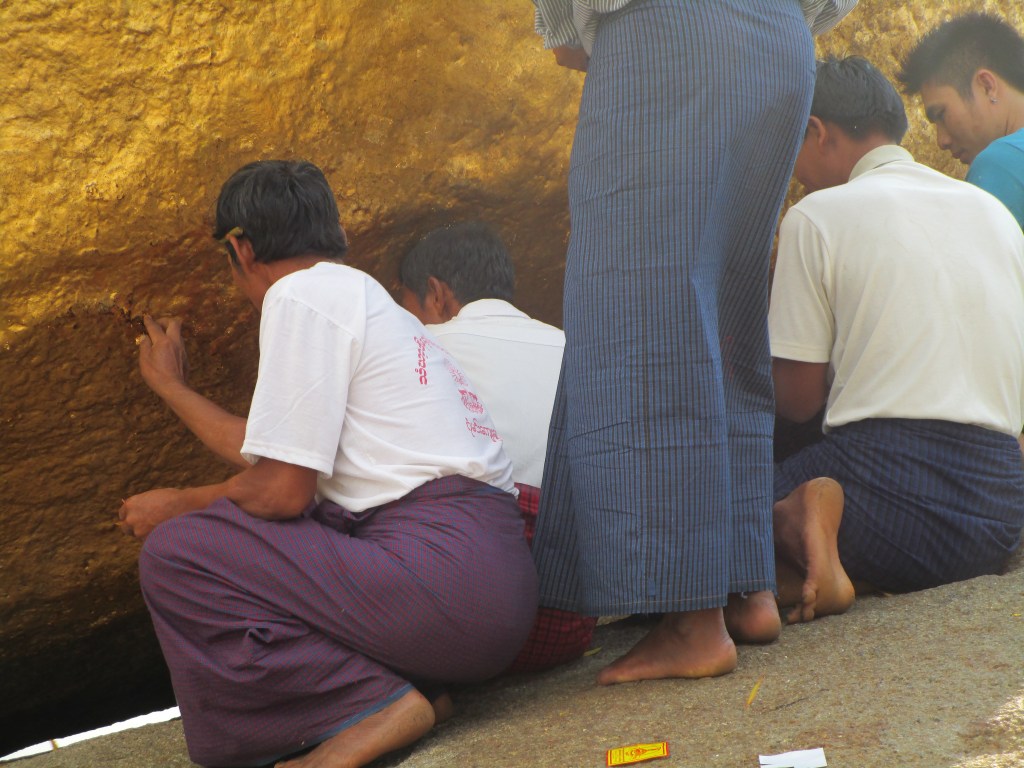
    The energy around the Golden Rock was palpable. Worshippers — and only men were allowed — pasted gold leaf at the base of the boulder.  Fragments frequently floated away on the breeze, catching the sun’s light as they did so. There was no fence or barrier of any kind between the base of the rock and a drop of easily ten meters. I asked our guide if anyone had ever fallen and she said no.  Yet, as men’s feet were literally inches from the ledge it certainly looked risky, even if you didn’t suffer from vertigo.
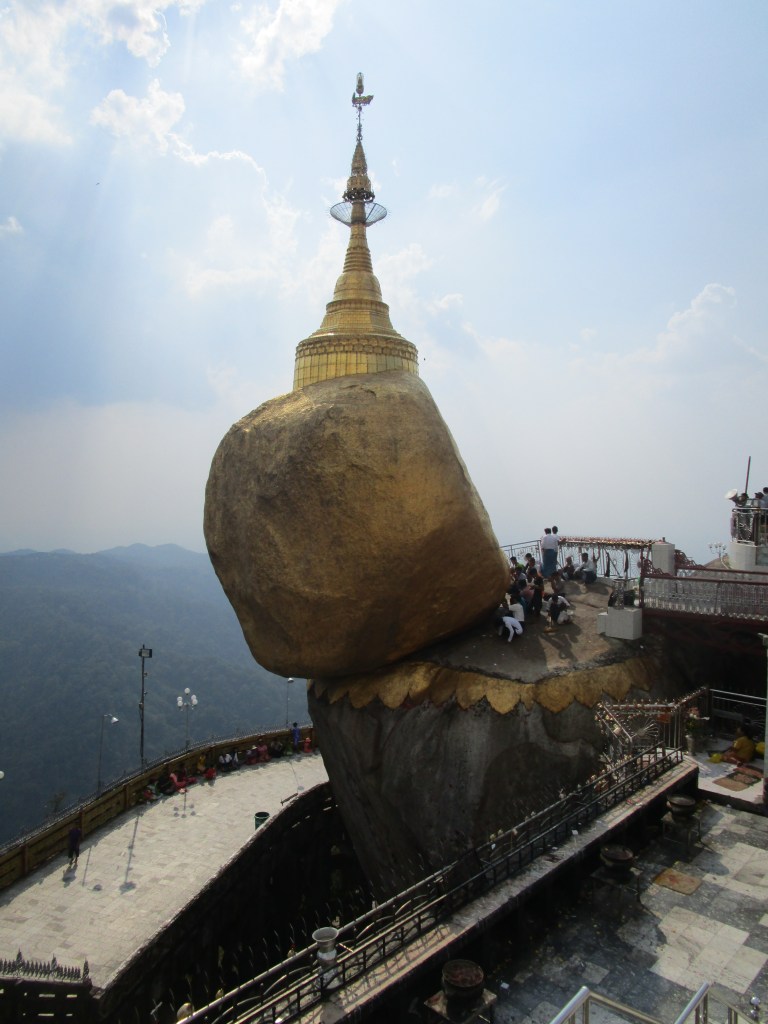
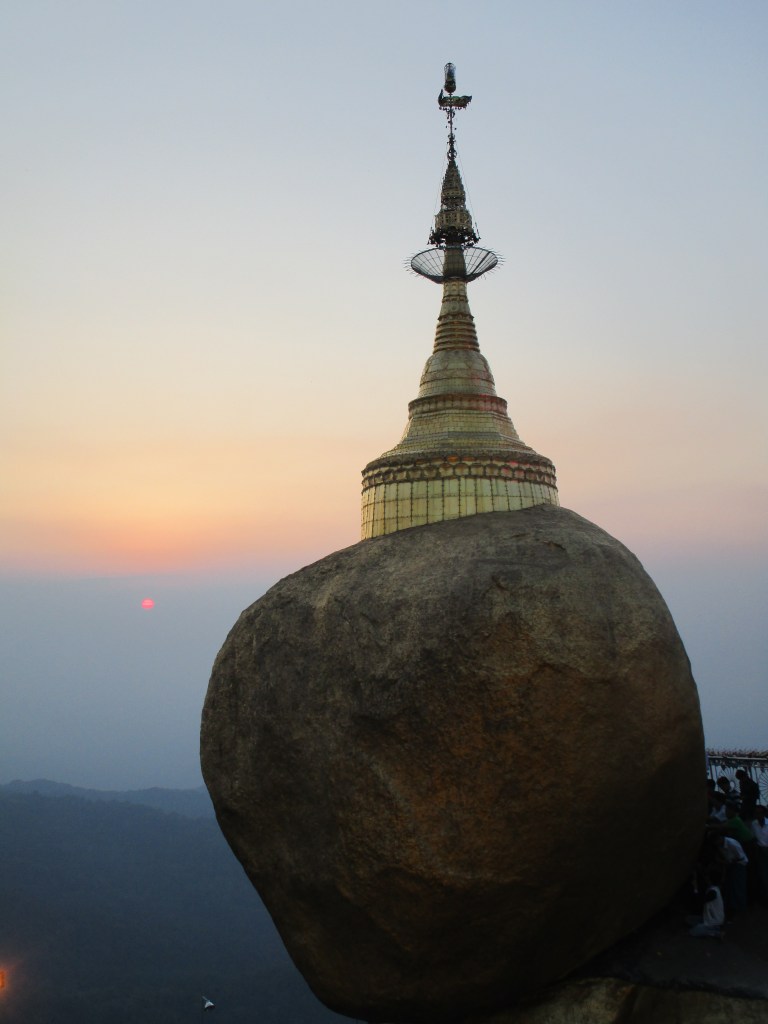
    I took steps down and soon I was looking up at the rock in more ways than one. The sense was that the rock was going to do something, take some action, yet it stayed absolutely still. It’s easy to understand why people are quickly mesmerized by it.  Some worshippers bowed to it. Others quietly put their hands together, closed their eyes and meditated. I watched as the sun set behind it, the valley glowing beneath it. Soon, the area was lit with hundreds of candles, casting a flickering glow on the Golden Rock that animated it, giving it a life of its own.

    Near the approach to the Golden Rock temple were numerous glass cases filled with bills, donations to the temple. Women sat and prayed under bare bulbs. Still further back people laid out mats and even set up tents, preparing to sleep there for the night so that they could worship at the Golden Rock at dawn.
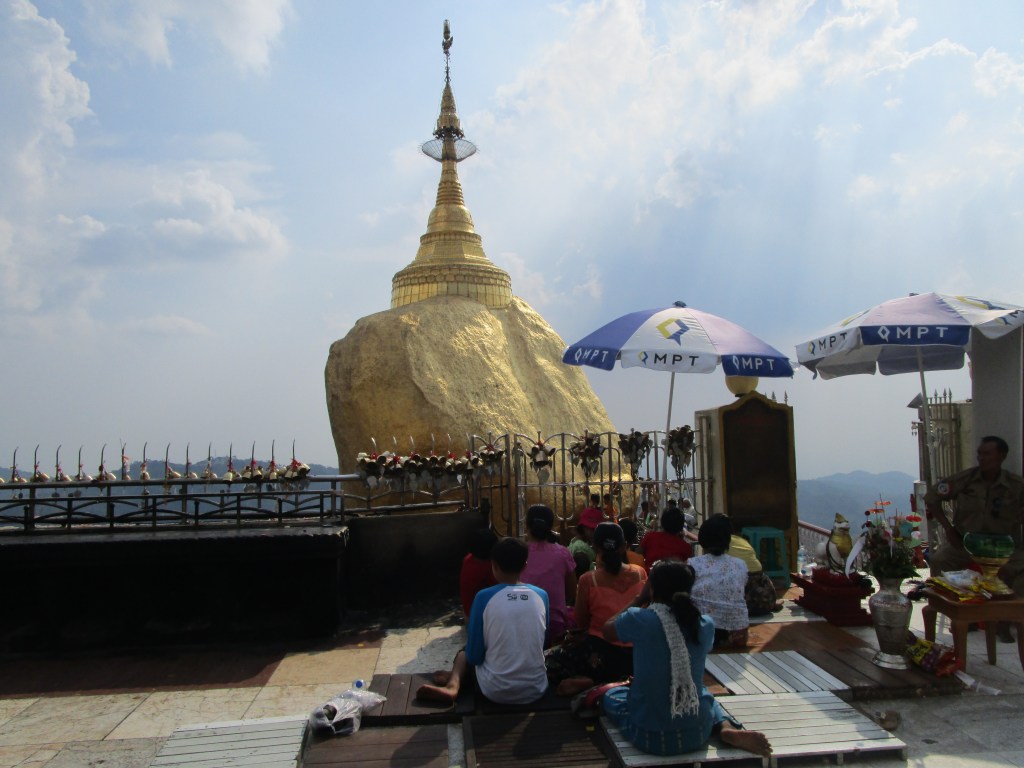
    I had not seen this level of religious intensity in my previous visits to Myanmar. The Golden Rock temple struck me as truly Myanmar’s golden heart, combining electric engagement with worshippers with an unnerving stillness. It was both timeless and in step with the times.
    HOW TO GET HERE FROM YANGON

    From Yangon you can take a bus but I recommend renting a van and guide and taking your time.  Not only are there the temples in Bago but there is the Allied War Cemetery near Htauk Kyant where you can read the poignant epitaphs   families had engraved on their loved ones gravestones.

    If you go straight from Yangon — and happen to miss the city’s traffic — it will take between three to four hours to get there.

    CULINARY HEART TOO

    And of course, don’t miss the food. This part of Myanmar is its culinary heart too. Myanmar food takes hours to cook, bringing out the sometimes pungent flavours of the ingredients. At the roadside restaurants people would quickly eat dishes that had taken a morning to prepare. Among others, there’s mohinga, a rice noodle fish soup, stone pumpkin soup with chicken, and fermented bamboo shoot soup. It’s not a well-known cuisine so your chance to experience at its best is here.

    Mark Twain once said, “Twenty years from now you will be more disappointed by the things you didn’t do than by the ones you did do.” As remote as it was, a visit to the Golden Rock temple was well the effort to get there. It wasn’t just a journey to Myanmar’s golden heart, but a glimpse into the spiritual heart of the nation.
    Published in Asian Journeys magazine, October-November 2015
  • Bangkok’s Serene Haven in Art-shopping Heaven: Drop After You Shop at the Plush Art-filled Anantara Siam Hotel

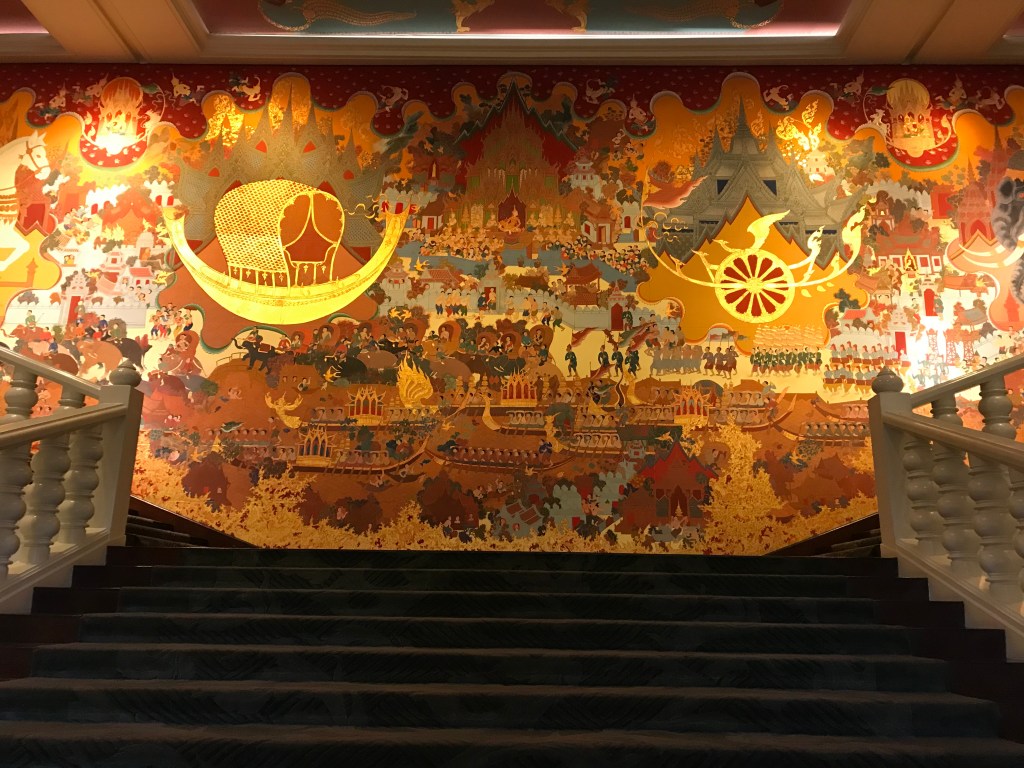
    Mural, Anantara Siam Hotel lobby

    Bangkok’s reputation as a shop till you drop destination is so well known it’s practically a meme. From Siam Paragon and Central World in Ratchadamri to Chatuchak weekend market to the newish Icon Siam on the Chao Praya river, listing them all would dwarf a Yellow Pages directory; visiting them all would be more tiring than sprinting up the side of the Grand Canyon.

    Inspiring art to inspire shopping for art

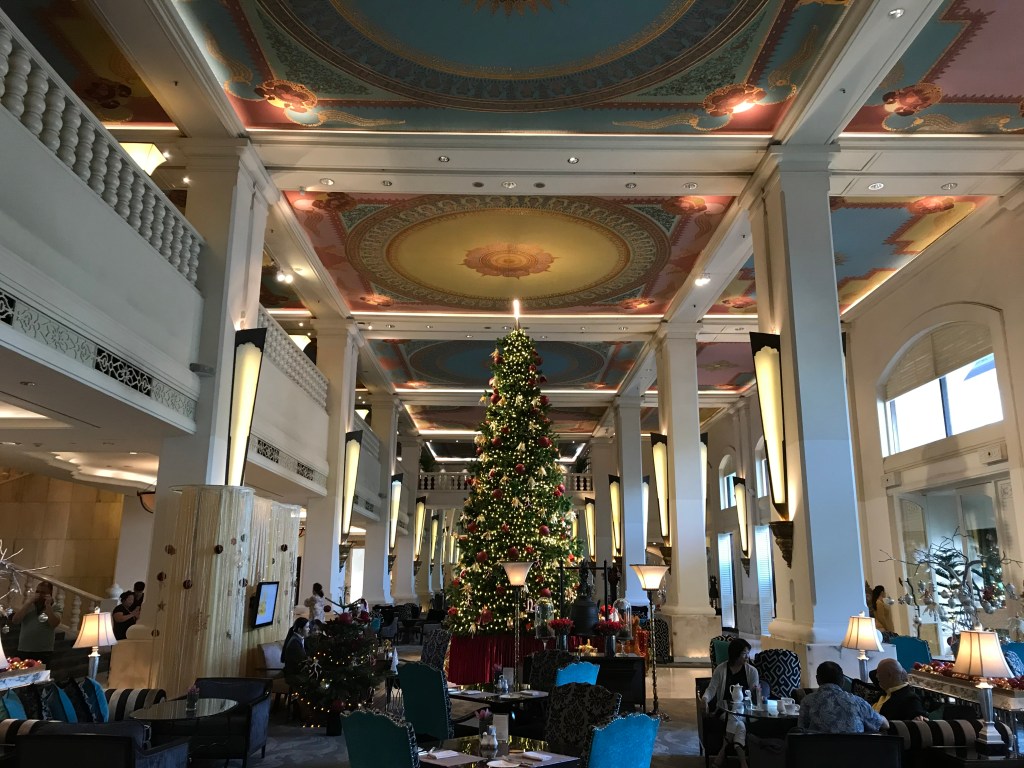
    What is less well known is that Bangkok is a destination for art lovers who love to shop for art. That shouldn’t be too surprising since Bangkok is a center of art from the traditional to contemporary. If art is your focus – and it is mine – then starting it from a hotel with expertly curated artwork gets your mind in the right space before deciding what will occupy a space in your home. The Anantara Siam, designed by leading Thai architect Dan Wongprasat, has a jaw dropping palatial lobby. The mural on the grand staircase landing of a traditional royal scene in hues of gold and red and the mandala painting on the sweeping ceiling by the late artist Arjarn Palboon Suwannakudt, gives the expansive space the feeling of a living, breathing palace that you want to linger in. And would certainly like to stay at.

    Artful champagne brunch fuels my search

    The Sunday champagne brunch to fuel my search for art was so rich – and enriching –  I almost called off the search. After the lobster thermidor, foie gras, fresh scallops, raw oysters, dessert bar and glass after glass of champagne I was feeling a little too comfortable to brave the rigors of art appreciation. But a cup of espresso finally got me off the all too comfortable dining room chair.

    Contemplate life while contemplating traditional art

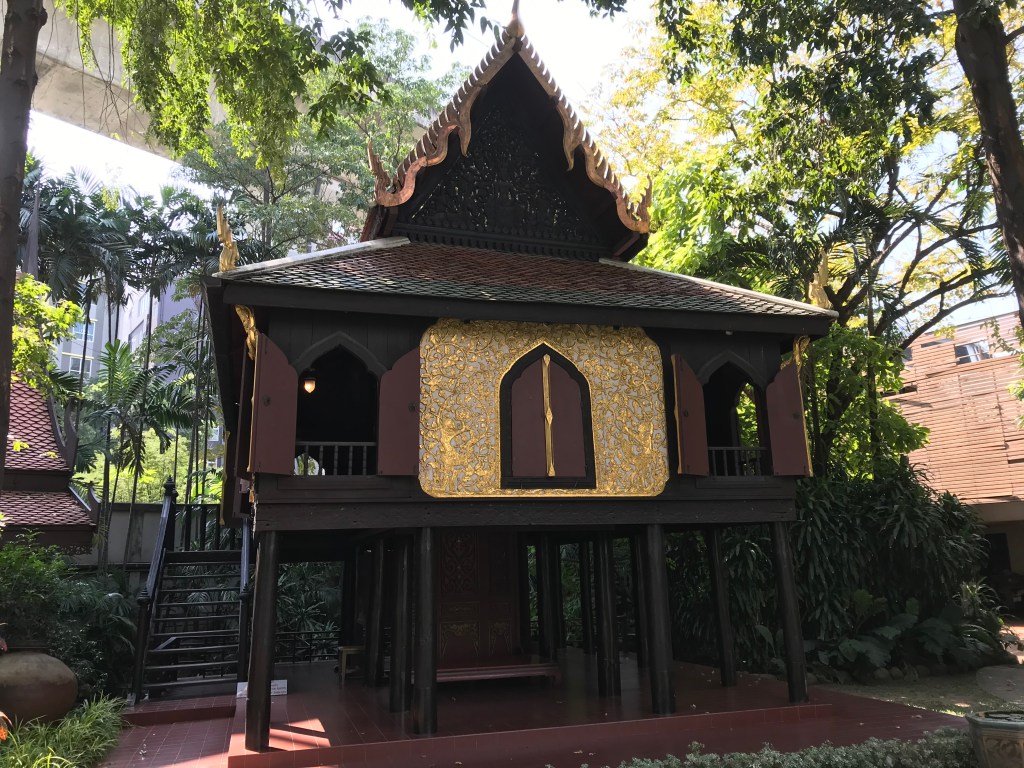
    Armed with a Bangkok Art Map that I got from the Anantara Siam’s concierge I started my art shopping excursion at Suan Pakkad Palace on nearby Sri Ayutthaya Road. There was nothing to buy at this museum but plenty to inspire me. The palace, once the home of Prince Chumbhot of Nagara Svarga and his consort, features a collection of artwork and antiques in eight houses that are some of the best examples of traditional Thai architecture in the city. The murals, sculptures, and art you see while sliding in your socks across polished wooden floors started the process of deciding what would work best in my home. What I saw there gave me ideas as to what antiques I would like to get. And I know that one of the most renowned centers for antique shopping in Asia is The River City Bangkok mall on the Chao Praya River.

    Echoes of Frank Lloyd Wright

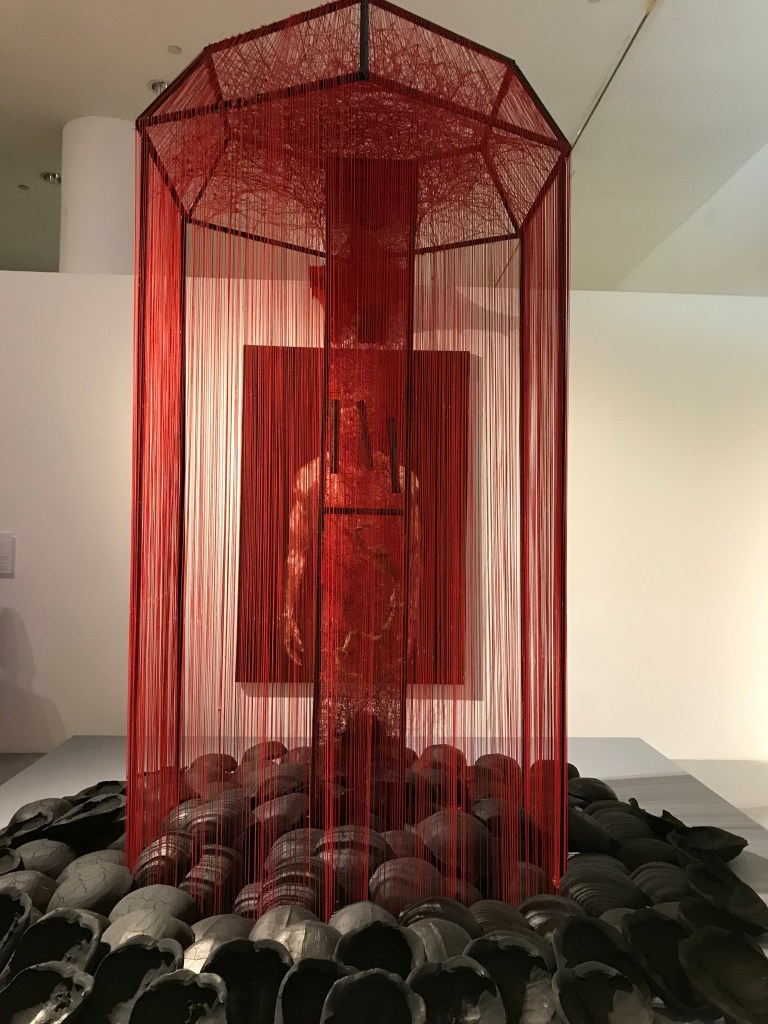
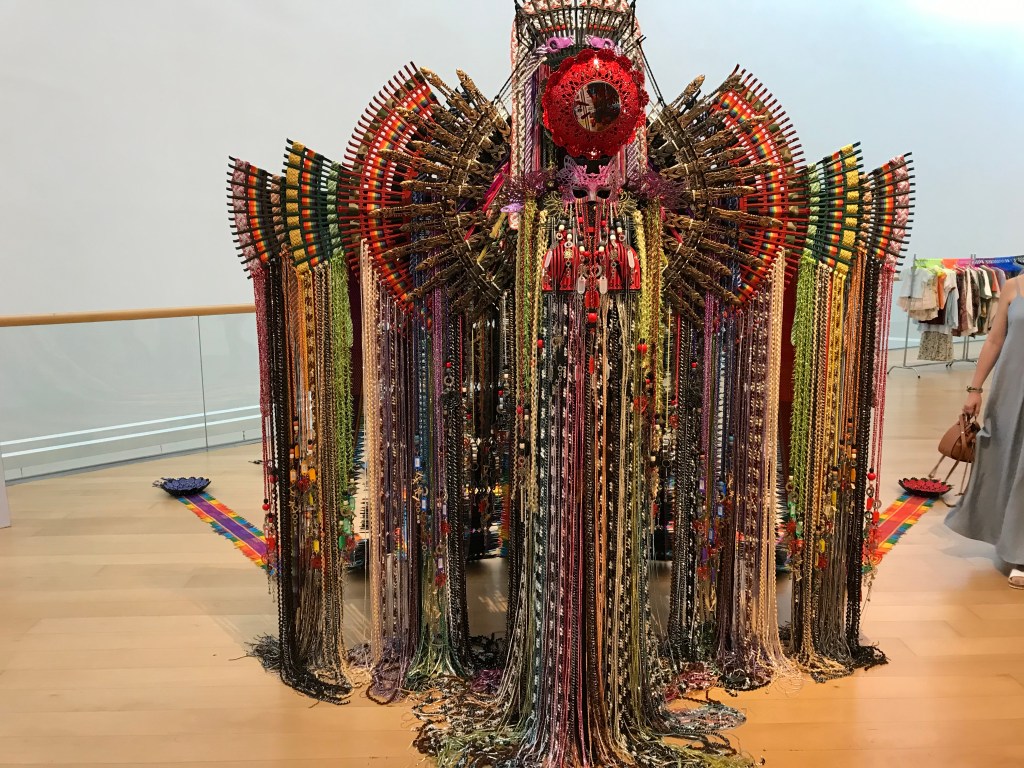
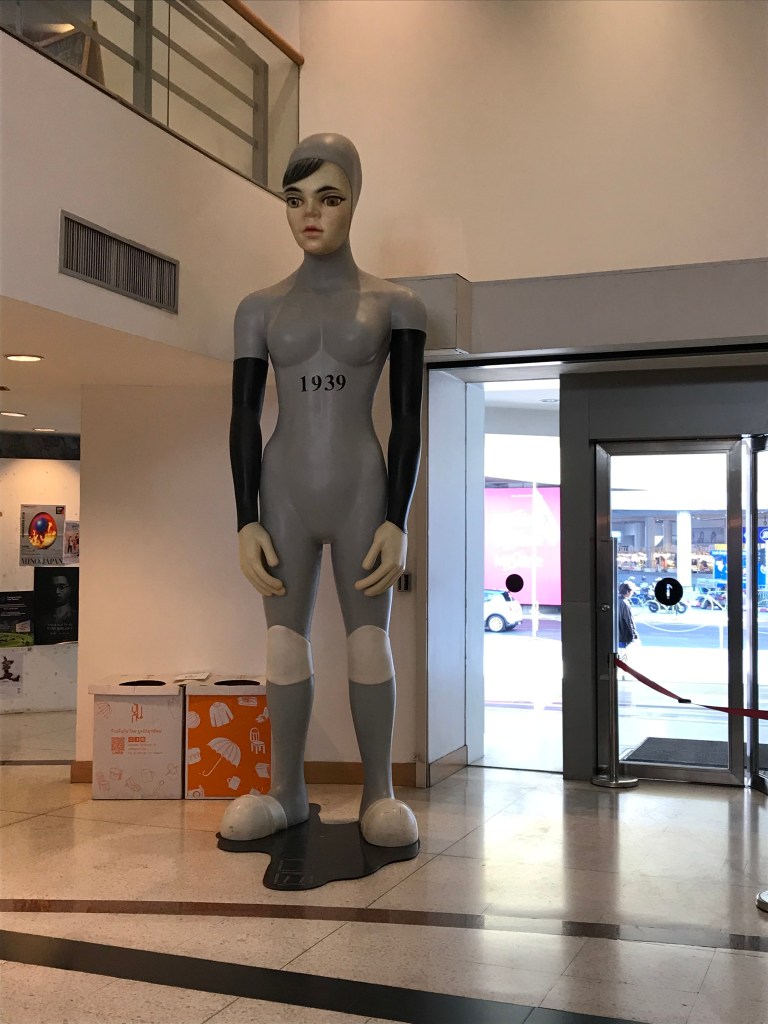
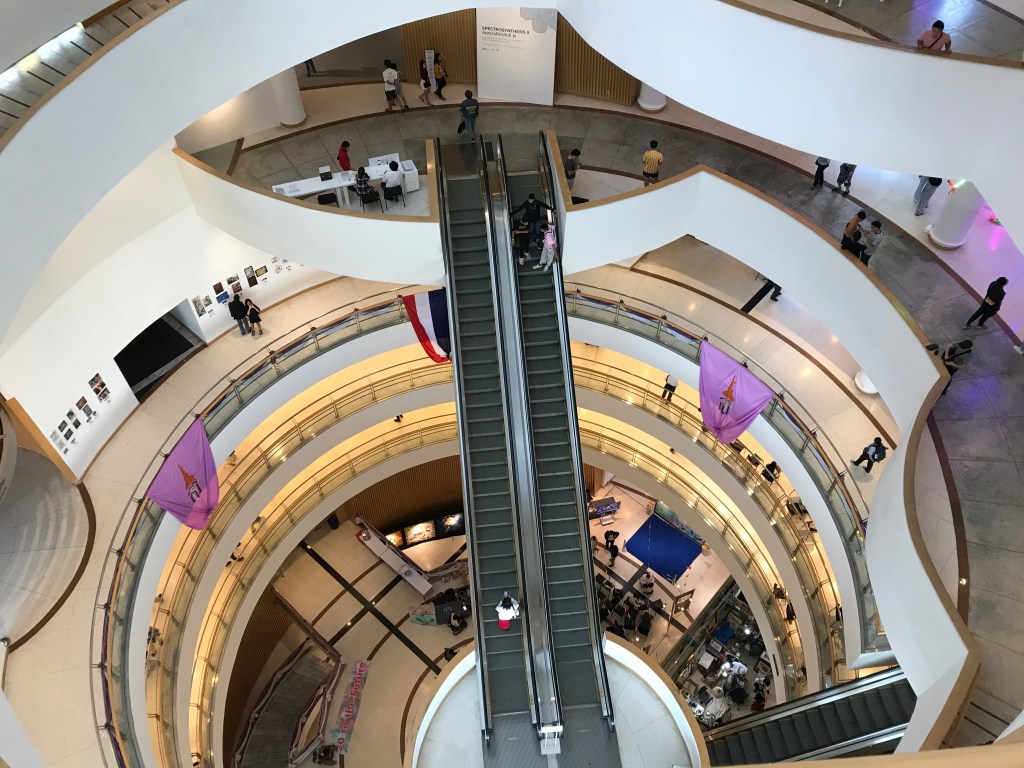
    My next stop was the Bangkok Art and Culture Center. It’s on the opposite end of the art spectrum from the Suan Pakkad Palace. An eight-story venue for contemporary art and shops selling hip crafts and gifts it attracts a crowd poked and provoked by its art. I went to the top floor to see the wonderful Royal Photo Exhibition, “Photos Wonderland,” and then worked my way down the spiral walkway that took me from one floor to the next for further art contemplation. It reminded me a bit of Frank Lloyd Wright’s Guggenheim Museum in New York with its top down spiral walkway. One of the shops, BKK Graff, sells cans of spray paint so that you can graffiti a space. Hopefully, not your home.

    Talked about art for your walls

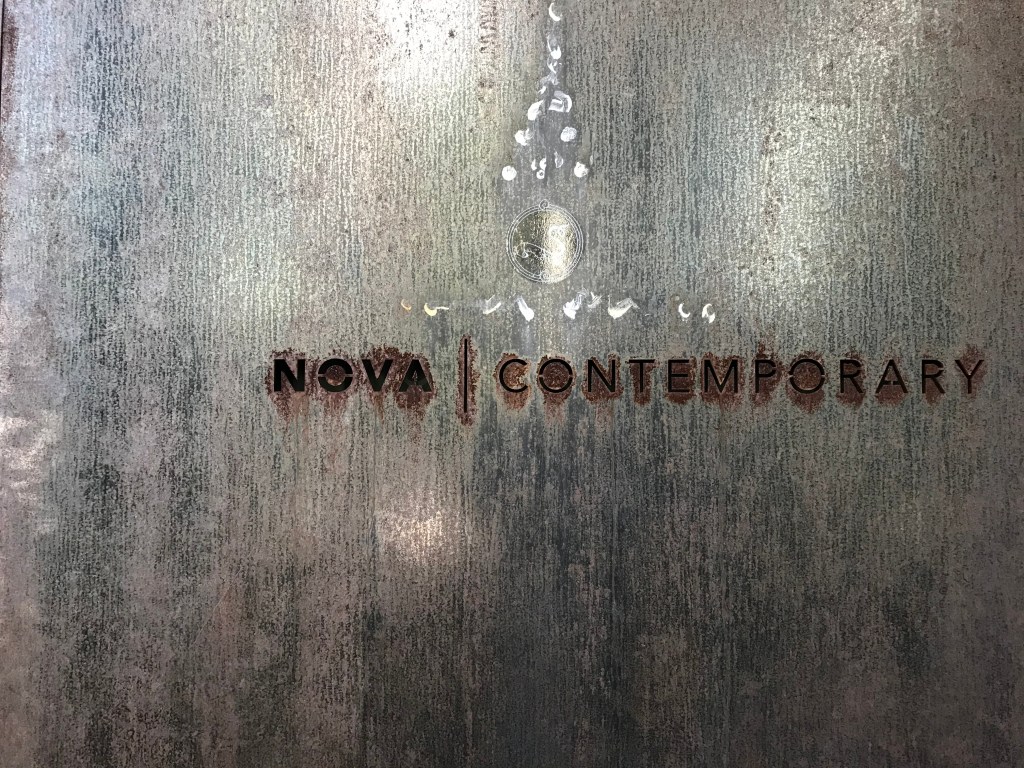
    A short walk from the Anantara Siam are three galleries that are among Bangkok’s best for contemporary art. Le Link Gallery, Tonson Gallery, and Nova Contemporary all feature contemporary artists whose art can dominate a wall and become a talking piece for visitors. Or yourself. Displayed at the Le Link Gallery were the brightly coloured Magenta Blues Artwork by German artist Ingeborg Zu Schleswig-Holstein.

    Before returning to the hotel I had a drink at the nearby Smalls Bar, chockablock with art. It’s rated by CNN Travel as one of the top bars to visit in Bangkok. All the art displayed in the three-story quirky bar is for sale.

    From fine arts to culinary arts at The Spice Market

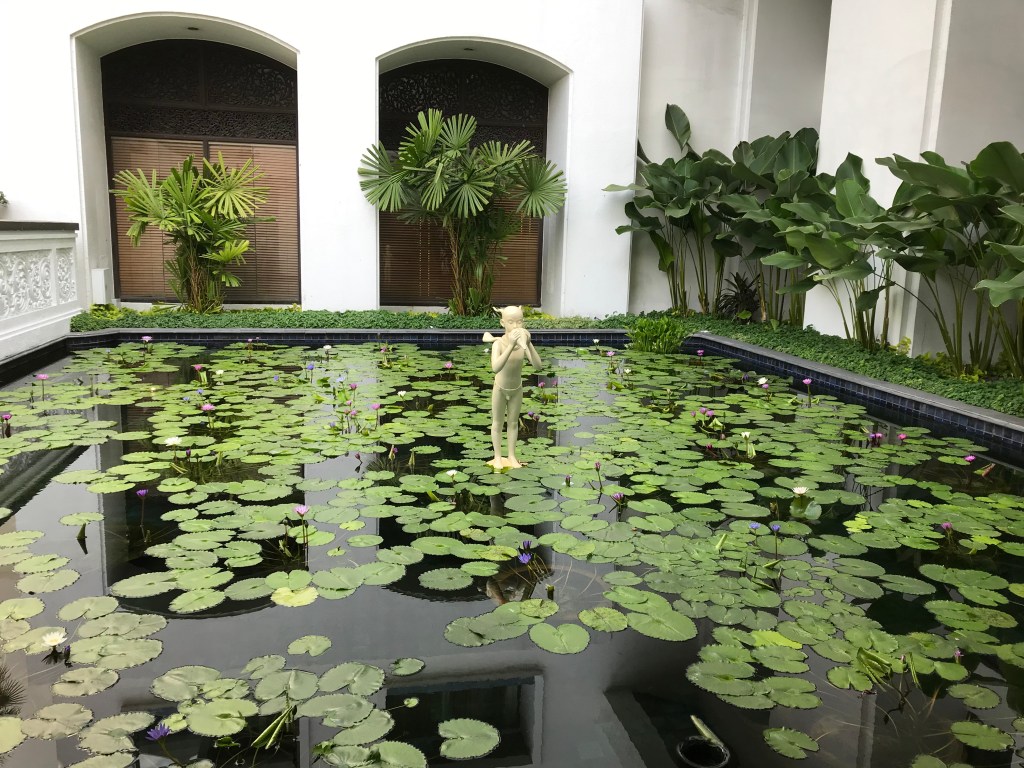
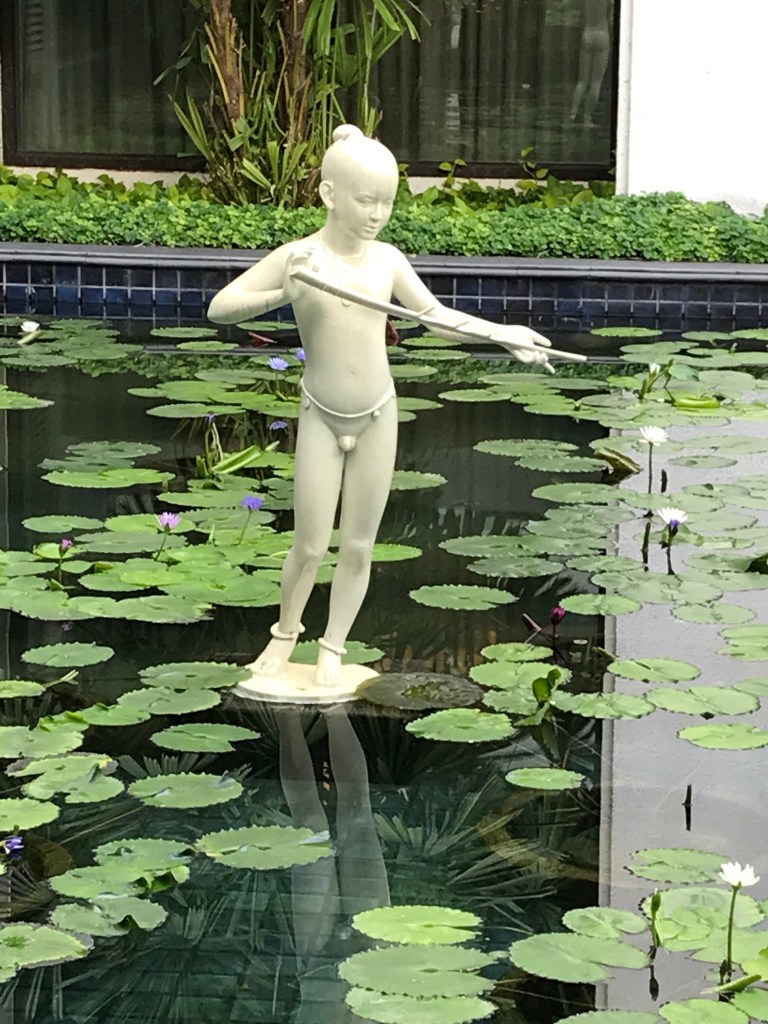
    After a day launched with a great meal it was time to end it with one. On the way into the hotel lobby I passed statues of water sprites surrounded by water lilies. Their presence is a reminder that you are entering a special world.

    The Anantara Siam’s The Spice Market is one of the finest Thai restaurants in Bangkok, helmed by award-winning Chef Warinthorn Sumrthlphon.

    The ambience of the restaurant puts you in the right mood to savor the food. With a polished teak wood décor, tables topped by Carrera marble, and cotton napkins and pillowcase coverings by Jim Thompson, it is a luxurious setting.

    And the food lives up to the décor. The ingredients are sourced locally to ensure freshness. The fruits and vegetables are all organic. The curry pastes are from the kitchen of M.L. Thor Kridakorn, whose recipes are so famous that they grace the dining table of the Royal Family.

    Some of the dishes I tried were the Tom Yam Goong, a spicy prawn soup perfectly flavoured with lemongrass; Larb Nua Pu Gab Goong Mae Nam Yam, crab meat salad and grilled river prawn; Pu Nim Phad Prig Thai Orn, crispy soft shell crab in peppercorn sauce; Kai Soe Rua Nua, northern style egg noodles in curry with chicken; and, Gaeng Kiew Warn Nua Toon Cab Roti, green curry with braised beef in coconut sauce.

    No amount of description can do them justice. More chamber music than symphony with their focused and nuanced flavours each dish was a distinctive delight. The meal was so filling I couldn’t tackle dessert, much as I wanted too. Next time I’ll pace myself better. I have my eye on the Tubtim Krob, the ruby water chestnuts.

    Only hotel in Thailand to offer sacred tattoo sessions

    Anantara Siam’s commitment to art is more than skin deep. It is the only hotel in Thailand to offer private sacred tattoo sessions by Bangkok’s most famous Sak Yant master, Ajarn Neng Onnut. He has inked Hong Kong star Alex Fong and Hollywood ones Ryan Philippe, Jessica Bradford, and Brooke Shields.

    As one of the world’s most ancient, sacred traditions, to master Sak Yant means learning how to do the artwork for almost a thousand different images. To become a master Ajarn Neng learned how to read and write ancient Khmer and Pali scripts and memorise unique prayers and secret spells, chants and mantras that relate to the sacred tattoos.

    His tattoo sessions at the Anantara Siam are private, either in a guest’s room or a private treatment room. The day before the tattoo he has a consultation with the guest where he learns about their life and goals before deciding on the correct Yant. Prior to the session and afterwards, Ajarn Neng performs a ceremony where the guest’s body and the art are blessed. That gives the wearer of the tattoo an emotional reminder of the experience that links the ink on their body to what it means to their life.

    Leaving an indelible mark in more ways than one

    A session with Ajarn Neng will leave an indelible mark on your spirit and your body. The Anantara Siam offers this unique experience so that you can get beneath the skin of Thailand for a richer appreciation of its culture.

    The same is true of a stay at the Anantara Siam hotel. The culinary art of its kitchens, the prompt, warm service, and the art that embraces you in visual splendor when you enter the hotel will also leave an indelible mark; the kind of indelible mark we all want to experience and take with us wherever we go.

    Published in Asian Journeys magazine, February-March 2020

  • Balancing Breathless Bangkok’s Ying with Yang: At the Anantara Siam Even the Fighting Fish are Relaxed

    Bangkok leaves you breathless. A pulsating, mega hive of frenetic activity, shopping is in malls wall to wall with branded goods and one of a kind items from one of the world’s most creative societies. Nightlife ranges from the pinnacle of high life in Sathorn and Thonglor — sky bars on rooftops to restaurants and clubs with sky high prices — to tawdry dens of iniquity that operate in dingy, neon lit alleys in Patpong and Soi Cowboy.

    All that activity can sometimes grate like a chainsaw tasting the bark of a tree before it’s cut down. Which is where Anantara Siam comes in. Just a few minutes’ walk from the Ratchprasong shopping district, it’s as tranquil as a posh private club in London. Its Thai design style from leading architect Dan Wongprasat gives you a sense of place and differentiates it from other hotels which have by the numbers luxury. More treat than retreat, you can take a breather here from this breathless city. From its palatial lobby, you view the soaring celling filled with mandala paintings from plush chairs you sink deeper and deeper into. The wall sized painting at the grand staircase’s landing by one of Thailand’s most famous painters, the late Arjarn Palboon Suwannakudt, is worth taking the stairs for to have a closer look. While he didn’t live to finish the work, his children, also artists, helped complete it as well the ceiling paintings in the lobby and mezzanine. It’s an enormous artistic achievement, 700 square meters of work.

    From “Well well” to wellness

    My wife and I had dinner at Anantara Siam’s Biscotti Restaurant, rated one of Bangkok’s best, according to Thailand Tatler and the Bangkok Restaurant Awards. It also received recognition from Michelin. I had a starter of creamy burrata cheese with tomatoes, ciabatta bread, basil dressing and shavings of truffles, while my wife had sea scallops, cream of buffalo mozzarella, cherry tomatoes confit and olives pate. Following our main courses of risotto black truffle with porcini, and grana Padano cheese and black ink angel hair pasta with king crab, prawns, and sundried tomato basil, we were stuffed. But we figured we would diet another day. Dessert was carmello spuma with layered dolce di latte foam, coffee granite, arabica crumbs and cocoa crackers and the Mascarpone Berry Salad with mixed berries, raspberry coulis, mascarpone cheese and pistachio sponge. The theatre of the dessert almost overwhelmed the taste. It was delivered to our table complete with trailing wisps of dry ice like something a sorcerer would prepare.

    “Well, well,” we thought. Not a meal we’d soon forget. Nor our scale. Just describing the meal was a mouthful.

    In the morning, we went from an indulgence ying to a wellness yang. We joined Anantara Siam’s new signature wellness program, “Morning Wellness at Siam.” It’s a program designed for travelers like my wife and I, who have come a long way, are a bit weary yet are eager to immerse ourselves in the culture of Bangkok. The program mirrors what for many Bangkokians, is an everyday routine.

     At 6am my wife and I were in the lobby providing alms to a monk on his early morning rounds. Anantara Siam is the only hotel in Bangkok which offers this unique local experience on a daily basis with staff who explain to guests how to appreciate and participate in this morning ritual. Our offerings were in pink and blue tiffin boxes. One box had curry, another an apple and Danish, a third fruits. Along with another hotel guest we did a Wai Pra, which is the appropriate way to bow to a monk to show respect. The chief concierge taught us: first, you place your palms together, then raise your hands in front of your face – your index finger tips must touch the hairline as your thumbs are placed between your eyebrows.  You need to bend the upper half of your body at an approximately 45-degree angle and bow for a couple of seconds before returning to your standing position. 

    Our alms, along with rice and bottles of water, were delivered direct to the temple the monk was from, Wat Pathum Wanaram Temple, between Siam Paragon and CentralWorld.

    From all twisted up to laid out flat

    The walk on Rajadamri Road to Lumpini park was a sensory feast, the crackling, chopping, cutting, dicing, slicing and munching of breakfast dishes being prepared and enjoyed at a food centre at the park’s edge. Like New York’s Central Park, Lumpini is the green, wellness lungs of the city with people trying to do right by their bodies. We passed a group doing tai chi to find our own spot at the lake’s edge. Two mats were laid down for us and a member of the hotel’s staff tried to teach us basic yoga. Our complete inability to execute the moves we were being taught certainly amused our instructor as well as a couple of monitor lizards who felt it was worth the climb from the water to have a stare at us.

    Once the yoga session was over it was our turn to feast. A huge, healthy spread was laid out for us on a picnic table overlooking the park’s lake. Cold pressed juices, prawns and salad with quinoa, cereal and milk — and handcrafted chocolates. Too much of a good thing, we simply couldn’t finish. It was a relief to have a tuk tuk carry us back to the hotel where we truly zoned out to a Chakra Crystal Balancing massage. In a room as chilled as they come our feet were bathed in a bowl of warm water. Like rare porcelain vases (which we’re far from being) we were gently lowered onto the massage tables, with our faces staring through to a bowl of petals floating in a water-filled brass urn. The masseuses surrounded us with rose quartz for our hearts, amethyst for our minds, tiger’s eye for harmonizing energy, and lapis lazuli for our throats. The throat is, apparently, a centre for spiritual energy. I’m not sure about the science of being surrounded by all of those stones but we were definitely beyond relaxed when it was over. And supposedly detoxed too. No small feat for a person like myself.

    In a single morning, we went from being spiritually centred to being all twisted up like pasta to being laid out flat on our stomachs then backs. We were knocked out — and Muay Thai star Tony Jaa wasn’t anywhere near us.

    Creativity flows by the river

    Energized, we continued our pursuit of Bangkok’s ying by visiting the Creative District.  It runs from Saphan Taksin BTS station along the Chao Phraya river to Chinatown. If you can handle the heat and humidity, it’s a great way to explore on foot what was once Bangkok’s commercial heart.

    The concierge at the Oriental Hotel gave us a map to the district. At the first stop, Assumption Cathedral, a Filipino priest was giving a Sunday sermon. Next to it, abutting the river, was the dilapidated East Asiatic headquarters building from the late 19th century. After strolling by the antique stores and boutiques of the plush OP Place past the modernist French embassy, we explored down a narrow alley to see the old Haroon Mosque with a silent green garden behind it. The pulsing intensity of Bangkok was an alternative universe, light years away.

    Bangkok meets Miami

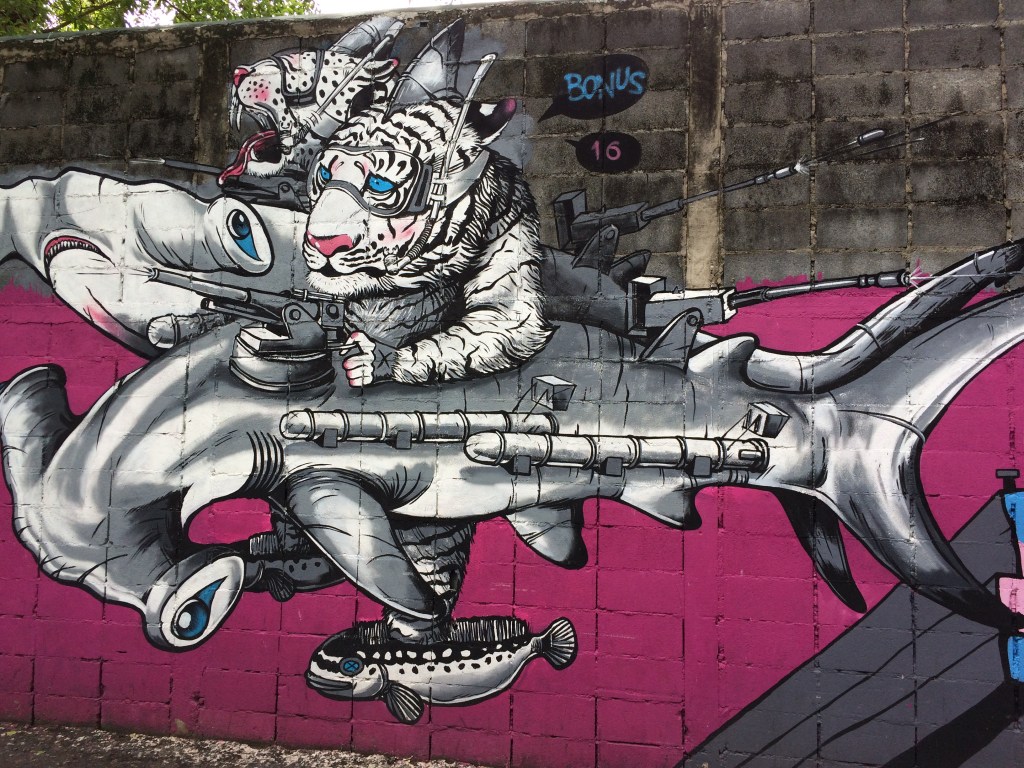
    A little further on, down another narrow alley, we saw the 19th century Customs House, a once grand building now in disrepair overlooking the river. We walked past the imposing Grand Central Postal building. Built in art deco style in 1940 it had huge pinkish Garudas garlanded with yellow flowers at the top of the central facade. Legend has it that when the Allies bombed Bangkok in World War II, they took flight to protect the building. Soon we were at the Thai Artists Wall. The huge murals reminded me of Miami’s trendy Wynwood district, both in terms of the art and the galleries and cafes nearby. Warehouse 30 was a collection of local fashion boutiques, a café and a restaurant occupying World War II-era military storage buildings. It was founded a little over a year ago by Duangrit Bunnag, one of Thailand’s most famous architects. Given the heat and humidity it was an ideal place to press the pause button on our stroll and have a couple of glasses of ice coffee. My wife bought slippers there from the brand called Other Leathers.

    Bangkok meets George Town meets Mad Max

    After Warehouse 30, we entered Talad Noi, a neighborhood whose architecture reminded me of George Town in Malaysia, where Pernankan meets European – but this time in a Thai setting. We stopped to see the towering spire of the cream-coloured Kalawar Church, completed during King Rama V’s reign. Down a zigzag of alleys we found Sol Heng Tai, a 200-year old Hokkien-Teochew mansion near the Chao Phraya, which serves drinks in a decidedly quirky environment. complete with a swimming pool that no one was using. Apparently, it is used for a scuba diving school. The 7th and 8th generations of the Posayajinda family still live here.

    We passed banyan spirit trees which sometimes had images of former Thai kings hanging from them, other times were festooned with multi-coloured ribbons. Shop after shop had immense piles of auto parts in front of them, making the area look like both a hoarders’ paradise and a back lot for a Mad Max movie.

    Soon we were in Chinatown, where the throbbing mania of the megalopolis returned, like a feverish dream. We chilled – literally – over a coffee and dessert at Chata Speciality Coffee, a café with creatively named brews and dainty cakes to complement them.

    The Siamese Fighting Fish aren’t in a Fighting Mood

    In front of the Anantara Siam is a statue of a water sprite blowing a conch shell atop water lilies – a harmonious greeting for our return. Our room overlooked the Royal Bangkok Sports Club. two panes of glass giving us the view without the street noise. On the desk, a Siamese Fighting Fish was swimming alone in a fishbowl without a care in the world. One of the world’s most aggressive species — agitation so much a part of its DNA that it immediately fights when it sees another fish — it was utterly at peace. The Anantara Siam was so tranquil even the Siamese Fighting fish doesn’t feel like fighting anymore. Now that’s the right kind of ying to balance Bangkok’s breathless yang.

    Anantara Siam Hotel address:

    155 Rajadamri Road

    Bangkok 10330 Thailand

    http://www.anantara.com

    Published in Asian Journeys magazine, August-September 2018

  • If You Have One Night in Bangkok

    Since my first visit to Bangkok in 1981, I’ve been back dozens of times. For a few years I even commuted to a job that was based here. I’ve seen the city transform again and again from a seedy backwater with a “reputation” to a glittering, glamorous metropolis with some gritty corners.  But there’s one label that no one has ever put on Bangkok and that is boring.

    So imagine the challenge I set for myself on my last trip: if I only had one night in the city what would I do?

    For inspiration I used the lyrics from the Murray Head song, One Night in Bangkok:

    One night in Bangkok makes a hard man humble

    Not much between despair and ecstasy

    One night in Bangkok and the tough guys tumble

    Can’t be too careful with your company

    I can feel the Devil walking next to me

    With those alarmist lyrics I decided I needed a really good meal to fuel the long evening ahead.

    SPOILED BY BANGKOK’S BEST STEAKHOUSE

    For fortification I started with a perfectly executed Citrus Martini, shaken not stirred, at the lushly appointed “Manhattan Lounge” at the JW Marriott Hotel. I followed this with dinner at the “New York Steakhouse” next door, consistently rated as Bangkok’s best. That’s a tough accolade to get year after year in a food-centered city like this. I couldn’t help but compare the experience here with a famous steakhouse in Palm Springs, California earlier this year where a grumpy, BMI-challenged waiter gave my family and I a Tomahawk-steak on a large platter where we all tucked in forks and sharp knives at the ready. The “New York Steakhouse’s” version of the Tomahawk-steak was altogether a different, much more elevated experience.  When the waitresses with model-like looks and killer smiles draped the elegantly cut slices of meat on the Tomahawk bone I knew it was going to be tough to dine at an American steakhouse again. I’ve now been spoiled.

    ASIA’S MOST HAPPENING STREET

    Properly nourished, I headed out with a friend to explore nearby Soi 11, in my opinion Asia’s most happening street.  When you think of nightlife areas in Asia, Hong Kong’s raucous Lan Kwai Fong springs to mind, or its more trendy, edgier sister Soho, or the upscale Xintiandi district in Shanghai or Singapore’s tony Club Street or Seoul’s fashionista Gangham district. But whereas those other nightlife areas

    give you a non-representative slice of those cities’ lives, on Soi 11 you feel the entire human spectrum and kinetic energy of the city, Bangkok on full display and in your face.

    Soi 11 is where I was going to spend my one night in Bangkok.

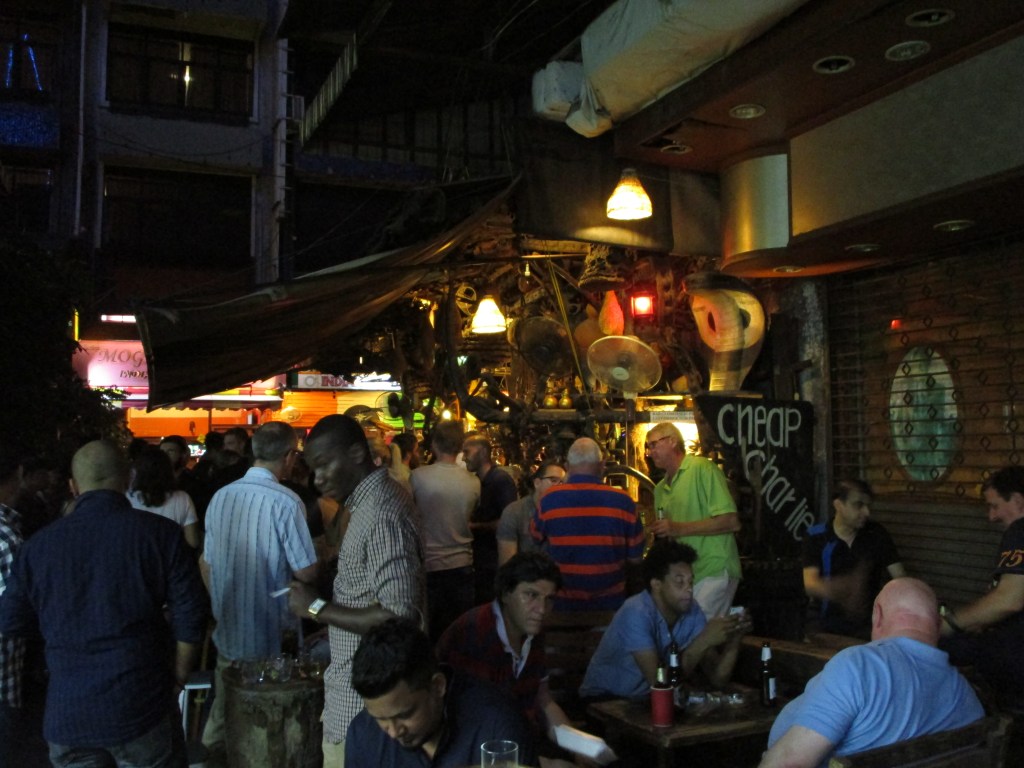
    Our journey up and down and from ground-level to high above the Soi was a both a trek across broken sidewalk pavements and a peek into the aspirations of the people there that make the Soi a place of unyielding buzz. From “Cheap Charlie’s” with its outside pavement seating and a reputation for the cheapest beers in Bangkok to “Above 11” for a contemplative view of the city that looks a lot tamer 33 floors up, away from the stumbling crowds and the cruising pink and yellow and green taxis that always seem to barely miss hitting someone. The skyline’s supercharged sparkle was borderline surreal. Emerald City on steroids.

    PEOPLE-WATCHING PERCH

    We found a central perch at “Oskar’s”, which gave us a panorama view of the Soi in action. With a counter seat, you can see the denizens of the street marching purposely towards a destination or lurching from one bar to the next. Usually packed after 9pm, it becomes the Soi’s defacto people watching fulcrum: inside the bar everyone is rubbing elbows with everyone else, in a hurry to meet or make friends. It is not a place for a solitary drink. Or soulful chats for that matter. Meaningful encounters just isn’t on the menu in this place.

    Having a tough time hearing each other, my friend and I made our way to the quieter “Wolff’s”, owned by former private investigator Malcolm Schaverien who writes thriller novels under the pseudonym of Harlan Wolff. Mr. Schaverien provided a bit of oral history of the Soi and its rise up Bangkok’s neon rankings: “Soi 11 became the local…nightspot when Q Bar first offered the option of trendy nightlife for those living on Sukhumvit. Before that we had pubs, gogo bars, cocktail lounges, restaurants and hotel bars – that was about it. So we would mostly make the trek to Silom or Siam Square for nightlife. After Q Bar came Bed Supper Club and others making Soi 11 a ‘trendy’ destination.”

    Sadly, both Bed Supper Club and Q Bar are now closed. A hotel is now being built where Bed Supper Club was. Q Bar is being transformed in a new venue called The District. The Soi’s reinvention continues.

    When I asked Mr. Schaverien why he created “Wolff’s” he said: “I was nostalgic for the classic bar I remember from my early days. The sort of place where people meet and talk over cocktails or a glass of wine. I couldn’t find one in my area so I built one with bricks and a copper top bar.”

    A few steps away we visited Brew, for a stylish beer-focused experience. Owner Chris Foo said the bar was “based on a space under a Trappist…Monastery in the mountains where monks produced beer. The water coming down the mountain would

    be collected and used to make the Trappist Beers and then they would store the beer

    in oak casks for fermentation.” With “the largest selection of beers and ciders in Asia,” Mr. Foo’s aims to make his bar a destination for beer-lovers. The menu was amazingly long. I could imagine drinking a different beer there almost every day of the year. Not a bad goal to set yourself.

    MUSIC YOU DON’T USUALLY GET ELSEWHERE

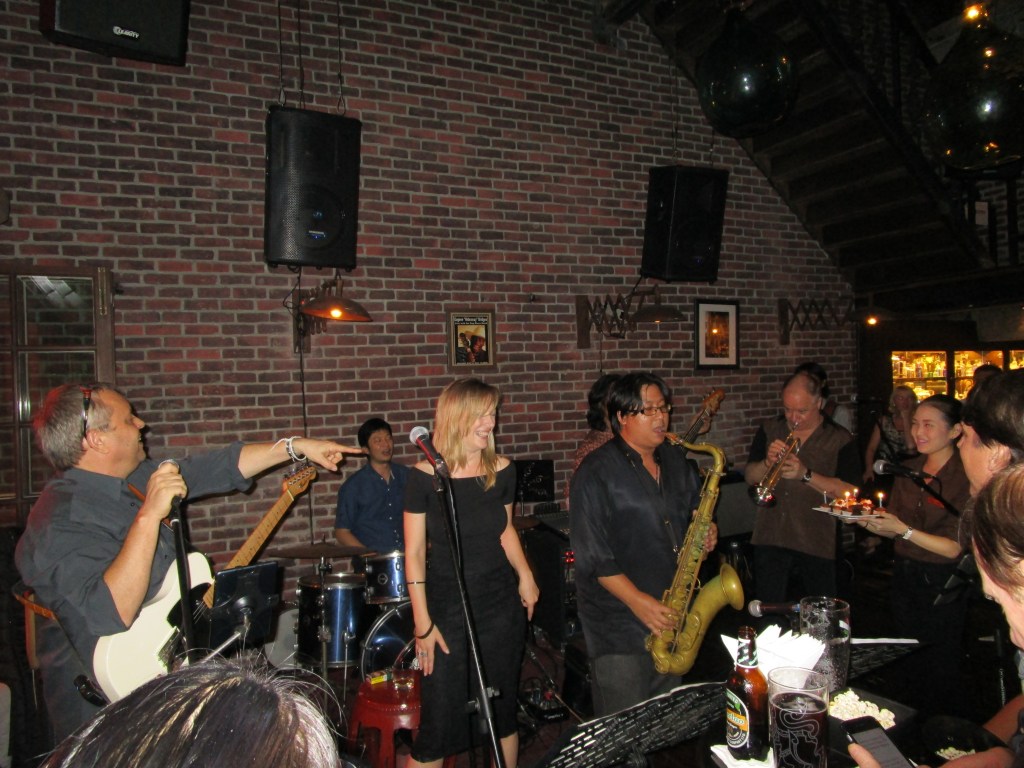
    At some point in any long evening music is as good a reason as any other to visit a bar. And Soi 11 is one of the best destinations in Bangkok for the more unusual types of music. At “Apotheka”, blues is played every evening except Sunday, when it’s jazz. With its dark wood interior the bar could be in Chicago or New York, only it isn’t. It’s completely open in the tropical heat and we briefly lingered on the sidewalk before being sucked into the bar for a better view of the band leader playing the trombone with aplomb while coaxing his fellow musicians. Munching on popcorn while sipping a craft beer was a great way to pass the time.

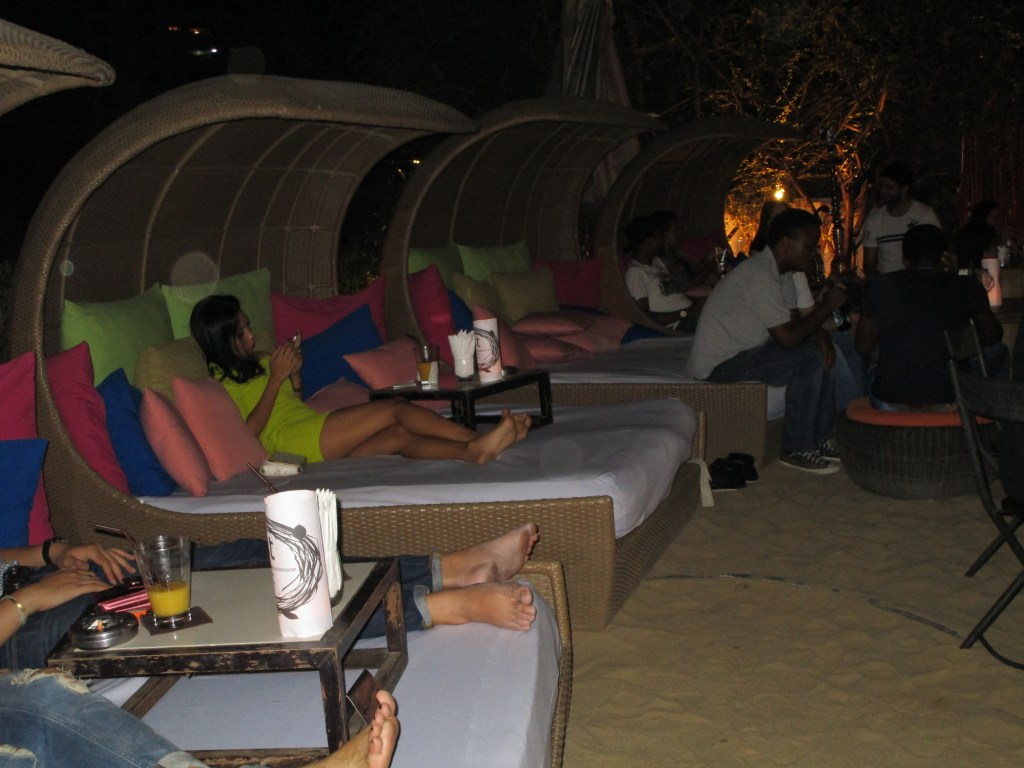
    Above “Apotheka” is yet another refuge from the Soi, “Nest”, where we sought temporary solace. With plants and alcoves and a floor covered in sand in places to reinforce the you’re-in-the-tropics feel, a guitarist provided the music to make it a chill place to hang.

    SINGLE-DIGIT TIME

    There comes a point in any evening where the drinks start to hit the double-digit point and the hour hand single digits. That’s when noisier, more primal venues hold greater appeal. “Levels”, on the 9th floor of the Aloft Hotel, fit that bill. It too had a view, of Soi 11 as it marched through the chaotic tide of humanity to not-so-distant Sukhumvit. With a more aggressive but more snappily dressed crowd, it was an ideal place to see the Soi from a different vantage point. It has a gigantic curving bar with a colossal sparkling chandelier above it, like a fountain of descending glass that never quite splashes down.

    After a drink there I too started my transformation into one of the lurching zombies of the late night Soi. Not quite an extra from the movie World War Z but in a few more hours I might have passed for one. I walked past brightly-lit drink and food carts that lined the streets selling pad thai, seafood of all kinds packed in ice, stacks of coconuts. There was even a shiny yellow van with seats out front called Taco Taxi. I thought of some more lyrics from Murray Head’s song:

    “One night in Bangkok and the world’s your oyster.

    The bars are temples but the pearls ain’t free.”

    ONE NIGHT ISN’T ENOUGH

    The Soi has startling variety of venues: from an Indian nightclub called “Daawat” in the Ambassador Hotel, to a German bar called “Old German Beerhouse”, from an Italian pizzeria called “Limoncello” to a bar called “The Alchemist” tucked away on an alcove just off the main Soi, to a wine bar called “Zaks” to a Thai restaurant, “Suk 11”, set in a traditional wooden building. That doesn’t begin to describe the diversity of choices on the Soi. One night in Bangkok isn’t enough to explore this street.

    I landed with a delightful thud in a basement after hours club named “Climax.” Given the way I was feeling, the long night clearly tugging on me, it certainly wasn’t the climax of my evening but with a glazed view of the revelers it seemed to have lived up to its name for some people.

    No night in Bangkok is complete unless you have a place to R & R (rest and recover) afterwards. The nearby JW Marriott certainly provided that for me. In the morning, I sweated out the previous evening’s indulgences with a lengthy session in the steambath and sauna at the hotel’s state-of-the-art spa. With a swim afterwards I was practically as good as new.

    Relaxing on a lounge chair by the soothing aquamarine pool, I considered with a clear head the challenge I had set for myself. What was I thinking? Who wants to spend just one night in Bangkok?

    Published in Asian Journeys magazine, December 2015-January 2016

  • Dine at SEEN and Be Seen at SIN

    Dine at SEEN and Be Seen at SIN

    Avani+ Riverside Bangkok Hotel’s elevated dining, drinking, and views defined my stay there  

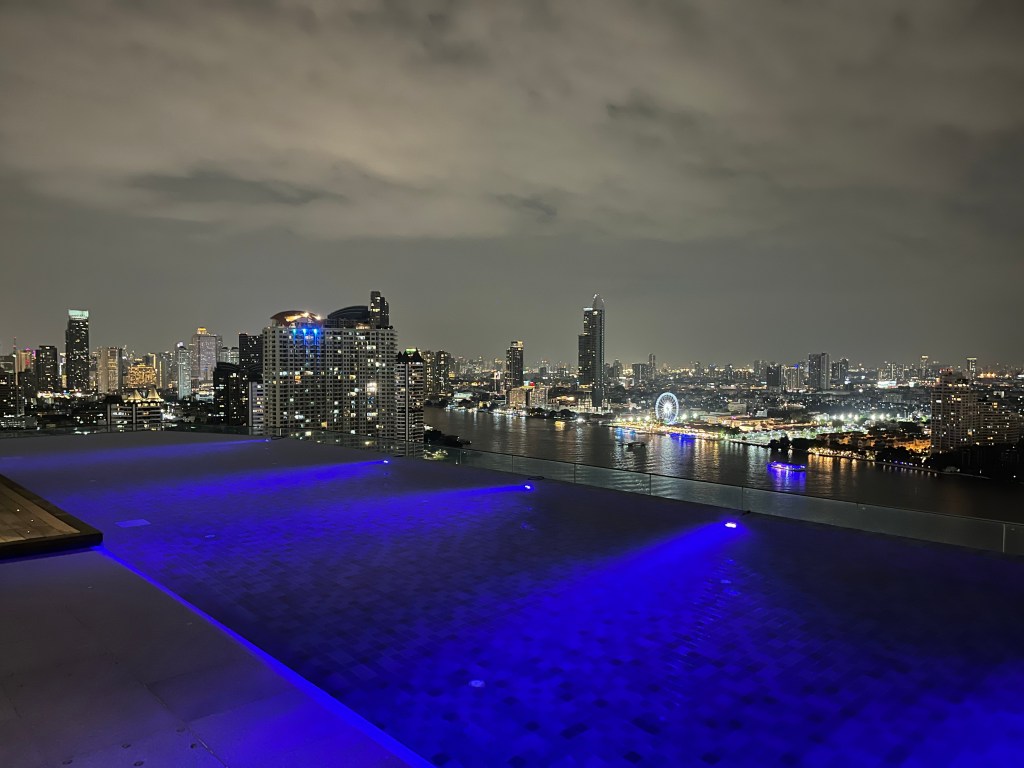
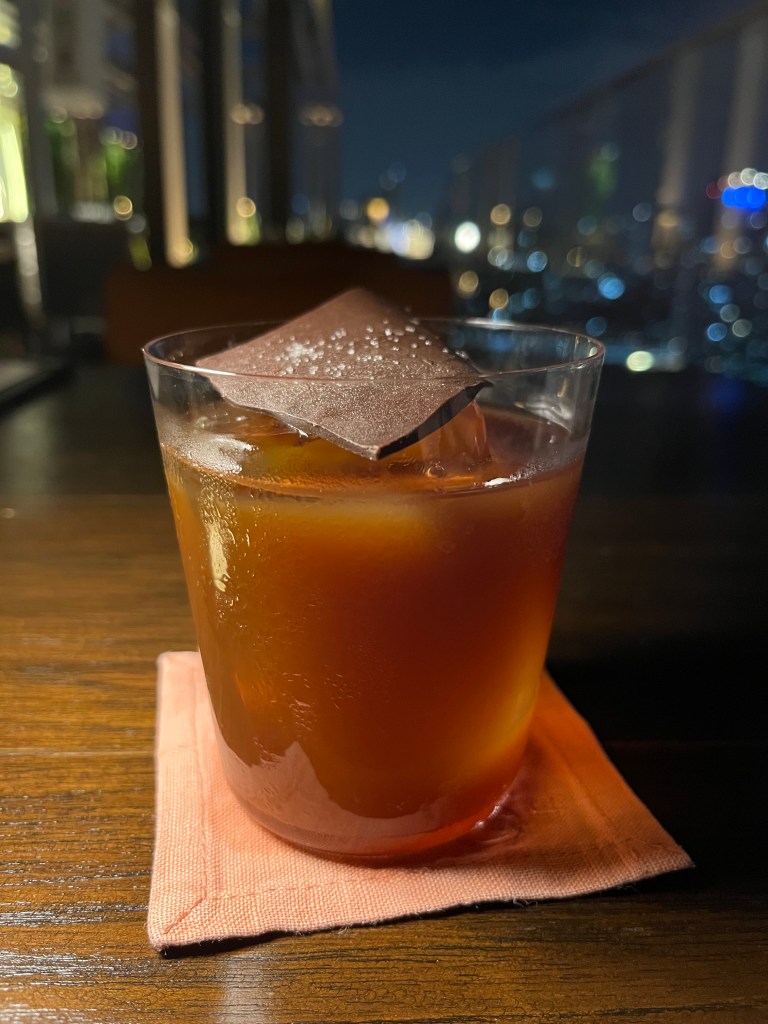
    My dinner at SEEN started with the appropriately named cocktail, Shaman. More magical portion than a cocktail, it mixed Remy Martin 1738, Michter’s US 1 Kentucky Straight Rye, Cinzano Rosso, Cacao, Cynar, Sandalwood, and tobacco. I sipped it while drinking in the view of the Chao Praya River and Bangkok’s jewel-like nighttime skyline.

    Necklace of lights visible from SEEN

    Bangkok is known for its street-level delights: from Chinatown food stalls to shops and shopping malls that invite you to step in from the sweltering heat of the sidewalks to the cooling comfort of air-conditioned retail therapy.

    The Avani+ Riverside Bangkok Hotel, though, defines itself with its views of Bangkok’s nighttime necklace of lights. My 26th-floor meal was an aerial tour of uplifting South American and Asian cuisine by star chef Oliver da Costa. The SEEN group of restaurants started in Sao Paulo, followed by outposts in Lisbon, Rome, and Nice, and now Bangkok and Koh Samui.

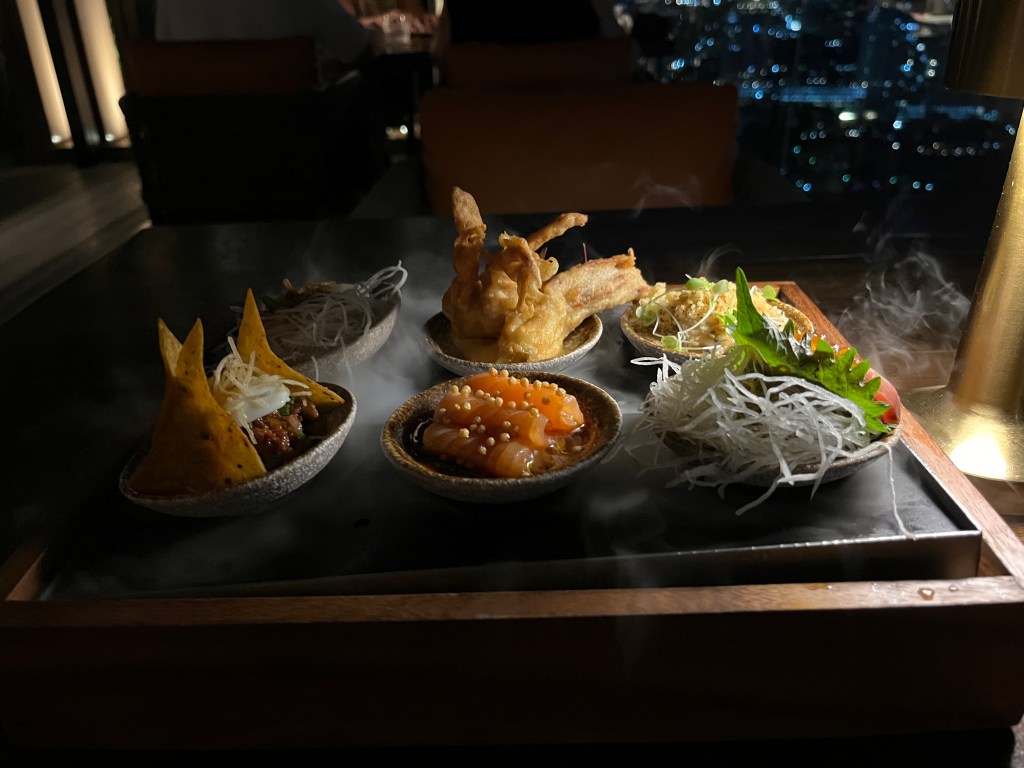
    My meal landed on my palate with a delectable wagyu beef carpaccio with arugula, pesto sauce, and pecorino. Bewitching mussels in a spicy bisque sauce, with scallions and a lemon wedge, followed. I took a well-needed breather before being served the Japanese Mystery Box with dry ice providing a veil of mist that gradually revealed its treasures, from salmon sashimi to tempura to Hamachi with fish eggs. The dishes were so layered and nuanced that I found myself pulled from the view of the river to the equally compelling view of the food I was eating. I finished with chocolate caviar: Belgian chocolate mousse, cherry compote, and chocolate crunchy with hazelnut ice cream.

    To recover, I sauntered over to the infinity pool with the infinite view of the city. The pool’s startling sapphire blue colour jumped from the water to my consciousness. Yes, that Shaman cocktail was well into my bloodstream by now.

    Found Lost & Found

    Too young a night to retreat to my room, I sauntered over to the Lost & Found Club. Located on the third floor of the next-door Riverside Plaza, it’s also part of the Avani +.

    Designed by Australian Ashley Sutton, who created Bangkok’s atmospheric Iron Fairies in Sukhumvit and Maggie Choo’s in Silom, Lost & Found looks like a decrepit spaceship from a high-concept sci-fi movie. Think of the spacecraft in Aliens. High-energy drag performers ignited the club’s vibe.

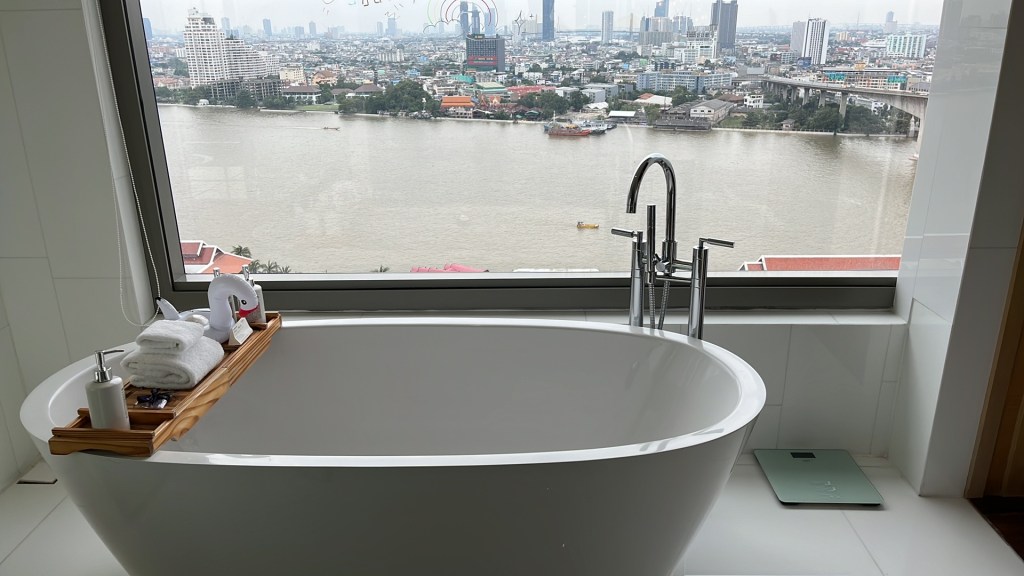
    I retreated at last to my riverside suite with a panoramic, almost IMAX-like view of the Chao Praya River. Even the bathtub has a view and the hotel-provided bath bomb was a bomb along with the MALIN+GOETZ toiletries. A good soaking sent me off on a long, deep sleep.

    Memorable AM to PM meals

    Breakfast at Avani+’s Skyline restaurant is a mixture of dishes that are good for you and those that aren’t. To recover from the night before, I started with a healthy avocado toast with a revitalizing shot of orange, carrot, and ginger juice. But that soon gave way to Thai noodles. And who can resist coconut ice cream in the morning? I couldn’t. And didn’t.

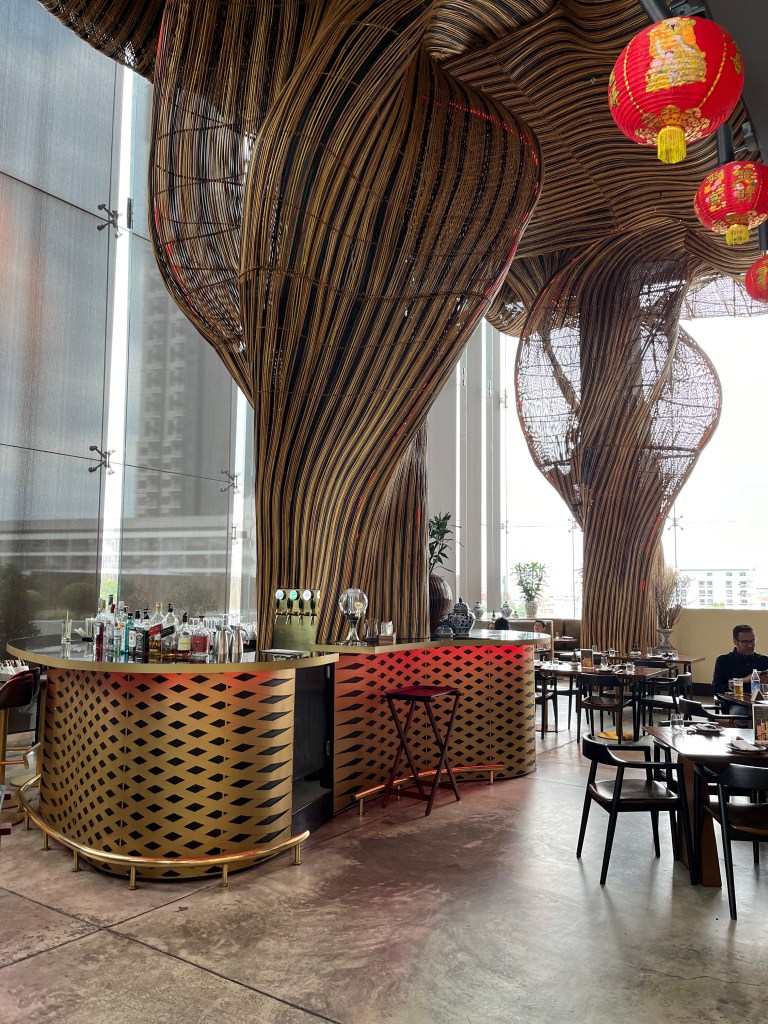
    For lunch, I dined at the Spice & Barley restaurant. Avani+’s Chinese restaurant was awarded best-designed restaurant in the brasserie category at the LIV Design Hospitality Awards. The Patrick Keane and Enter Projects Asia space uses swirling floor-to-ceiling rattan sculptures, a giant mural of an imperial concubine, and a gold-tinted color scheme to communicate a luxurious visual embrace. My chicken clay pot lived up to the high expectations of the setting.

    After lunch, I had a pastry pick-up at The Pantry. The tarty lemon tart with coffee in the light, airy space was a chilled way to spend part of an afternoon and gather steam for what promised to be a long evening ahead.

    On Bangkok’s Thon Buri side

    The Avani+ Riverside Bangkok Hotel is located on the Thon Buri side of the Chao Praya River. Getting to the main part of Bangkok is easy: an hourly ferry runs from the next-door Anantara Riverside Hotel to the Saphan Taksin Skytrain station, where all of the city is accessible. On the Thon Buri side is the ICONSIAM mall — massive with literally all you could ever want. There’s also Wat Arun, the Royal Barges National Museum, and the Thonburi Canals that give a glimpse into an all-but-vanished traditional Bangkok life.

    Experiencing SIN was sublime

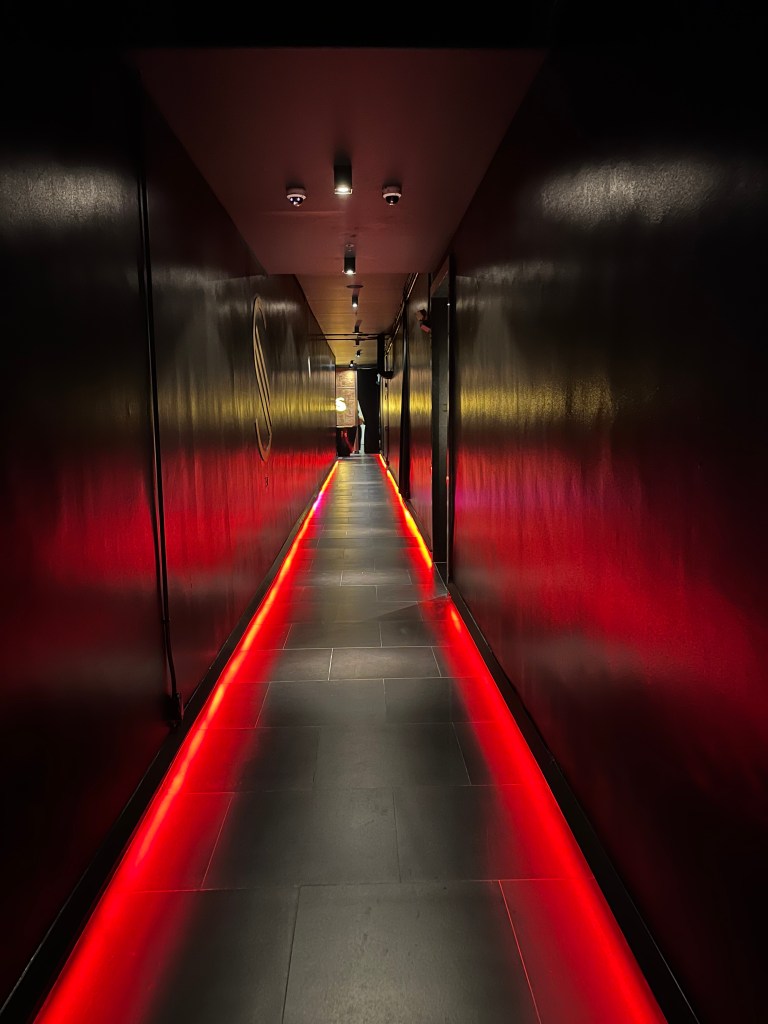
    In the evening, I strolled down a long, narrow corridor flanked by ribbons of red light to be greeted by a hostess who escorted me into the theatrically expansive 27th-floor rooftop bar and club, SIN. The effect of emerging from the narrow corridor into the outdoor area gave me a sense of “Wow.” I found out later that was the design intention. As someone who loves Frank Lloyd Wright’s architecture, it’s a technique he frequently used in the homes he designed. I may have dined at SEEN the evening before, but now it was time to experience SIN.

    With a table overlooking the river but not far from the bar, I was able to savor the view and experience the bar. For a kick-off, I had the Forbidden Nectar cocktail: Michter’s Kentucky Straight Bourbon, miso, caramel yogurt, carrot, and creamy bourbon. The drink was so complicated I imagined that the mixologist needed a chemistry degree to make it. With a cocktail that sublime I didn’t need rose-colored glasses to see the world in a more optimistic light.

    Sinfully good dishes at SIN

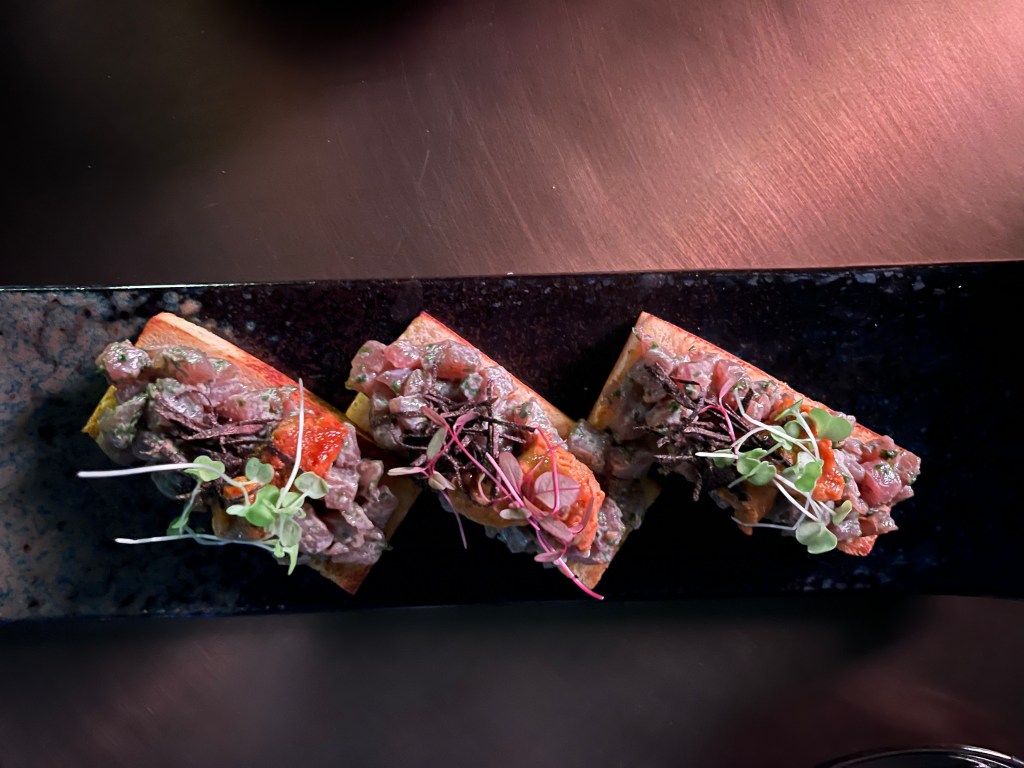
    My dishes soon followed. The starter piqued my tastebuds: scallop crudo with yuzu vinaigrette, yuzu gel, coriander oil, and Kaluga caviar. Following that was a more substantial open-faced sandwich — bluefin tuna, smoked tuna, fresh summer truffle mayonnaise, shaved truffle, and Uni from Hokkaido on a crispy brioche. Just one more dish to round out the meal: wagyu Miyazaki beef A5 grade, bulldog sauce, and a sprinkling of Kaluga caviar on a brioche. No exaggeration: the best food I’ve had in a bar ever. It’s not only the view that is stellar at SIN.

    SIN’s atmosphere is somewhat otherworldly. Overlooking the elliptical-shaped bar and expansive terrace in an immense oval-shaped alcove with a giant golden “S,” a headphone-wearing DJ in a sleeveless purple gown presided over the eclectic, pulsating music and stylish crowd like a Mount Olympus goddess.

    Sip to savor cocktails at SIN

    Which brought me to my evening’s second cocktail. Given the bar’s name, the Midnight Sin was that moment’s go-to cocktail: Remy Martin 1738, Jameson Black Barrel, cacao nibs, cacao husk, coconut cold brew, PX. I like to sip to savor my cocktails, and this was a drink that I hoped would never end.

    Bangkok is a hot and humid city. But at that hour and that elevation, I was cooling down fast. A few sips from a cocktail at SIN and Bangkok is transformed into a serendipitous and serene place. A cocktail bar doesn’t get better than that. And neither does a hotel stay like the one I had at Avani+ Riverside Bangkok Hotel.

    Published in February/March issue of Asian Journeys magazine