
SINGAPORE: There was symmetry to the moment: I was standing on the balcony of Singapore’s colonial-era iconic building, the Supreme Court, while taking a photo of its 21st century one: the Marina Bay Sands. The meanings of the two buildings couldn’t be more different yet more appropriate for their respective eras. The Supreme Court stood for rule of law in an unruly part of the world in the 1930s. And the triple-towered Marina Bay Sands, designed by Moshe Safdie, with its colossal boat-shaped SkyPark, stands for fun in a country that recognizes the economic value of “the pursuit of happiness.” As “billboards” advertising their respective messages, they work. The Marina Bay Sands, for example, just brought in a record-breaking profit of $314 million for its corporate parent, Las Vegas Sands.
Iconic buildings have been central to humanity since Stonehenge. Architecture has always been about context. This is what Moshe Safdie calls on his website, “Responding to the Essence of Place”. And also content, or “Shaping the Public Realm”, also from his website. Their purpose in ancient times was either to foster religion or generate fear and respect for the governing body. Whether it was the Parthenon on the Acropolis or the pyramids of Egypt, rulers created iconic buildings to secure their hold on the populace.
But now it is different. Culture and business, today’s soft power drivers, are the reason these buildings are created. Government involvement is more backseat: from encouraging the development through zoning laws, approvals or tax and other incentives.
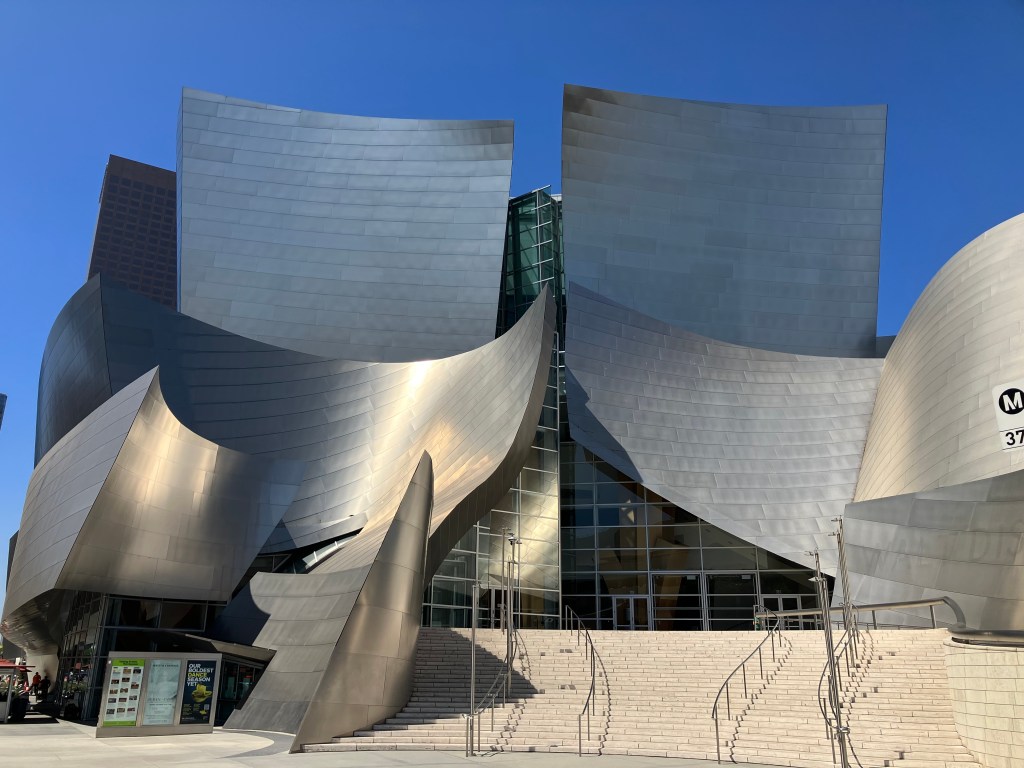
It is perhaps Frank Gehry’s Guggenheim Museum in Bilbao that started the latest wave of iconic buildings as billboards. Although Asia and the Middle East were already approving plans and laying foundations for their own monumental billboards before the Guggenheim was opened in 1997.
The Petronas Towers in Kuala Lumpur, opened in 1998, signaled the emergence of Malaysia as more than a country of rubber and palm oil plantations. Architect Cesar Antonio Pelli said, “I tried to express what I thought were the essences of Malaysia, its richness in culture and extraordinary vision for the future.” And Taipei 101, from 2003 until this year the world’s tallest building, reminded people that Taiwan still mattered as a business hub and wasn’t overshadowed – yet— by China.
Iconic buildings can create a buzz that translates to perceptual and economic benefits over time. When the Burj-al-Arab opened in 1999, it put Dubai on the map as the ultimate luxury destination. Like the Marina Bay Sands, it communicated fun in a part of the world that is usually more associated with oil and the occasional war. The term “seven star” hotel was invented to describe the hotel. Looking like a colossal chrysalis from which a butterfly is about to emerge it has attracted celebrity guests and incalculable positive PR.
Dubai followed up this year with the can’t top this Burj-al-Khaifa. As Christopher Davidson, a University of Durham professor said, “The tower was conceived as a monument to Dubai’s place on the international stage.” The world’s tallest building by far it is a litany of superlatives: 828 meters high, 160 floors, world’s fastest elevators at 64 kilometers per hour, 12,000 workers and contractors involved in the building of it. When compared to the rest of the Dubai skyline it looks like it is nearly double the height of the next highest building. It is truly a Great Pyramid of Giza for our time. But its opening earlier this year was colored by the collapse of Dubai’s economy. Still, I believe that over time it will deliver on its promise to transform the city’s image. Scenes from Tom Cruise’s next “Mission Impossible” movie will feature the building, creating buzz for Dubai that it needs in its economic recovery stage.
Not that Qatar will allow its sister gulf state to grab all the attention easily. Doha, the capital of Qatar, now has its own iconic building: the Museum of Islamic Art, which opened in 2008. The I.M. Pei designed building showcases a stunning collection of Islamic Art to remind the international community of the richness — not just riches – of the Arab world. Like the Guggenheim museum in Bilbao, it’s a transformative culturally-oriented building, making Doha a destination in its own right. Perched pyramid-like on the edge of Doha Bay, it is a visual anchor of the city. As the Qatar Museums Authority website says: “It will bring the world to Doha, but it will also connect Doha to the world.”
And of course China is building a number of iconic buildings to flesh out its progressive 21st century image. I remember standing on the Oriental Pearl building in Shanghai, that 1990s Flash Gordon inspired image of the future with its spheres and pointy spire and looking down on the iconic buildings of the 1920s on the Bund with their colonial-era stolidness, projecting wealth and power with fluted columns and granite. And I looked up at the iconic building of the 21st building, the Shanghai World Financial Center building, opened in 2008, which at one angle looks like a giant bottle opener overshadowing the nearby Jin Miao tower. Shanghai, like the New York it seeks to emulate, and Hong Kong, which it is overtaking, is a city of iconic buildings.
When will this latest wave of building competition end? Not anytime soon. If you want to understand the power of iconic buildings to attract attention to a city trying to compete in this globalized economy, then think of the cities that don’t have them. Bangkok perhaps. Or Mumbai. Or Jakarta. Or Manila. You’ll discover that the negative clichés about these metropolises tend to define them. In a world where a positive image translates to economic advantage, iconic buildings give just that more of a winning edge. You only need to take another look at the Marina Bay Sands and its recent profits to see that the gamble to build it has paid off. As British archaeologist, Jacquetta Hawkes, said, “every generation gets the Stonehenge it deserves – and desires.”
Published in The Straits Times, November 2, 2010
 Maybe Next Trip