Tag: japan

  • The Road to Myanmar’s Golden Heart

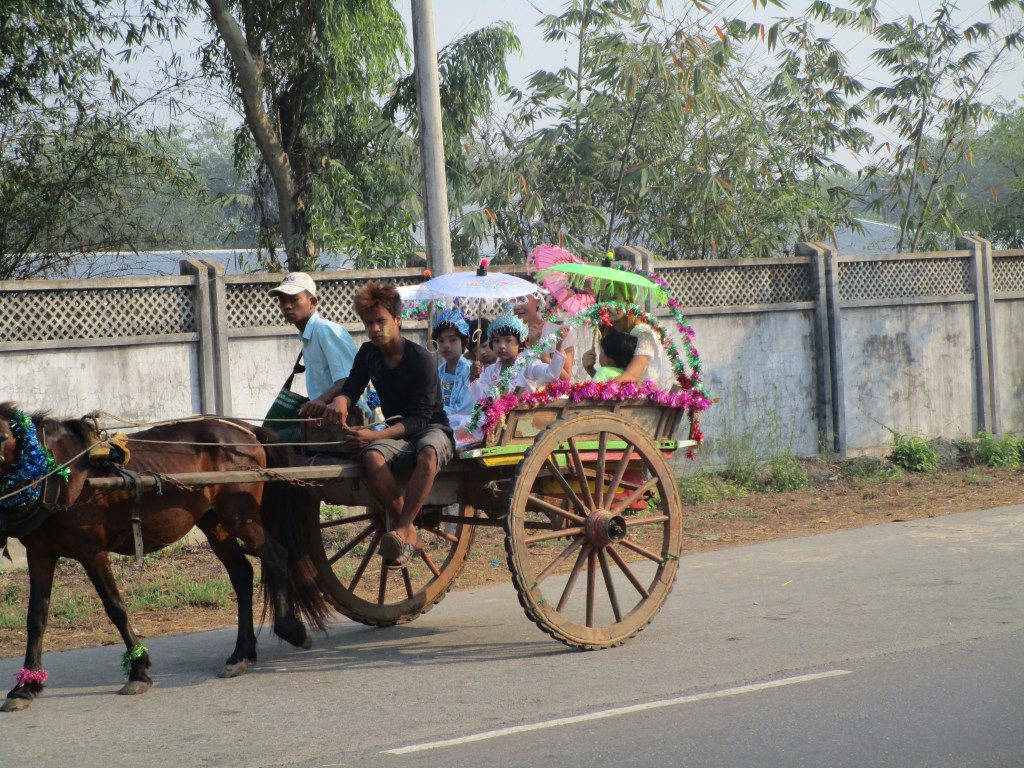
    I’ve been travelling to Myanmar since 1981 and it was quite unlike any procession I had ever seen: groups of men surrounding boys atop richly adorned horses and kept comfortable under the shade of golden parasols. The men, retainers more like, walked beside them in the baking March sun.  The boys wore lush embroidered silk outfits of pale pink or golden yellow, with headgear befitting a prince, while the men wore simple shirts and dark-patterned longyi.  Behind the boys were flower-bedecked horse carts carrying young girls under frilly parasols of pink, white, pale green. The procession stretched for hundreds of meters followed by a travelling band playing on a flatbed truck.
    BUDDHIST INITIATION RITES

    What my wife and I witnessed was part of the shinbyu, the initiation ceremony for monks that is a rite of passage for Buddhist boys in Myanmar. The first step is to re-enact the privileges of the Buddha as prince before he rejects the royal life in exchange for one of self-denial.

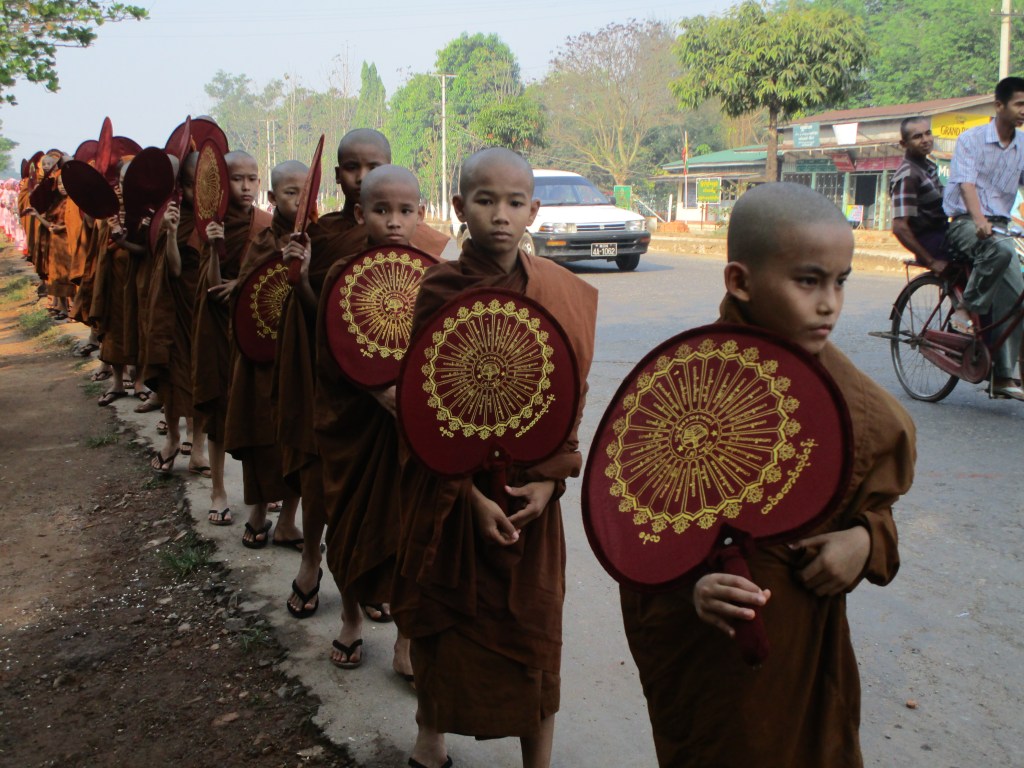
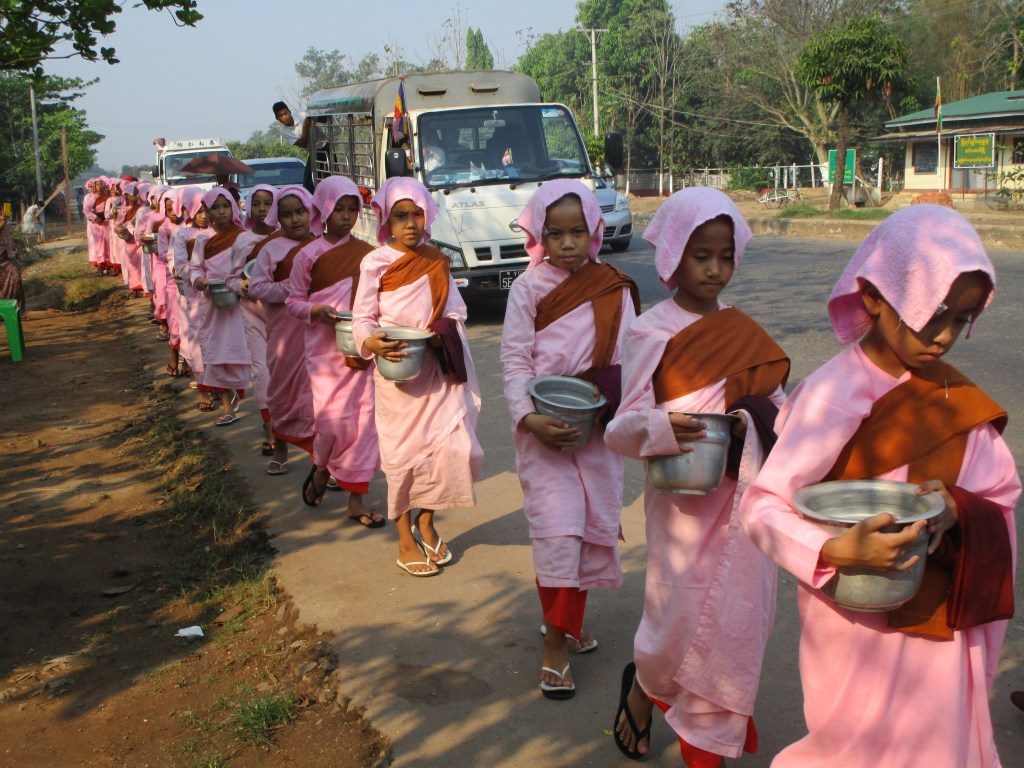
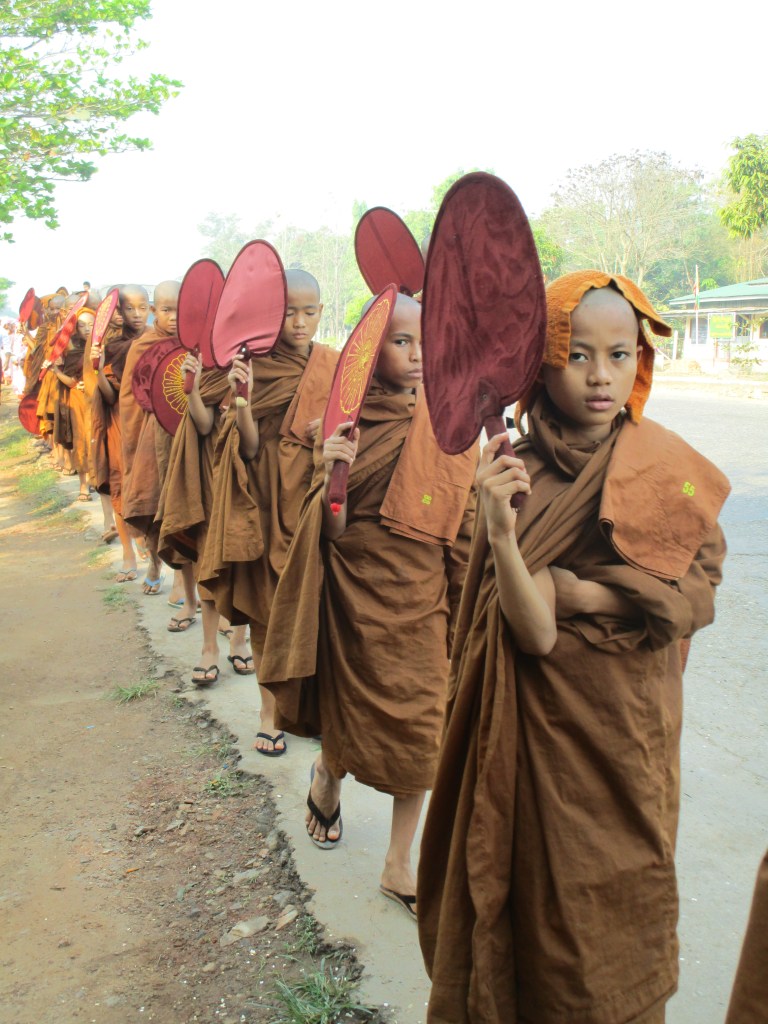
    Further down the road we saw boys who had already rejected their princely lives in favor of the simple existence of monks, their heads shaven, wearing plain brown robes and simple sandals, waving fans to cool themselves from the heat, temperatures above 30 C the day we saw them. Following them were dozens of girls in pale pink robes, carrying tin alms bowls, cloths draped over their heads to keep themselves cool.
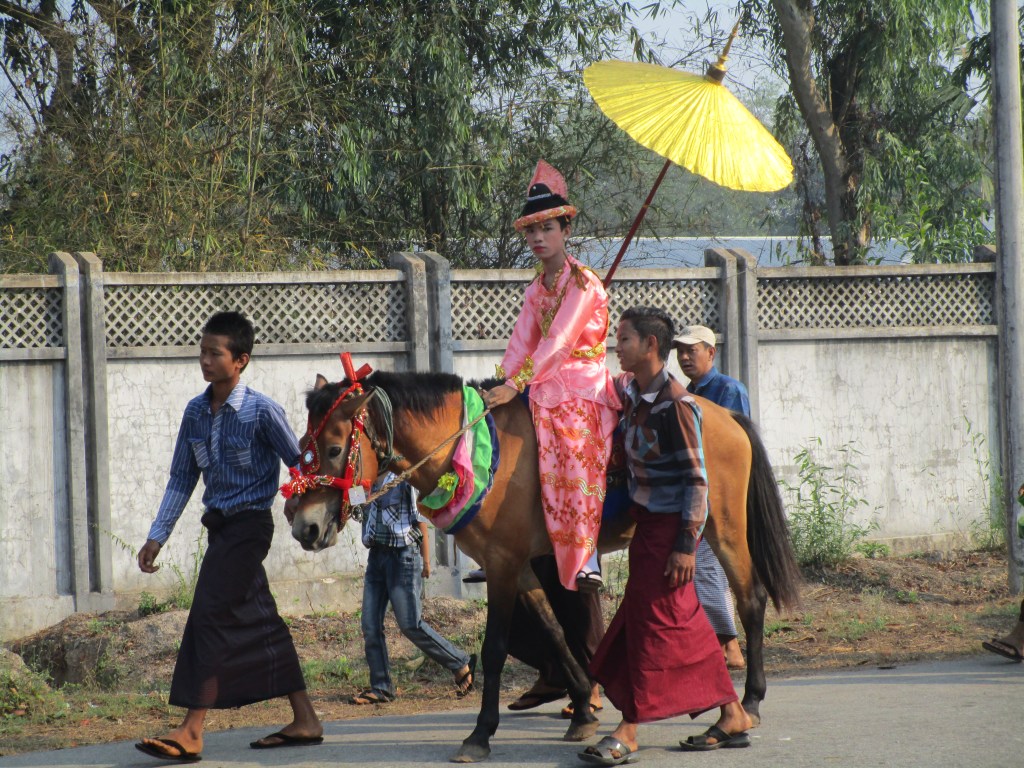
    There were hundreds of boys and girls, all in a line, all along the road that stretched from the capital Yangon to the Golden Rock temple in the south of the country.

    The 210 kilometers from the traffic-clogged colonial-era city of Yangon to Golden Rock temple, also known as Kyaiktiyo Pagoda, is a journey to the golden heart of the country. Along the road I witnessed a microcosm of its spiritual side.

    HIGHEST PAGODA IN MYANMAR

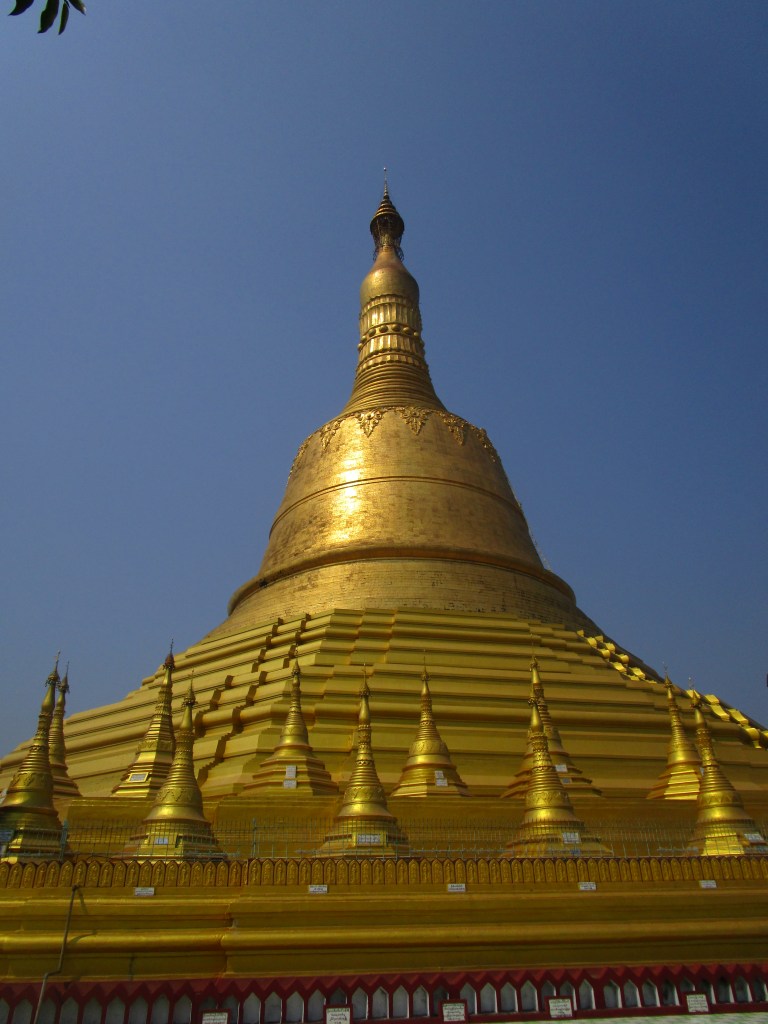
    At Bago, the midway point, we visited the Shwemawdaw pagoda, the highest pagoda in Myanmar at 114 meters, higher even than the Shwedagon pagoda in Yangon. Also known as the Golden God pagoda it is over a thousand years old, and reportedly contains hair and tooth relics of the Buddha. The pagoda dominates Bago and the surrounding plains with its golden spire contrasting against an impossibly blue sky the day I saw it. A young monk struck an enormous bell with a large wooden stick. Worshippers spent time in contemplation near the pagoda, staying in the shade.
    One of the challenges of visiting Myanmar temples is enjoying them while walking barefoot on ground that can sometimes be achingly hot. During the March April hot season we employed a strategy of lingering in the shade, and moving fast when not.

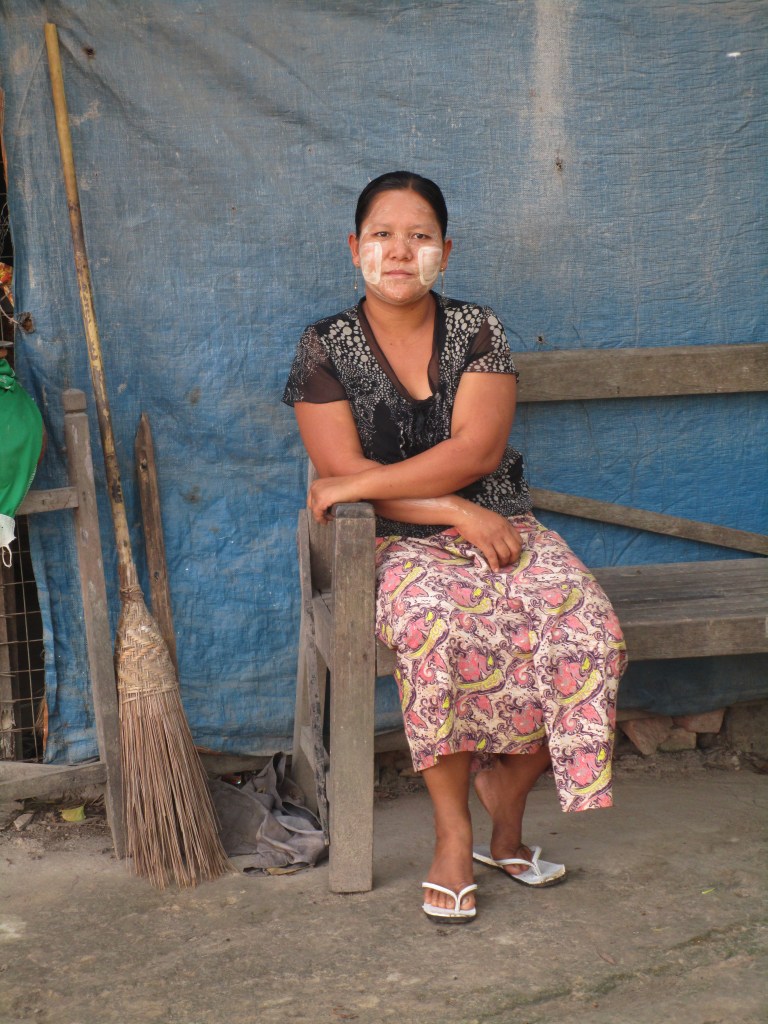
    As we left the pagoda via the covered walkway steps we saw iridescent green rice cakes for sale by a girl with a face thickly covered by thanaka, a yellowish sunscreen created by ground bark that looks somewhat like kabuki make-up.  There were hundreds of red bags of rice stacked on tables as donations to the temple. Just outside the pagoda I stopped by a woman with a cage of twittering sparrows. For less than a dollar, I bought three to release into the air. According to Buddhist belief, each bird you release earns you merit and symbolizes the letting go of your troubles. I’m not sure anyone’s troubles can so easily disappear but it did feel good letting the birds fly from my palms into freedom.

    SECOND LARGEST BUDDHA IN THE WORLD

    Nearby was the Shwethalyaung Buddha, which at a length of 55 meters and a height of 18 meters is the second largest Buddha in the world. Built in 994, its colossal size with an almost unreal serenity makes it a stop you want to spend time in. I wasn’t alone in feeling that way. Hundreds were there not just to look and move on but to stay and pray. Beneath the Buddha and along the temple’s wire enclosure were plaques with the names and amounts from donors all around the world.

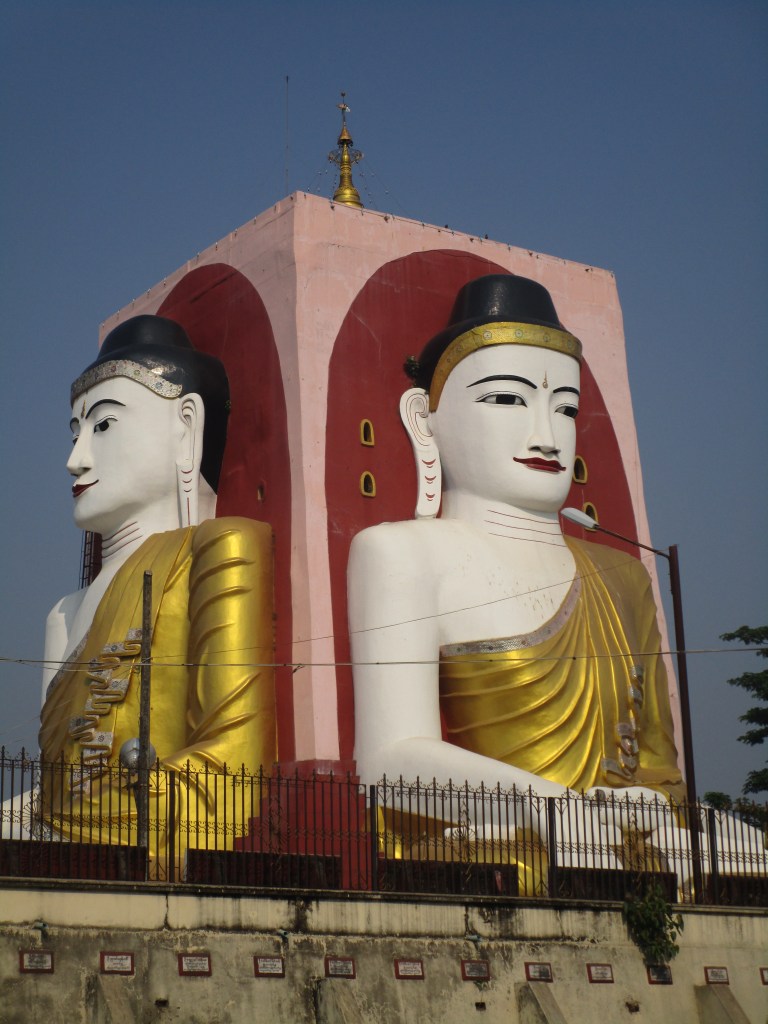
    Before leaving Bago, we stopped at the 27 meter high Kyaik Pun pagoda, where four gargantuan Buddha images sat ramrod straight against a massive square-shaped brick pillar. The pagoda was reportedly built by King Migadippa of Bago in the 7th century and renovated by King Dhammazedi in 1476. However, a folk story has it that it was originally built by four sisters vowing to be single. But the youngest one broke her vow. The statue of that sister is on the southwest corner where monsoon winds and rain regularly lash it. With alabaster white skin, glinting gold robes set against the ochre and faded pink of the pillar the four Buddhas looked like sentinels and must have conveyed how powerful the Mon kingdom was at its apex.
    LAST LEG TO GOLDEN ROCK

    To reach the Golden Rock temple we transferred at the town of Kim Pun from our van to a packed open-backed truck with seats in the back. For a little bit more you can ride up front with the driver. We decided to splurge! Each of the trucks had their own name. Ours was called Fuso Fighter.

    During the eleven-kilometer drive up on a steep, single lane road to an elevation of about 1,000 meters the drivers were quick to punch the accelerator or hit the brake! Lurching wildly from side to side I realized that having a bit of faith helped on this last leg of the journey.
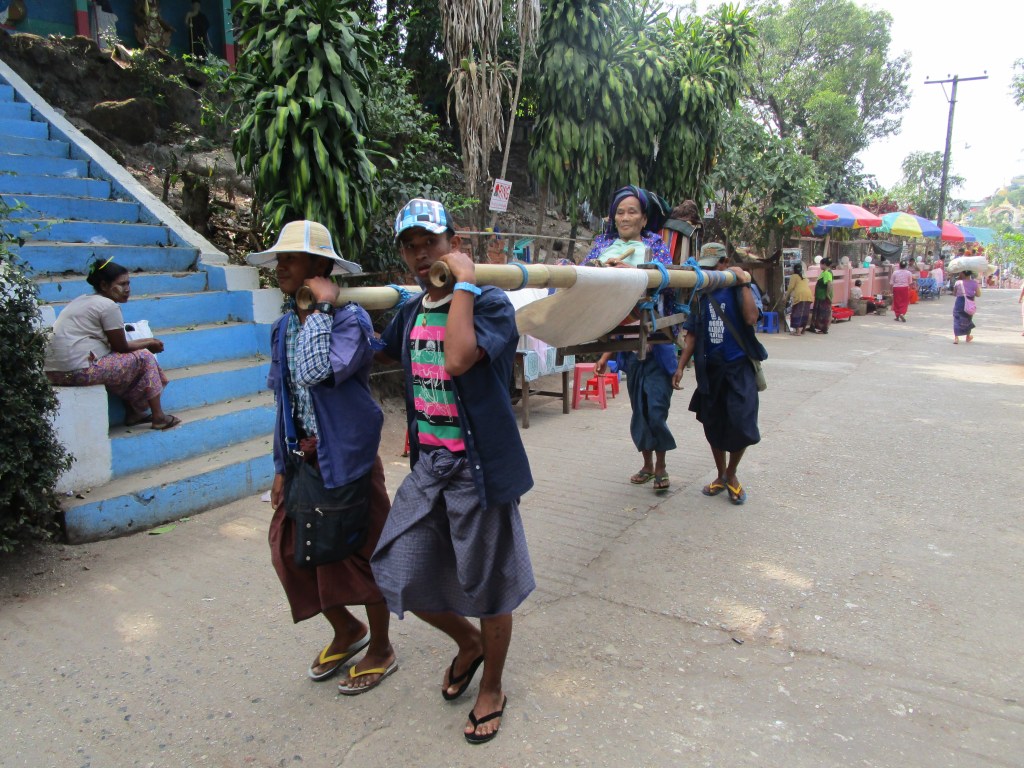
    At the top, we felt the buzz of anticipation from pilgrims and monks. Young men with baskets offered to carry the pilgrims’ belongings. For those in very poor shape, four young men would carry the pilgrims themselves on makeshift sedan chairs, a concoction of cloth with bamboo poles. The people in those certainly seemed comfortable. Most pilgrims just joined the quiet crowd making their way to the pagoda. Monks walked in a line with their alms bowls.
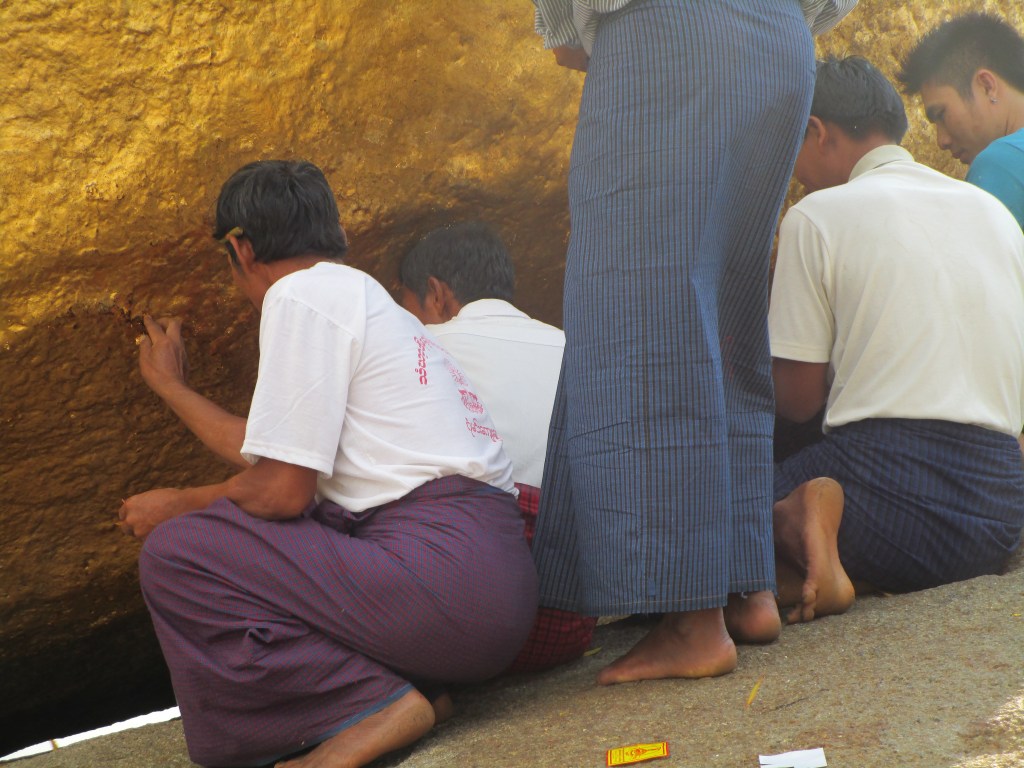
    Along the kilometer long path shops sold everything from bottles of herbal concoctions to freshly cooked dishes to musical instruments to amulets to gold leaf to paste on the Golden Rock itself.  For a thin filament of gold it’s about a dollar fifty.

    THIRD MOST IMPORTANT BUDDHIST PILGRIMAGE SITE IN MYANMAR
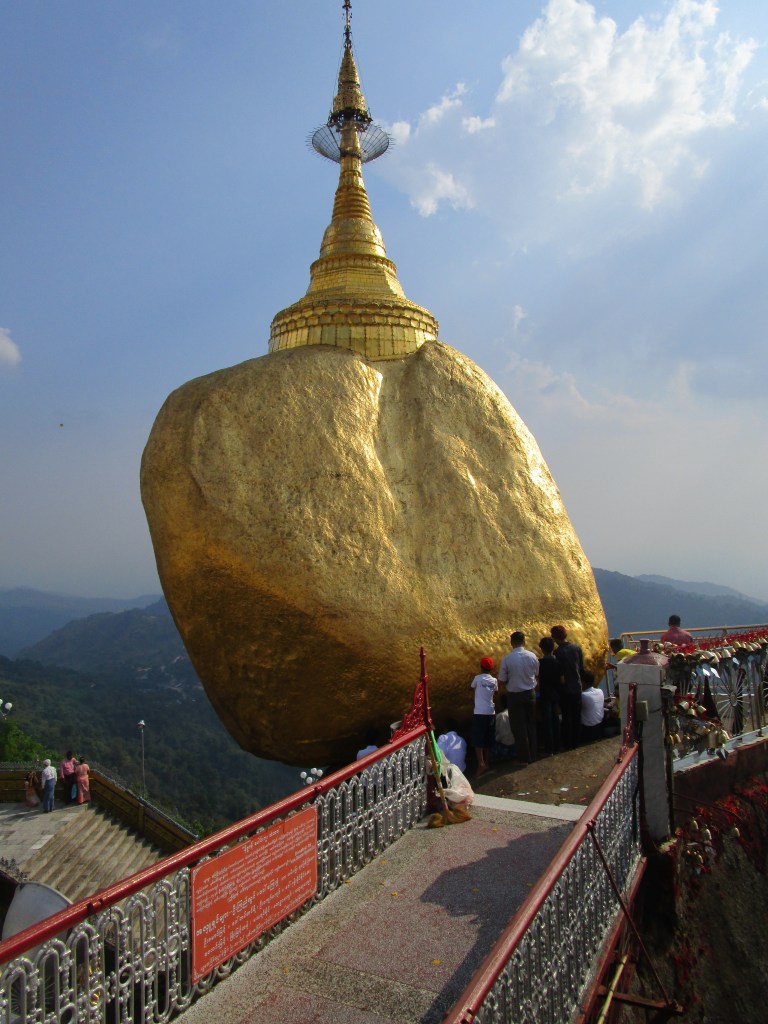
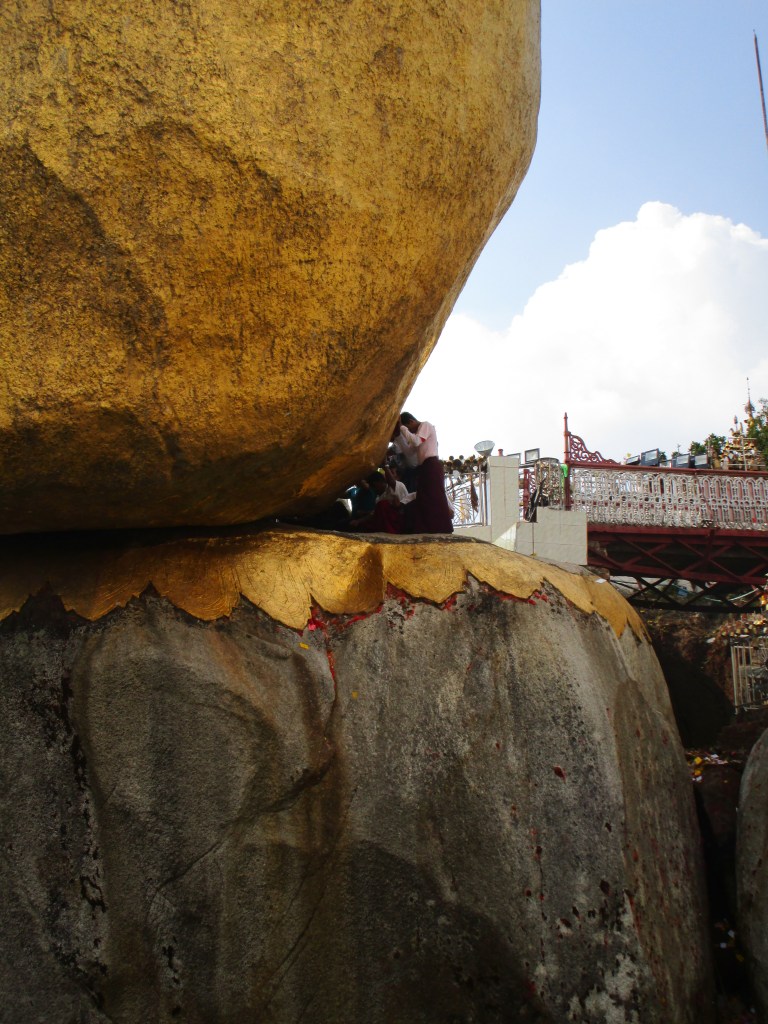
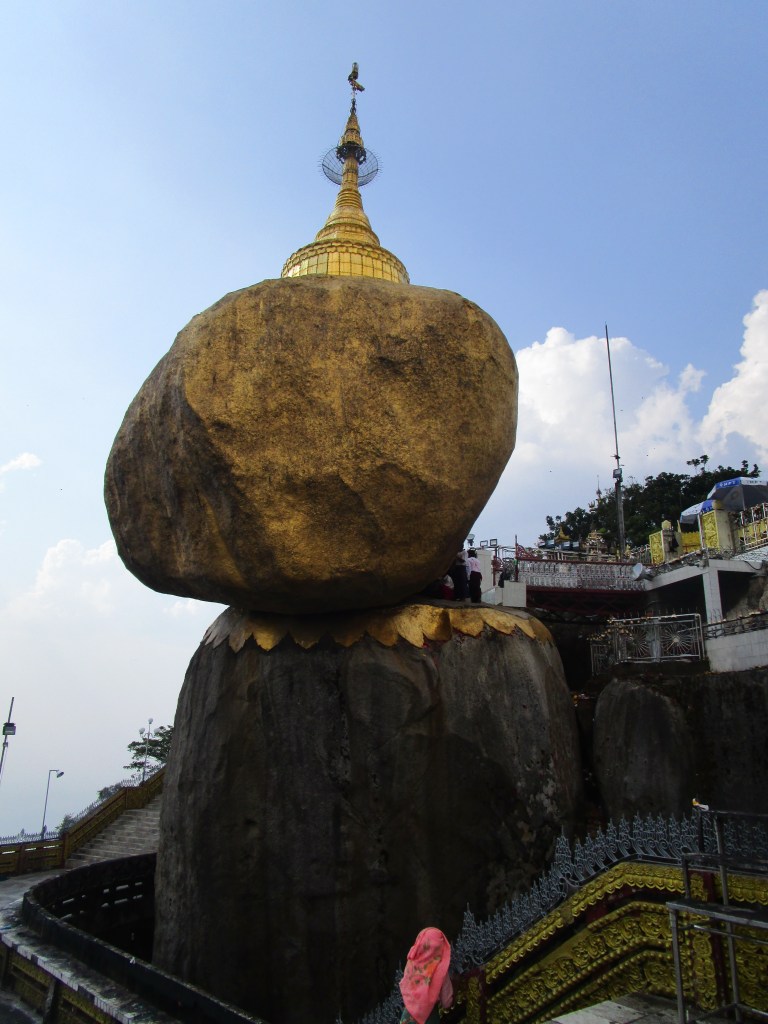
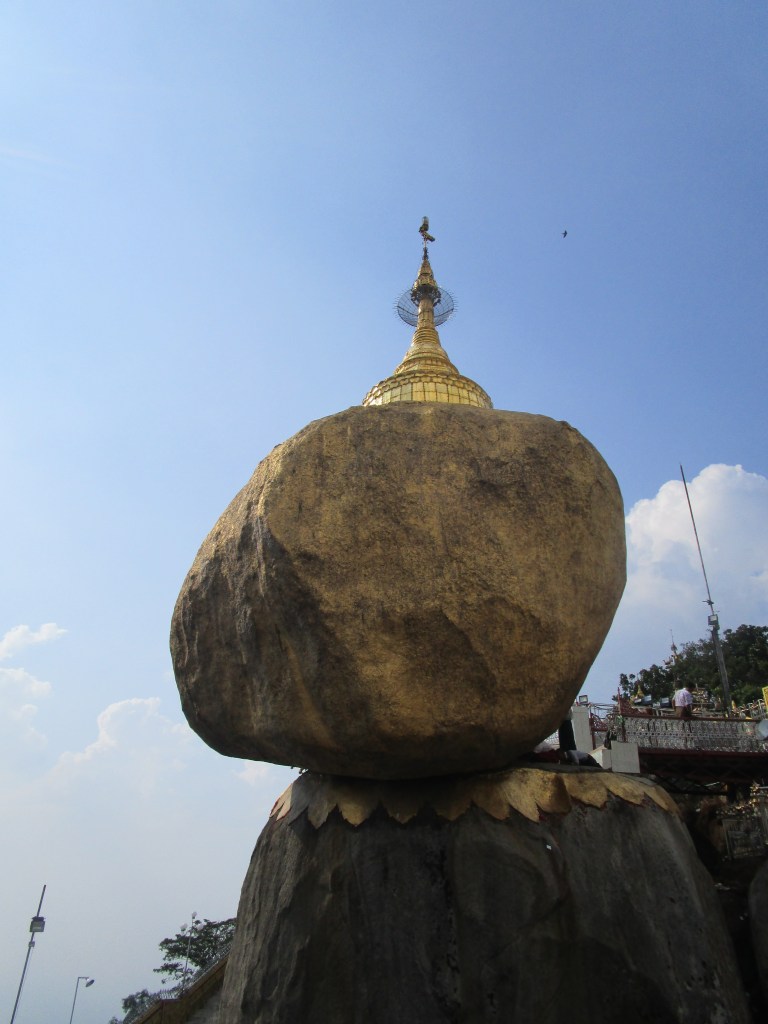
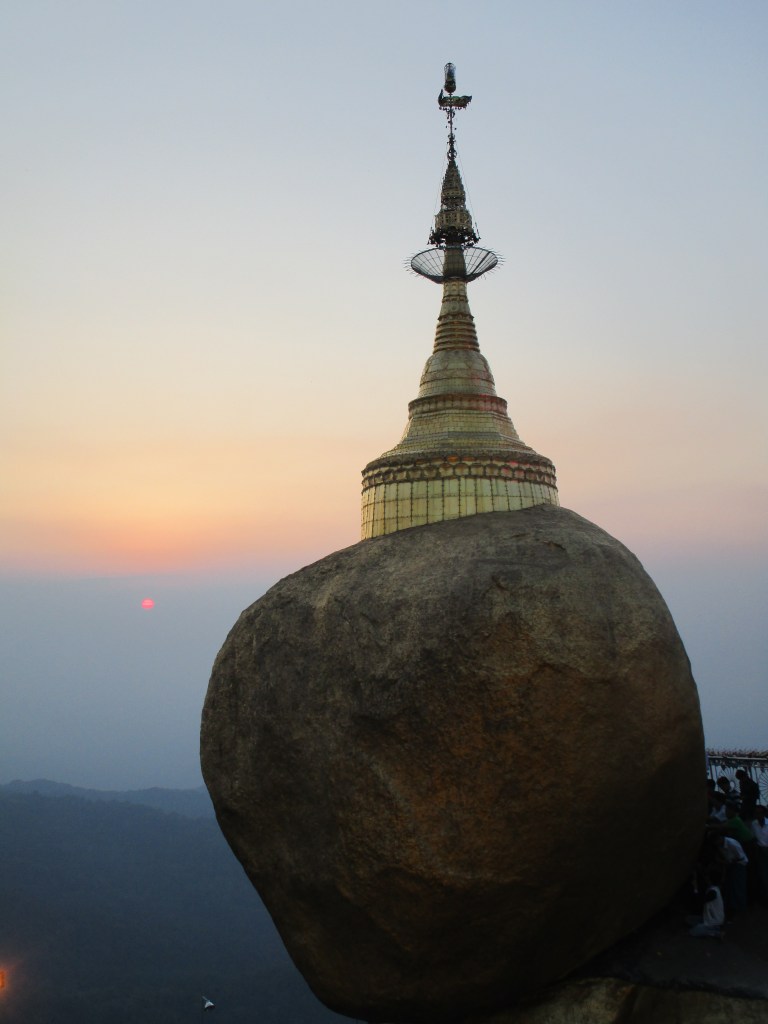
    The pagoda itself is small, about 6 meters in height. It sits on top of an enormous gold-covered granite boulder that looks like it’s just about to tip over and roll down the mountain. But it doesn’t fall, even though it’s nearly halfway off the ledge it has been on for eons and is some eight meters in height and 611 tons in weight. Legend has it that a hermit kept strands of the Buddha’s hair and then when he was dying, looked for a suitable place to hide it. He saw the loose boulder, Golden Rock, and built the small stupa on top where the strands of hair are kept inside. The pagoda was built in 574 BC.

    It is the third most important Buddhist pilgrimage site in Myanmar, after Shwe Dagon pagoda and Mahamuni pagoda in Mandalay.

    The energy around the Golden Rock was palpable. Worshippers — and only men were allowed — pasted gold leaf at the base of the boulder.  Fragments frequently floated away on the breeze, catching the sun’s light as they did so. There was no fence or barrier of any kind between the base of the rock and a drop of easily ten meters. I asked our guide if anyone had ever fallen and she said no.  Yet, as men’s feet were literally inches from the ledge it certainly looked risky, even if you didn’t suffer from vertigo.
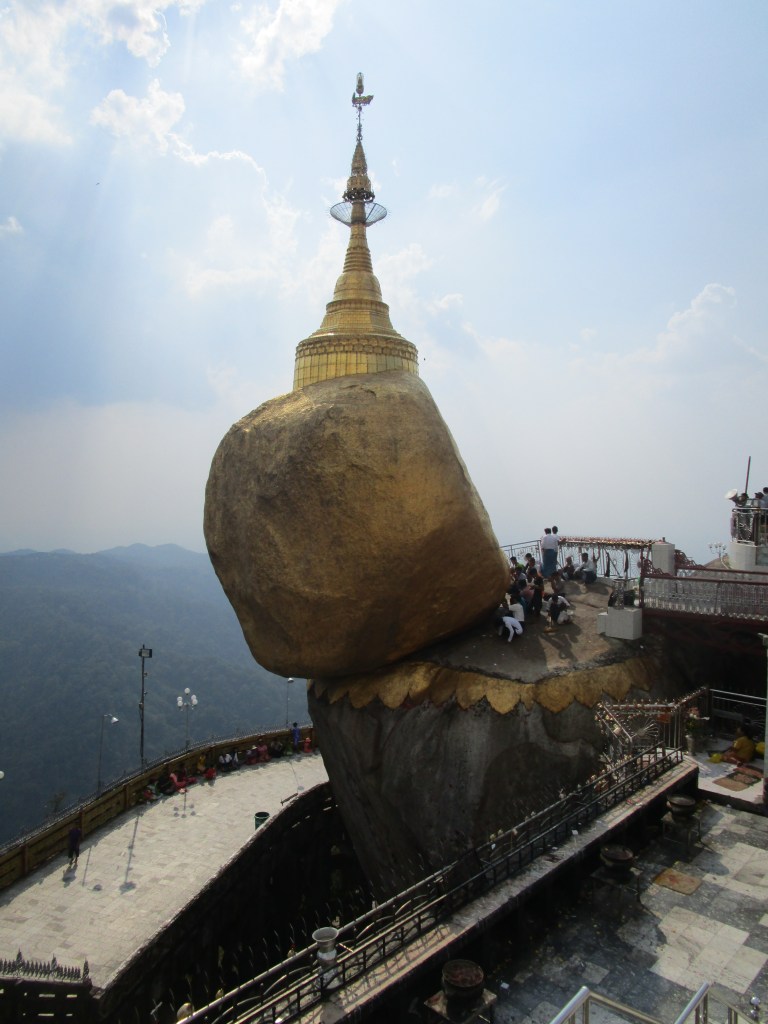
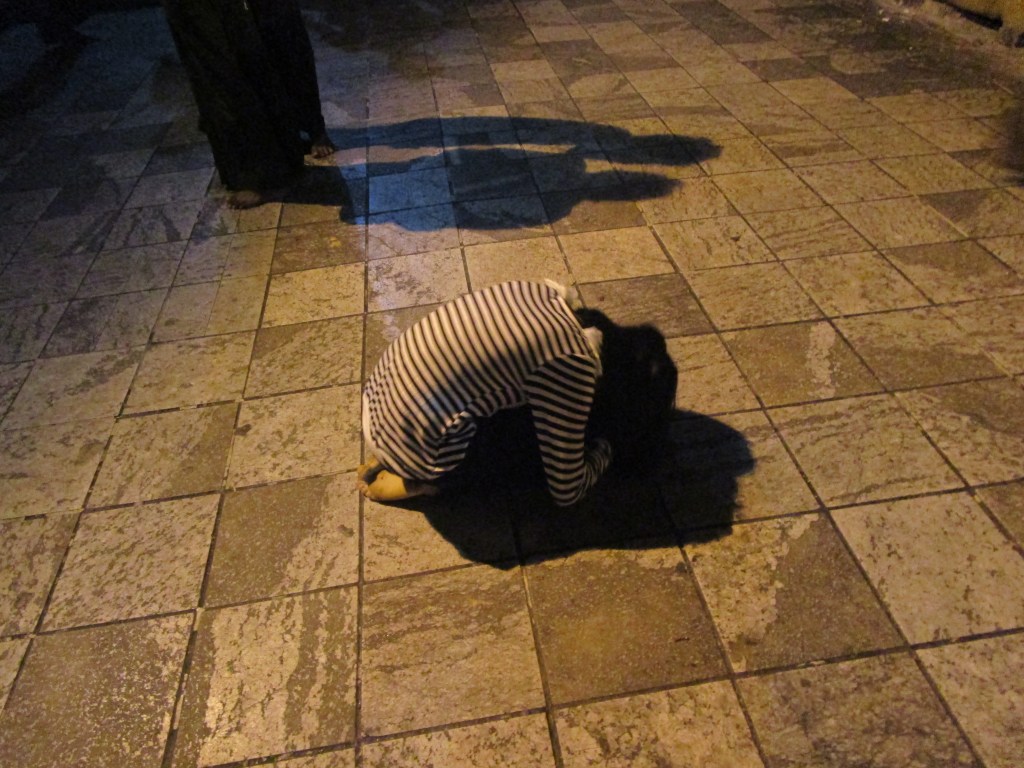
    I took steps down and soon I was looking up at the rock in more ways than one. The sense was that the rock was going to do something, take some action, yet it stayed absolutely still. It’s easy to understand why people are quickly mesmerized by it.  Some worshippers bowed to it. Others quietly put their hands together, closed their eyes and meditated. I watched as the sun set behind it, the valley glowing beneath it. Soon, the area was lit with hundreds of candles, casting a flickering glow on the Golden Rock that animated it, giving it a life of its own.

    Near the approach to the Golden Rock temple were numerous glass cases filled with bills, donations to the temple. Women sat and prayed under bare bulbs. Still further back people laid out mats and even set up tents, preparing to sleep there for the night so that they could worship at the Golden Rock at dawn.
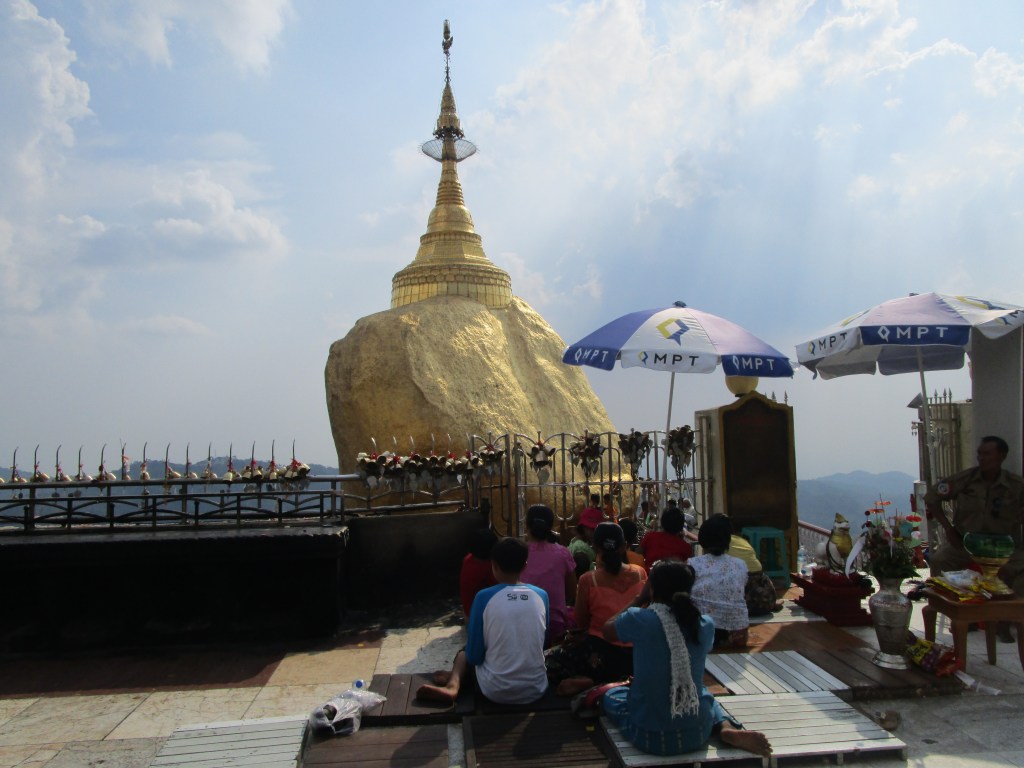
    I had not seen this level of religious intensity in my previous visits to Myanmar. The Golden Rock temple struck me as truly Myanmar’s golden heart, combining electric engagement with worshippers with an unnerving stillness. It was both timeless and in step with the times.
    HOW TO GET HERE FROM YANGON

    From Yangon you can take a bus but I recommend renting a van and guide and taking your time.  Not only are there the temples in Bago but there is the Allied War Cemetery near Htauk Kyant where you can read the poignant epitaphs   families had engraved on their loved ones gravestones.

    If you go straight from Yangon — and happen to miss the city’s traffic — it will take between three to four hours to get there.

    CULINARY HEART TOO

    And of course, don’t miss the food. This part of Myanmar is its culinary heart too. Myanmar food takes hours to cook, bringing out the sometimes pungent flavours of the ingredients. At the roadside restaurants people would quickly eat dishes that had taken a morning to prepare. Among others, there’s mohinga, a rice noodle fish soup, stone pumpkin soup with chicken, and fermented bamboo shoot soup. It’s not a well-known cuisine so your chance to experience at its best is here.

    Mark Twain once said, “Twenty years from now you will be more disappointed by the things you didn’t do than by the ones you did do.” As remote as it was, a visit to the Golden Rock temple was well the effort to get there. It wasn’t just a journey to Myanmar’s golden heart, but a glimpse into the spiritual heart of the nation.
    Published in Asian Journeys magazine, October-November 2015
  • Kamikazes ‘R’ Us: In Japan, A Peace Museum Celebrates Suicidal Warriors

    Chiran Peace Museum for Kamikaze Pilots

    After the September 11th hijackers carried out their evil deeds across America, the media and just about everyone else were left scratching their heads wondering what sickness could possibly drive young men to choose suicide as a way to prove their allegiance to an ideology. The same bafflement applies to the Tamil Tiger bombers blowing up politicians and themselves while conducting their war against the Sri Lankan government. And, of course, to the crazy legions of Palestinian terrorists turning themselves into human bombs at Tel Aviv discos or Jerusalem pizza parlors.

    While I doubt we’ll ever fully understand the private motivation or personal confusion of the individual bombers, today’s suicides aren’t the first: they are all following in the doomed footsteps of the Japanese kamikaze pilots of World War II. Bizarrely enough, for those who interested to learn more about these infamous pilots and their mystique, there is a “Peace Museum” honoring kamikazes in the very peaceful village of Chiran.

    Chiran is a beautiful little town an hour’s drive south of Kagoshima on the southern Japanese island of Kyushu. Terraced rice paddies and forested hills greet a traveler’s arrival in what is a gem of rural Japan. A narrow goldfish pond runs alongside one of the sidewalks that ribbons through the center of the town. Small shops sell purple yam chips glazed in sugar, a regional specialty. They even sell yam ice cream. Near the center of town are samurai houses from the 19th century. Tranquil gardens, hidden from the road by a high and lengthy stone wall, lounge behind each of the houses. Tourists drift in and out as they savor the delightful mixing of elements necessary for a Japanese garden – color and sound, texture and moisture. It is easy to imagine how the “perfect retreat for the spirit” can be achieved in some of these gardens, which are protected national monuments.

    Those gardens and their past warrior occupants epitomize the dueling essence of the town. For the samurai citizens of the past surely were the inspiration for the kamikaze warriors of World War II. At the Chiran Peace Museum for Kamikaze Pilots, the heroic lives – and dramatic deaths – of the samurais are honored in great detail.

    Chiran was the choice for the kamikaze museum because one of the airfields for the “special attack corps” (no kidding, that was their official military identification) was in the town’s vicinity. Their eerie motto was “a battleship for every aircraft,” and if they didn’t succeed in their mission there was no worry about military punishment because they all died trying.

    Recovered Mitsubishi Zero

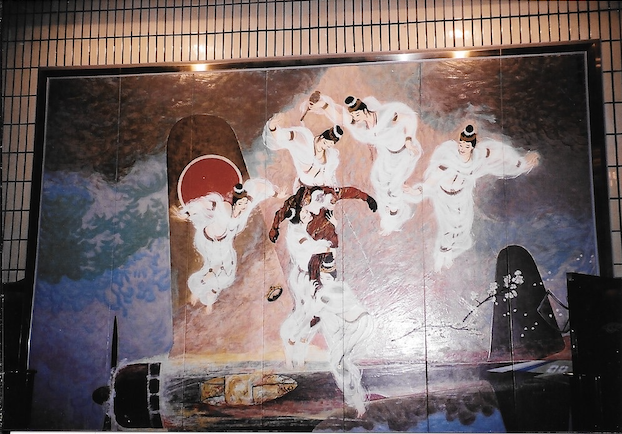
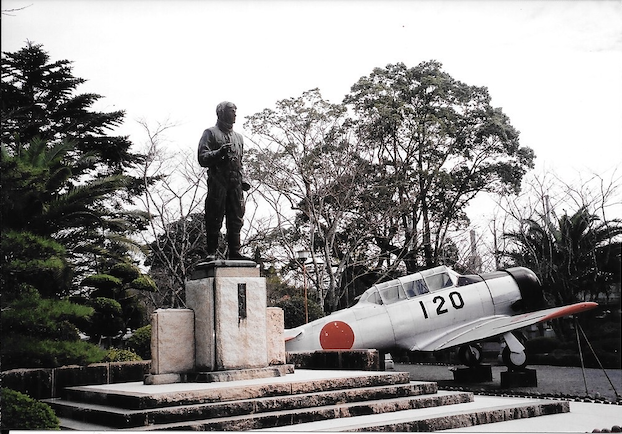
    The museum was opened in 1975 as part of a complex. Next to it is the Heiwa-Kannon Temple containing the goddess Kannon, who appropriately enough in this case is symbolic of pity. The temple was opened in 1955. The museum is in the shape of a plane. In front of it is a bronze statue of a kamikaze pilot next to a Mitsubishi Zero. In the entrance hall is a huge lacquer-wood painting of a kamikaze pilot’s body being lifted from a burning plane and gently carried by a half-dozen angelic spirits to a better afterworld – his sacrifice supposedly not in vain.

    On the day I dropped by for a visit, the museum was jam-packed with visitors. That surprised me a bit because I had visited a number of museums in Kagoshima and its vicinity and all of them were noticeably empty. Not this one. Perhaps interest and shock over the September 11th attack made the museum a more interesting and timely destination for Japanese trying to find historical references for a new crisis.

    Statues of pilots saluting Mitsubishi Zero

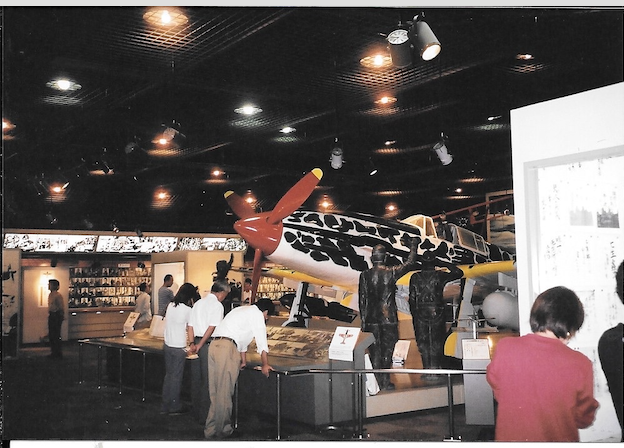
    The museum’s main hall is dominated by a Mitsubishi Zero and a statue of a brave pilot saluting from the cockpit. His proud, stiff-armed salute is being returned by two other pilots bidding him farewell – from the base and no doubt from his life too. Surrounding the plane are exhibits featuring personal mementos from the actual pilots themselves: letters, watches, binoculars and photos, for example. In all of the snapshots, the would-be suicide bombers are smiling, arm-wresting, saluting, eating, drinking ceremonial cups of sake, and being waved off to duty by cooing girls with flowers in their hands.

    The visual presentation is only the beginning. The voice on the audio guide describes all of the pilots’ love of life, adding the discreet caveat that their willingness to pay the supreme price is the result of a patriotic virtue to defend the homeland. The audio guide’s narrator, with her unusually sweet voice, describes how the pilots would cry into their pillows on the night before their missions, leaving the pillows soaking wet with tears. But seconds later she goes on to describe the kamikazes’ brave smiles as they flew off as just that – brave smiles. No comment is made about the opposing realities of suicide and bravery.

    Kamikaze pilots entered World War II during the battle for Okinawa. In total, 1,036 pilots sacrificed themselves in explosives-filled planes in a desperate effort to try and stop the American invasion. Of course, the tactic and the kamikazes failed. In addition to Chiran, they flew from bases in Bansei, Miyakonojo, Kengun and Taiwan.

    In the museum there was a video of the Battle of Okinawa. The benches in front of the video were full of people staring somberly as plane after plane was shown being destroyed by U.S. artillery before hitting a targeted battleship. Eventually, one kamikaze Zero did hit a ship, but the senseless loss comes through clearly in the video. At the moment of impact, the soundtrack changes from the battle sounds of exploding flak and fiery descents of planes to classical music – as if the whole situation were all a bad dream.

    Painting in Chiran Peace Museum for Kamikaze Pilots

    Outside of the museum’s theater, there is a room filled with uniforms. And another room with colorful funeral wreaths piled high on the walls. And still another with a crashed plane that had been recovered, cleaned up and put on display, minus half the fuselage. But it is outside the museum next to the Kannon Temple where a visitor gets the closest sense of the men in the photos: Rows of stone lanterns cover the grounds. On each one there is a relief carving of a kamikaze pilot with a small Mona Lisa smile on his face. Their enigmatic smiles direct you to the lone surviving barracks where some of the pilots spent their last night.

    Stone lanterns honoring kamikaze pilots

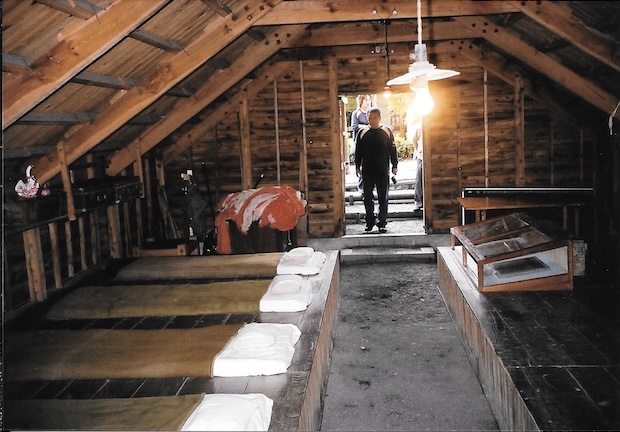
    Decades after they were built, the kamikaze barracks remain just as they were when they housed their terminal residents: very spartan, and camouflaged by trees to protect them from American bombers. Naked light bulbs throw a harsh glare on the room, and lumpy futons covered with green blankets sit on raised wooden platforms. But it was those pillows that drew my attention, the pillows that supposedly were saturated with tears on the morning of the suicide pilots’ last day. It was on those pillows that the kamikazes left their fears and their futures behind to do their awful work.

    Kamikaze pilots’ barracks

    Published in The Asian Wall Street Journal, November 16, 2001

  • The Price of Peace: Where the Last Global War Ended

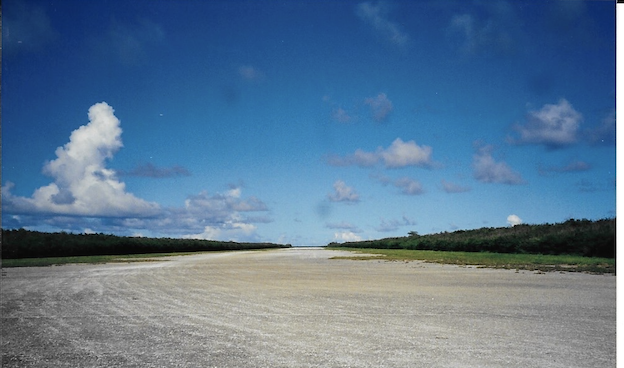
    Tinian runway where Enola Gay and Bockscar took off on their missions

    As the free world hunkers down for the first global war of the 21st century it’s worth taking a glimpse at a place where the last global war ended: at Tinian Island, where the planes that dropped the atom bombs on Japan took off. My family recently took a trip to Tinian, a Manhattan-shaped island in the Mariana Islands where the Manhattan project neared its end. Colonel Paul Tibbets, piloting the B-29 Superfortress named Enola Gay, took off from here to drop the bomb, “Little Boy,” on Hiroshima. Three days later, Major Charles Sweeney, also took off from here in the airplane named Bockscar to drop the bomb on Nagasaki.

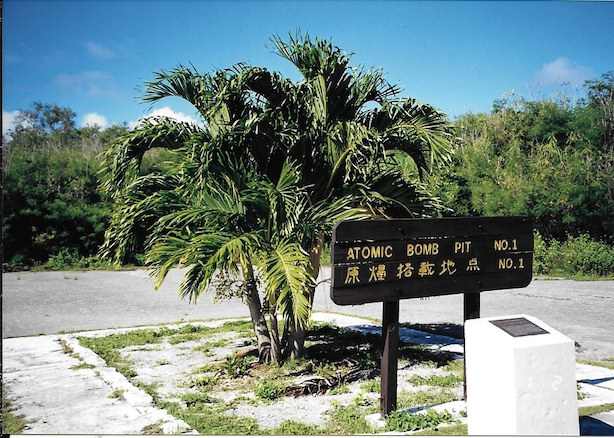
    Atomic pit No. 1 where Hiroshima bomb was loaded

    At the end of World War II Tinian was the busiest airfield on earth, with six gigantic runways. Nineteen-thousand combat missions flew from here. Now it’s a quiet place with some unusual attractions. With a population of less than 3,000 people in an area of 39 square miles, it lies next to Saipan in the Mariana Islands and is politically part of the Commonwealth of the Northern Mariana Islands, a U.S. territory.

    Atomic pit No. 2 where Nagasaki bomb was loaded

    When we got off the boat from Saipan, my family’s first stop was the casino that today is the island’s largest business. Tinian Dynasty Hotel and Casino is a flash place — a Macau-style casino occupying a piece of South Seas paradise. But unlike other hotels in the tropics, it doesn’t leverage its location. No al-fresco dining to pull you away from the gaming tables. The windows in the rooms don’t open to let in the warm breezes. After all, you might be tempted to enjoy the tropical weather outside — leaving the pleasures of the slot machines behind.

    Plaque to commemorate that planes with atomic bombs left from this airfield
    Sign to where atomic bombs were loaded

    We started our touring by driving to the Suicide Cliffs on the south side of the island. As American troops were invading the island at the end of July 1944, Japanese civilians chose suicide rather than surrender. They jumped to their deaths from here. Their fanatical behavior has an eery parallel with the terrorists of today. The site is spectacular and empty with vertical cliffs dropping to crashing waves and a sea of startling blue. We were the only visitors, deepening the natural solitude of the area and making it feel as if we really were in a sacred place.

    Jungle encroaching on Tinian road

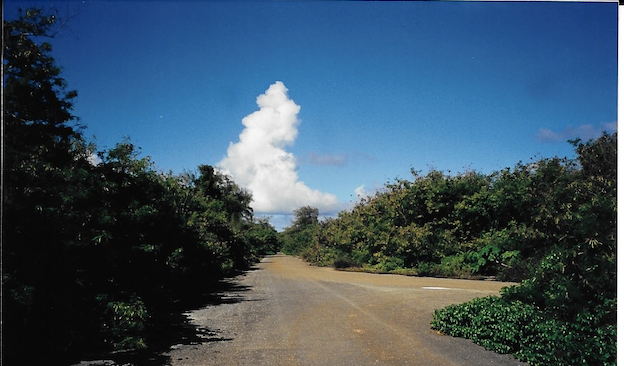
    From there we drove clear across the island. Because Tinian is shaped like Manhattan the military named the island’s roads after streets in New York. Broadway is a long straight avenue, but unlike its famous namesake there is no traffic at all, no pedestrians, and only a few gutted buildings from World War II days. Weeds sprouted from the asphalt. Jungle is starting to creep in at the edges.

    Unexploded World War II ordnance on Tinian

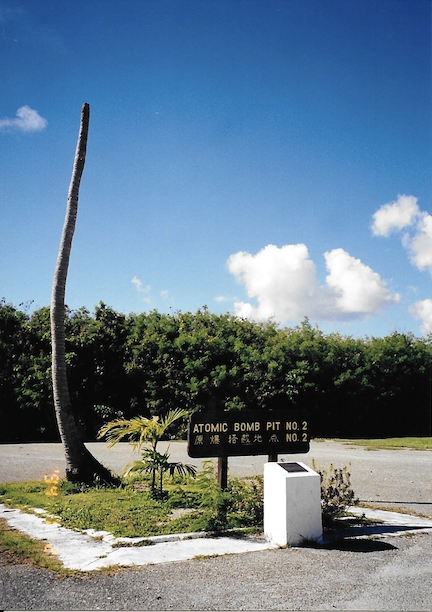
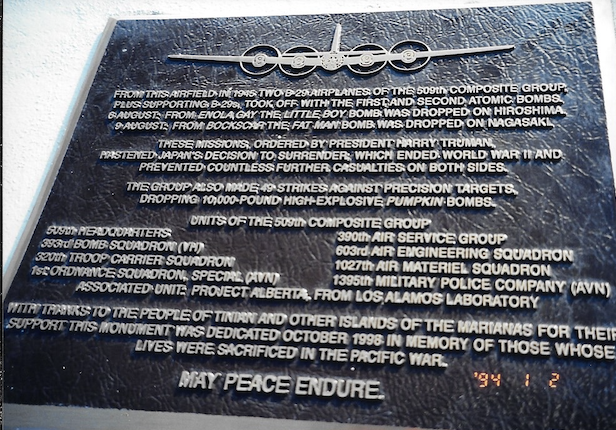
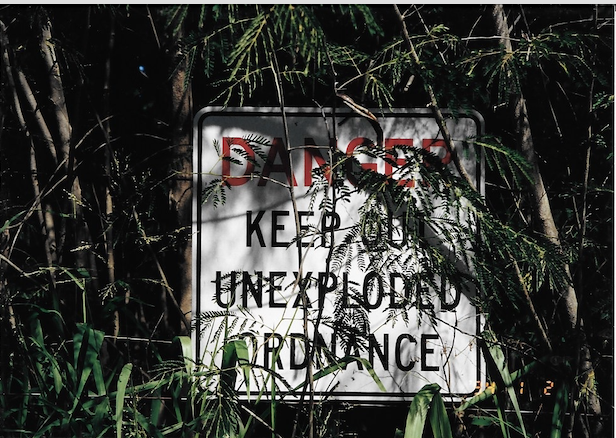
    At a roundabout there was a ruined Japanese shrine. We drove around it to a truly forbidding part of the island. The road narrowed and every couple of yards there were signs on jungle-covered barbed-wire fences that warned of explosive ordinance. After a couple of miles there was a dirt turnoff to the left where we stopped next to a large grave-size plot with a few flowers on it and a headless palm-tree in front of it. A wooden sign read, “Atomic Bomb Pit No. 1.” The plaque described how the bomb dropped on Hiroshima was winched into the belly of the Enola Gay at this spot.

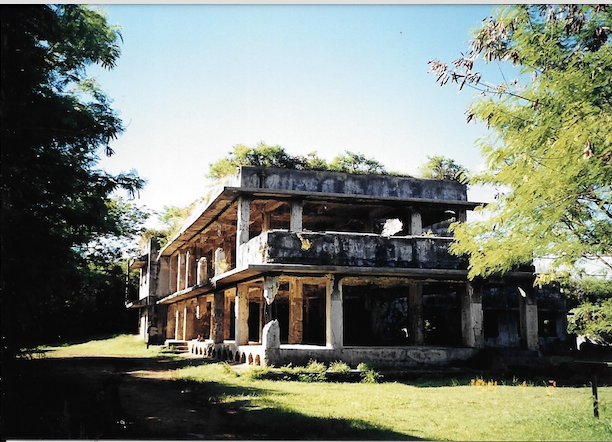
    Ruins of World War II barracks

    About 50 feet away was another signpost: “Atomic Bomb Pit No. 2.” Another atom bomb, “Fat Man,” was winched into the belly of Bock’s Car here prior to its journey to Nagasaki.

    I’ve visited the Los Alamos laboratories in New Mexico, where the U.S. atomic bomb project feverishly was pursued, and its museum. I’ve also visited the museums at Hiroshima and Nagasaki and saw the horrors that befell the victims of the bombs. But this site at Tinian affected me the most: the silence; the complete absence of tourists or any other people; the sense of decay as if we were standing in a post-nuclear war world, one decimated by atomic weapons.

    Abandoned World War II tanks

    Further on we discovered the runways, monumental ribbons of concrete, now silent and slowly being reclaimed by the lush vegetation of the surrounding jungle. Near some Japanese bunkers on the side of one runway were plaques honoring the U.S. military units that served here. Then we found ourselves driving down the very straight 8th Avenue towards the hotel. We passed the sign for the 509th Bomber Group and its slogan bragging that it was the first to use atomic weapons. This was Col. Tibbets’s unit.

    Tinian as seen from Saipan ferry

    With some relief we reached the town again. We visited the ruins of a previous civilization: a collection of huge latte stones — like a South Pacific Stonehenge — that were the foundations of a home belonging to a legendary Chamorro chieftain, Taga the Great. Within moments we were back at the familiar surroundings of the casino. Other than the gambling and eating the only other entertainment at the hotel was a troupe of Russian dancers. But as I sat down to watch them gamely doing their routine I realized that I was the only one in the audience. It was an empty house.

    Foundations of home belonging to Chamorro chieftain Taga the Great

    Published in The Wall Street Journal, March 1, 2002