Tag: history

  • Bangkok’s Serene Haven in Art-shopping Heaven: Drop After You Shop at the Plush Art-filled Anantara Siam Hotel

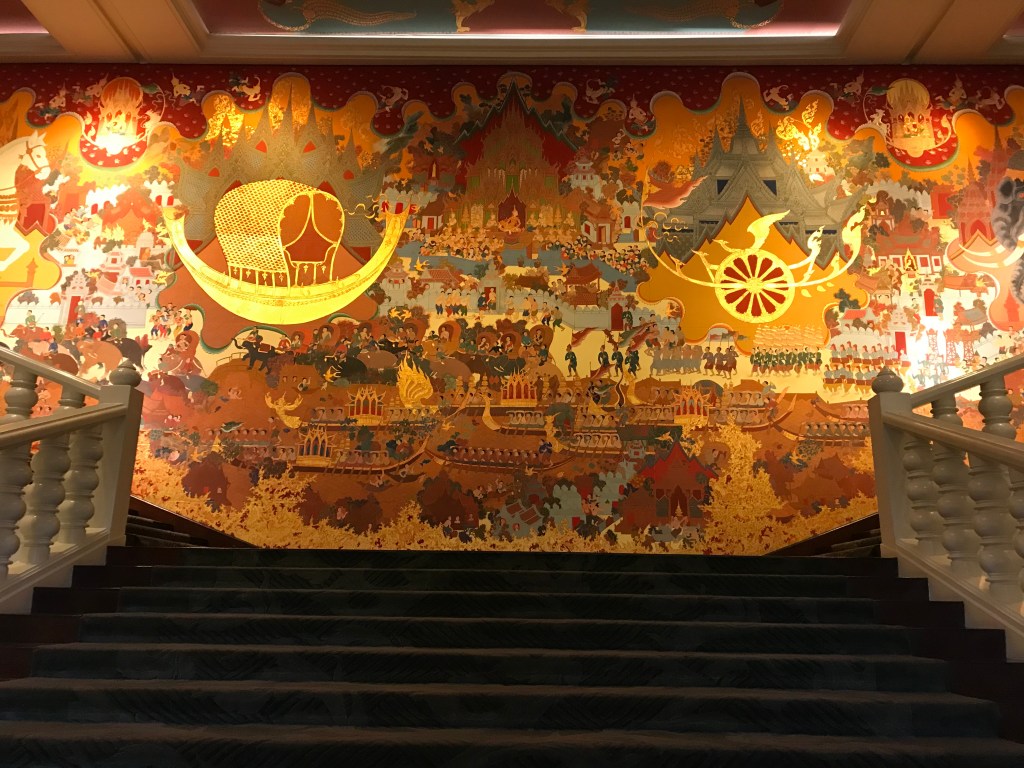
    Mural, Anantara Siam Hotel lobby

    Bangkok’s reputation as a shop till you drop destination is so well known it’s practically a meme. From Siam Paragon and Central World in Ratchadamri to Chatuchak weekend market to the newish Icon Siam on the Chao Praya river, listing them all would dwarf a Yellow Pages directory; visiting them all would be more tiring than sprinting up the side of the Grand Canyon.

    Inspiring art to inspire shopping for art

    What is less well known is that Bangkok is a destination for art lovers who love to shop for art. That shouldn’t be too surprising since Bangkok is a center of art from the traditional to contemporary. If art is your focus – and it is mine – then starting it from a hotel with expertly curated artwork gets your mind in the right space before deciding what will occupy a space in your home. The Anantara Siam, designed by leading Thai architect Dan Wongprasat, has a jaw dropping palatial lobby. The mural on the grand staircase landing of a traditional royal scene in hues of gold and red and the mandala painting on the sweeping ceiling by the late artist Arjarn Palboon Suwannakudt, gives the expansive space the feeling of a living, breathing palace that you want to linger in. And would certainly like to stay at.

    Artful champagne brunch fuels my search

    The Sunday champagne brunch to fuel my search for art was so rich – and enriching –  I almost called off the search. After the lobster thermidor, foie gras, fresh scallops, raw oysters, dessert bar and glass after glass of champagne I was feeling a little too comfortable to brave the rigors of art appreciation. But a cup of espresso finally got me off the all too comfortable dining room chair.

    Contemplate life while contemplating traditional art

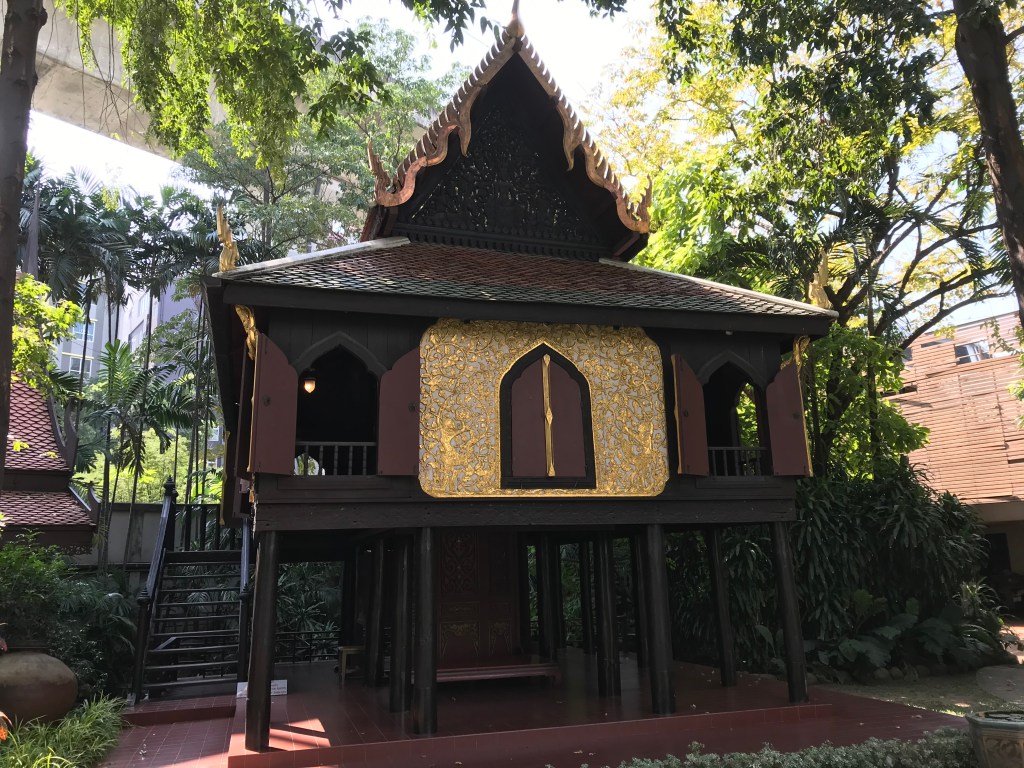
    Armed with a Bangkok Art Map that I got from the Anantara Siam’s concierge I started my art shopping excursion at Suan Pakkad Palace on nearby Sri Ayutthaya Road. There was nothing to buy at this museum but plenty to inspire me. The palace, once the home of Prince Chumbhot of Nagara Svarga and his consort, features a collection of artwork and antiques in eight houses that are some of the best examples of traditional Thai architecture in the city. The murals, sculptures, and art you see while sliding in your socks across polished wooden floors started the process of deciding what would work best in my home. What I saw there gave me ideas as to what antiques I would like to get. And I know that one of the most renowned centers for antique shopping in Asia is The River City Bangkok mall on the Chao Praya River.
    Echoes of Frank Lloyd Wright

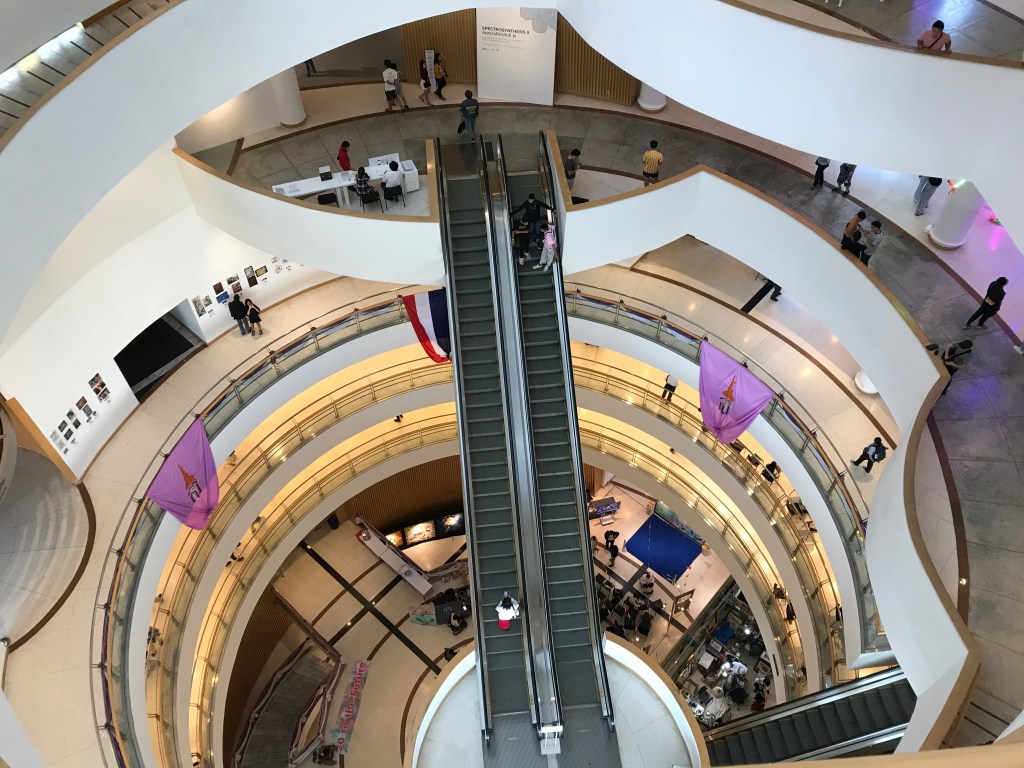
    My next stop was the Bangkok Art and Culture Center. It’s on the opposite end of the art spectrum from the Suan Pakkad Palace. An eight-story venue for contemporary art and shops selling hip crafts and gifts it attracts a crowd poked and provoked by its art. I went to the top floor to see the wonderful Royal Photo Exhibition, “Photos Wonderland,” and then worked my way down the spiral walkway that took me from one floor to the next for further art contemplation. It reminded me a bit of Frank Lloyd Wright’s Guggenheim Museum in New York with its top down spiral walkway. One of the shops, BKK Graff, sells cans of spray paint so that you can graffiti a space. Hopefully, not your home.
    Talked about art for your walls

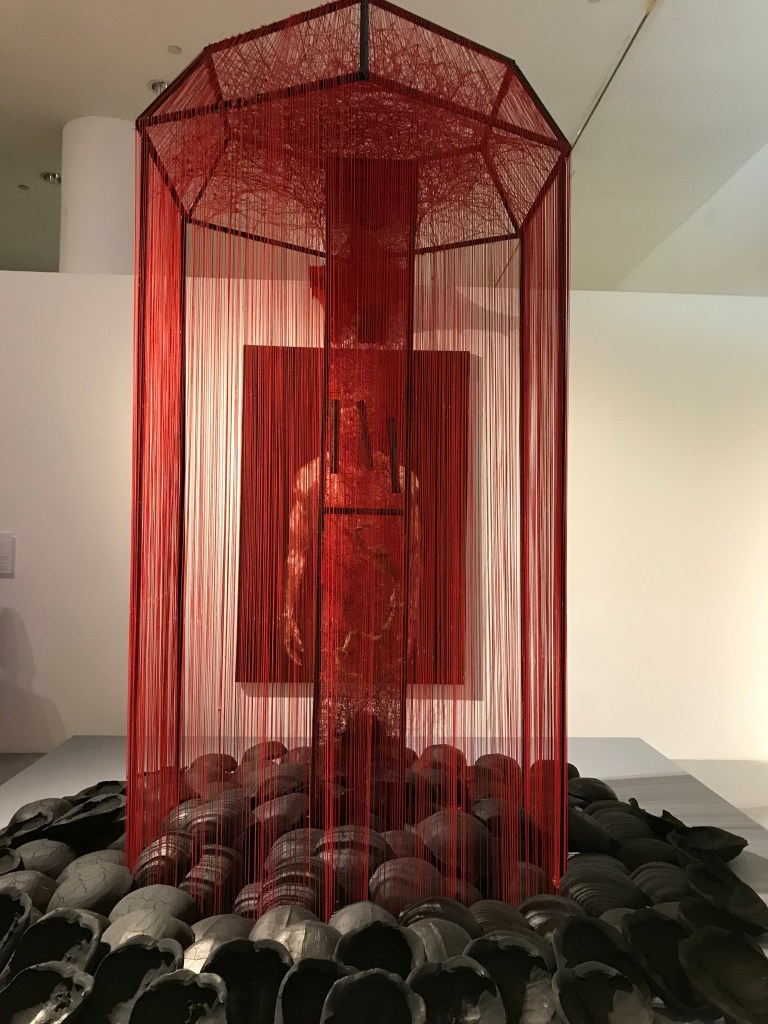
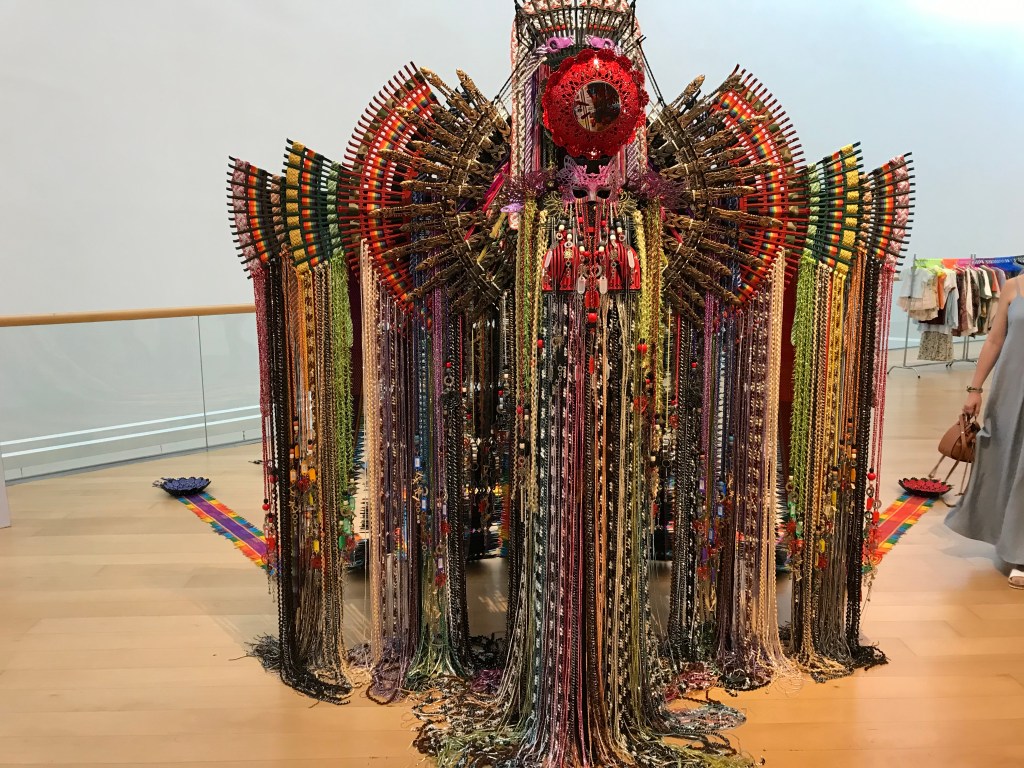
    A short walk from the Anantara Siam are three galleries that are among Bangkok’s best for contemporary art. Le Link Gallery, Tonson Gallery, and Nova Contemporary all feature contemporary artists whose art can dominate a wall and become a talking piece for visitors. Or yourself. Displayed at the Le Link Gallery were the brightly coloured Magenta Blues Artwork by German artist Ingeborg Zu Schleswig-Holstein.
    Before returning to the hotel I had a drink at the nearby Smalls Bar, chockablock with art. It’s rated by CNN Travel as one of the top bars to visit in Bangkok. All the art displayed in the three-story quirky bar is for sale.

    From fine arts to culinary arts at The Spice Market

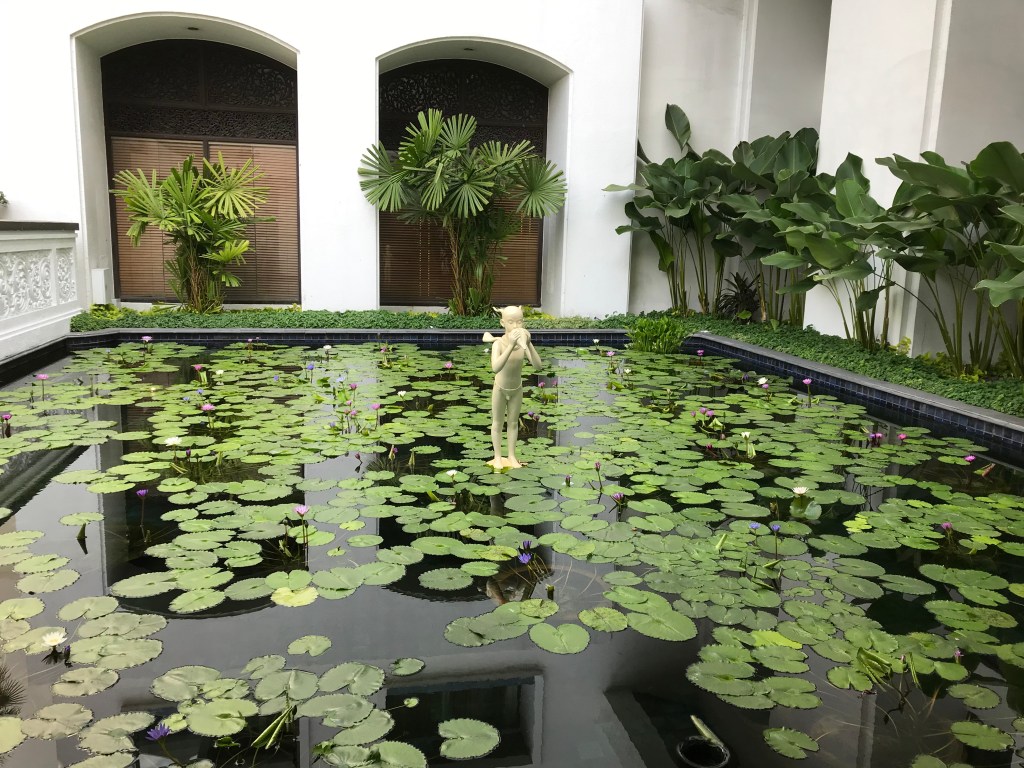
    After a day launched with a great meal it was time to end it with one. On the way into the hotel lobby I passed statues of water sprites surrounded by water lilies. Their presence is a reminder that you are entering a special world.

    The Anantara Siam’s The Spice Market is one of the finest Thai restaurants in Bangkok, helmed by award-winning Chef Warinthorn Sumrthlphon.

    The ambience of the restaurant puts you in the right mood to savor the food. With a polished teak wood décor, tables topped by Carrera marble, and cotton napkins and pillowcase coverings by Jim Thompson, it is a luxurious setting.

    And the food lives up to the décor. The ingredients are sourced locally to ensure freshness. The fruits and vegetables are all organic. The curry pastes are from the kitchen of M.L. Thor Kridakorn, whose recipes are so famous that they grace the dining table of the Royal Family.

    Some of the dishes I tried were the Tom Yam Goong, a spicy prawn soup perfectly flavoured with lemongrass; Larb Nua Pu Gab Goong Mae Nam Yam, crab meat salad and grilled river prawn; Pu Nim Phad Prig Thai Orn, crispy soft shell crab in peppercorn sauce; Kai Soe Rua Nua, northern style egg noodles in curry with chicken; and, Gaeng Kiew Warn Nua Toon Cab Roti, green curry with braised beef in coconut sauce.

    No amount of description can do them justice. More chamber music than symphony with their focused and nuanced flavours each dish was a distinctive delight. The meal was so filling I couldn’t tackle dessert, much as I wanted too. Next time I’ll pace myself better. I have my eye on the Tubtim Krob, the ruby water chestnuts.

    Only hotel in Thailand to offer sacred tattoo sessions

    Anantara Siam’s commitment to art is more than skin deep. It is the only hotel in Thailand to offer private sacred tattoo sessions by Bangkok’s most famous Sak Yant master, Ajarn Neng Onnut. He has inked Hong Kong star Alex Fong and Hollywood ones Ryan Philippe, Jessica Bradford, and Brooke Shields.

    As one of the world’s most ancient, sacred traditions, to master Sak Yant means learning how to do the artwork for almost a thousand different images. To become a master Ajarn Neng learned how to read and write ancient Khmer and Pali scripts and memorise unique prayers and secret spells, chants and mantras that relate to the sacred tattoos.

    His tattoo sessions at the Anantara Siam are private, either in a guest’s room or a private treatment room. The day before the tattoo he has a consultation with the guest where he learns about their life and goals before deciding on the correct Yant. Prior to the session and afterwards, Ajarn Neng performs a ceremony where the guest’s body and the art are blessed. That gives the wearer of the tattoo an emotional reminder of the experience that links the ink on their body to what it means to their life.

    Leaving an indelible mark in more ways than one

    A session with Ajarn Neng will leave an indelible mark on your spirit and your body. The Anantara Siam offers this unique experience so that you can get beneath the skin of Thailand for a richer appreciation of its culture.

    The same is true of a stay at the Anantara Siam hotel. The culinary art of its kitchens, the prompt, warm service, and the art that embraces you in visual splendor when you enter the hotel will also leave an indelible mark; the kind of indelible mark we all want to experience and take with us wherever we go.
    Published in Asian Journeys magazine, February-March 2020
  • Clubbing in Calcutta: The World’s Largest ‘Museum’ of British Colonial Architecture

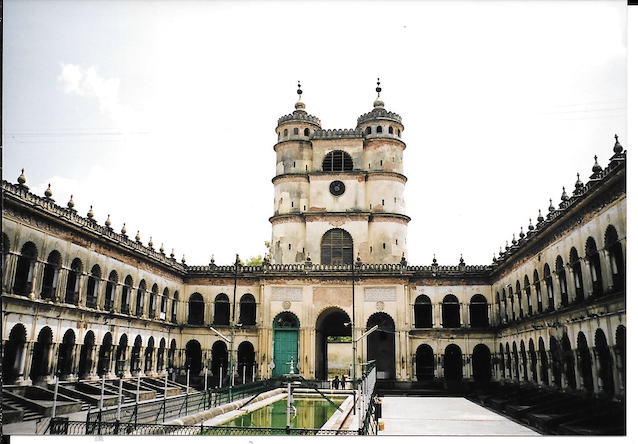
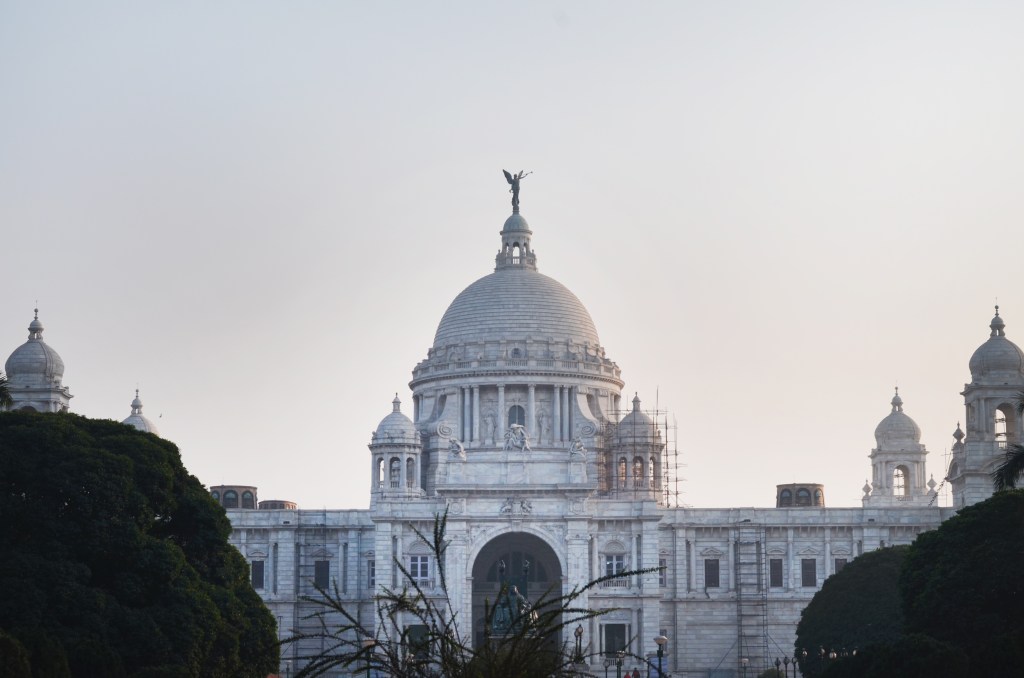
    Victoria Monument, Kolkata

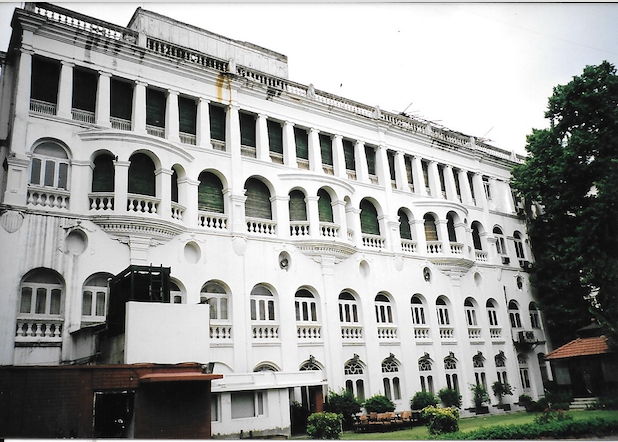
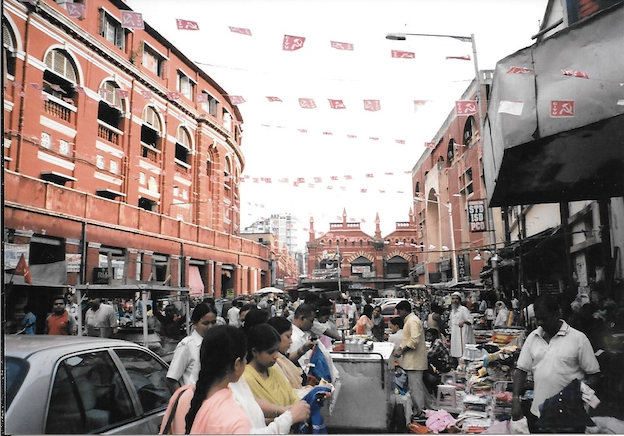
    The graffiti on the outside wall has the look of urban scrawl everywhere: “We protest against the dictatorship of the club president!” The president of the Bengal Club in Calcutta, founded in 1828, was just trying to enforce some club rules, and he seems to have run headfirst into a wider force. Calcutta’s genteel clubs are having to reckon with the culture of protest that has always existed outside their forbidding white-washed walls.

    The Bengal Club, Kolkata
    The Bengal Club
    Traditions live on at The Bengal Club

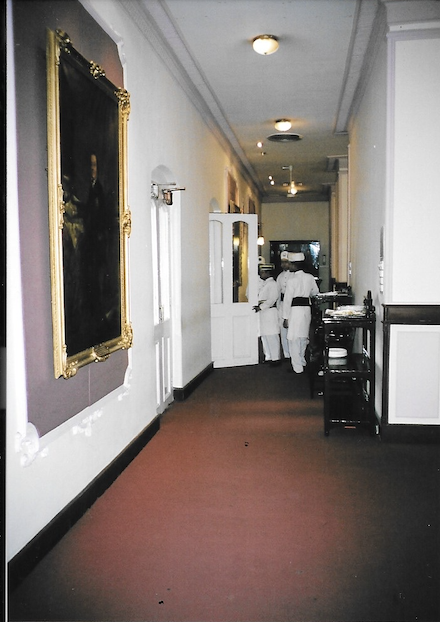
    Inside the Bengal’s stately building, members speak in hushed tones. A steel-gated elevator clatters you to the second floor, where the same dining tradition has been maintained for over 150 years. The waiters, wearing white tunics with brass buttons and wide black sashes for belts, look like they stepped out of a Rudyard Kipling book. The paintings on the walls are of old British sahibs – the respectful Indian term for Europeans. Those men are now probably buried in the crow-filled, weed-covered South Park Street Cemetery a few blocks away.

    The Bengal’s graffiti hardly fits with the gentlemanly, antiquated spirit of the place. But then again, Calcutta is notorious for its culture of protest. People in this city have always taken to the streets, whether to be among the first to fight colonialism – or later, whatever happened to the national government of the day. It was this spirit of rebellion that led the British to move their capital to New Delhi in 1912.

    Clubs are popular in Calcutta, now officially known at Kolkata. No, not dance clubs where girls in short skirts and guys in tight shirts hang out. Calcutta’s night life is pretty tame in that respect. These clubs were started by the British to deal with homesickness and the dull, distant colonial lifestyle. But when they left, the tradition stayed – carried on by the society’s elite: barristers, lawyers, doctors, engineers, businessmen, even the occasional maharaja, or local prince.

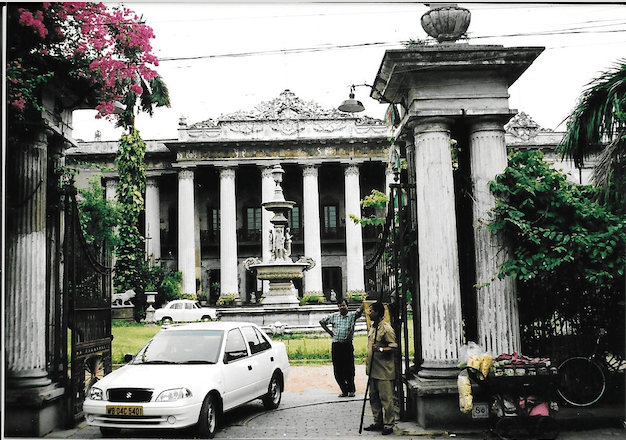
    Calcutta High Court
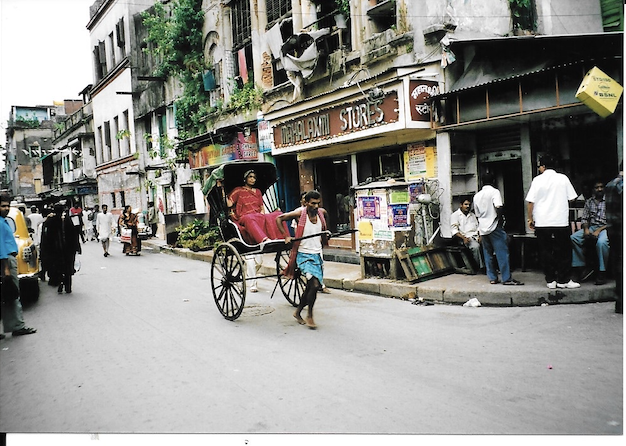
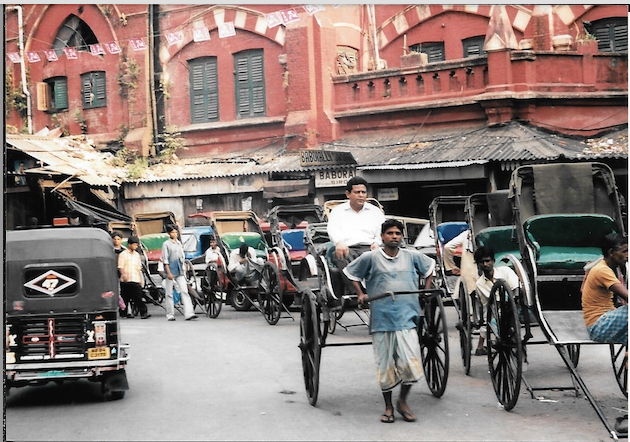
    Rickshaw puller

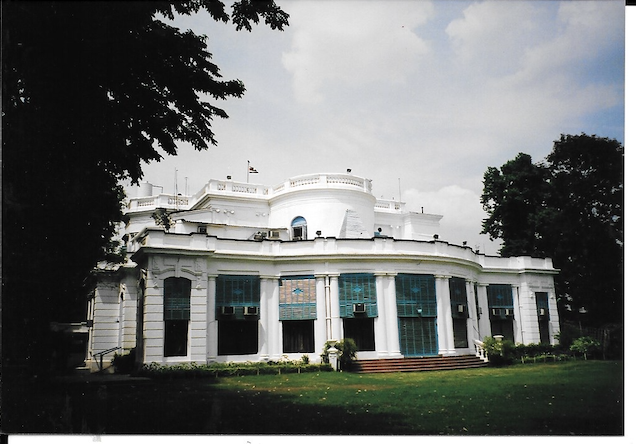
    Another landmark, the Saturday Club, was founded in 1875 by the Calcutta Light Horse Regiment. The current club premises, built in 1900, are entered by passing beneath a series of flags and a small balcony where a dignitary might wave to well-wishers. On the other side of the grand ballroom, covered in a parquet floor with huge fans hanging immobile from the ceiling, you can reach the Light Horse Bar. When the regiment was disbanded after India gained its independence, its trophies moved there.

    Saturday Club

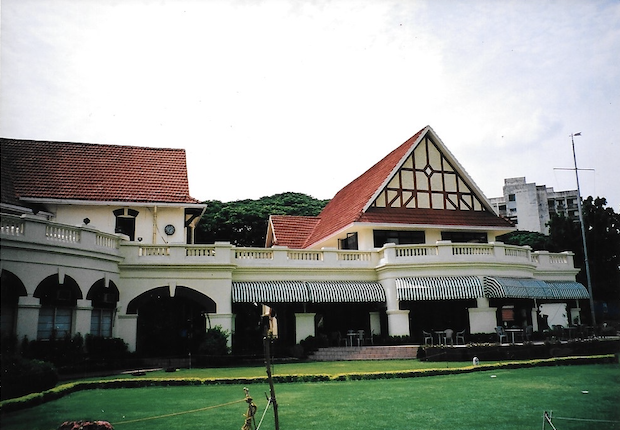
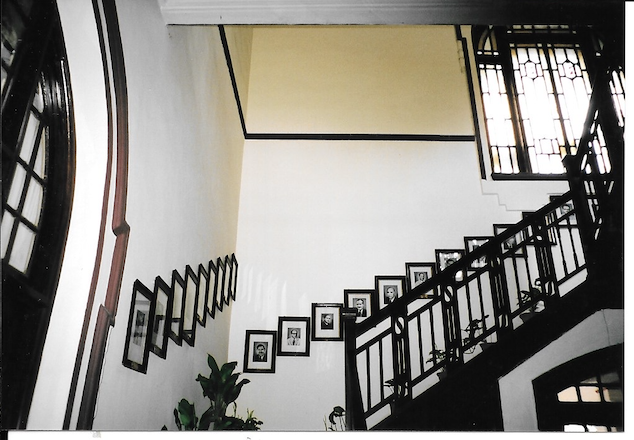
    Then there’s the Royal Calcutta Golf Club, also known as the “Royal.” Founded in 1829, it’s the oldest golf club outside of the British Isles. It was King George V who gave the club its “royal” title at the Delhi Durbar in 1911. The building that houses the club now was opened in 1914. It looks like a sprawling lord’s manor with a red-titled roof and red trim around the windows, doors and grand entranceway. The lawns are vast and manicured. Inside, it has the austere atmosphere of a British public school. Long mahogany boards list the names of gold-medal winners in gold lettering all the way back to the 1870s. Black and white photos of stiff-looking club presidents line the stairway to the second floor. Beneath the striped awning out back you can watch golf, or just sit and drink tea.

    Royal Calcutta Golf Club
    Past presidents of Royal Calcutta Golf Club
    Royal Calcutta Golf Club

    Nearby is the Tollygunge Club, founded in 1895, which is spread over 100 acres that surround a more than century-old clubhouse. You can find golf, tennis, squash, swimming or even horseback riding here – just like those denizens of the Raj did so many years ago. In a city mired by poverty, this is where the gold leaf thin top tier of society spent their leisure time.

    Tollygunge Club

    It might seem strange that Calcutta should play host to so many antiquated British institutions. Yet up until 1912, Calcutta was the second-largest city in the British Empire. The Victoria Monument here was built by Lord Curzon between 1906 and 1921 in memory of his empress and was meant to be larger and more impressive than the Taj Mahal. The former Dalhousie Square, now known as BBD Bagh, was the bastion of British bureaucracy, with impressive colonial-era edifices surrounding it. The massive 200-year-old British Government House is now known as the Raj Bhavan and is the seat of the West Bengal government. Nearby is the Doric-style Town Hall and the High Court, copied from the Staadhaus at Ypres, Belgium and opened for justice in 1872.

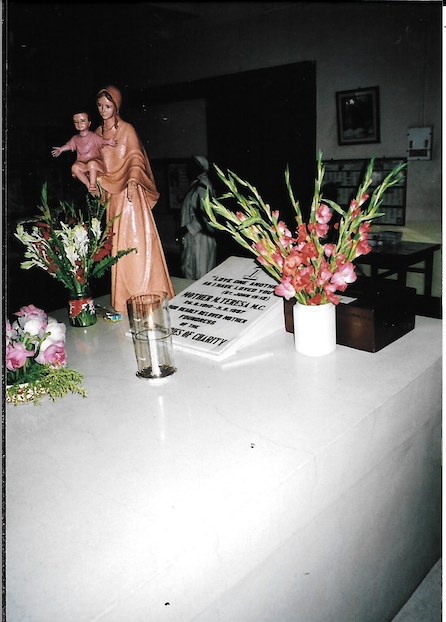
    Mother Teresa’s tomb at Missionaries of Charity
    Nuns praying at Mother Teresa’s Missionaries of Charity

    Because it has seen so much war, poverty and turmoil, Calcutta has not torn down its past. It has simply been too poor to build many new buildings. The result is the largest “museum” of British colonial architecture in the world. Think of it as a tropical 19th-century London. Add to that the antique-looking Ambassador cars with styling that hasn’t changed since the 1950s and the human rickshaw pullers, and you could be worlds away from the rapid development of Indian cities like Mumbai and Bangalore.

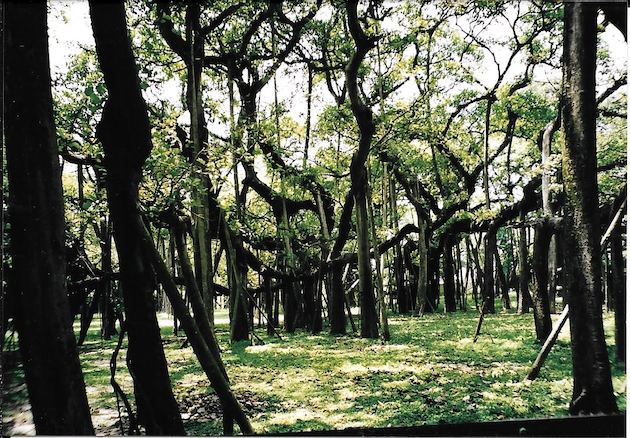
    Great Banyan Tree, Kolkata, the widest tree in the world

    The graffiti on the wall does suggest that tradition could rapidly slip away from the clubs that Calcutta has nourished since the days of the British Raj. Nevertheless, these traditions are still more intact here than in most other parts of the world.

    Published in The Asian Wall Street Journal, August 12-14, 2005

  • Kamikazes ‘R’ Us: In Japan, A Peace Museum Celebrates Suicidal Warriors

    Chiran Peace Museum for Kamikaze Pilots

    After the September 11th hijackers carried out their evil deeds across America, the media and just about everyone else were left scratching their heads wondering what sickness could possibly drive young men to choose suicide as a way to prove their allegiance to an ideology. The same bafflement applies to the Tamil Tiger bombers blowing up politicians and themselves while conducting their war against the Sri Lankan government. And, of course, to the crazy legions of Palestinian terrorists turning themselves into human bombs at Tel Aviv discos or Jerusalem pizza parlors.

    While I doubt we’ll ever fully understand the private motivation or personal confusion of the individual bombers, today’s suicides aren’t the first: they are all following in the doomed footsteps of the Japanese kamikaze pilots of World War II. Bizarrely enough, for those who interested to learn more about these infamous pilots and their mystique, there is a “Peace Museum” honoring kamikazes in the very peaceful village of Chiran.

    Chiran is a beautiful little town an hour’s drive south of Kagoshima on the southern Japanese island of Kyushu. Terraced rice paddies and forested hills greet a traveler’s arrival in what is a gem of rural Japan. A narrow goldfish pond runs alongside one of the sidewalks that ribbons through the center of the town. Small shops sell purple yam chips glazed in sugar, a regional specialty. They even sell yam ice cream. Near the center of town are samurai houses from the 19th century. Tranquil gardens, hidden from the road by a high and lengthy stone wall, lounge behind each of the houses. Tourists drift in and out as they savor the delightful mixing of elements necessary for a Japanese garden – color and sound, texture and moisture. It is easy to imagine how the “perfect retreat for the spirit” can be achieved in some of these gardens, which are protected national monuments.

    Those gardens and their past warrior occupants epitomize the dueling essence of the town. For the samurai citizens of the past surely were the inspiration for the kamikaze warriors of World War II. At the Chiran Peace Museum for Kamikaze Pilots, the heroic lives – and dramatic deaths – of the samurais are honored in great detail.

    Chiran was the choice for the kamikaze museum because one of the airfields for the “special attack corps” (no kidding, that was their official military identification) was in the town’s vicinity. Their eerie motto was “a battleship for every aircraft,” and if they didn’t succeed in their mission there was no worry about military punishment because they all died trying.

    Recovered Mitsubishi Zero

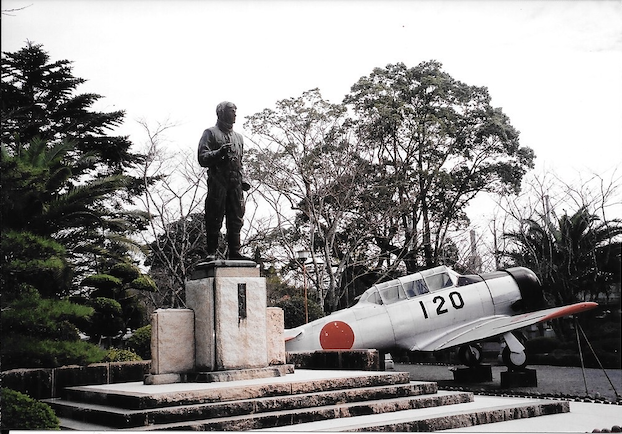
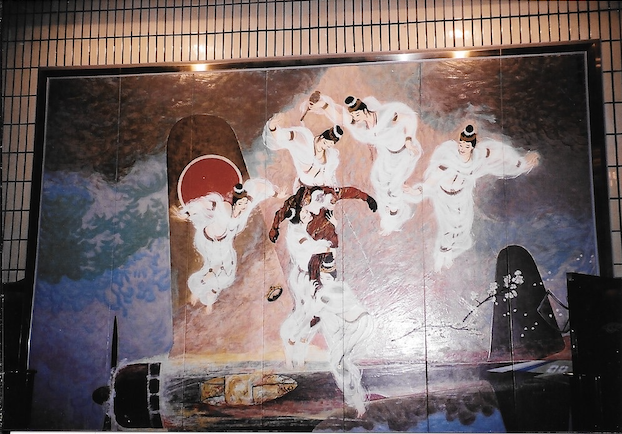
    The museum was opened in 1975 as part of a complex. Next to it is the Heiwa-Kannon Temple containing the goddess Kannon, who appropriately enough in this case is symbolic of pity. The temple was opened in 1955. The museum is in the shape of a plane. In front of it is a bronze statue of a kamikaze pilot next to a Mitsubishi Zero. In the entrance hall is a huge lacquer-wood painting of a kamikaze pilot’s body being lifted from a burning plane and gently carried by a half-dozen angelic spirits to a better afterworld – his sacrifice supposedly not in vain.

    On the day I dropped by for a visit, the museum was jam-packed with visitors. That surprised me a bit because I had visited a number of museums in Kagoshima and its vicinity and all of them were noticeably empty. Not this one. Perhaps interest and shock over the September 11th attack made the museum a more interesting and timely destination for Japanese trying to find historical references for a new crisis.

    Statues of pilots saluting Mitsubishi Zero

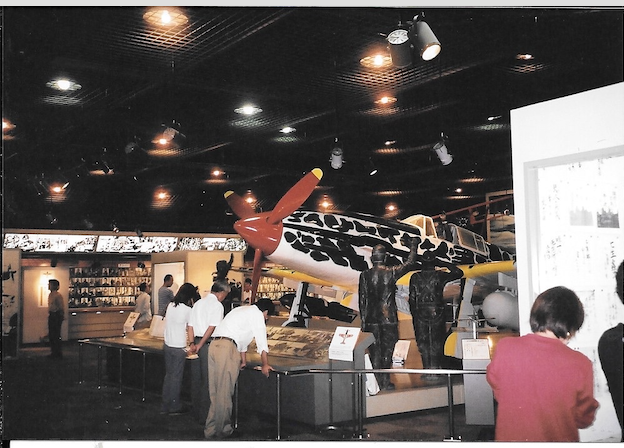
    The museum’s main hall is dominated by a Mitsubishi Zero and a statue of a brave pilot saluting from the cockpit. His proud, stiff-armed salute is being returned by two other pilots bidding him farewell – from the base and no doubt from his life too. Surrounding the plane are exhibits featuring personal mementos from the actual pilots themselves: letters, watches, binoculars and photos, for example. In all of the snapshots, the would-be suicide bombers are smiling, arm-wresting, saluting, eating, drinking ceremonial cups of sake, and being waved off to duty by cooing girls with flowers in their hands.

    The visual presentation is only the beginning. The voice on the audio guide describes all of the pilots’ love of life, adding the discreet caveat that their willingness to pay the supreme price is the result of a patriotic virtue to defend the homeland. The audio guide’s narrator, with her unusually sweet voice, describes how the pilots would cry into their pillows on the night before their missions, leaving the pillows soaking wet with tears. But seconds later she goes on to describe the kamikazes’ brave smiles as they flew off as just that – brave smiles. No comment is made about the opposing realities of suicide and bravery.

    Kamikaze pilots entered World War II during the battle for Okinawa. In total, 1,036 pilots sacrificed themselves in explosives-filled planes in a desperate effort to try and stop the American invasion. Of course, the tactic and the kamikazes failed. In addition to Chiran, they flew from bases in Bansei, Miyakonojo, Kengun and Taiwan.

    In the museum there was a video of the Battle of Okinawa. The benches in front of the video were full of people staring somberly as plane after plane was shown being destroyed by U.S. artillery before hitting a targeted battleship. Eventually, one kamikaze Zero did hit a ship, but the senseless loss comes through clearly in the video. At the moment of impact, the soundtrack changes from the battle sounds of exploding flak and fiery descents of planes to classical music – as if the whole situation were all a bad dream.

    Painting in Chiran Peace Museum for Kamikaze Pilots

    Outside of the museum’s theater, there is a room filled with uniforms. And another room with colorful funeral wreaths piled high on the walls. And still another with a crashed plane that had been recovered, cleaned up and put on display, minus half the fuselage. But it is outside the museum next to the Kannon Temple where a visitor gets the closest sense of the men in the photos: Rows of stone lanterns cover the grounds. On each one there is a relief carving of a kamikaze pilot with a small Mona Lisa smile on his face. Their enigmatic smiles direct you to the lone surviving barracks where some of the pilots spent their last night.

    Stone lanterns honoring kamikaze pilots

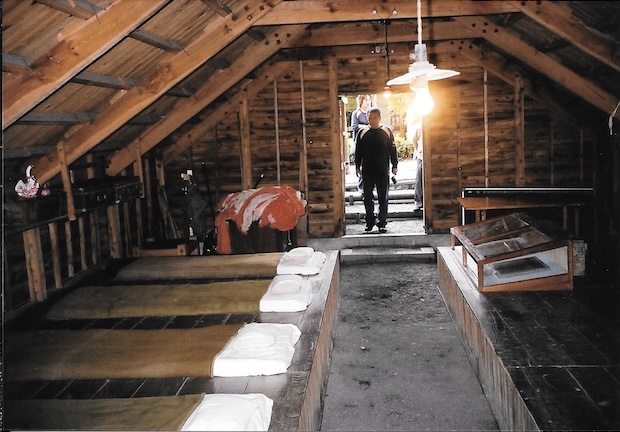
    Decades after they were built, the kamikaze barracks remain just as they were when they housed their terminal residents: very spartan, and camouflaged by trees to protect them from American bombers. Naked light bulbs throw a harsh glare on the room, and lumpy futons covered with green blankets sit on raised wooden platforms. But it was those pillows that drew my attention, the pillows that supposedly were saturated with tears on the morning of the suicide pilots’ last day. It was on those pillows that the kamikazes left their fears and their futures behind to do their awful work.

    Kamikaze pilots’ barracks

    Published in The Asian Wall Street Journal, November 16, 2001

  • The Price of Peace: Where the Last Global War Ended

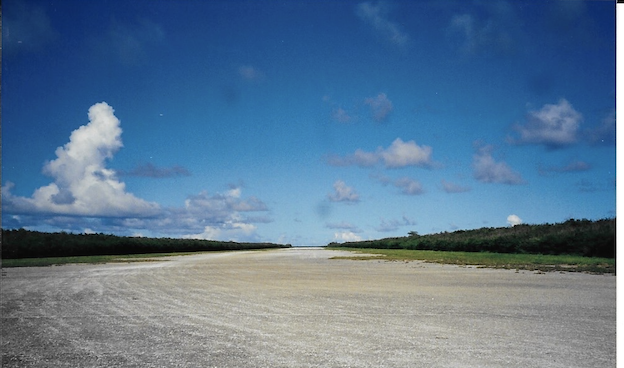
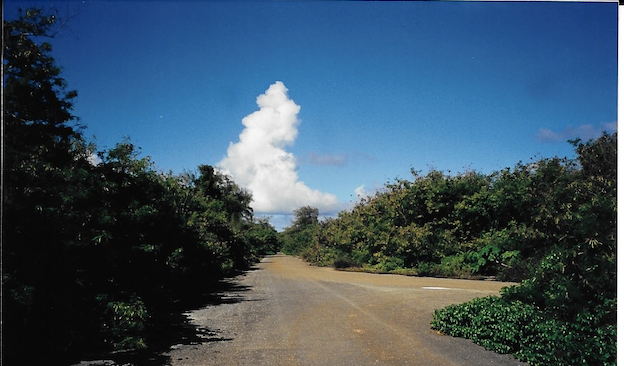
    Tinian runway where Enola Gay and Bockscar took off on their missions

    As the free world hunkers down for the first global war of the 21st century it’s worth taking a glimpse at a place where the last global war ended: at Tinian Island, where the planes that dropped the atom bombs on Japan took off. My family recently took a trip to Tinian, a Manhattan-shaped island in the Mariana Islands where the Manhattan project neared its end. Colonel Paul Tibbets, piloting the B-29 Superfortress named Enola Gay, took off from here to drop the bomb, “Little Boy,” on Hiroshima. Three days later, Major Charles Sweeney, also took off from here in the airplane named Bockscar to drop the bomb on Nagasaki.

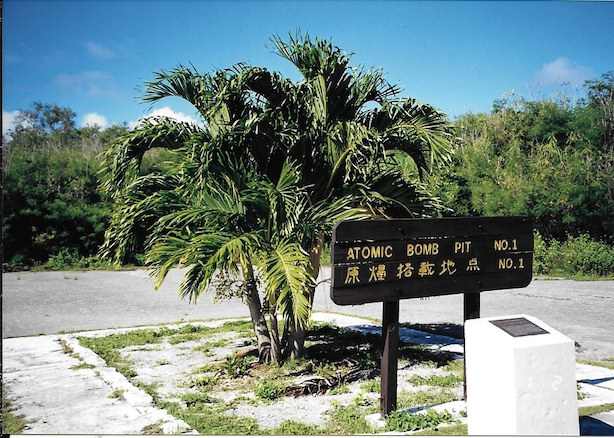
    Atomic pit No. 1 where Hiroshima bomb was loaded

    At the end of World War II Tinian was the busiest airfield on earth, with six gigantic runways. Nineteen-thousand combat missions flew from here. Now it’s a quiet place with some unusual attractions. With a population of less than 3,000 people in an area of 39 square miles, it lies next to Saipan in the Mariana Islands and is politically part of the Commonwealth of the Northern Mariana Islands, a U.S. territory.

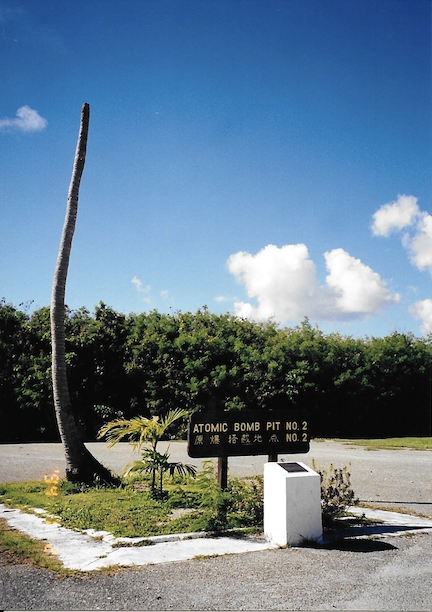
    Atomic pit No. 2 where Nagasaki bomb was loaded

    When we got off the boat from Saipan, my family’s first stop was the casino that today is the island’s largest business. Tinian Dynasty Hotel and Casino is a flash place — a Macau-style casino occupying a piece of South Seas paradise. But unlike other hotels in the tropics, it doesn’t leverage its location. No al-fresco dining to pull you away from the gaming tables. The windows in the rooms don’t open to let in the warm breezes. After all, you might be tempted to enjoy the tropical weather outside — leaving the pleasures of the slot machines behind.

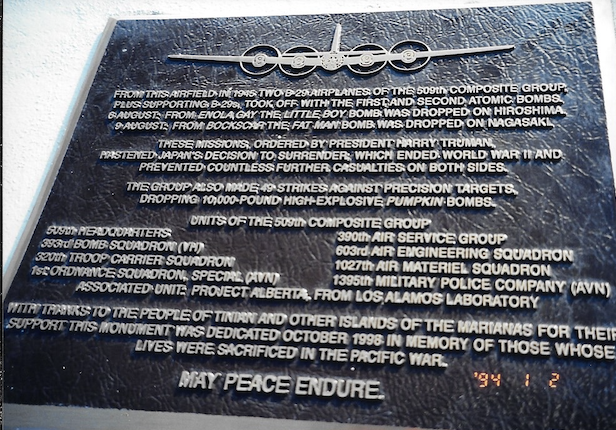
    Plaque to commemorate that planes with atomic bombs left from this airfield
    Sign to where atomic bombs were loaded

    We started our touring by driving to the Suicide Cliffs on the south side of the island. As American troops were invading the island at the end of July 1944, Japanese civilians chose suicide rather than surrender. They jumped to their deaths from here. Their fanatical behavior has an eery parallel with the terrorists of today. The site is spectacular and empty with vertical cliffs dropping to crashing waves and a sea of startling blue. We were the only visitors, deepening the natural solitude of the area and making it feel as if we really were in a sacred place.

    Jungle encroaching on Tinian road

    From there we drove clear across the island. Because Tinian is shaped like Manhattan the military named the island’s roads after streets in New York. Broadway is a long straight avenue, but unlike its famous namesake there is no traffic at all, no pedestrians, and only a few gutted buildings from World War II days. Weeds sprouted from the asphalt. Jungle is starting to creep in at the edges.

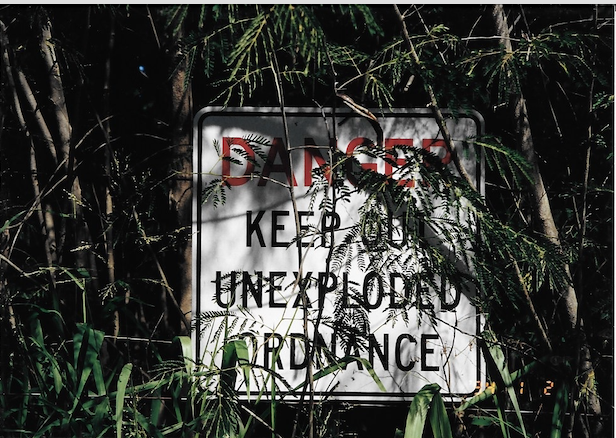
    Unexploded World War II ordnance on Tinian

    At a roundabout there was a ruined Japanese shrine. We drove around it to a truly forbidding part of the island. The road narrowed and every couple of yards there were signs on jungle-covered barbed-wire fences that warned of explosive ordinance. After a couple of miles there was a dirt turnoff to the left where we stopped next to a large grave-size plot with a few flowers on it and a headless palm-tree in front of it. A wooden sign read, “Atomic Bomb Pit No. 1.” The plaque described how the bomb dropped on Hiroshima was winched into the belly of the Enola Gay at this spot.

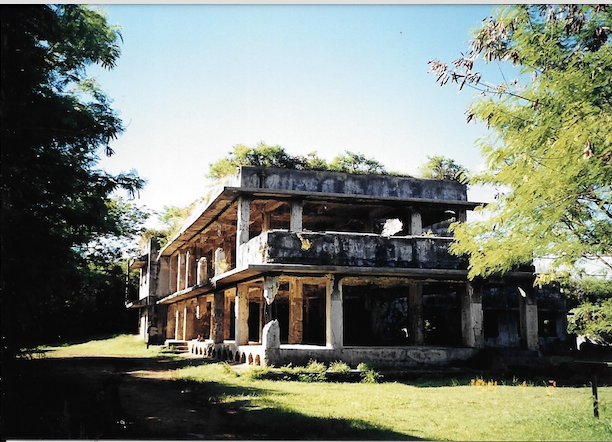
    Ruins of World War II barracks

    About 50 feet away was another signpost: “Atomic Bomb Pit No. 2.” Another atom bomb, “Fat Man,” was winched into the belly of Bock’s Car here prior to its journey to Nagasaki.

    I’ve visited the Los Alamos laboratories in New Mexico, where the U.S. atomic bomb project feverishly was pursued, and its museum. I’ve also visited the museums at Hiroshima and Nagasaki and saw the horrors that befell the victims of the bombs. But this site at Tinian affected me the most: the silence; the complete absence of tourists or any other people; the sense of decay as if we were standing in a post-nuclear war world, one decimated by atomic weapons.

    Abandoned World War II tanks

    Further on we discovered the runways, monumental ribbons of concrete, now silent and slowly being reclaimed by the lush vegetation of the surrounding jungle. Near some Japanese bunkers on the side of one runway were plaques honoring the U.S. military units that served here. Then we found ourselves driving down the very straight 8th Avenue towards the hotel. We passed the sign for the 509th Bomber Group and its slogan bragging that it was the first to use atomic weapons. This was Col. Tibbets’s unit.

    Tinian as seen from Saipan ferry

    With some relief we reached the town again. We visited the ruins of a previous civilization: a collection of huge latte stones — like a South Pacific Stonehenge — that were the foundations of a home belonging to a legendary Chamorro chieftain, Taga the Great. Within moments we were back at the familiar surroundings of the casino. Other than the gambling and eating the only other entertainment at the hotel was a troupe of Russian dancers. But as I sat down to watch them gamely doing their routine I realized that I was the only one in the audience. It was an empty house.

    Foundations of home belonging to Chamorro chieftain Taga the Great

    Published in The Wall Street Journal, March 1, 2002

  • Ju Ming Museum: A Sculptural Oasis in Taiwan

    In 1542, sailors on a Portuguese ship heading to Japan spotted Taiwan and named it Ilha Formosa, beautiful island. While driving along the coastal road from Taipei to the Ju Ming Museum it’s easy to understand how the sailors arrived at that name. The coastline, studded with rock formations, is at once dramatic and forbidding. It may have also served as inspiration for Ju Ming, Taiwan’s greatest living sculptor.

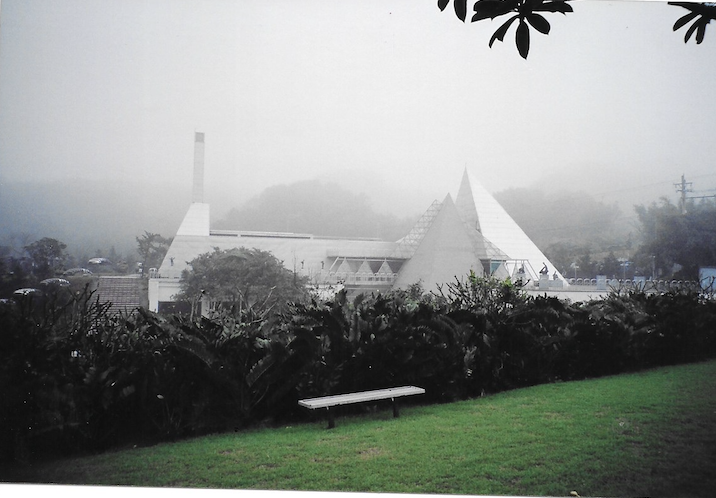
    Ju Ming Museum building

    His museum, opened in 1999, was designed by him to showcase his vision in bronze, stone, clay and wood. While the focus on primarily one artist’s work is unique in Asia, in a nod to inclusiveness great artists from the both East and West are also exhibited. Taiwanese painters such as Chang Wan-chuan, Lee Cher-fan, Liao Chi-chun as well as Western artists such as Henry Moore, Andy Warhol, Joan Miro, Picasso, Bernard Buffet and Robert Rauschenberg can be seen there. The closest to a Western equivalent to it would be the Rodin Museum in Paris or the Picasso Museum in Barcelona – but minus the ego.

    Born in 1938, Ju Ming began sculpting as an apprentice at the age of 15. For the next two decades he modestly viewed himself as just a talented craftsman and sought teachers such as the sculptor Yang Ying-feng to mould and shape his skill into true artistry.

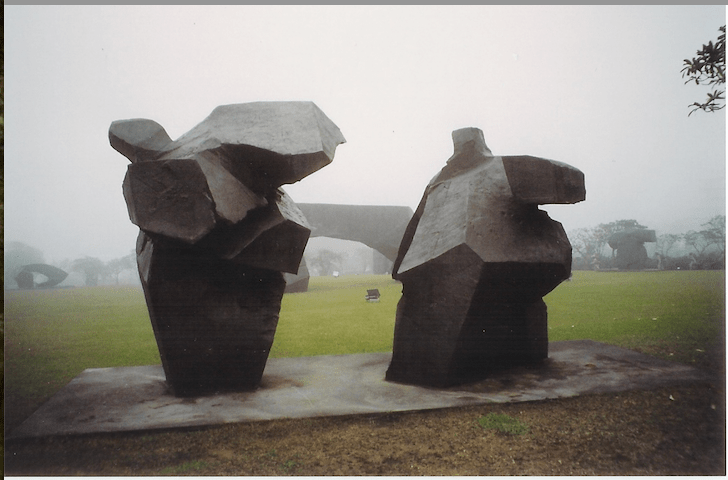
    Monumental Sculpture by Ju Ming

    In 1976, Ju Ming’s work, including his iconic Taichi Series, was featured at Taiwan’s National Museum of History. His Living World Series furthered his reputation internationally. In 1994 his work was featured at the Hakone Open-Air Museum in Japan, the first exhibition by a Chinese artist there.

    Colorful sculptures inside the museum building

    I entered the 11-hectare museum through a white angular building, descending some stairs before walking down a long, white hallway. I had the impression that the architect’s vision was that the hallway was like a birth canal and the outdoor exhibition just beyond the glass doors a new way to see the world.

    Sculpture with an urban theme

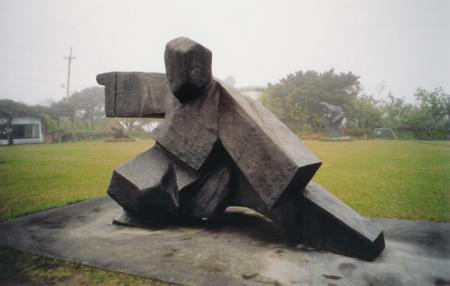
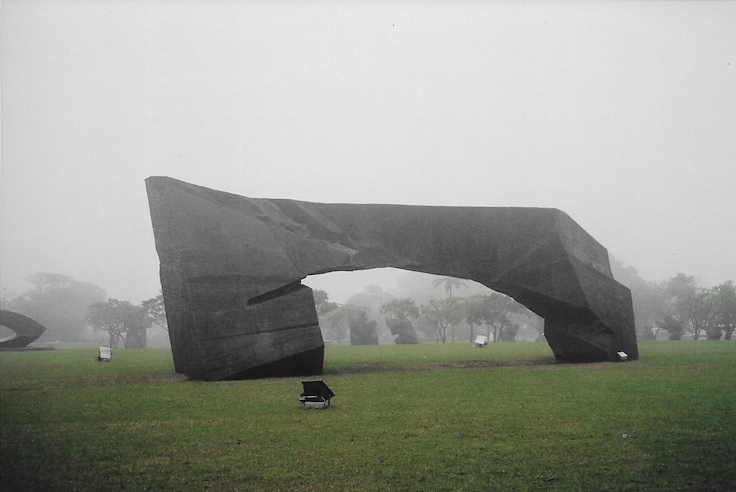
    I visited on a foggy weekday. Mist rolled over the works, at once obscuring and revealing them. Lack of sunlight dulled the color of the grass and the grey milkwood trees, but gave the works more gravitas as the Tai Chi figures were pushing at each other and the intrusive sky. The ever changing motion from the ground cover clouds helped to convey the stillness and movement of the figures, the uncanny sense that they were observers as well as the observed, like actors in a tableaux. While the figures were abstract or semi-abstract, the strength of their inner spirit was apparent. I was dwarfed by the size of the largest of the pieces, which at 15.2 meters wide by 6.2 meters high was the size of a small house.

    Celebrating the Navy

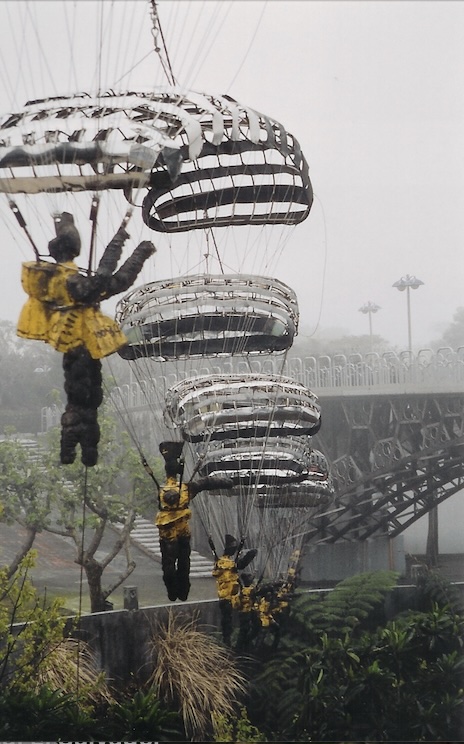
    There was a series of pieces on the Taiwan military. A platoon of life-size sculptures of soldiers was marching, exhausted, on a path. In another piece, soldiers stood at attention while an officer addressed them. There was an eight-story high bare metal frame of a naval ship, its mast lost in the fog of that day, while Ju Ming’s sculptured sailors were ready to be reviewed. His parachutists descended towards a landing zone beneath a bridge that connected the two sides of the museum grounds. Pilots stood impassive beside a mock-up of a fighter jet. His military were less enshrined heroes than people worn down by duty and obligation.

    Whether it’s the Tai Chi masters or the Taiwan military, Ju Ming’s inspiration comes from the land of his birth. His angular Tai Chi masters look as if they emerged from the rocky shores the Portuguese sailors saw centuries before.

    His stature, and statues, are helping Taiwan to carve a separate cultural identity, at once a part of and yet distinct from China. On both sides of the Taiwan Strait he is viewed as a great Chinese artist. A visit to his museum will show you why.

    Screenshot

    Published in South China Morning Post, April 18, 2007

  • Jakarta’s Money Central

    A trip to Jakarta is usually a chore. Traffic can be so bad that you’ll spend more time commuting to a sight than you did at the sight itself. With a little digging, though, the city has some one-of-a-kind cultural gems.

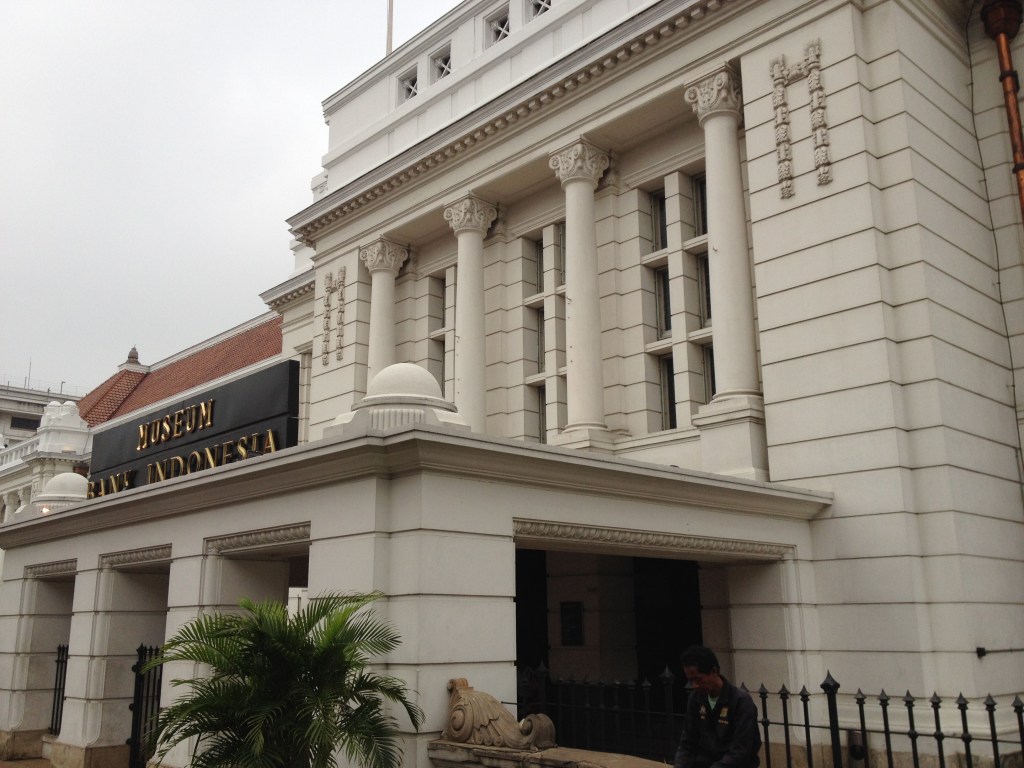
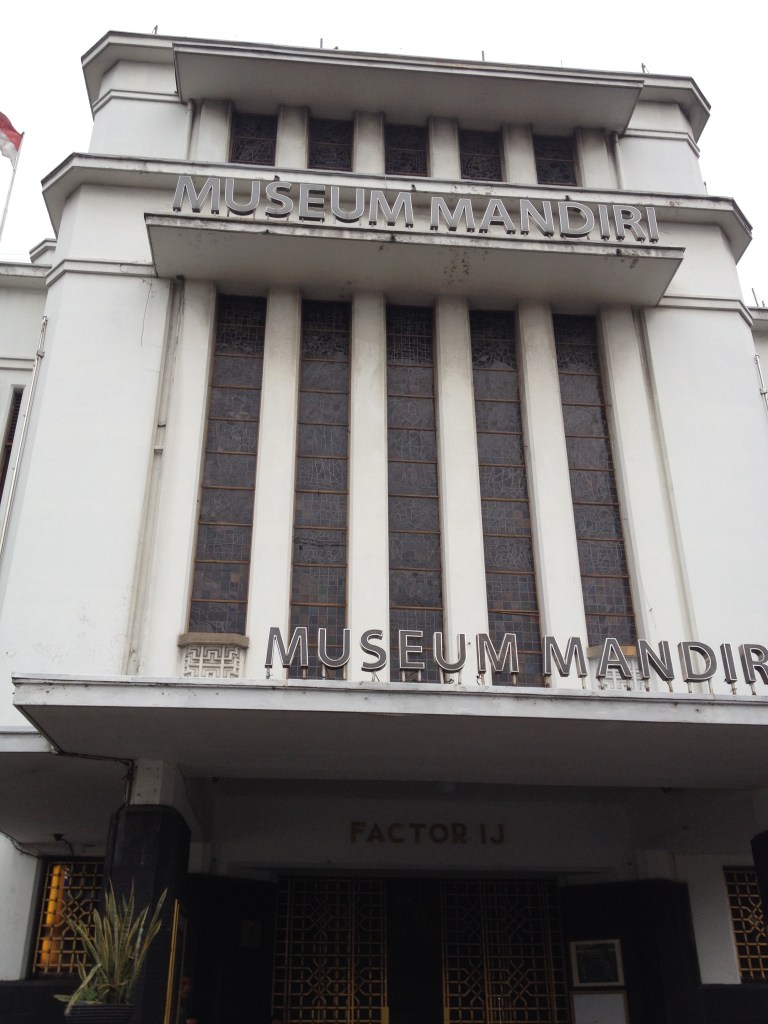
    In Kota, also known as Old Batavia, are a number of museums in stolid Dutch colonial buildings better suited for northern European winters than the tropics. The Fatahillah, Shadow Puppet, and Ceramic museums all sit around a picaresque cobblestoned square where you can almost forget the jammed traffic in the streets around you. Two of the most engaging museums though are nearby and next to each other: The Bank of Indonesia and the Bank Mandiri museums.

    The Bank of Indonesia museum is the flashier of the two, with informative exhibits that underline its role as a pillar of a volatile ever-evolving society. After three years of meticulous restoration, it was opened July 2009.

    MUSEUM WITHIN THE DE JAVASCHE BANK BUILDING

    The museum sits within what was once the The De Javasche Bank. That bank, also known as the Bank of the East Indies, was founded in 1828 and moved into this building by Dutch architect Edward Cuypers, in 1909. As the colonial central bank it played a stabilizing role through the Japanese occupation, the 1945 declaration of independence until finally the Indonesia government nationalized the bank in 1953 and turned it into the Bank of Indonesia.

    While the replacement of De Javascche Bank was a nationalist move, it is curious to note the original Bank of Indonesia logo was closely aligned with the De Javasche logo: the letter J was changed  to the letter I without altering any other design elements. So much for continuity.    

    EARLY 20TH CENTURY DESIGN

    For early 20th century design aficionados, the museum is a treat. The lobby has tiled azure pillars supporting a high vaulted ceiling. Through an archway is the old teller system. A bank customer would go into an enclosed room and do their transactions through a wire mesh.

    The exhibits take you through Indonesia’s mercantile history. Life size mannequins of laborers loading sacks of spices for shipment to Europe for the VOC company; Dutch colonialists having dealings with pigtail wearing Chinese; even soldiers firing on the Japanese in a World War II scene. The message was clear: the bank and nation’s history are intertwined.

    STACKS OF GOLD BULLION

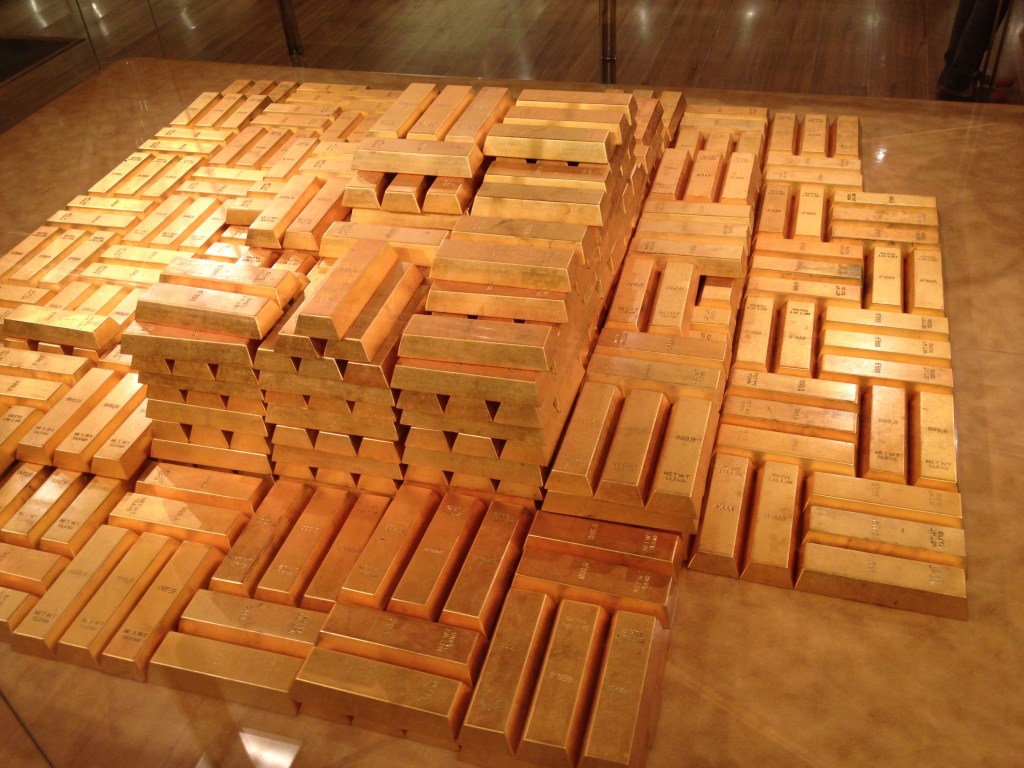
    And, of course, no visit to a central bank is complete without seeing its gold bullion. Within a clear plexiglass enclosure are stacks of gold bricks. And nearby, inside a spacious walk-in vault, are displays of Indonesian money from the 14th century to the present.

    While I like history, the restored to its original grandeur building was worth lingering in: the bank’s boardroom with its malachite green-tiled walls and intricate stained glass windows, a grandfather clock in the rear; the huge open-air courtyard covered in decorative tiles and potted trees surrounded by the bank’s white-colored pillars and covered interior walkways. The building projects the stability it sought to achieve.

    BANKING IN THE 1930S

    While the Bank of Indonesia museum projects a stolid national institution, the Bank Mandiri museum next door is more lively, a sort of this is how banking really was in the 1930s.  The building originally was the Netherlands Trading Society. Designed by Dutch architects JJ de Bruyn, A.P. Smits and C van de Linde in an art deco style it was opened in 1933. The building was nationalized in 1960 to become part of the Bank Export Import Indonesia until finally through a series of mergers it became Bank Mandiri in 1999.

    The museum has a cluttered hodgepodge collection with teletypes from various eras, paper shredders, logbooks, securities, antiquated computers, old currency, and colonial era antiques.

    ART DECO AT ITS BEST

    Fans of art deco will be delighted. As you walk in the massive building you see a 50-meter long polished counter where a lot of the bank business was conducted with customers. Behind the counter bank officers sat at elegant wooden desks on polished red-tiled floors. You can stroll amidst the exhibits and mannequins to get more of the bank experience. The walk-in vault in the basement was the highlight. There were walls lined with safe deposit boxes, and a mannequin bank officer and his female assistant going through a log book while soldiers in wide-rimmed hats stood nearby.

    PANORAMA VS. NOSTALGIC SNAPSHOT

    While the Bank of Indonesia museum is structured and organized as a panorama walk through history, Bank Mandiri is a snapshot focused on a nostalgic 1930s experience. Two sides of Indonesia banking: one depicting the nation’s history; the other it mercantile spirit. Both set in stunning architectural examples of the early and mid-twentieth century. A visit to both will give you a perspective of Jakarta that will be refreshing after a long bumper to bumper drive.

    Published in the April-May 2015 issue of Asian Journeys magazine

  • A Miracle in Vietnam

    Dong Khoi Street is home to a Prada store and a brand new shopping mall. And for the past few weeks, Saigon’s upscale shopping district has been the site of what many Vietnamese Catholics believe to be a miracle.

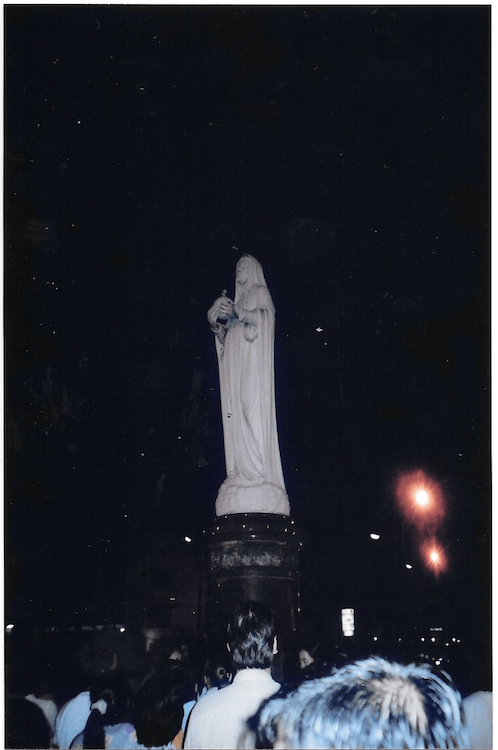
    After word spread that on Oct. 29 a tear streaked down the face of the Virgin Mary statue, staining it, several thousand people flocked to Saigon’s Notre Dame Cathedral to see it. Crowds, many with mobile phone cameras, gathered to record the sight. Initially only city dwellers came, but soon, visitors from the countryside came, too. Traffic around the cathedral slowed to a crawl, and the police arrived to maintain order.

    More than a week later, there was still a mark on Mary’s face, and the phenomenon continued to attract hundreds of daily visitors. People took turns crowding on to the small traffic island that is the site of the four-meter high statue. City gardeners in orange jumpsuits busily repaired the damage caused by feet trampling the grass and shrubbery around the statue.

    Vietnam’s government has been widely criticized for cracking down on religious groups. The U.S. Secretary of State this week again designated Vietnam as a “country of particular concern” in its annual report on international religious freedom.

    Still, several religions, including Roman Catholic and Muslim religious organizations, among others, are officially recognized in Vietnam. There are an estimated five to eight million Roman Catholics in this country of around 80 million. From Phat Diem Cathedral in the north to Notre Dame Cathedral in Saigon, there are so many worshippers on Sundays that people spill out of churches.

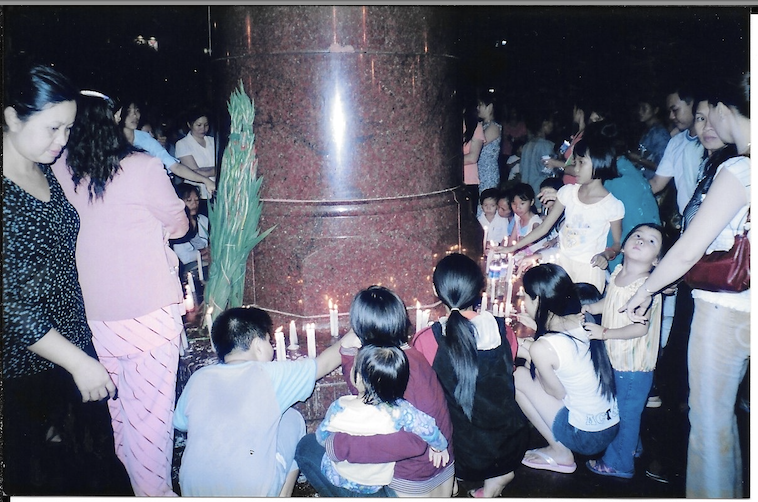
    For the most part, the crowd around the Mary statue was orderly. During the day, a sea of umbrellas floated above the crowd as people protected themselves from Saigon’s blazing sun. At night, candles and flowers were placed around the statue, turning it into an outdoor shrine.

    The mood wasn’t completely solemn, however. Children played around the statue. People sold drinks, ice cream, peanuts, prawn crackers — even cotton candy and balloons. Japanese, American and other foreign tourists have visited the site.

    Faithful at Virgin Mary Statue

    The event has been the talk of the town, and the subject of articles in local newspapers. Those keeping a vigil at the statue say it’s a miracle; others say it’s a warning. Some Vietnamese speculate that the tear is an omen about an impending bird-flu pandemic. Some even drew connections between Tuesday’s earthquake — centered in nearby Vung Tau but clearly felt in Saigon — to the weeping statue.

    Other Vietnamese I spoke to were more skeptical, saying the streak was just a mark from the heavy rain that recently fell upon the city. Some speculated about mischief. An executive at a large manufacturing company told me: “I think a game is being played on people. A person put that mark on her face.” Others were simply unmoved by the event. One woman said: “In many countries Mary cries. So it’s not a big deal.”

    The authorities appeared to be tolerant of this public act of faith. I didn’t notice any visible restrictions on who could visit the statue, just some traffic cops making sure people don’t spill out into the streets in front of cars and motorcycles. The police actually discouraged hawkers from selling photos of Mary’s tear-streaked face with a digitally added halo. They don’t want a religious event to be used as a commercial opportunity.

    The crowds of believers surrounding the statue of Mary — against the backdrop of the fancy boutiques and trendy art galleries on Saigon’s Dong Khoi Street — is a telling sight. It suggests that the economic growth and cultural vitality in this communist country are being accompanied by an upsurge of spirituality.

    Screenshot

    Published in The Wall Street Journal, November 11, 2005

  • Genghis Lives

    Nearly eight centuries after his death, Genghis Khan still rules the hearts of Mongolians, and his popularity is growing. Since the Russians were pushed out in 1990, a homegrown brand of Mongolian nationalism has started to reveal itself, with Genghis Khan at its center. His face is on the national currency notes, the togrog. A giant image of him has been carved into a mountain just outside Ulan Bator, visible from the city center. There are even calls within Mongolia to relocate the capital from Ulan Bator to Karakoram, the capital of Genghis Khan’s empire, on the 800th anniversary of its founding, which will fall around 2020.

    These reminders of Mongolia’s glory days would not have been visible 20 years ago. When Russia ruled Mongolia from behind the scenes between 1921 and 1990, imagery of Genghis Khan was banned because he was such a strong symbol of Mongolian national pride. Mongolia’s domineering neighbors like to downplay the historical significance of this warrior leader, whose power was won at their expense. His empire became the largest in history, stretching from China to Russia to India to the Balkans.

    It didn’t last. Mongolia was eventually invaded by its neighbors, becoming a fiefdom of China from 1732 to 1911, and then a puppet regime controlled by Russia for most of the 20th century. When protests toppled the pro-Soviet rulers in 1990, democracy took hold — and so did the public memory of Genghis Khan. At Sukhbaatar Square in Ulan Bator, a massive memorial to him is near completion. People line up to have their photos taken in front of it. An energy drink, a vodka and a beer are named after him, not to mention restaurants and tourist agencies. Mongolian legislators even debated a law to license his image last year, which would have allowed the government to charge royalties for use of the warrior’s name and control the ways in which his image could be used.

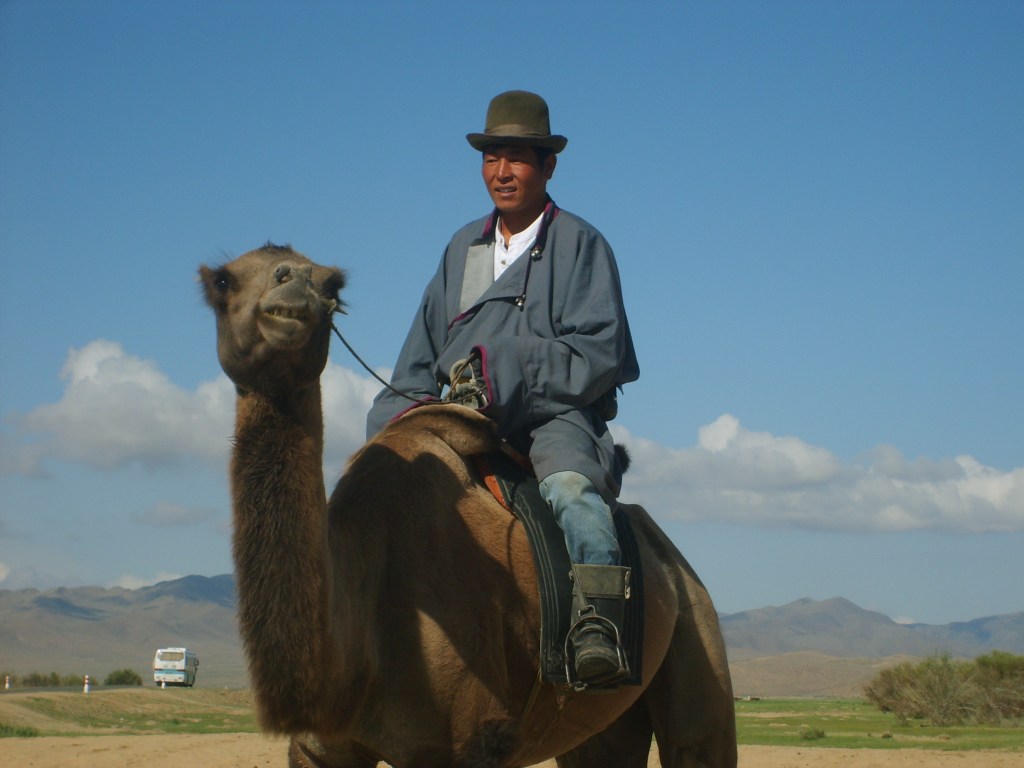
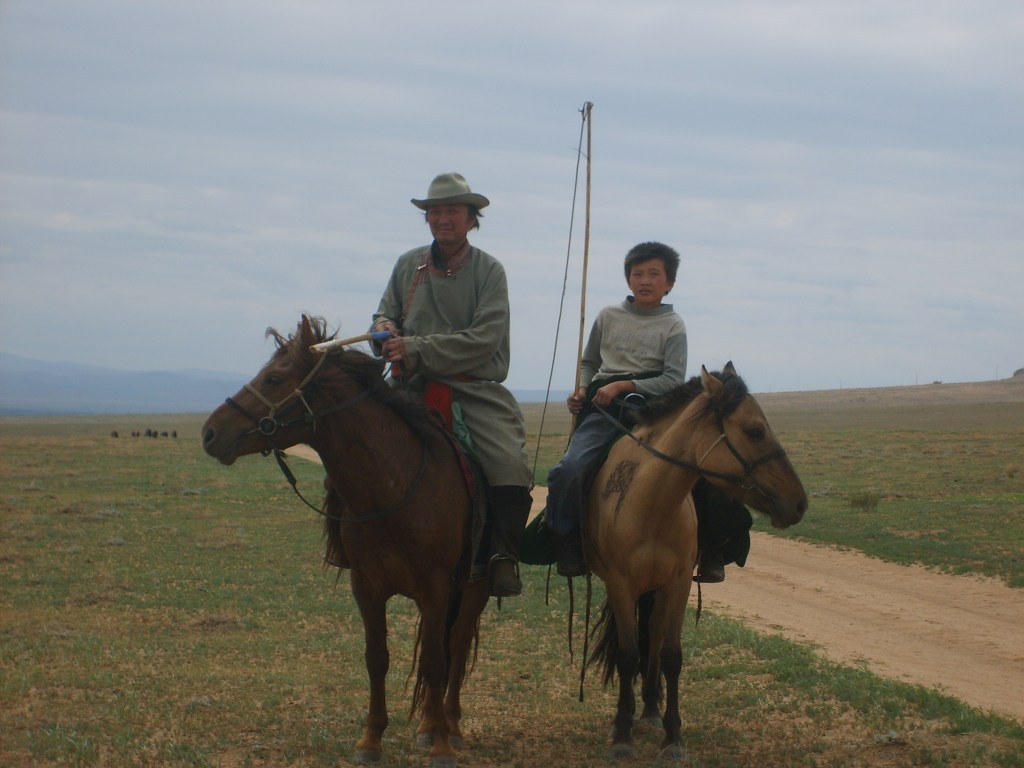
    My guide when I was recently in Mongolia, a college student named Bolor, spoke of him in hushed tones, as if he were still living and very much in charge. Genghis Khan’s cultural legacy is also all around. The annual Nadam festival features the sports famous in Genghis Khan’s time: horseback riding, archery and wrestling. The fermented mare’s milk sold by children at roadsides and served by nomads to visiting guests was the fuel that powered his army on their conquests.

    Genghis Khan may be best known as a warrior, but his legacy of governance is still relevant, too. He introduced a written Mongolian script still in use today and the rule of law, the Yasaq. He practiced a sort of religious tolerance that is progressive even for today: Citizens of the Mongol empire had no religious restrictions and could pray as they pleased – as long as they were loyal to the Mongol rulers. He unified warring Mongolian tribes into one nation and he and his sons conquered more territory in 25 years than the Romans did in 400 years. Mongolia is not the only nation in his debt — modern-day Russia and China were also first united under the reign of Genghis and his descendants.

    In one respect it’s odd that a young democracy should so admire a ruler with such a fierce, autocratic reputation. Yet, the Mongol empire’s success was grounded on the principle of meritocracy. Ethnicity and race mattered less than ability. The Mongolians see Genghis Khan as the embodiment of that principle. That one man could so rapidly create so large an empire from such a remote outpost provides inspiration to his countrymen even today.

    Published in The Wall Street Journal, November 2, 2007

  • I Voted For Vigan!

    I Voted For Vigan!

    When I arrived at night I saw a poster asking for votes for Vigan to be one of the new seven wonder cities of the world.  It was the first time I had heard of the vote let alone seen a city lobbying for to be one of winners.

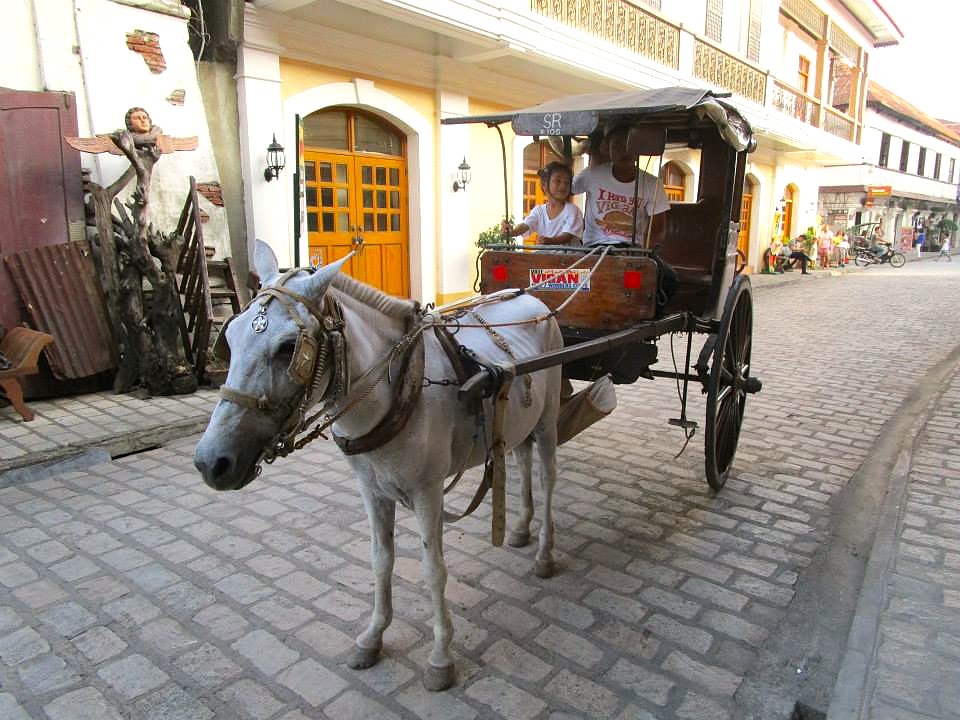
    Over an al-fresco dinner along a cobblestoned lane, surrounded by Spanish-era mansions from the 19th century with capiz-shell windows, I wondered how 21st century social media could transform this place. Kalesas, horse-drawn carts, are still a form of public transport, the sound of hooves nearly as common as the buzzsaw sound of low riding three-wheelers. At night, the yellow tinted streetlights gave the town a sepia-toned look, like a faded postcard from a bygone age.

    PHILIPPINES ONLY UNESCO HERITAGE TOWN

    With a population of 50,000, Vigan is the Philippines only UNESCO heritage town and the best preserved Spanish colonial town in Asia.  It has Vietnam’s Hoai An’s antiquity and charm without the tourist hordes and glossy five star hotels. I saw only a dozen or so foreign tourists during our four days there and not that many local tourists either.

    With mansions from Filipino, Chinese and Mestizo merchants lining street after street, some well-restored, others falling apart, some just plain run down, it feels like a place that skipped a beat in time. I was reminded of my first visit to Myanmar in 1981 where cars from the 1960s were traversing the roads. Or, my first visit to Luang Prabang in Laos in 2001 where monks in flowing orange robes were the most commonly seen pedestrians. Vigan is that rare town in Asia — a piece of the past that looks joyfully stuck there.

    Vigan almost had the war-ravaged and recovered look that many places in Asia have. At the end of World War II, American bombers were about to target Japanese forces stationed there when they found that they had already left. Just before the bombing run the planes pulled up and headed back to base.

    The best place to start is the Plaza Salcedo where the St. Paul Metropolitan Cathedral is. A massive pale yellow edifice with white trimming flanked on one side by the archdiocese building, inside ivory-carved saints with natural hair wigs looked down upon the devoted.  Kalesas were lined up in front of the church.

    Across from the church is the Vigan Dancing Fountain where every night at 7:30pm multi-colored water sprouts swing to the beat of decidedly modern talents such as the Irish chanteuse Enya.

    Then further along the church-state power axis is the capitol of the state of Ilocos Sur. A stolid Spanish colonial building, it’s an imposing counterweight to the church.

    Next to the town’s other plaza, Plaza Burgos, is the beating heart of Vigan, Crisologo Street. A pedestrian only cobble-stoned lane lined with mansions and stores selling antiques and handwoven items along with some cookie cutter tourist souvenirs, kalesas regularly trot down it. Some of the antiques were good finds. My wife and I bought a beautiful Chinese porcelain plate painted with swimming fish, a reminder that Vigan is just a few kilometers from the shore and has been a trading port since before the Spanish arrived.

    PHILIPPINES “MACONDO”?

    On Quirino Blvd, we visited Syquia Mansion, home of Elpidino Quirino, the sixth President of the Philippines. Inside was a 19th century European home with unique Filipino touches. Figurines graced oversized antique mirrors and furniture. Paintings of the house’s most famous occupants were set high in the living room, looking down at visitors. Sprinkled throughout the home were black and white photos depicting earlier eras in a time-warped town. Filipino touches were panels of fabric that hung from the ceiling over the dining room table where they were pulled back and forth to create a cooling breeze. Between the outside of the home and its interior was a narrow corridor which was meant to trap the heat.

    On Liberation Blvd. is the Crisologo mansion. The Crisologos were one of the leading families of Illocos Sur. Floro Crisologos was governor, senator and a Philippine military adviser during the Vietnam War. At the museum is the rusting Chevy his then pregnant governor wife Carmeling was in when it was attacked, bullet holes along one side of the car. She survived. But he wasn’t so lucky, having been assassinated in the cathedral in 1970. His trousers, neatly ironed, covered in dried blood, sit in a glass case, along with his shoes and a glasses case, a reminder of his sacrifice.

    The presence of the Sy and Crisologos families dominating the town reminded my wife and I, both fans of the Gabriel Garcia Marquez book, “100 years of Solitude,” of the mythical town of Macondo.  You sensed that there was a novel hiding somewhere in the town, in hidden courtyards, up musty stairwells.

    A visit to the museum in the Archbishop’s palace gave you the sense of the pull of faith.  Religious icons carved in ivory, embellished by silver, were pushed together in the downstairs room of the museum. But it was the upstairs, where the baroque presence of the palace held heavy sway. You could feel the secular power the clergy once had.

    FAMED POTTERY AND LOOMWEAVING

    The iron pottery works at the edge of the town have been a traditional source of commerce for centuries. The RG Jar Factory has a fifty-meter dragon kiln which can bake a thousand pots at one time. The pottery is called “iron” because a tap on it with a coin provides a metal clink even though it is clay.

    Loomweaving is another traditional form of commerce. Barangay Camaggaan is about a fifteen minute three-wheeler ride from town and has a half dozen looms all being worked to create colorful blankets, towels, placemats, washcloths.

    GOOD BASE TO TRAVEL ILLOCOS

    Getting to Vigan isn’t easy. It isn’t on the way to anywhere else.  It’s an eight-hour bus ride from Manila or you can fly into the city of Laoag, captital of Illocos Norte, and take a two-hour car ride south to the city.

    The town provides good base to explore Illocos, an under touristed part of the Philippines.

    South of Vigan, about an hour coastal drive, is the UNESCO protected church of Santa Maria, at the top of eighty-eight granite steps, an auspicious number.  Built in 1769, it is what is known as “earthquake baroque”.  This architectural style is only found in the Philippines and Guatemala, because of their proximity to earthquake zones. The churches were designed lower and wider with broad-shouldered walls that are heavily buttressed to provide stability during seismic shaking. Santa Maria’s bell tower was stout in keeping with the style. Inside the empty church birds flew to and from the nests they created in the eaves.

    CATHOLIC ANGKOR TEMPLE?

    North of Vigan about an hour is the town of Paoay. In the 19th century the town was famous for two of its sons: Antonio Luna, a general and Juan Luna, one of the Philippines most famous painters. The latter’s house is a museum. Paoay is also famous for another UNESCO protected baroque church, St. Augustine’s, also known as the Paoay Church. Begun in 1704 and finished ninety years later, it sits in the center of manicured lawns with plants growing haphazardly from the building, giving it the mysterious aura of a Catholic Angkor temple, a place of faith still standing in a place of implacable elements.

    MARCOS COUNTRY

    Paoay is also Marcos country.  While he may be reviled as a dictator in the rest of the Philippines in his home province of Ilocos Norte he is the favorite son. You can get Marcos t-shirts, iphone covers, watch a game at the Marcos stadium, take classes at Mariano Marcos State University, named for his father.  At the Malacanang of the North, the traditional mansion on idyllic Paoay lake, you can see how the Marcos family lived and played during his more than two decades in power.  The family still

    holds the political power in the province with his daughter Imee as governor, his son Bong, a senator, and his shoe-loving wife Imelda, a congresswoman.

    The Marcos museum pays homage to his life in a way that is more fitting for the hero of a pulp romance novel. He developed toughness from his grandfather during stints in the woods; learned academic excellence from his mother; discipline from his father. Known as the “golden voice of the north” the baritone Marcos was supposedly the highest scoring student on the national bar exam — except jealous examiners marked him down from 98.01 to 92.35. The museum noted that he was the most decorated Philippine soldier during World War II, having miraculously survived the Bataan Death March to take on the Japanese as a guerilla leader. You can also read about his shinkansen fast 11-day courtship of Imelda after he fell in love at first sight when he saw her munching on watermelon seeds.

    IS IT REALLY MARCOS?

    At the squat gray Marcos mausoleum next door, funereal music plays at too high a volume when you step into its black painted interior.  You pass medieval armaments, from battleaxes to maces to clubs, to enter a high-ceilinged room where white flowers created from seashells line the walls. Marcos lays in state, in socks, no shoes, encased in a crystal sarcophagus.  While we strolled quietly around we looked closely at Marcos to determine if is it really him? Or, a wax representation? The only security was a middle-aged guard wearing a t-shirt that was stretched over his considerable gut. Once the half dozen visitors were done looking, sometimes gawking, we were ushered out and he shut the door behind us.

    CUISINE YOU CAN’T GET ANYWHERE ELSE

    The Ilocano cuisine can’t be found outside of the Philippines. Vigan longanizas, pork sausages, are slighty sweet and famed throughout the country. Other specialities are chicken cooked in its own blood; bangus, a local fish, grilled and stuffed with herbs; bagnet, pork with crispy skin; and more exotic dishes such as Ugsa Pochero, sundried wild deer with pork belly made into a stew. If you’re a calorie counter, Illocano food is a challenge.

    Hotel options are largely mansions converted into lodgings with various levels of homage to the town’s past. The best and most authentic hotel was the Villa Angela, a 140-year old mansion. Filled with antiques, rattan chairs and artifacts of the family’s history you feel like a privileged guest with a vantage on a more serene lifestyle.  It may be museum-like but it’s one you wouldn’t mind living in. In our room at night we could see light from the floor below shine through the worn though highly polished wooden boards.

    TOM CRUISE STAYED HERE

    On the wall on the living room is a photo of the actor Tom Cruise with the owner of the villa.  He stayed there when he was filming the movie “Born on the Fourth of July.”  When I asked the manager which of the rooms at the hotel he slept in, she replied, “Yours.”

    I smiled and thought, “Yes, I’ll vote for Vigan.” And yes, Vigan got voted as one of the new seven wonder cities of the world. (https://www.new7wonders.com/en/cities)

    Published in December 2014/January 2015 Asian Journeys magazine