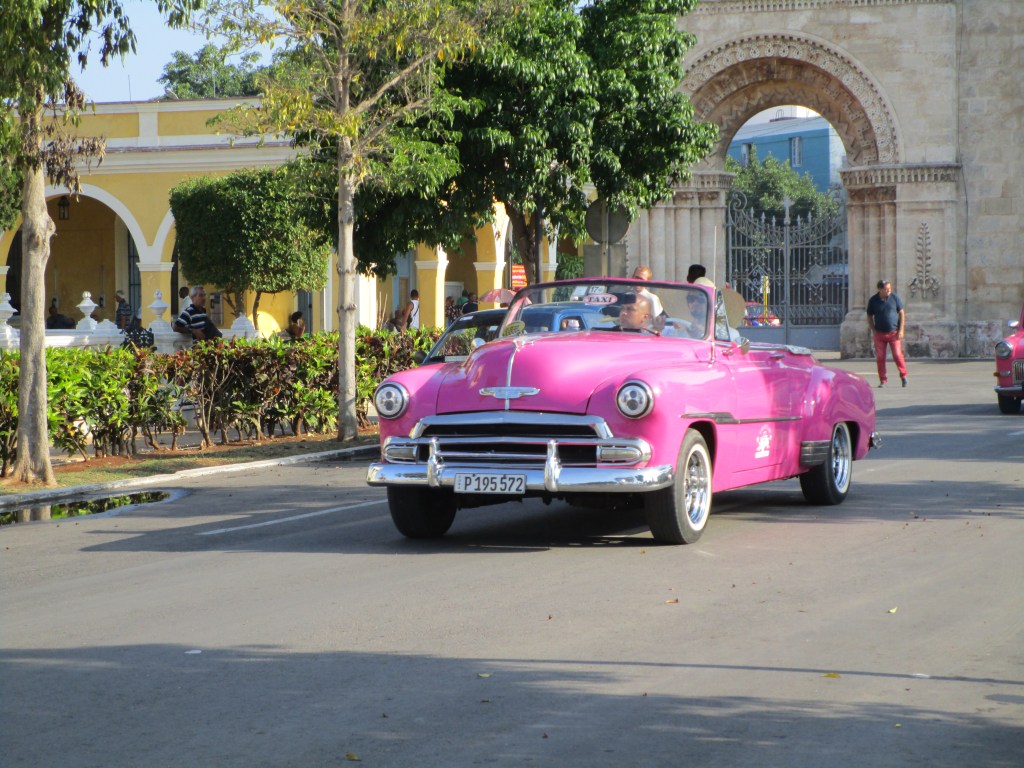
The shimmering red coloured ’51 Chevy convertible roared away from the square in the Spanish colonial-era Parque Central, down the 1920s-era El Prado, sun glinting from its chrome, wind whipping through my hair, careened through the Castro-era harbor tunnel before coming to a belching halt in front of the 16th century fort known as El Morro. Founded in 1519, Havana is the youngest acting 500-hundred-year old I’ve ever met.
The fort and its lighthouse, along with the Castillos de San Salvador and de la Fuerza on the opposite side of the harbour, guarded Havana for centuries before the 1762 British invasion. Spain signed away Florida to get Havana back and La Cabana fort was built from 1763 to 1774 to close the gap the British exploited to invade the city. It was the largest Spanish fortress in the Americas with the harbour facing wall stretching 700 meters and its area covering 10 hectares. Its size is intimidating.

Half of my heart is in Havana
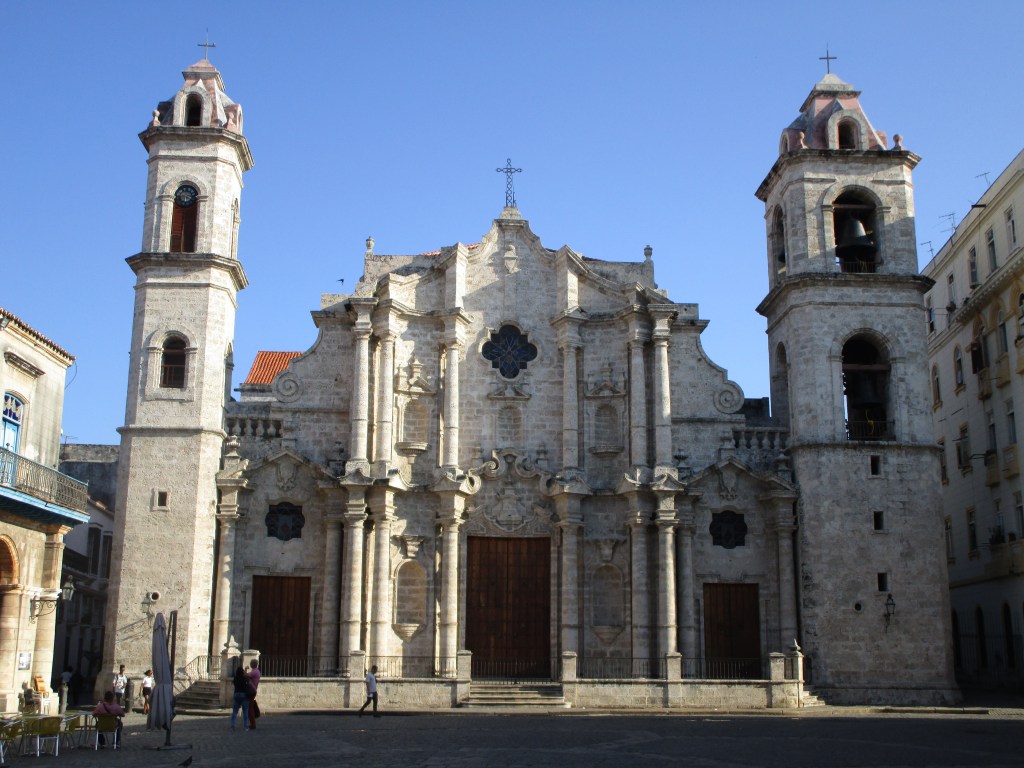
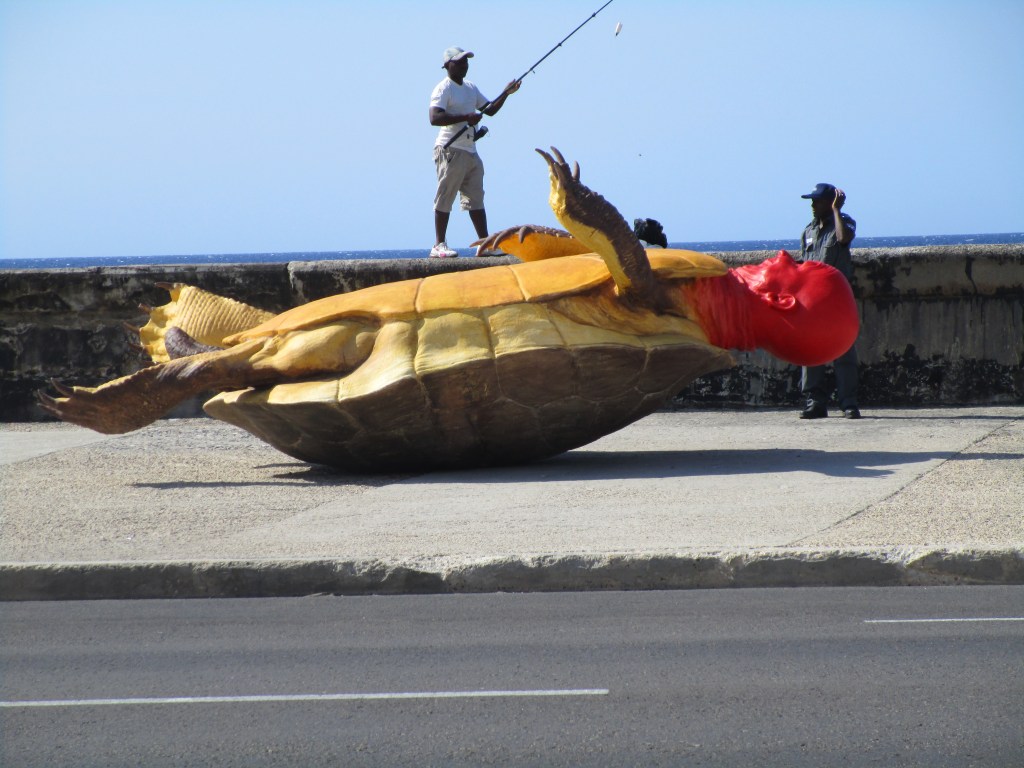
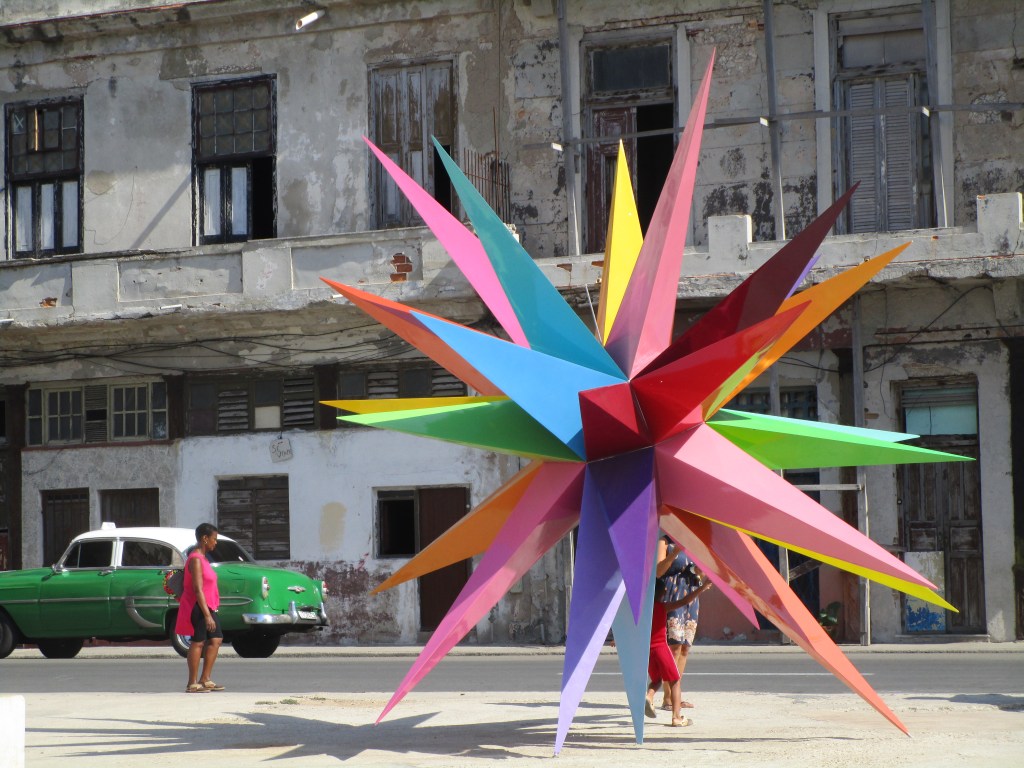
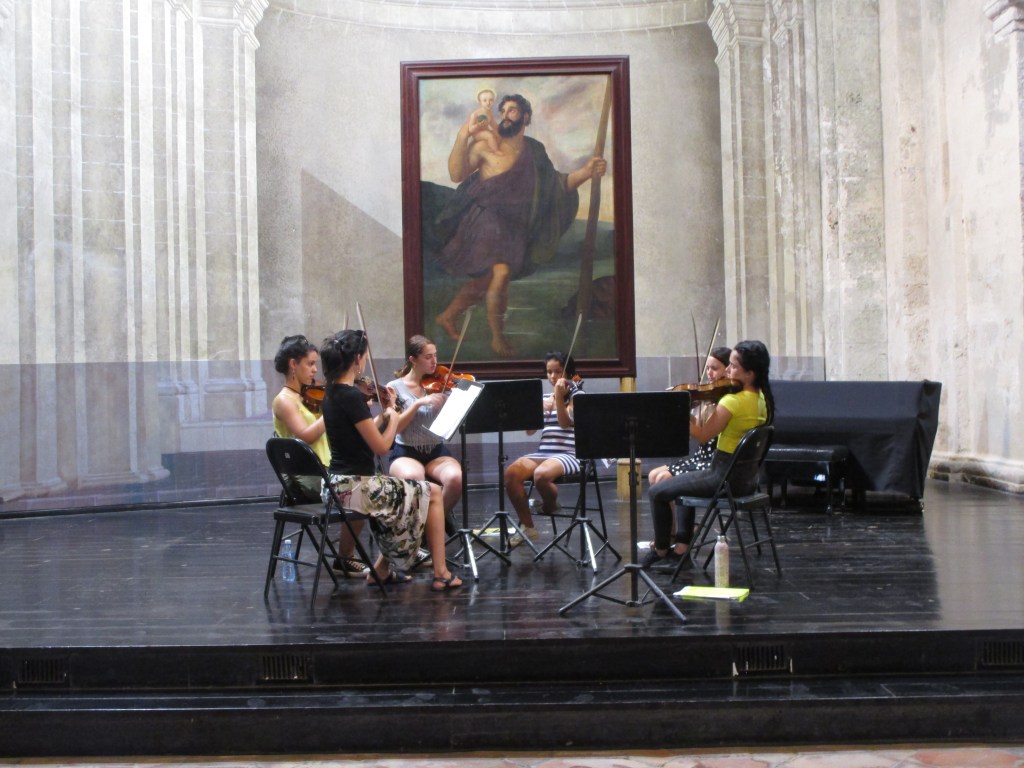
In her song, Havana, Camila Cabello sings: “Half of my heart is in Havana.” Stroll through Havana Vieja, a UNESCO heritage site, and yours will be too. Ages and musical styles collide: Buildings spanning Baroque, colonial and Art Deco eras, quartets practicing classical music at Convento de San Francisco, and choirs singing melodies in churches. Bands at bars and restaurants play Cuban favorites near 2019 Havana Biennial art pieces that interpret this storied city. Occasionally, throngs of cruise passengers flood the Plaza Vieja or Plaza Armas to glimpse what was once the New World’s most cosmopolitan metropolis. The palace the Museo de la Ciudad is in, completed in the 1770s, shows what the vast unequal wealth of the Spanish era looked like, while Havana Cathedral, finished in 1787, shows its intense religiosity.
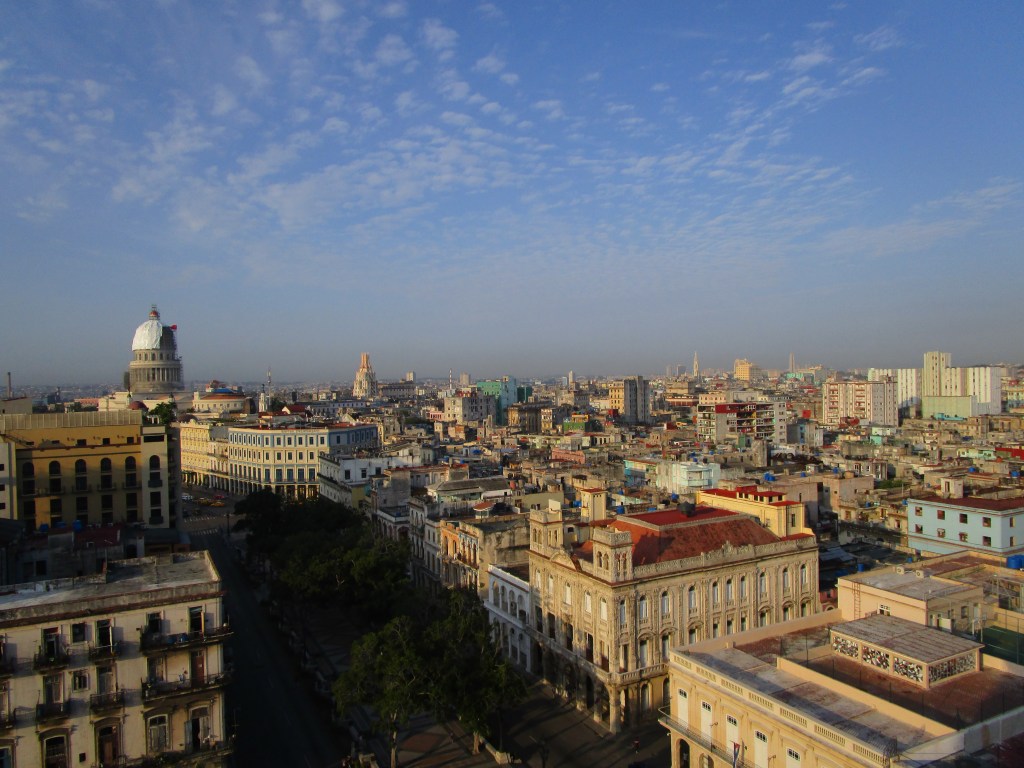
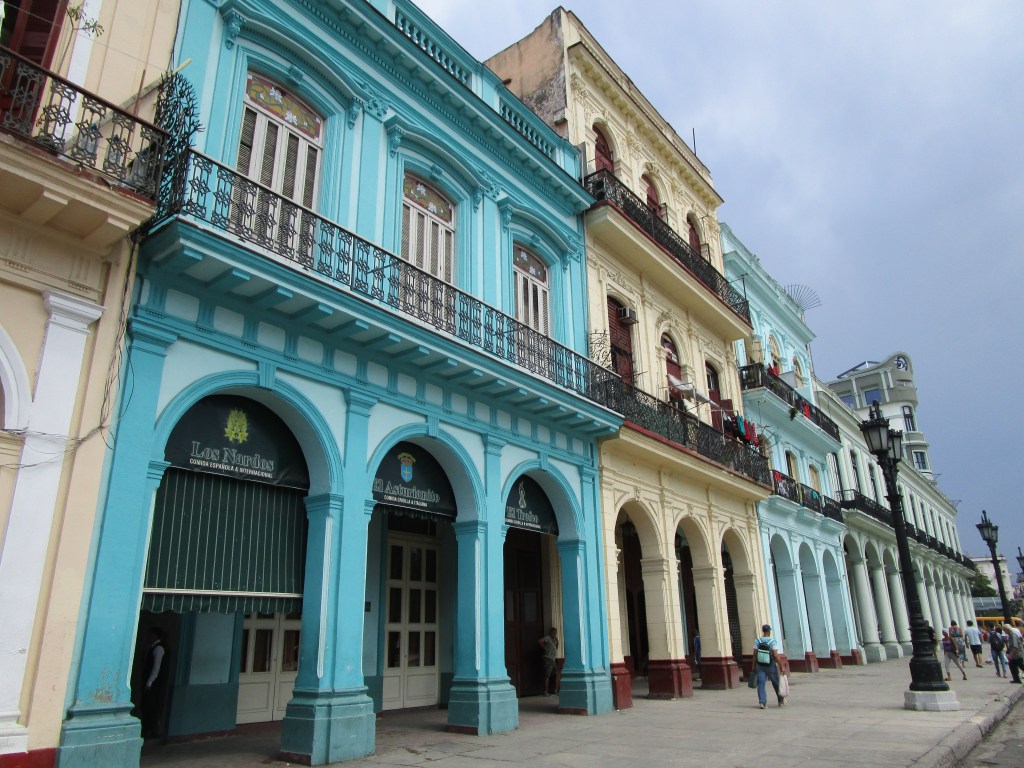
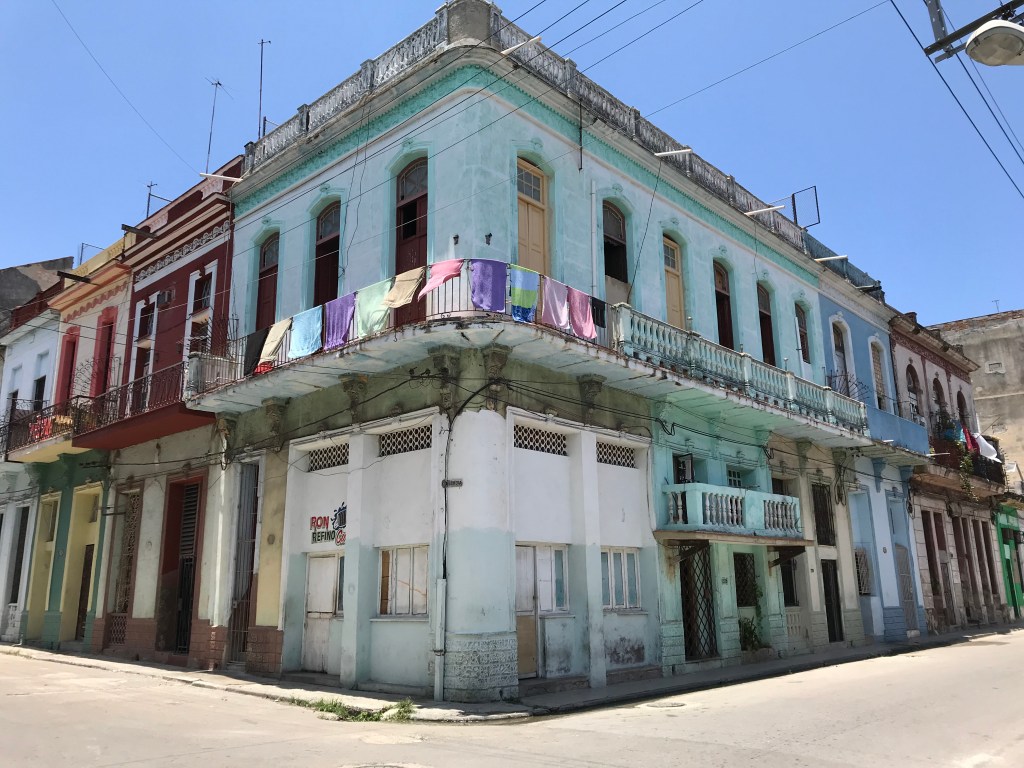
But the district is a work in progress. Decayed, even collapsing buildings, line many streets. At night, lack of street lighting juxtaposed with people escaping their too hot homes for the relative coolness of the squares gives the city a sultry yet somewhat sinister feel, an aura of expectation. Sepia toned light spilling from the buildings makes you feel like you are in another age.
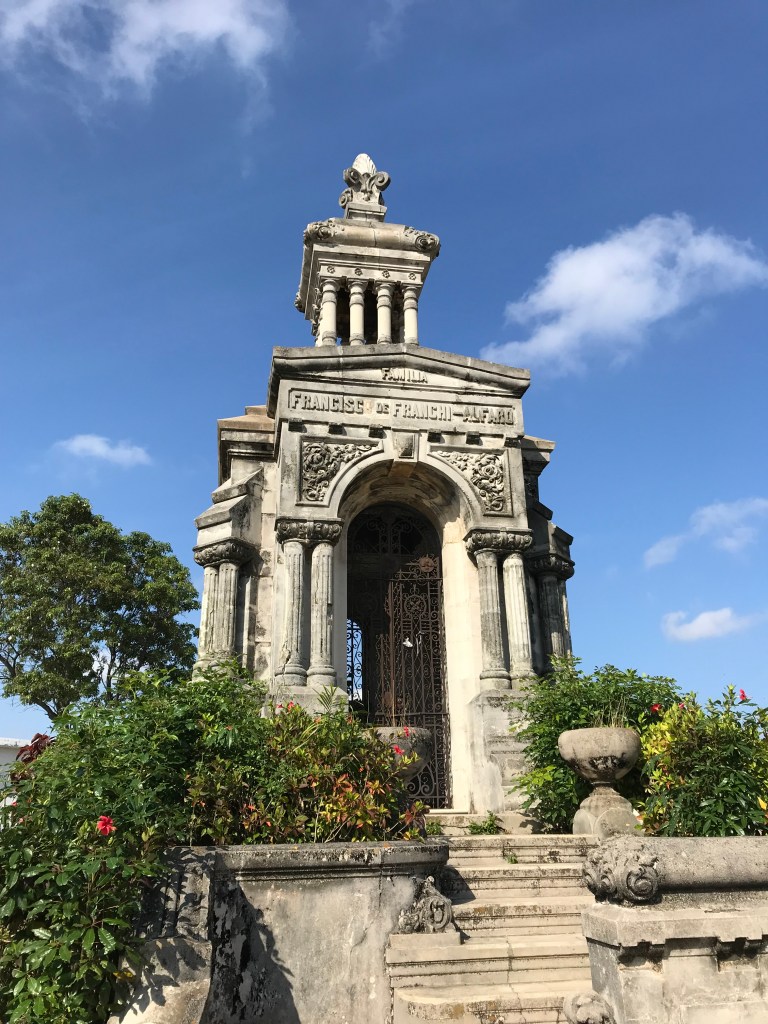
Many of Havana Vieja’s residents from previous centuries are buried in the gothic Necropolis Cristobal Colon in Vedado, huge mausoleums for the wealthiest families casting shadows that lengthen with the day. Its neo-Romanesque Capilla Central is where last respects are paid.
Hemingway was here, here, even there
American writer Ernest Hemingway was one of Havana’s most beloved figures. His home, now a museum in the suburb of San Francisco de Paula, has open windows and doors you look into to get a sense of his life. Shelves of books are everywhere, even next to the toilet. Heads of game animals line the walls in every room, so many you wonder if Hemingway was a little too proud of his prowess in the blood sport of hunting. To escape trespassing reporters in the ‘40s and ‘50s he built a tower for privacy so he could work. It provided a perch where he could contemplate Havana as a distant glittering Oz.


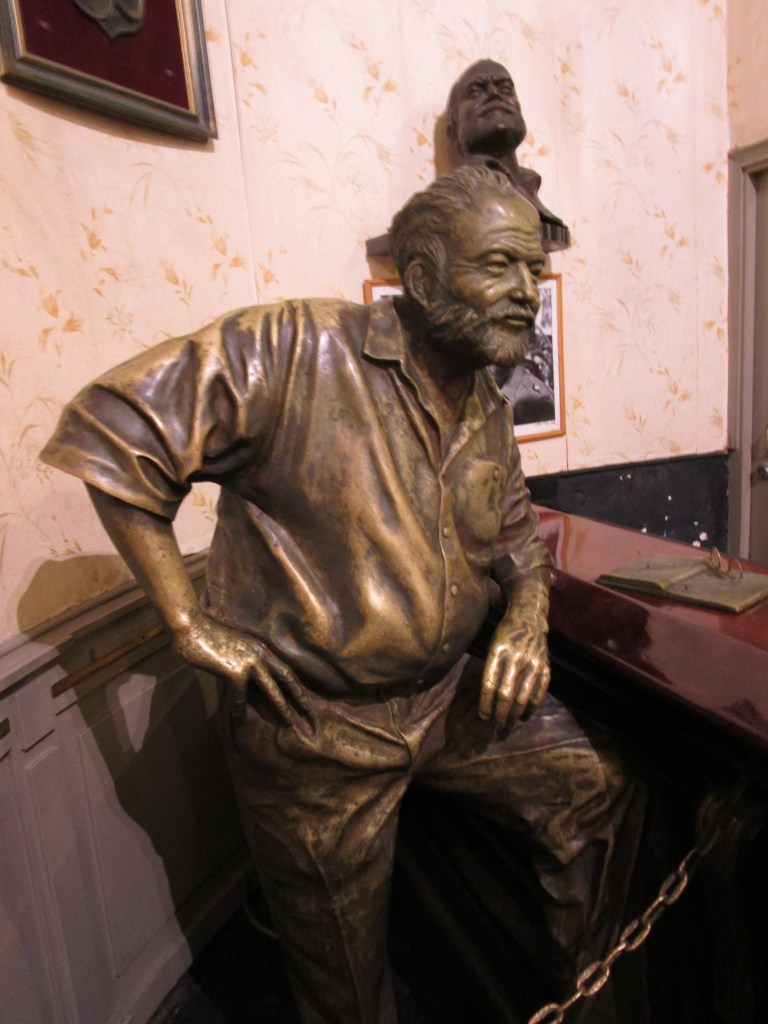
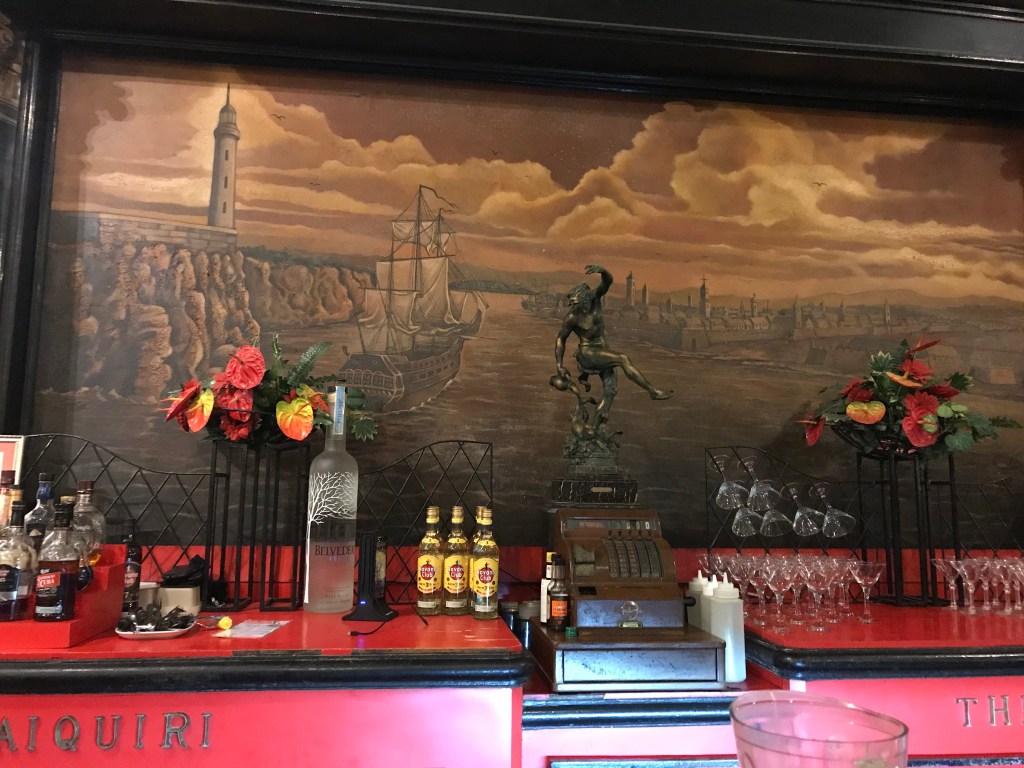
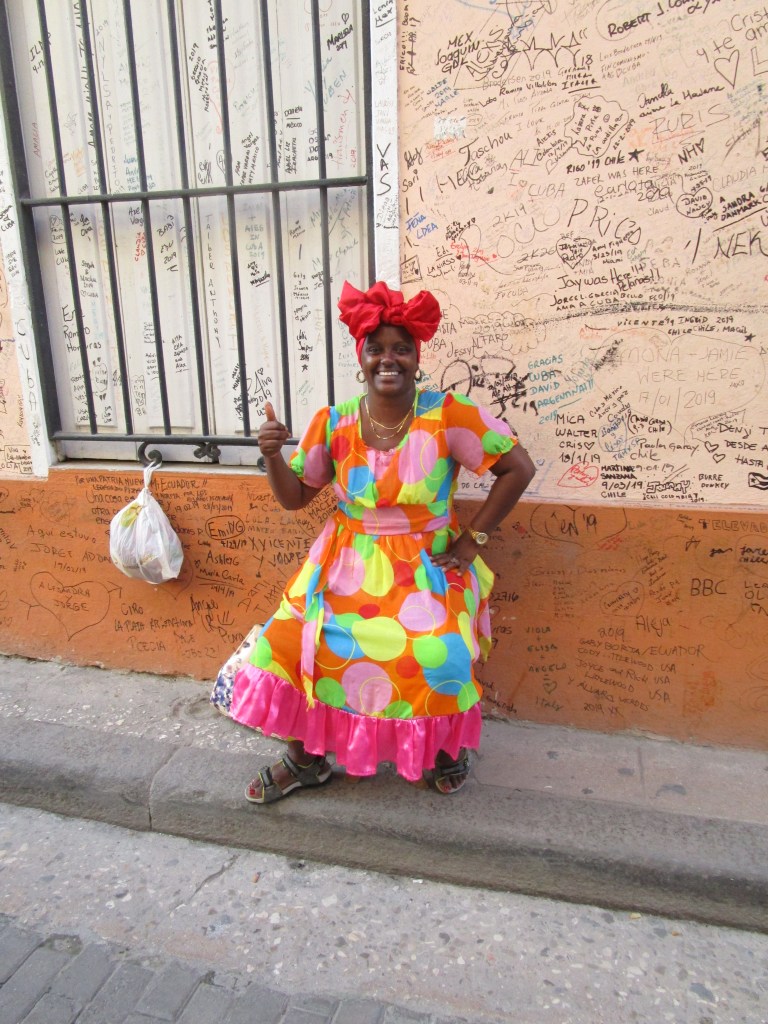
A legendary drinker, Hemingway provided this endorsement: “My mojito in La Bodeguita. My daiquiri in El Floridita.” The result: Mobs of drinkers in both establishments every night. La Bodeguita claims to be the birthplace of the mojito. Numerous celebrities have left their autographs on the wall outside, protected under plastic. Everyone else just writes their name where they can, leaving a graffiti scrawl both outside and inside of the establishment. The upscale La Floridita, with a doorman outside, is a more dignified place to follow in the writer’s footsteps. A statue of Hemingway is in the corner looking across the bar. Down at the docks, down at the heels Dos Hermanos bar, founded in 1894, was also frequented by Hemingway as well as Marlon Brando and Errol Flynn.

Gaudi meets Chagall
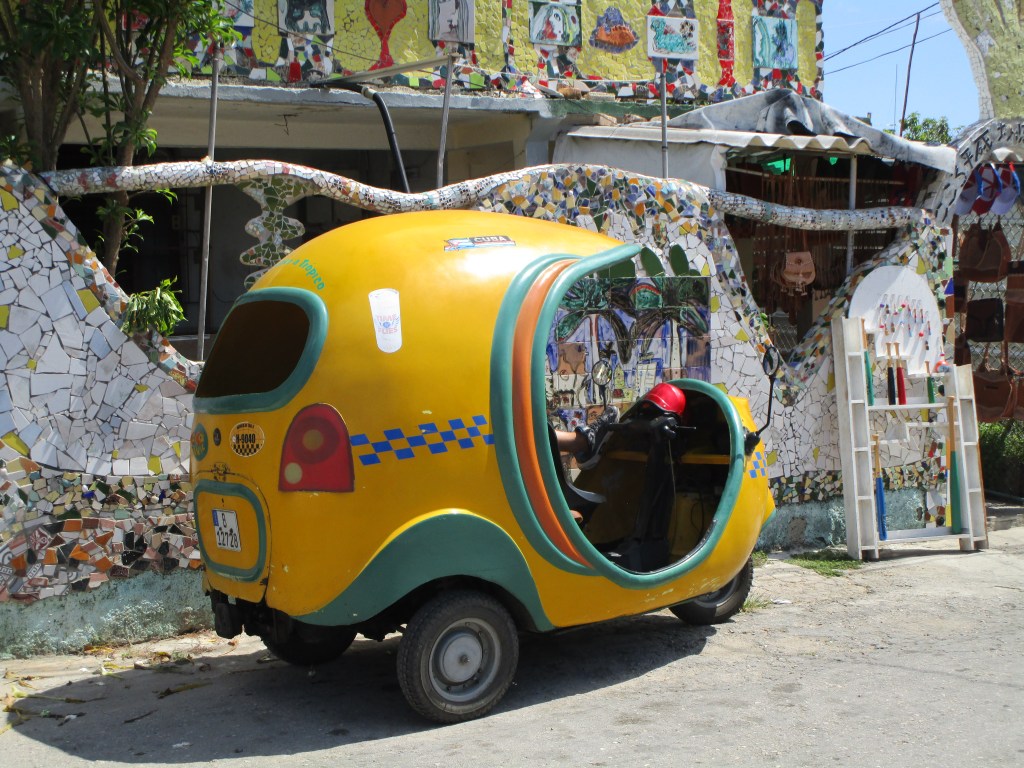
In a city so artfully constructed one artist stands out. In the Jaimanitas district Jose Fuster has turned his home and immediate neighborhood into a larger than life canvas for his art. With work that can be described as Chagall meets Gaudi, Fuster’s multi-hued house translates the Caribbean sun and vibrant Cuban spirit into fluid shapes that seem ready to embrace you. The 72-year old artist still lives here and sells his paintings in its gallery. I bought one of his vases.

Stroll from soul to heart
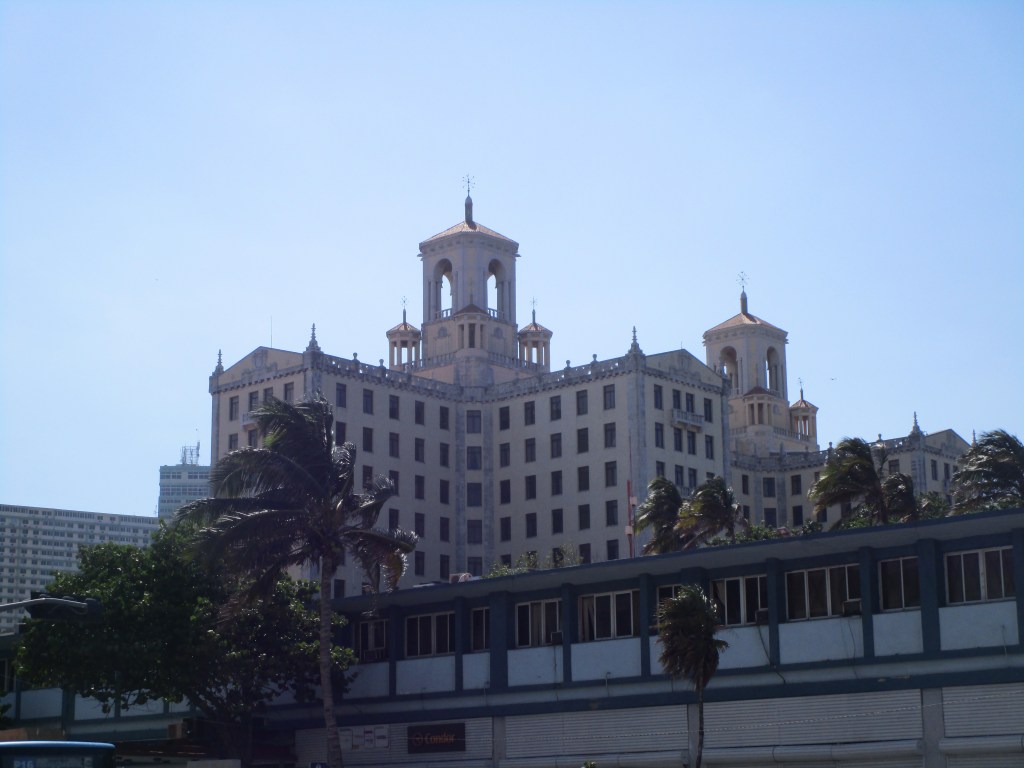
To get a feel of the city’s newer heart it’s best to stroll from the pulsing energy of the Vedado district’s Universidad de la Havana where students congregate under luxurious Ceiba trees down the steps past the seated, welcoming Alma Mater statue to the Hotel Nacional, former 1940s and 50s headquarters for the American mafia. Meyer Lansky and Lucky Luciano held court here. The towering art deco hotel, opened in 1930, and styled after Palm Beach’s the Breakers, is a place to pause for a Cuba Libre on the verandah while the tropical breeze washes over you. Winston Churchill, John Wayne and Frank Sinatra are among the many celebrities who may have sat here.
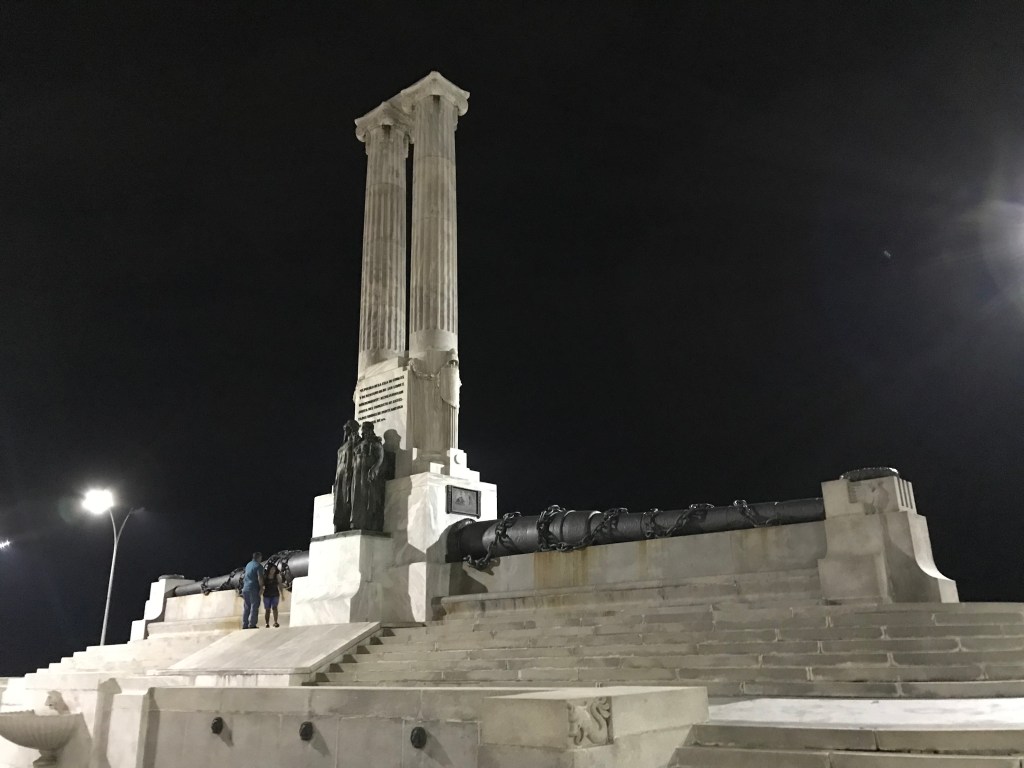
Near the hotel, by the sea, is the memorial to the sinking of the USS Maine, when 238 American sailors lost their lives. The US blamed Spain for the sinking and started the Spanish-American war in 1898. At the war’s conclusion Cuba gained its independence and the US acquired the Philippines, Guam and the Mariana Islands as its first colonies.
The Malecon, Havana’s seaside drive, is the natural congregation point for many residents with its opportunity to fish and alluring sea breezes making it a good place to gather and chat and just cool off. Since I was there during the Havana Biennial some of the provocative art displayed was definitely talked about. From the Malecon I headed up El Prado, the European style pedestrian promenade guarded by bronze lions and flanked by some of Havana’s most elegant buildings, including the Hotel Sevilla where I stayed. Al Capone and Josephine Baker were regulars. Graham Greene made it a setting for his book, Our Man in Havana. And yes, Hemingway was there too.

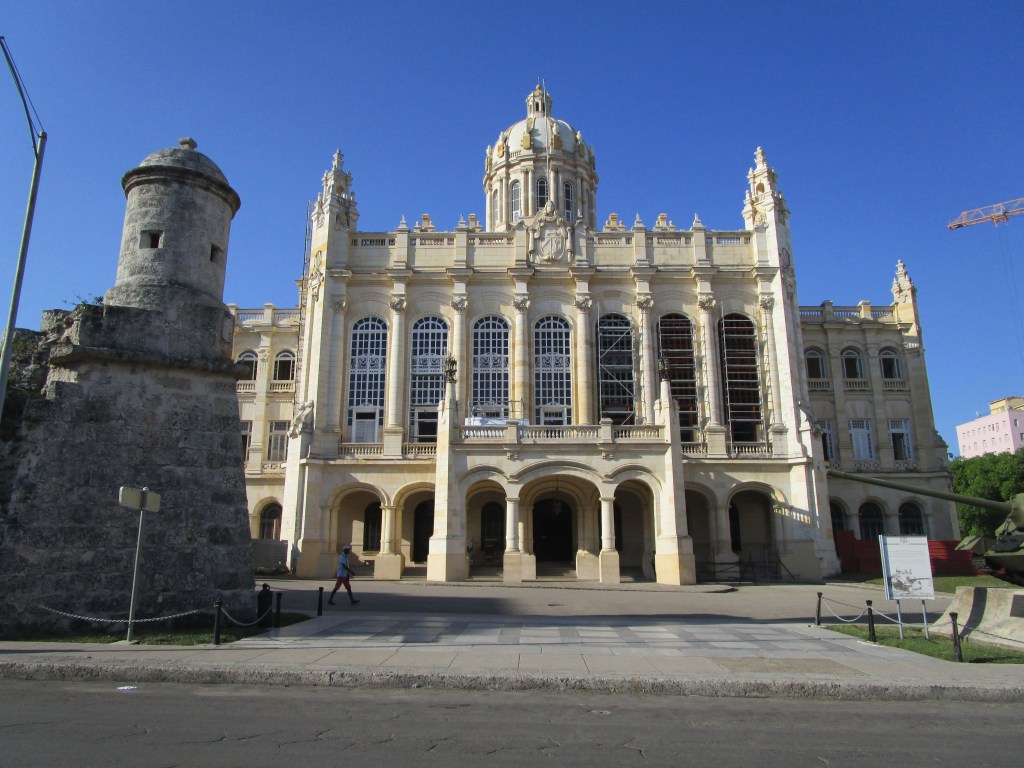
On the other side of the Hotel Sevilla is the Museo de la Revolucion, previously the presidential palace. Completed in 1920, it was where the dictator Fulgencio Batista lived and Fidel Castro took power in December 1958. Tiffany’s decorated the interior. The museum provides the government perspective on Cuban history. Behind it is the leisure yacht Granma encased in a glass pavilion that is clouded by humidity. Castro and 81 compatriots sailed on the Granma from Mexico in December 1956 to start their revolution.
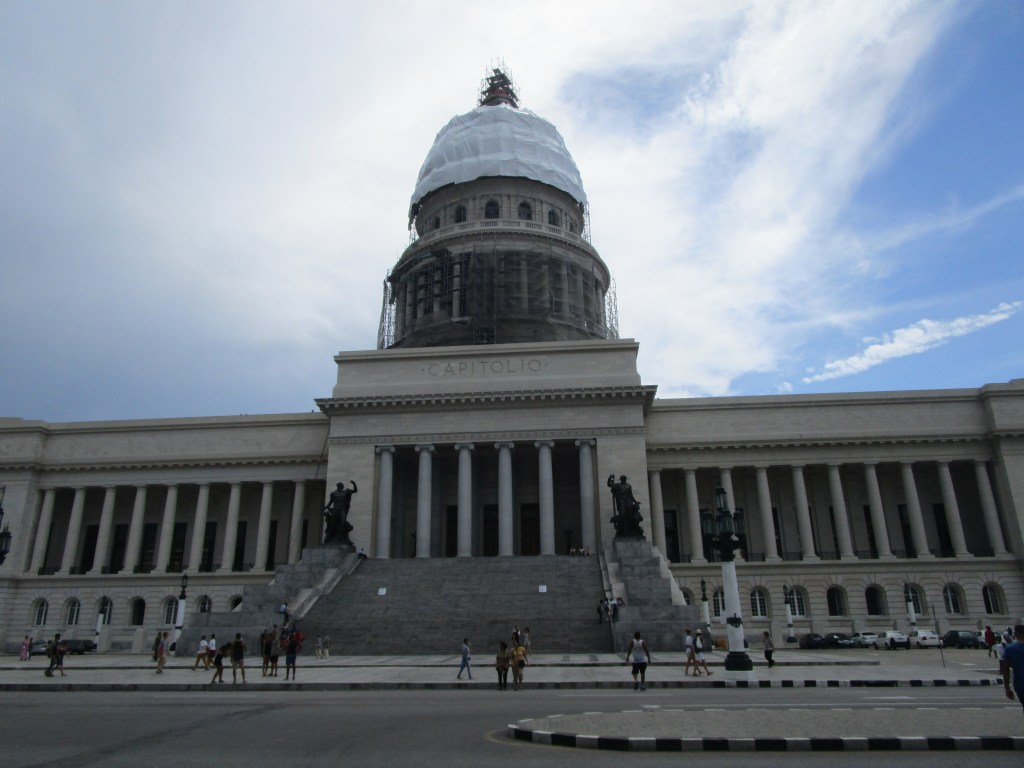
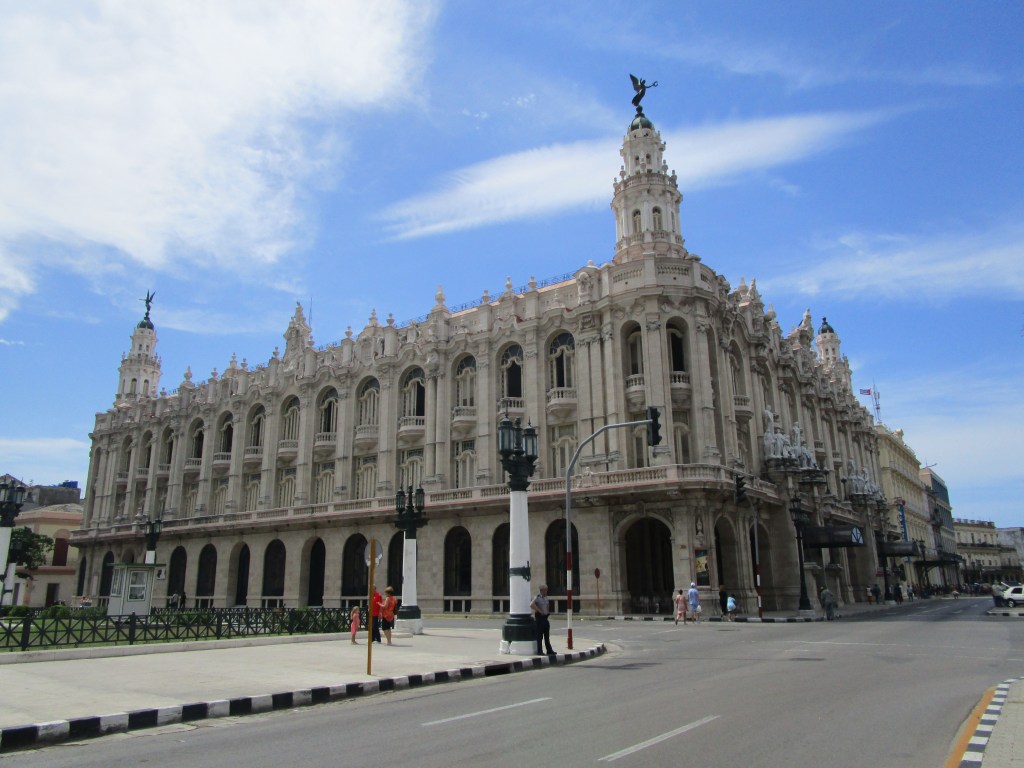
From there it’s a short walk to Parque Central, Havana’s cultural and political center. The Bellas Artes museum and the Gran Teatro de la Alicia Alonso are on two sides of the square while nearby is the massive Capitolio, patterned after the US capital in Washington DC. Prowling the square are so many mint condition American Chevys, Chryslers and Buicks from the ‘50s and ‘60s, now taxis, you feel you have stepped into a time warp. Russian imports like the Lada and Mosvitch, trishaws, horse carts, motorcycles with and without sidecars and two-seater bubble shaped bici-taxis create a vehicular menagerie that barely hangs together on the city’s cobblestoned and pot holed streets.
Cuban cigars to cuisine
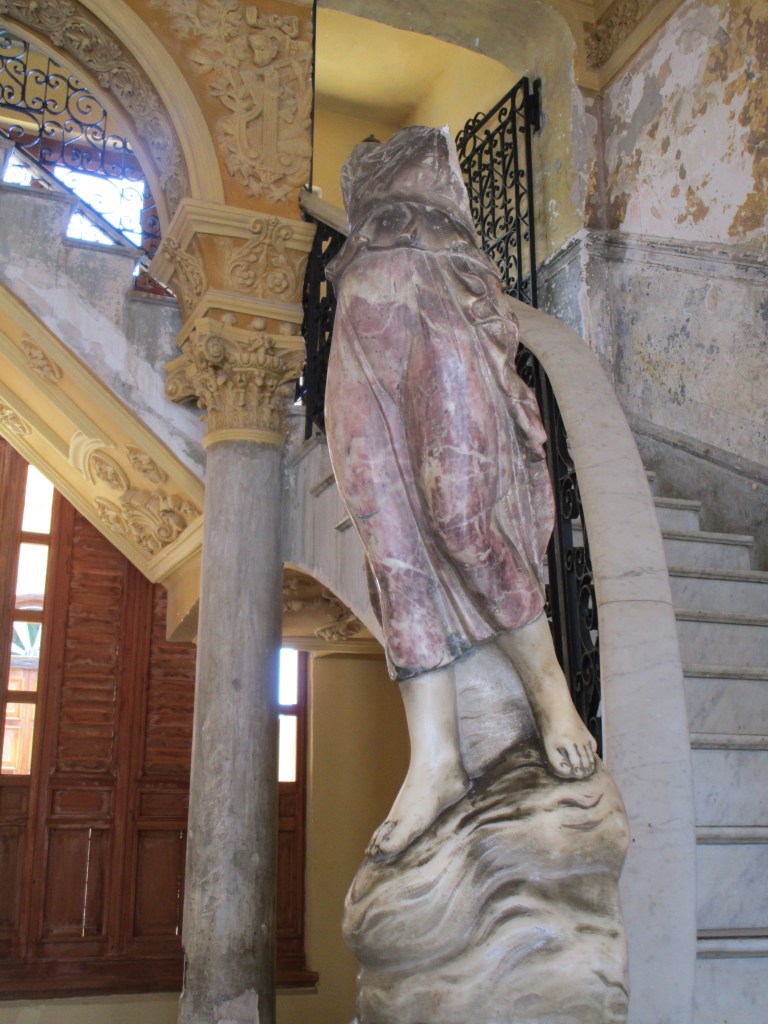
At the Real Fabrica de Tabacos Partagas factory I saw the fine motor skills that go into the making of cigars from the selecting of the tobacco leaves to the very tight rolling of them. It’s tedious and repetitive work on hard benches. Now that the industry is owned by the government numerous brands are made at each tobacco factory in the country. I saw Cohiba, Romeo y Julietta and yes, Partagas cigars made there. I decided to smoke a Romeo y Julietta Churchill after the tour. Like all premium cigars, the ash was firm and didn’t drop off until there was more than an inch of it. The cigar was so potent I knew I needed a long lunch at La Guarida restaurant in Centro Havana to recover. I climbed past a decapitated statue at the start of a sweeping staircase until I reached the third floor of the dilapidated mansion where an artfully funky space overlooked a street in the throes of gentrification. The watermelon gazpacho with strawberry and shrimp was refreshing and removed the cigar taste. The freshly caught longfin tuna with sugarcane, coconut and seafood sauce was perfectly prepared. Cuban cuisine has definitely arrived.
Music all day, all night
Music and dance are an integral part of Cuban life. Children learn the intricate dance steps of danzon, mambo and chachacha that are second nature to them and completely alien to someone like myself.

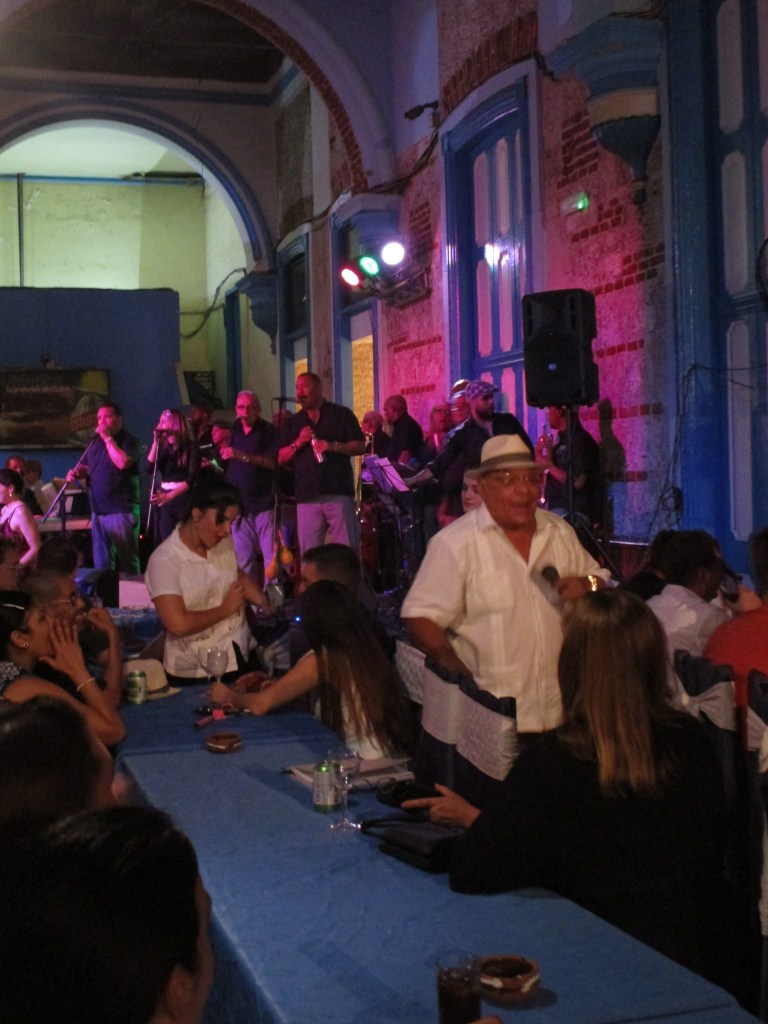
I visited the La Zorra El Cuervo Jazz Club, accessed speakeasy style through a British red telephone booth, and down steps to a basement space. The band, with a female vocalist, had a sassy energy that got people dancing at their chairs.
I watched the world-famous Buena Vista Social Club play on the top floor of a 19th century commercial building near the Capitolio. Singers strolled amongst the crowd as they sang Cuban favorites like Chan Chan and Candela.
From Rum to Rumba
Pre-Castro Havana was famous for nightclubs that started late and went all night. At the Hotel Nacional’s Parisen Cabaret dancers with flawless bodies wore outlandish headgear that could have been designed by Salvador Dali for an Aztec religious ceremony. If I told Freud that I had a dream with them in it he probably would have chomped hard on his Cuban cigar and clicked his fingers for an aide to bring a strait jacket. But I wasn’t dreaming this performance nor alone in gulping my mojito and asking for another. After the show, a dancer in a slinky red dress and sky-high stilettos navigated the steps from the stage to ask me to dance.

Fortified with plenty of rum, and despite two left feet, I was ready to rumba.
And that’s how Havana works its magic. With half my heart in the city I know I have to return someday to reclaim it.
Travel Tips:
Restaurants:
-Dona Eutima next to Plaza de la Catedral for the best traditional Cuban food. The Ropa Vieja, shredded beef, balanced flavors and textures perfectly. Reservations essential.
-Jibaro near the Iglesia y Convento de Santa Clara for innovative Cuban food. Mashed plantains as a dip with fried plaintains to scoop it; shredded pork in a coconut sauce atop rice surrounded by a moat of black bean puree; for dessert, guava topped with cheese.


Places to Stay:
-Hotel Sevilla, built in 1908, has huge rooms with high ceilings and a buffet breakfast on the 9th floor with unhindered 360-degree views of Havana.
-There are numerous casas particulares, independent hotels, which have excellent accommodations.


Museums:
-In a city filled with museums my favourites were: the Bellas Artes for paintings; Museo Napoleonico, with mementos from Napoleon, including his death mask, in a lavishly restored palace across from the Universidad de la Havana; Museo Hemingway; and, Museo de la Ciudad on Plaza Armas to experience an exquisitely restored Spanish palace.

Bars:
-El Dandy on Calle Brasil for a chilled vibe underneath a giant painting of El Dandy himself.
-The rooftop terrace of Ingleterra Hotel for a sweeping view of Parque Central and Centro Havana.
Currency:
-Cuba has two currencies: the CUC$, used by foreigners; and pesos (MN$), used by locals. It is primarily a cash-dependent country so arrive with plenty of cash. US credit cards are not accepted here at all.
What not to be worried about:
-Before I went I read about the jineteros, touts. I didn’t find them that prevalent and when I declined politely to whatever they were selling they moved on. Havana struck me as safe. Just use the usual precautions.

Published in Asian Journeys magazine, June-July 2019
 Maybe Next Trip