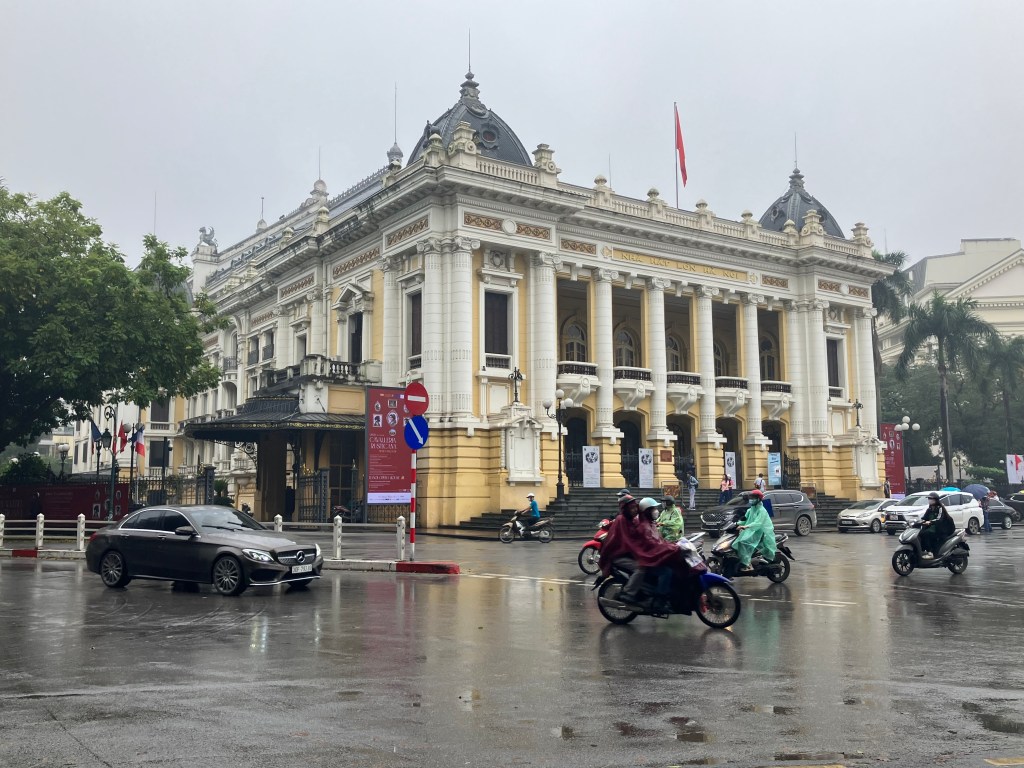
When Coca-Cola relaunched in Vietnam earlier this year, it did so with fanfare, holding opening ceremonies and a variety show complete with Vietnamese dancers.
The show was held, tastefully enough, at the French-built Hanoi Opera House, an imposing ochre-coloured relic from the early years of this century. Less tasteful were the giant inflatable plastic Coke bottles that the company set up outside the building.
“It shows the U.S. is good at marketing but it was irritating to see a national monument used like this,” a Hanoi resident told reporters, reflecting a widely held sentiment. Not only is the Hanoi Opera House the center of Hanoi cultural life, it is also a national symbol: From its balcony, the left-wing Viet Minh announced its takeover of the city after World War II.

Coke realized it had made a faux pas. It took down the bottles. The Vietnamese government, meanwhile, has since decided that advertising in general needs to be reined in. It has taken down some billboards in Hanoi and Ho Chi Minh City. It has also restricted the number of outdoor sites where companies can advertise their products.
In Asia’s developing economies, marketing pitfalls abound. A soft drink television spot in Malaysia a few years ago featured an exuberant woman kicking furniture in her apartment before taking a soothing sip of her drink. A local TV station pulled the ad off the air, saying the woman was “too aggressive.” Malaysia also banned feminine hygiene products a few years ago, in response to pressure from a women’s group. The women argued the products were too personal and an inappropriate sight for the eyes of Malaysian children.
The Thai government prohibits advertising in which one product is judged better than a competitor. Such a comparison, familiar in Pepsi Challenge ads where consumers compare the taste of Pepsi and Coke, is said to break the taboo of public displays of conflict.
The Chinese government frowns on revealing clothing. The obligatory lathery shower scene featured in shampoo ads is problematic in Malaysia, where officials don’t want bare shoulders to be seen on television. And in Pakistan, men and women can’t appear together in advertisements.
Besides the cultural motivations for these restrictions, there is hostility toward what these governments see as promotion of Western values at the expense of their own, and promotion of Western goods at the expense of local companies. As a result, the climate for advertising in Asia’s developing economies can be quite difficult for Western marketers. And because local marketing talent is not as exposed as it could be to the outside industry, the local advertising strategies are in many cases immature. Of course, foreign marketers sometimes stumble into cultural insensitivity. But for all the government officials’ zeal in locking out Western cultural influences and protecting domestic commercial interests, they are hurting their own economies.
They fail to see advertising’s principal advantage: It creates consumer demand. Workers become consumers who want to satisfy their demand for the convenience-adding or pleasing products they see advertised. In order to make more money to buy these products, consumers work harder at their jobs and upgrade their skills. The collateral advantage to governments is that societies become more affluent, and workers become more productive.
This cycle has been repeated in all the Asian Tigers. Advertising sells products, and those products are the symbols of a rising standard of living. It’s not that the West’s values are being pushed, but rather that higher quality of life is being sought by consumers.
Developing-country governments’ protection of local companies isn’t wise either. In the Darwinian logic of the modern market economy, smart companies embrace change. In many cases, local companies recognize advertising as a powerful brand-building tool. In Malaysia, for example, the local haircare brands New & Trendy and Follow Me use advertising aggressively. As a result they control about a third of the market.
A famous example of a company using advertising to boost its market share is Singapore Airlines. The airline built its reputation by catering to Singaporeans’ exacting standards for service and safety, and communicating those qualities through the memorable image of the Singapore Girl. The result: The airline is one of the largest in the world.
That’s not to mention the good name the ads create for Singapore itself. The Malaysian government has learned this lesson as well, promoting its airline with futuristic ads that feature a spaceship. The ads move Malaysia beyond its reputation as a producer of tin and rubber, and suggest it is a country ready to enter the 21st century.
Besides creating demand and a positive image for its products, advertising does another important job as well. It tells information-starved consumers what those products do: How to use a washing machine, a soup mix, or a microwave oven. As developing markets open up, advertising shows the way through a strange new world of consumer choice – a world that the citizens of Asia’s developing markets want very much to join.
Published in The Wall Street Journal, August 18, 1994
 Maybe Next Trip