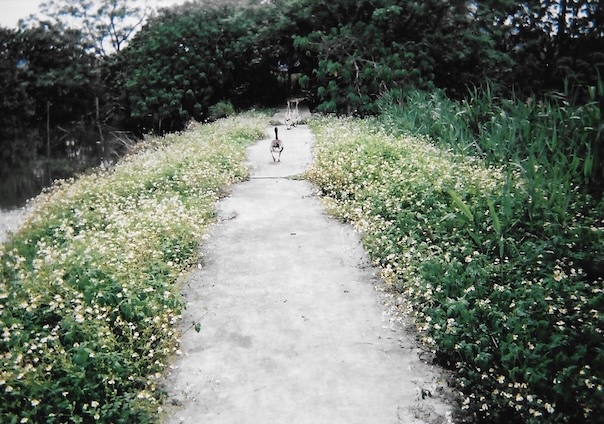
The Mai Po Marshes in Hong Kong have always been an anomaly. They are a conservation area of international importance in a territory where environmental conservation of any kind has always played second fiddle to economic growth. Breathe the air or swim at any beach and you’ll see how low a priority conservation really is.
The marshes are a habitat for up to 320 species of birds, yet they straddle the border between Hong Kong and mainland China. The suburbs of Hong Kong’s New Territories are creeping up on one side and the skyscrapers of the sprawling mainland city of Shenzhen are getting closer on the other. In this place of tranquility in the middle of urban hustle and bustle, quiet stepping birdwatchers compete for space with boot- and khaki-wearing Hong Kong coppers protecting their side of the border.
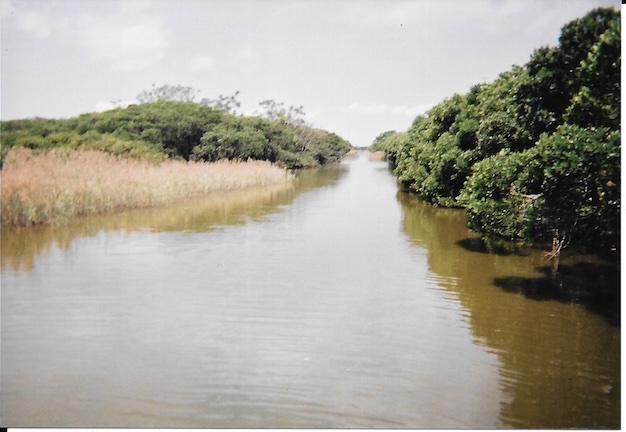
In a sense the Mai Po Marshes are the summation of the past, present, and future of this part of Southern China – and the fate of the birds is a subject that should be important to anyone concerned about the quality of life in the region. We humans who squeeze the abode of our fine, feathered friends on two sides ought to reconsider any future construction here, for this hiding place is one of the area’s last resorts for a variety of natural wonders.
The Mai Po Marshes and Inner Deep Bay in the New Territories of Hong Kong were created as a conservation area in 1984 by the World Wildlife Fund. This area was set aside so that migratory and waterbirds such as gulls, ducks, shorebirds, herons and egrets would have a place to call home or rest on their flight southward from Siberia during winter months. For the migratory birds a resting place is essential as the round trip between their Siberian summer breeding grounds and their winter home of Australia can be as long as 33,000 kilometers.
Endangered species such as the Saunders’ Gull and Blackfaced Spoonbill frequent here. The mangroves stand is the sixth largest in China. Also in the reserve are 24 traditionally operated shrimp ponds that are the last of their kind in Southern China.

A visit, however, reveals much more than flora and fauna. The first thing one notices upon arrival at the marshes are the watchtowers and huge fences topped by coils of barbed wire, with a lone flag of the Hong Kong Special Administrative Region hanging limply in the humid air. This stretch of land is the border, the demarcation zone, between the two systems that exist in one country. To be allowed into the Mai Po Marshes you need a passport, a “Frontier Closed Area” permit and a Mai Po Marshes permit. The hard edge of a heavily policed no man’s land contrasts with the tranquility of the natural environment.
My family entered through the border gate and walked on a pontoon bridge made of planks of wood strapped to empty barrels. We balanced precariously as the barrels bobbed in the water of the marshes. Every now and then we would stop to see white bursting flowers above or crabs below, distinctive with their one large claw as they scamped among the mud of the mangroves.
On two occasions heavily armed Hong Kong police in military fatigues passed by us. They were searching for illegal immigrants hoping to slip into the SAR through this nature zone.
At the end of the walk we came upon a “hide” – a concrete hut with slits for windows, the better to silently watch the birdlife. Inside, we saw before us the vast mudflats that lead to the Shenzhen River and a freighter cruising up the river. Through telescopes and binoculars, we spotted groups of birds and mud skippers sliding up from the mud and slipping into it again. We also spied a man who seemed to be skiing across the mudflats – stopping and stooping on occasion – and then continuing. I asked the guide who he was and he told me he was a poacher, grabbing mud skippers for the markets of Shenzhen. “Hong Kong people,” I was told, almost as an afterthought, “don’t eat then.”
I asked why the police didn’t catch him, and the guide smiled: “He can move faster than they can in the mud.” And he was right: in no time at all he was out of sight, with his illegal goods in a bucket.
After the hide we continued on our hunt for birdlife, passing a traditional shrimp pond where a sluice gate was opened to force the water out and the hapless shrimp into a net. We visited an empty museum that was filled with bird models and monotonous exhibits. I could have dismissed it offhandedly as being for the birds – but it was, more accurately, about the birds.
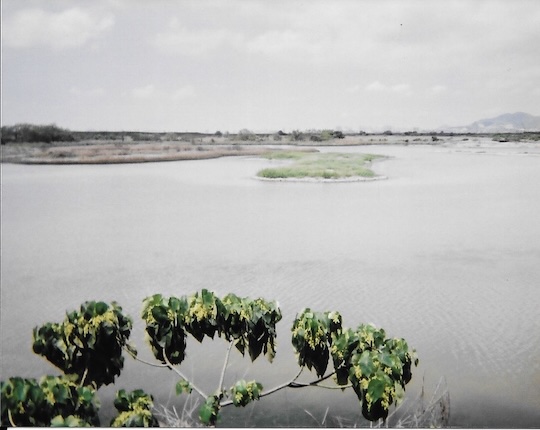
We also visited another hide, the mountains of the New Territories visible behind it. As the afternoon wore on, we found that the birds were perhaps a bit more sensible than we were. As the day got hotter, they flew to cooler environs. The guides, armed with portable telescopes on tripods and awesomely sharp eyesight, often found birds for us – hidden in thick foliage. They fluttered their wings to stay cool. Sometimes we spotted birds’ nests, aerial homes built with mud, twigs and leaves.
Throughout our visit, the watchtowers, the barbed-wire-topped fences and the buildings of densely populated areas were never out of sight – or mind. I don’t know how the birds felt, but as for me, I thought it was getting about time for them to start looking for a new home and resting place for their long annual journey. Despite the promises of authorities on both sides of the border to protect the wildlife reserve, it seems likely that the Mai Po Marshes will be developed into yet another concrete canyon. After all, local people need a place to nest too.
Published in The Asian Wall Street Journal, March 7, 2003
 Maybe Next Trip