Category: Uncategorized

  • A Miracle in Vietnam

    Dong Khoi Street is home to a Prada store and a brand new shopping mall. And for the past few weeks, Saigon’s upscale shopping district has been the site of what many Vietnamese Catholics believe to be a miracle.

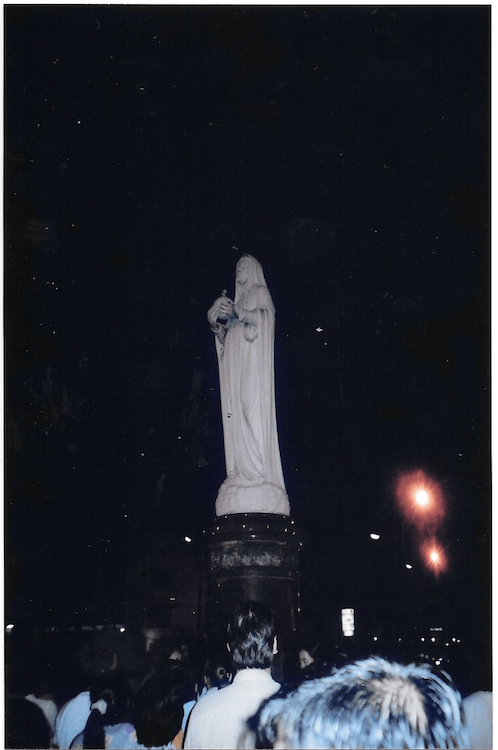
    After word spread that on Oct. 29 a tear streaked down the face of the Virgin Mary statue, staining it, several thousand people flocked to Saigon’s Notre Dame Cathedral to see it. Crowds, many with mobile phone cameras, gathered to record the sight. Initially only city dwellers came, but soon, visitors from the countryside came, too. Traffic around the cathedral slowed to a crawl, and the police arrived to maintain order.

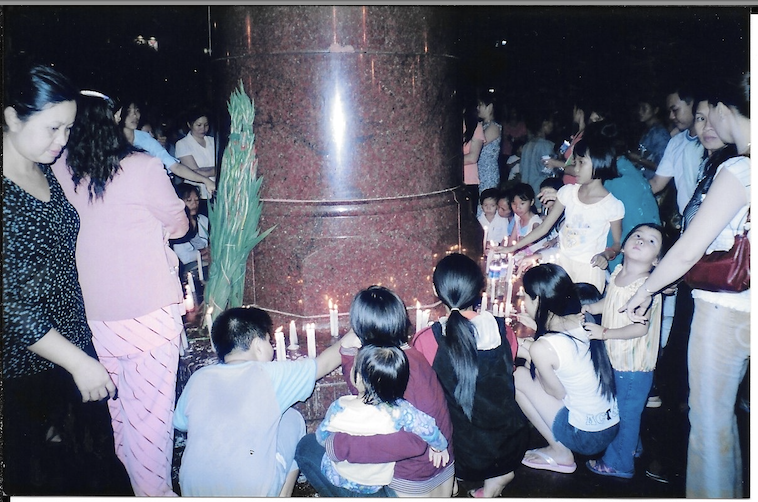
    More than a week later, there was still a mark on Mary’s face, and the phenomenon continued to attract hundreds of daily visitors. People took turns crowding on to the small traffic island that is the site of the four-meter high statue. City gardeners in orange jumpsuits busily repaired the damage caused by feet trampling the grass and shrubbery around the statue.

    Vietnam’s government has been widely criticized for cracking down on religious groups. The U.S. Secretary of State this week again designated Vietnam as a “country of particular concern” in its annual report on international religious freedom.

    Still, several religions, including Roman Catholic and Muslim religious organizations, among others, are officially recognized in Vietnam. There are an estimated five to eight million Roman Catholics in this country of around 80 million. From Phat Diem Cathedral in the north to Notre Dame Cathedral in Saigon, there are so many worshippers on Sundays that people spill out of churches.

    For the most part, the crowd around the Mary statue was orderly. During the day, a sea of umbrellas floated above the crowd as people protected themselves from Saigon’s blazing sun. At night, candles and flowers were placed around the statue, turning it into an outdoor shrine.

    The mood wasn’t completely solemn, however. Children played around the statue. People sold drinks, ice cream, peanuts, prawn crackers — even cotton candy and balloons. Japanese, American and other foreign tourists have visited the site.

    Faithful at Virgin Mary Statue

    The event has been the talk of the town, and the subject of articles in local newspapers. Those keeping a vigil at the statue say it’s a miracle; others say it’s a warning. Some Vietnamese speculate that the tear is an omen about an impending bird-flu pandemic. Some even drew connections between Tuesday’s earthquake — centered in nearby Vung Tau but clearly felt in Saigon — to the weeping statue.

    Other Vietnamese I spoke to were more skeptical, saying the streak was just a mark from the heavy rain that recently fell upon the city. Some speculated about mischief. An executive at a large manufacturing company told me: “I think a game is being played on people. A person put that mark on her face.” Others were simply unmoved by the event. One woman said: “In many countries Mary cries. So it’s not a big deal.”

    The authorities appeared to be tolerant of this public act of faith. I didn’t notice any visible restrictions on who could visit the statue, just some traffic cops making sure people don’t spill out into the streets in front of cars and motorcycles. The police actually discouraged hawkers from selling photos of Mary’s tear-streaked face with a digitally added halo. They don’t want a religious event to be used as a commercial opportunity.

    The crowds of believers surrounding the statue of Mary — against the backdrop of the fancy boutiques and trendy art galleries on Saigon’s Dong Khoi Street — is a telling sight. It suggests that the economic growth and cultural vitality in this communist country are being accompanied by an upsurge of spirituality.

    Screenshot

    Published in The Wall Street Journal, November 11, 2005

  • Good Ol’ Advertising Deserves a Plug

    When Coca-Cola relaunched in Vietnam earlier this year, it did so with fanfare, holding opening ceremonies and a variety show complete with Vietnamese dancers.

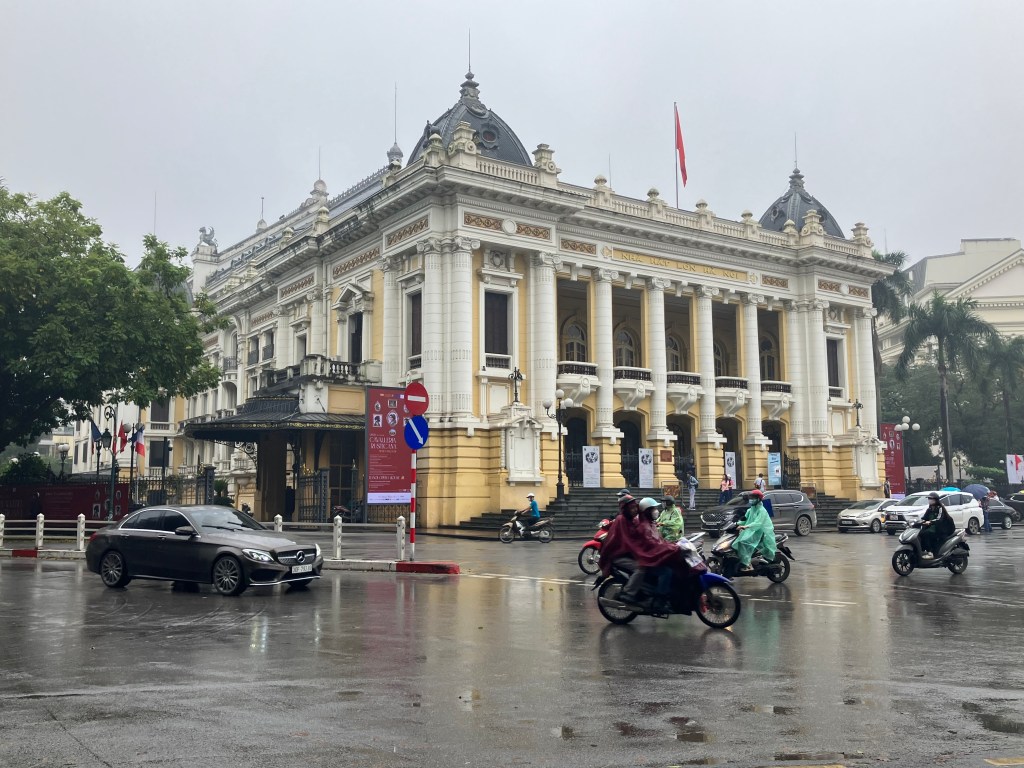
    The show was held, tastefully enough, at the French-built Hanoi Opera House, an imposing ochre-coloured relic from the early years of this century. Less tasteful were the giant inflatable plastic Coke bottles that the company set up outside the building.

    “It shows the U.S. is good at marketing but it was irritating to see a national monument used like this,” a Hanoi resident told reporters, reflecting a widely held sentiment. Not only is the Hanoi Opera House the center of Hanoi cultural life, it is also a national symbol: From its balcony, the left-wing Viet Minh announced its takeover of the city after World War II.

    Postcard of Hanoi Opera House with Coke bottle in front of it

    Coke realized it had made a faux pas. It took down the bottles. The Vietnamese government, meanwhile, has since decided that advertising in general needs to be reined in. It has taken down some billboards in Hanoi and Ho Chi Minh City. It has also restricted the number of outdoor sites where companies can advertise their products.

    In Asia’s developing economies, marketing pitfalls abound. A soft drink television spot in Malaysia a few years ago featured an exuberant woman kicking furniture in her apartment before taking a soothing sip of her drink. A local TV station pulled the ad off the air, saying the woman was “too aggressive.” Malaysia also banned feminine hygiene products a few years ago, in response to pressure from a women’s group. The women argued the products were too personal and an inappropriate sight for the eyes of Malaysian children.

    The Thai government prohibits advertising in which one product is judged better than a competitor. Such a comparison, familiar in Pepsi Challenge ads where consumers compare the taste of Pepsi and Coke, is said to break the taboo of public displays of conflict.

    The Chinese government frowns on revealing clothing. The obligatory lathery shower scene featured in shampoo ads is problematic in Malaysia, where officials don’t want bare shoulders to be seen on television. And in Pakistan, men and women can’t appear together in advertisements.

    Besides the cultural motivations for these restrictions, there is hostility toward what these governments see as promotion of Western values at the expense of their own, and promotion of Western goods at the expense of local companies. As a result, the climate for advertising in Asia’s developing economies can be quite difficult for Western marketers. And because local marketing talent is not as exposed as it could be to the outside industry, the local advertising strategies are in many cases immature. Of course, foreign marketers sometimes stumble into cultural insensitivity. But for all the government officials’ zeal in locking out Western cultural influences and protecting domestic commercial interests, they are hurting their own economies.

    They fail to see advertising’s principal advantage: It creates consumer demand. Workers become consumers who want to satisfy their demand for the convenience-adding or pleasing products they see advertised. In order to make more money to buy these products, consumers work harder at their jobs and upgrade their skills. The collateral advantage to governments is that societies become more affluent, and workers become more productive.

    This cycle has been repeated in all the Asian Tigers. Advertising sells products, and those products are the symbols of a rising standard of living. It’s not that the West’s values are being pushed, but rather that higher quality of life is being sought by consumers.

    Developing-country governments’ protection of local companies isn’t wise either. In the Darwinian logic of the modern market economy, smart companies embrace change. In many cases, local companies recognize advertising as a powerful brand-building tool. In Malaysia, for example, the local haircare brands New & Trendy and Follow Me use advertising aggressively. As a result they control about a third of the market.

    A famous example of a company using advertising to boost its market share is Singapore Airlines. The airline built its reputation by catering to Singaporeans’ exacting standards for service and safety, and communicating those qualities through the memorable image of the Singapore Girl. The result: The airline is one of the largest in the world.

    That’s not to mention the good name the ads create for Singapore itself. The Malaysian government has learned this lesson as well, promoting its airline with futuristic ads that feature a spaceship. The ads move Malaysia beyond its reputation as a producer of tin and rubber, and suggest it is a country ready to enter the 21st century.

    Besides creating demand and a positive image for its products, advertising does another important job as well. It tells information-starved consumers what those products do: How to use a washing machine, a soup mix, or a microwave oven. As developing markets open up, advertising shows the way through a strange new world of consumer choice – a world that the citizens of Asia’s developing markets want very much to join.

    Published in The Wall Street Journal, August 18, 1994

  • At Christmas, Commune with the Crabs

    No, Christmas Island isn’t the suburb where Santa Claus lives. But he might consider vacationing there during the off season. Located 360 kilometers from Java, 1,400 kilometers from Australia, and just this side of nowhere, Christmas Island is as remote as they come. Named by Captain William Mynors on Christmas Day in 1643, this poodle-shaped island has been ruled by Britain, Singapore and now Australia. Once famous for its phosphate mining, now it is known mainly for its casino and its crabs.

    One of millions of Christmas Island crabs

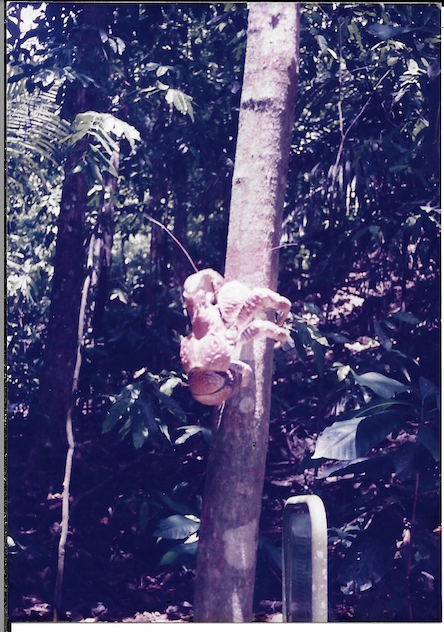
    Crab climbing tree

    Last month, 140 million red crabs marched from the rainforest to the sea to mate. It’s the annual Indian Ocean equivalent of the wildebeest stampede on the great African savannah. The crabs have a certain cuddly quality, although you wouldn’t want to put them under the Christmas tree as a gift or tuck them into bed next to your kids at night.

    Crab crossing

    On the bus ride from the airport to the island’s only resort, my four-year-old and I looked intently out the window for any sign of crawling life. We spotted a lonesome crab shortly after the bus left the airport. Then as the bus descended steeply down a road cut through the jungle, we started to see a lot of crabs – hundreds, not yet thousands – and crab carcasses. The smell of rotting crabs reached us in the bus. “Daddy, it stinks,” my daughter said. The jungle smelled more like a fish market at the end of the day. While the Australian government built crab tunnels – like cattle grids – so that crabs can get to the other side of the road in one piece, evidently not all the crabs decided to take the safe route.

    Spare the crabs, use a different road
    Screenshot

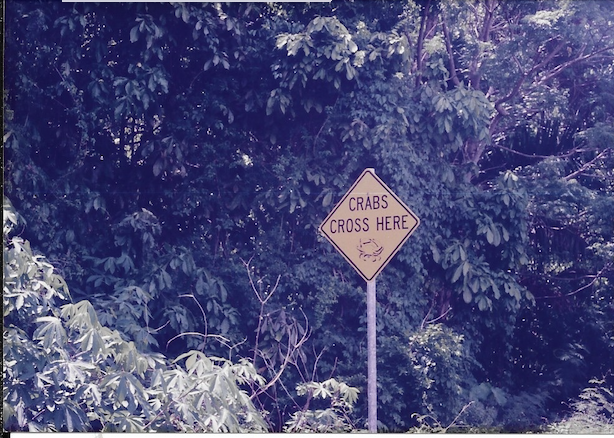
    The Christmas Island red crab is not very big – about the size of a man’s fist – and covers about five feet a minute. No way they were going to get out of the way of an oncoming car or bus. A yellow warning sign that says, “Crabs cross here” could not prevent thousands of them from being smashed to smithereens. Although cars and buses really do try to avoid hitting them. For one thing, it’s not pleasant killing a crab. For another, the claws sometimes puncture tires. Try getting a new tire in the middle of the Indian Ocean.

    Christmas Island dinosaurs at resort

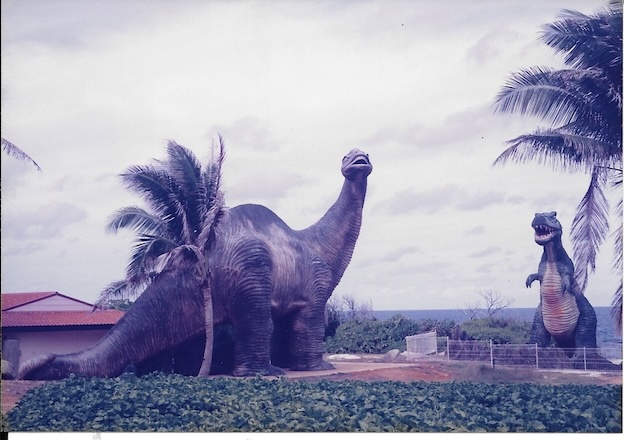
    At the resort there was a smattering of crabs across the driveway, across the lawn, along the walkways. Crossing in front of you, crossing behind you. Squatting in front of doorways. Hovering around porches. The resort was a pleasant enough place, perched on limestone cliffs that took a non-stop battering from the sea. It even had a casino meant to attract Southeast Asian high-rollers. At the resort’s swimming pool, which had a white crab guard to keep the crabs from swimming with the guests, frigate birds were constantly dive bombing for a drink of chlorinated water. Away from the pool, near the ocean, were two life-size statues of dinosaurs – a brontosaurus and a tyrannosaurus. When the ocean swells hit the limestone cliffs surrounding the resort, the roar passed through the open mouths of the dinosaurs. Disney World it wasn’t.

    Christmas Island dinosaurs overlooking cliffs

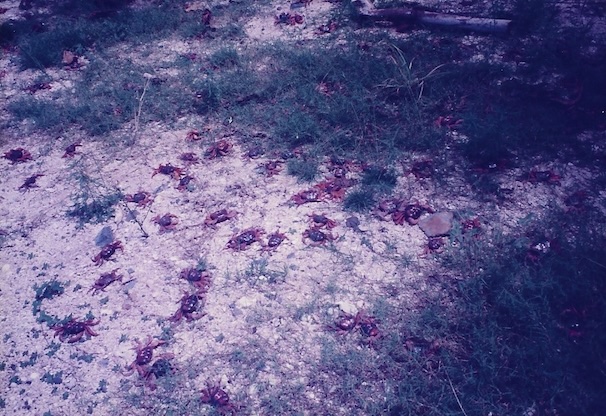
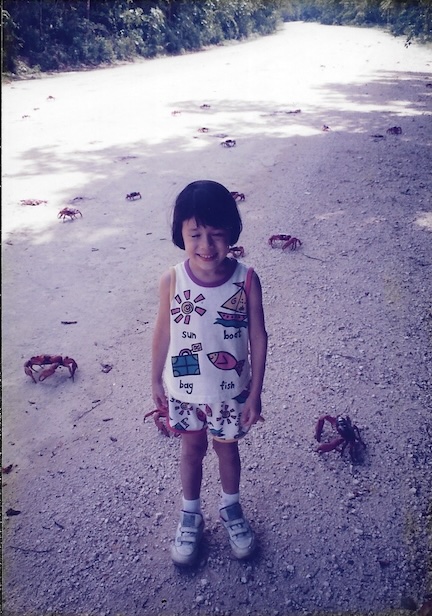
    On a drive through the jungle-covered park that covers two-thirds of the island, we saw a large crab migration. We jumped out of the four-wheel drive to get amongst the crabs. They were everywhere, all over the road, swirling around our feet, carpeting the jungle floor, crawling over each other, fighting each other, even cannibalizing the carcasses of crabs that didn’t make it. My daughter stood in the middle of this moving red carpet and posed, smiling, for one of many photographs. “Daddy, the crabs are my friends,” she said, holding her wide smile effortlessly, as they moved harmlessly around her.

    Screenshot

    Santa may not call Christmas Island home. And he may not even vacation there. But for a little magic to stir a child’s heart, nothing beats the land of the crabs.

    With the Christmas Island crabs

    Published in The Asian Wall Street Journal, December 27, 1996

  • Genghis Lives

    Nearly eight centuries after his death, Genghis Khan still rules the hearts of Mongolians, and his popularity is growing. Since the Russians were pushed out in 1990, a homegrown brand of Mongolian nationalism has started to reveal itself, with Genghis Khan at its center. His face is on the national currency notes, the togrog. A giant image of him has been carved into a mountain just outside Ulan Bator, visible from the city center. There are even calls within Mongolia to relocate the capital from Ulan Bator to Karakoram, the capital of Genghis Khan’s empire, on the 800th anniversary of its founding, which will fall around 2020.

    These reminders of Mongolia’s glory days would not have been visible 20 years ago. When Russia ruled Mongolia from behind the scenes between 1921 and 1990, imagery of Genghis Khan was banned because he was such a strong symbol of Mongolian national pride. Mongolia’s domineering neighbors like to downplay the historical significance of this warrior leader, whose power was won at their expense. His empire became the largest in history, stretching from China to Russia to India to the Balkans.

    It didn’t last. Mongolia was eventually invaded by its neighbors, becoming a fiefdom of China from 1732 to 1911, and then a puppet regime controlled by Russia for most of the 20th century. When protests toppled the pro-Soviet rulers in 1990, democracy took hold — and so did the public memory of Genghis Khan. At Sukhbaatar Square in Ulan Bator, a massive memorial to him is near completion. People line up to have their photos taken in front of it. An energy drink, a vodka and a beer are named after him, not to mention restaurants and tourist agencies. Mongolian legislators even debated a law to license his image last year, which would have allowed the government to charge royalties for use of the warrior’s name and control the ways in which his image could be used.

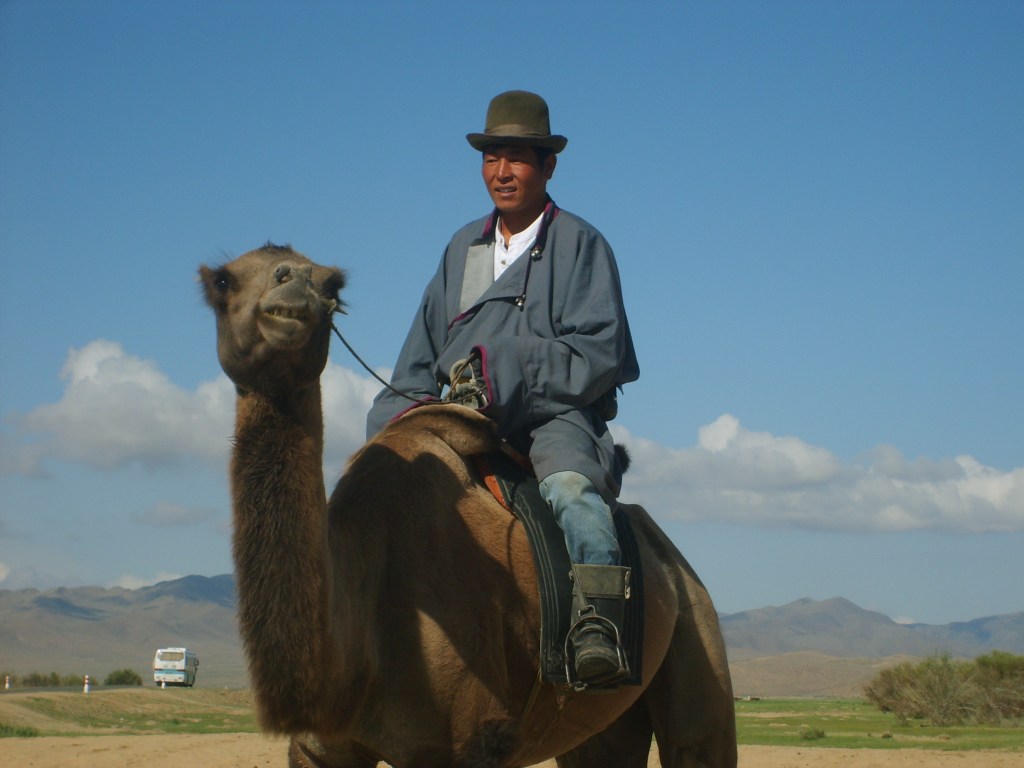
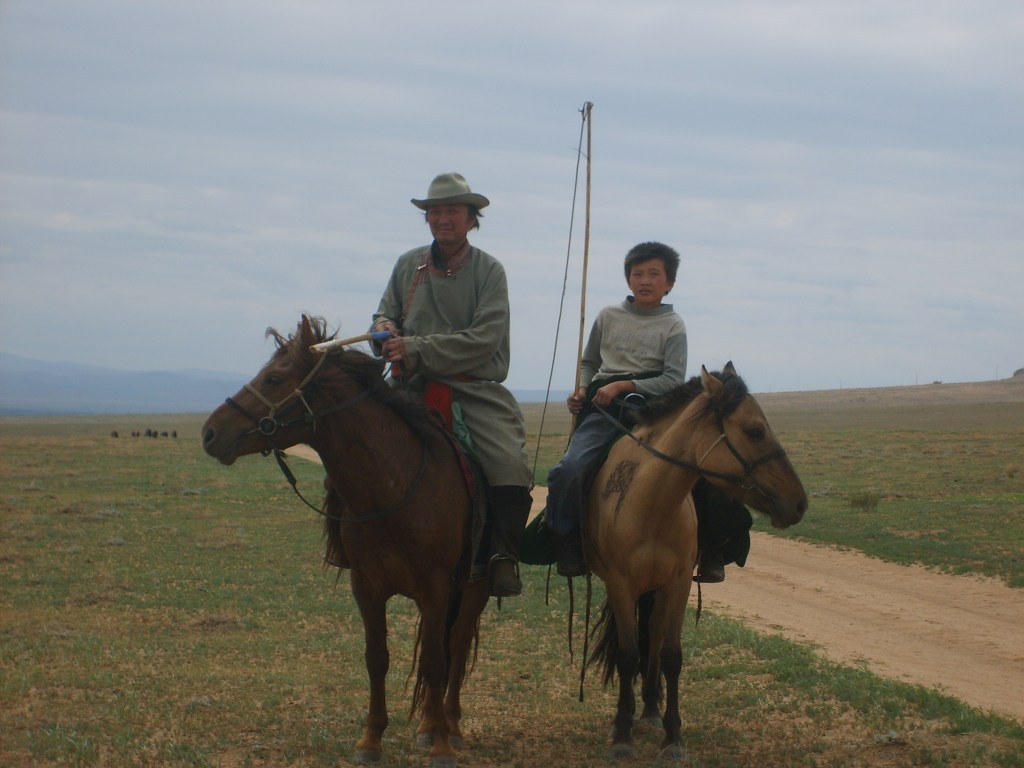
    My guide when I was recently in Mongolia, a college student named Bolor, spoke of him in hushed tones, as if he were still living and very much in charge. Genghis Khan’s cultural legacy is also all around. The annual Nadam festival features the sports famous in Genghis Khan’s time: horseback riding, archery and wrestling. The fermented mare’s milk sold by children at roadsides and served by nomads to visiting guests was the fuel that powered his army on their conquests.

    Genghis Khan may be best known as a warrior, but his legacy of governance is still relevant, too. He introduced a written Mongolian script still in use today and the rule of law, the Yasaq. He practiced a sort of religious tolerance that is progressive even for today: Citizens of the Mongol empire had no religious restrictions and could pray as they pleased – as long as they were loyal to the Mongol rulers. He unified warring Mongolian tribes into one nation and he and his sons conquered more territory in 25 years than the Romans did in 400 years. Mongolia is not the only nation in his debt — modern-day Russia and China were also first united under the reign of Genghis and his descendants.

    In one respect it’s odd that a young democracy should so admire a ruler with such a fierce, autocratic reputation. Yet, the Mongol empire’s success was grounded on the principle of meritocracy. Ethnicity and race mattered less than ability. The Mongolians see Genghis Khan as the embodiment of that principle. That one man could so rapidly create so large an empire from such a remote outpost provides inspiration to his countrymen even today.

    Published in The Wall Street Journal, November 2, 2007

  • I Voted For Vigan!

    I Voted For Vigan!

    When I arrived at night I saw a poster asking for votes for Vigan to be one of the new seven wonder cities of the world.  It was the first time I had heard of the vote let alone seen a city lobbying for to be one of winners.

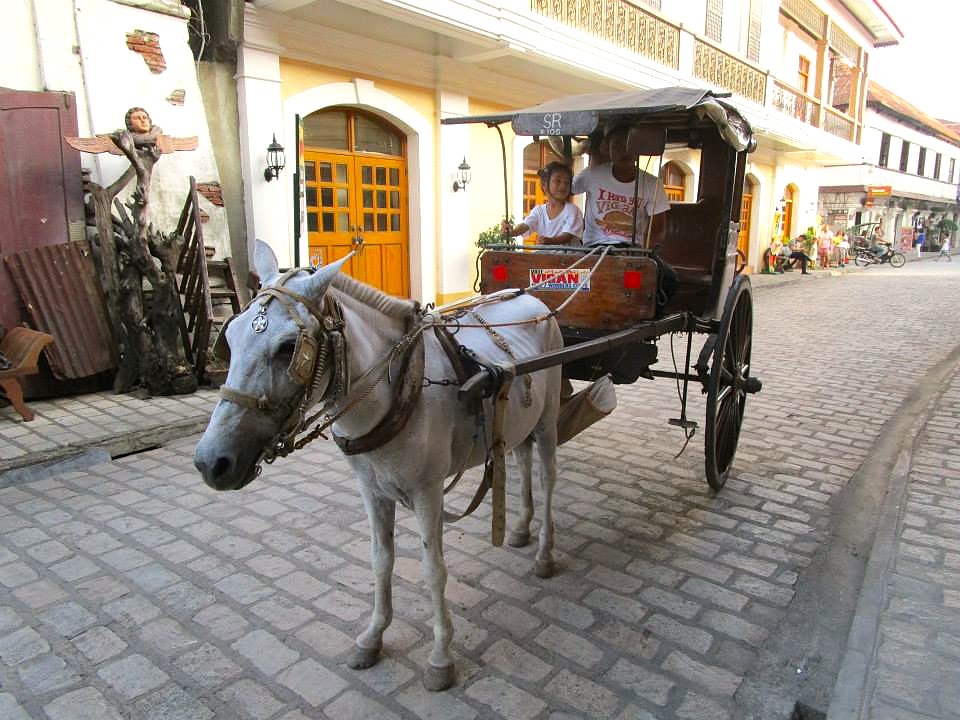
    Over an al-fresco dinner along a cobblestoned lane, surrounded by Spanish-era mansions from the 19th century with capiz-shell windows, I wondered how 21st century social media could transform this place. Kalesas, horse-drawn carts, are still a form of public transport, the sound of hooves nearly as common as the buzzsaw sound of low riding three-wheelers. At night, the yellow tinted streetlights gave the town a sepia-toned look, like a faded postcard from a bygone age.

    PHILIPPINES ONLY UNESCO HERITAGE TOWN

    With a population of 50,000, Vigan is the Philippines only UNESCO heritage town and the best preserved Spanish colonial town in Asia.  It has Vietnam’s Hoai An’s antiquity and charm without the tourist hordes and glossy five star hotels. I saw only a dozen or so foreign tourists during our four days there and not that many local tourists either.

    With mansions from Filipino, Chinese and Mestizo merchants lining street after street, some well-restored, others falling apart, some just plain run down, it feels like a place that skipped a beat in time. I was reminded of my first visit to Myanmar in 1981 where cars from the 1960s were traversing the roads. Or, my first visit to Luang Prabang in Laos in 2001 where monks in flowing orange robes were the most commonly seen pedestrians. Vigan is that rare town in Asia — a piece of the past that looks joyfully stuck there.

    Vigan almost had the war-ravaged and recovered look that many places in Asia have. At the end of World War II, American bombers were about to target Japanese forces stationed there when they found that they had already left. Just before the bombing run the planes pulled up and headed back to base.

    The best place to start is the Plaza Salcedo where the St. Paul Metropolitan Cathedral is. A massive pale yellow edifice with white trimming flanked on one side by the archdiocese building, inside ivory-carved saints with natural hair wigs looked down upon the devoted.  Kalesas were lined up in front of the church.

    Across from the church is the Vigan Dancing Fountain where every night at 7:30pm multi-colored water sprouts swing to the beat of decidedly modern talents such as the Irish chanteuse Enya.

    Then further along the church-state power axis is the capitol of the state of Ilocos Sur. A stolid Spanish colonial building, it’s an imposing counterweight to the church.

    Next to the town’s other plaza, Plaza Burgos, is the beating heart of Vigan, Crisologo Street. A pedestrian only cobble-stoned lane lined with mansions and stores selling antiques and handwoven items along with some cookie cutter tourist souvenirs, kalesas regularly trot down it. Some of the antiques were good finds. My wife and I bought a beautiful Chinese porcelain plate painted with swimming fish, a reminder that Vigan is just a few kilometers from the shore and has been a trading port since before the Spanish arrived.

    PHILIPPINES “MACONDO”?

    On Quirino Blvd, we visited Syquia Mansion, home of Elpidino Quirino, the sixth President of the Philippines. Inside was a 19th century European home with unique Filipino touches. Figurines graced oversized antique mirrors and furniture. Paintings of the house’s most famous occupants were set high in the living room, looking down at visitors. Sprinkled throughout the home were black and white photos depicting earlier eras in a time-warped town. Filipino touches were panels of fabric that hung from the ceiling over the dining room table where they were pulled back and forth to create a cooling breeze. Between the outside of the home and its interior was a narrow corridor which was meant to trap the heat.

    On Liberation Blvd. is the Crisologo mansion. The Crisologos were one of the leading families of Illocos Sur. Floro Crisologos was governor, senator and a Philippine military adviser during the Vietnam War. At the museum is the rusting Chevy his then pregnant governor wife Carmeling was in when it was attacked, bullet holes along one side of the car. She survived. But he wasn’t so lucky, having been assassinated in the cathedral in 1970. His trousers, neatly ironed, covered in dried blood, sit in a glass case, along with his shoes and a glasses case, a reminder of his sacrifice.

    The presence of the Sy and Crisologos families dominating the town reminded my wife and I, both fans of the Gabriel Garcia Marquez book, “100 years of Solitude,” of the mythical town of Macondo.  You sensed that there was a novel hiding somewhere in the town, in hidden courtyards, up musty stairwells.

    A visit to the museum in the Archbishop’s palace gave you the sense of the pull of faith.  Religious icons carved in ivory, embellished by silver, were pushed together in the downstairs room of the museum. But it was the upstairs, where the baroque presence of the palace held heavy sway. You could feel the secular power the clergy once had.

    FAMED POTTERY AND LOOMWEAVING

    The iron pottery works at the edge of the town have been a traditional source of commerce for centuries. The RG Jar Factory has a fifty-meter dragon kiln which can bake a thousand pots at one time. The pottery is called “iron” because a tap on it with a coin provides a metal clink even though it is clay.

    Loomweaving is another traditional form of commerce. Barangay Camaggaan is about a fifteen minute three-wheeler ride from town and has a half dozen looms all being worked to create colorful blankets, towels, placemats, washcloths.

    GOOD BASE TO TRAVEL ILLOCOS

    Getting to Vigan isn’t easy. It isn’t on the way to anywhere else.  It’s an eight-hour bus ride from Manila or you can fly into the city of Laoag, captital of Illocos Norte, and take a two-hour car ride south to the city.

    The town provides good base to explore Illocos, an under touristed part of the Philippines.

    South of Vigan, about an hour coastal drive, is the UNESCO protected church of Santa Maria, at the top of eighty-eight granite steps, an auspicious number.  Built in 1769, it is what is known as “earthquake baroque”.  This architectural style is only found in the Philippines and Guatemala, because of their proximity to earthquake zones. The churches were designed lower and wider with broad-shouldered walls that are heavily buttressed to provide stability during seismic shaking. Santa Maria’s bell tower was stout in keeping with the style. Inside the empty church birds flew to and from the nests they created in the eaves.

    CATHOLIC ANGKOR TEMPLE?

    North of Vigan about an hour is the town of Paoay. In the 19th century the town was famous for two of its sons: Antonio Luna, a general and Juan Luna, one of the Philippines most famous painters. The latter’s house is a museum. Paoay is also famous for another UNESCO protected baroque church, St. Augustine’s, also known as the Paoay Church. Begun in 1704 and finished ninety years later, it sits in the center of manicured lawns with plants growing haphazardly from the building, giving it the mysterious aura of a Catholic Angkor temple, a place of faith still standing in a place of implacable elements.

    MARCOS COUNTRY

    Paoay is also Marcos country.  While he may be reviled as a dictator in the rest of the Philippines in his home province of Ilocos Norte he is the favorite son. You can get Marcos t-shirts, iphone covers, watch a game at the Marcos stadium, take classes at Mariano Marcos State University, named for his father.  At the Malacanang of the North, the traditional mansion on idyllic Paoay lake, you can see how the Marcos family lived and played during his more than two decades in power.  The family still

    holds the political power in the province with his daughter Imee as governor, his son Bong, a senator, and his shoe-loving wife Imelda, a congresswoman.

    The Marcos museum pays homage to his life in a way that is more fitting for the hero of a pulp romance novel. He developed toughness from his grandfather during stints in the woods; learned academic excellence from his mother; discipline from his father. Known as the “golden voice of the north” the baritone Marcos was supposedly the highest scoring student on the national bar exam — except jealous examiners marked him down from 98.01 to 92.35. The museum noted that he was the most decorated Philippine soldier during World War II, having miraculously survived the Bataan Death March to take on the Japanese as a guerilla leader. You can also read about his shinkansen fast 11-day courtship of Imelda after he fell in love at first sight when he saw her munching on watermelon seeds.

    IS IT REALLY MARCOS?

    At the squat gray Marcos mausoleum next door, funereal music plays at too high a volume when you step into its black painted interior.  You pass medieval armaments, from battleaxes to maces to clubs, to enter a high-ceilinged room where white flowers created from seashells line the walls. Marcos lays in state, in socks, no shoes, encased in a crystal sarcophagus.  While we strolled quietly around we looked closely at Marcos to determine if is it really him? Or, a wax representation? The only security was a middle-aged guard wearing a t-shirt that was stretched over his considerable gut. Once the half dozen visitors were done looking, sometimes gawking, we were ushered out and he shut the door behind us.

    CUISINE YOU CAN’T GET ANYWHERE ELSE

    The Ilocano cuisine can’t be found outside of the Philippines. Vigan longanizas, pork sausages, are slighty sweet and famed throughout the country. Other specialities are chicken cooked in its own blood; bangus, a local fish, grilled and stuffed with herbs; bagnet, pork with crispy skin; and more exotic dishes such as Ugsa Pochero, sundried wild deer with pork belly made into a stew. If you’re a calorie counter, Illocano food is a challenge.

    Hotel options are largely mansions converted into lodgings with various levels of homage to the town’s past. The best and most authentic hotel was the Villa Angela, a 140-year old mansion. Filled with antiques, rattan chairs and artifacts of the family’s history you feel like a privileged guest with a vantage on a more serene lifestyle.  It may be museum-like but it’s one you wouldn’t mind living in. In our room at night we could see light from the floor below shine through the worn though highly polished wooden boards.

    TOM CRUISE STAYED HERE

    On the wall on the living room is a photo of the actor Tom Cruise with the owner of the villa.  He stayed there when he was filming the movie “Born on the Fourth of July.”  When I asked the manager which of the rooms at the hotel he slept in, she replied, “Yours.”

    I smiled and thought, “Yes, I’ll vote for Vigan.” And yes, Vigan got voted as one of the new seven wonder cities of the world. (https://www.new7wonders.com/en/cities)

    Published in December 2014/January 2015 Asian Journeys magazine

  • Salvation in El Salvador

    Salvation in El Salvador

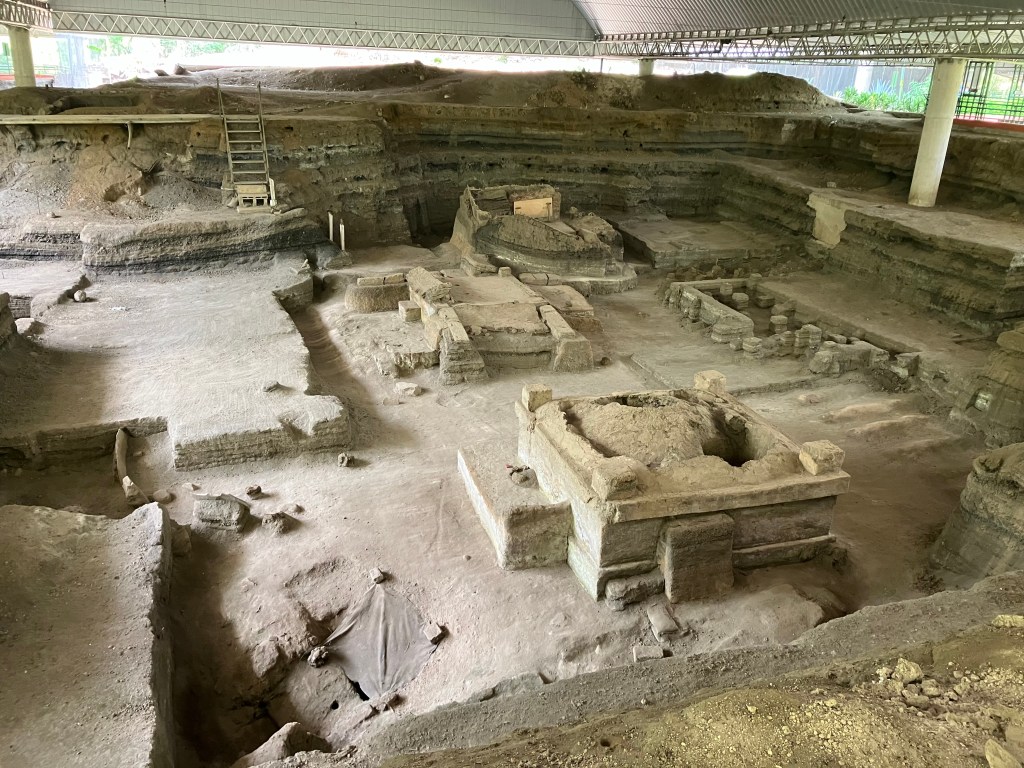
    At the archaeological park Cihuatan in northwest El Salvador, the park’s sole guide told me that I was the only tourist that day and the only visitor, now that a school group had just left. At over 60 hectares in size, it’s the largest archaeological site in El Salvador. The guide walked me around a site that featured the country’s ancient and recent history. Dating from 950-1200, Cihuatan was a large Mesoamerican city built following the mysterious collapse of the Maya civilisation.

    A perfectly preserved ball court was missing only the players that once animated it. In the quiet of the park, punctuated by the chirping of birds, I imagined teams of four moving a heavy rubber ball to a hoop to score, using only their hips, elbows, and knees to pass the ball. The winners of the game were sacrificed. If I played the game, I would happily be a gracious loser.

    Next to a large pyramid is a huge Ceiba tree, known among the Mayas as the Tree of Life since they believed four Ceibas hold up the corners of the universe. The tree is pockmarked by bullet holes from army helicopters that fired at FMLN guerillas who took shelter behind it during El Salvador’s 1979-1992 Civil War. By protecting the lives of those guerillas, the tree lived up to its name.

    At nearby Joya de Ceren, a UNESCO World Heritage site known as the Pompeii of the Americas, I walk through the ruins of a Maya settlement that was buried under six meters of ash when the Laguna Caldera volcano blew in 567 AD. Unlike Pompeii, no human remains were found — but there is a footprint preserved on ash, indicating that people hot-footed out of there to survive. Just a handful of tourists here.

    From turbulent history to tranquil present

    El Salvador’s turbulent history extends from the Maya era through the colonial era to the recent Civil War and the emergence of the violent MS-13 gang. The gang, which originated in Los Angeles to protect Salvadoran immigrants, metastasized into an international criminal organization that terrorized its home country. The murder rate peaked at 103 per one hundred thousand in 2015 and has dropped dramatically, especially under the strong leadership of current president, Nayib Bukele, to 2.4 per hundred thousand in 2023. Now El Salvador is more than two times as safe as the US with its murder rate in 2023 of 5.5 per hundred thousand.

    Cobble-stoned colonial cities

    The northern town of Suchitoto delights with evocative colonial architecture from its time as the heart of the indigo trade. Although it was the center of fighting during Civil War’s early day, the scars have been covered up. The Parque Central fronts the charming Iglesia Santa Lucia. Cafes abound and a fifteen-minute downhill walk on cobblestoned streets takes me to the shores of Lago de Suchitlan. Boats traverse the 135 square kilometer lake to take tourists to islands and falls.

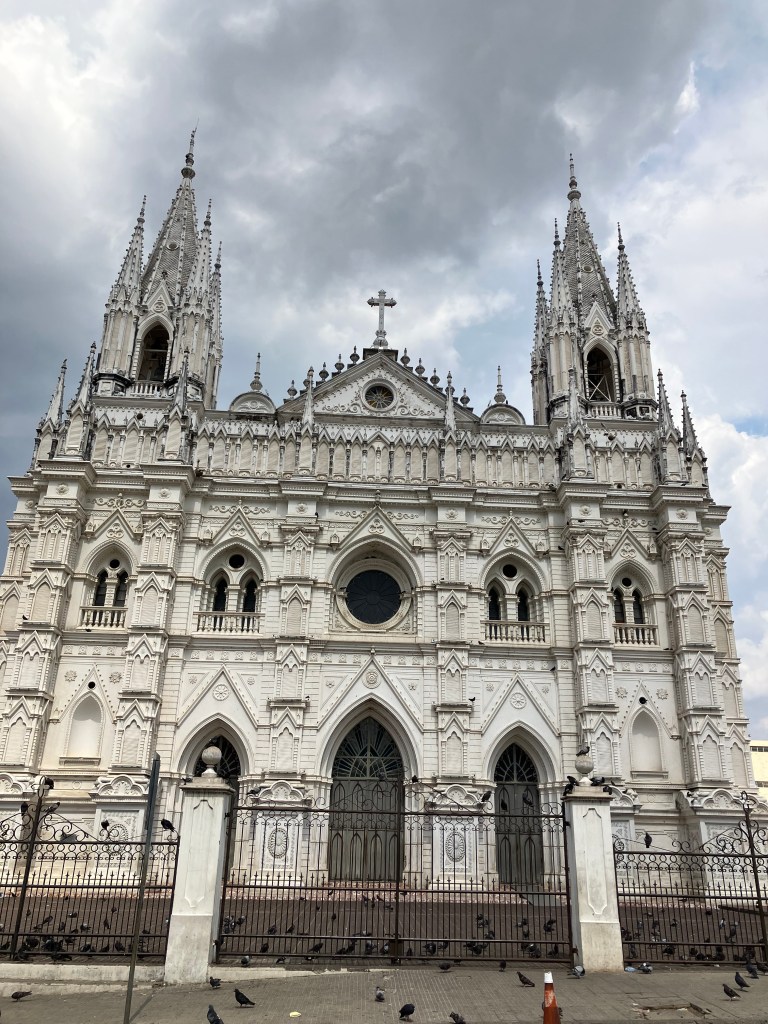
    Santa Ana is a grander colonial city with the imposing neo-gothic Catedral de Santa Ana, which opened in 1913, anchoring its center. Fueled by the lucrative coffee trade, growers built the lavish Teatro de Santa Ana, also on Parque Libertad, in 1910.

    Small country, big landscapes

    El Salvador’s vivid landscapes punctuate my trip. Lingering over a morning coffee I study the reflection of clouds in Lago de Coatepeque’s blue waters as it is framed by the Cerro Verde, Izalco, and Santa Ana volcanoes.

    At the 1,893-meter-high El Boqueron volcano, there is another cone within its crater. On the Sunday morning that I visited Salvadorans enjoyed the park for its coolness and the views of the vast center of this volcano, which towers above San Salvador city.

    At nearby Puerto del Diablo, two gargantuan rock outcroppings jut over sheer cliffs. There is a legend as to how it got its name, the Devil’s Door. The devil himself was courting Maria de la Paz, daughter of the wealthy Renderos family, until the family decided to hunt him down. When the devil was cornered by his would-be captors he broke through the middle of the rocky outcrop to escape, creating the opening that makes it look like a colossal doorway.

    During the Civil War, the area lived down to its name. The army executed guerrillas and their supporters here and threw their bodies into the ravine below. A dozen hawks circled relentlessly the day I visited.

    Hawaiians travel here to surf

    El Tunco on the coast is known as Surf City. While strolling down the narrow lanes leading to the ocean I hear in addition to Spanish voices American and Australian ones. Nearly everyone, except for me, seems to be carrying a board either on the way to or from the beach. El Salvador has some of the best surfing in Central America and the world. During my recent visit to the Upcountry Farmers Market in Maui, a stall owner there spoke to a friend about a surfing trip she was planning to El Salvador. When Hawaiians want to travel to El Salvador for their waves you know they’re good.

    A newly completed highway connects the beaches with San Salvador in about an hour — commuting distance. Greater San Salvador is becoming closely linked to its beach towns the way Los Angeles is to its seaside cities.

    From notorious to noteworthy

    San Salvador has a reputation for political and gang-related violence. The Oliver Stone movie, Salvador, depicting the journalist Richard Boyle’s experience during the Salvadoran Civil War, is engrained in many people’s minds as to what El Salvador is like even today. It isn’t. Not even close.

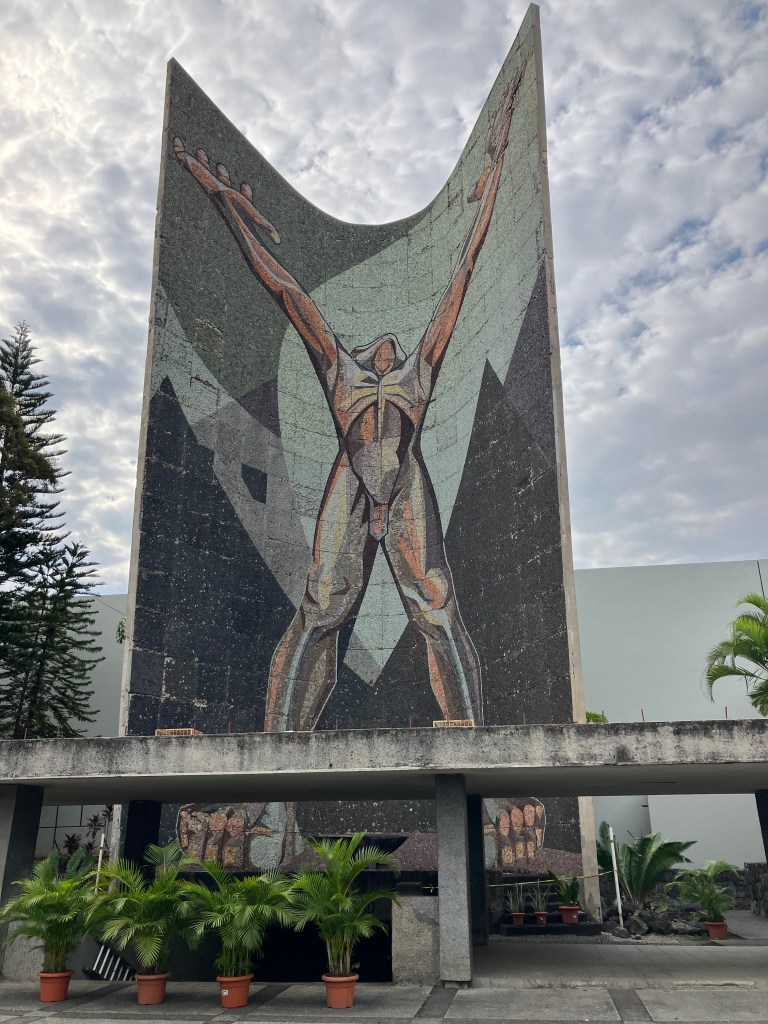
    Today the city is a sparkling counterpoint to Stone’s out-of-date vision. Probably the best before and after juxtaposition is the Monumento a la Revolucion at the back of the Museo de Arte de El Salvador. The imposing monument, 25 meters high by 16 meters wide, is a mosaic depicting a man with arms upraised as if throwing off shackles. It was built to celebrate the popular uprising that overthrew the rule of the dictator General Salvador Castaneda Castro. The jewel-like museum features the country’s most famous artists, including the world-famous Fernando Llort. Next to the museum is the Teatro Presidente, an elegantly designed performance space.

    An unflinching look at the past

    To get a sense of San Salvador’s journey I visited sites that marked its Civil War period. The Monumento a la Memoria y Verdad is an 85-meter black granite wall with the names of the over 25,000 people who died or disappeared before and during the Civil War. Haunting sculptures capture the spirit of reconciliation. One shows two hands holding two sides of a split heart with a man and a woman hugging at the top.

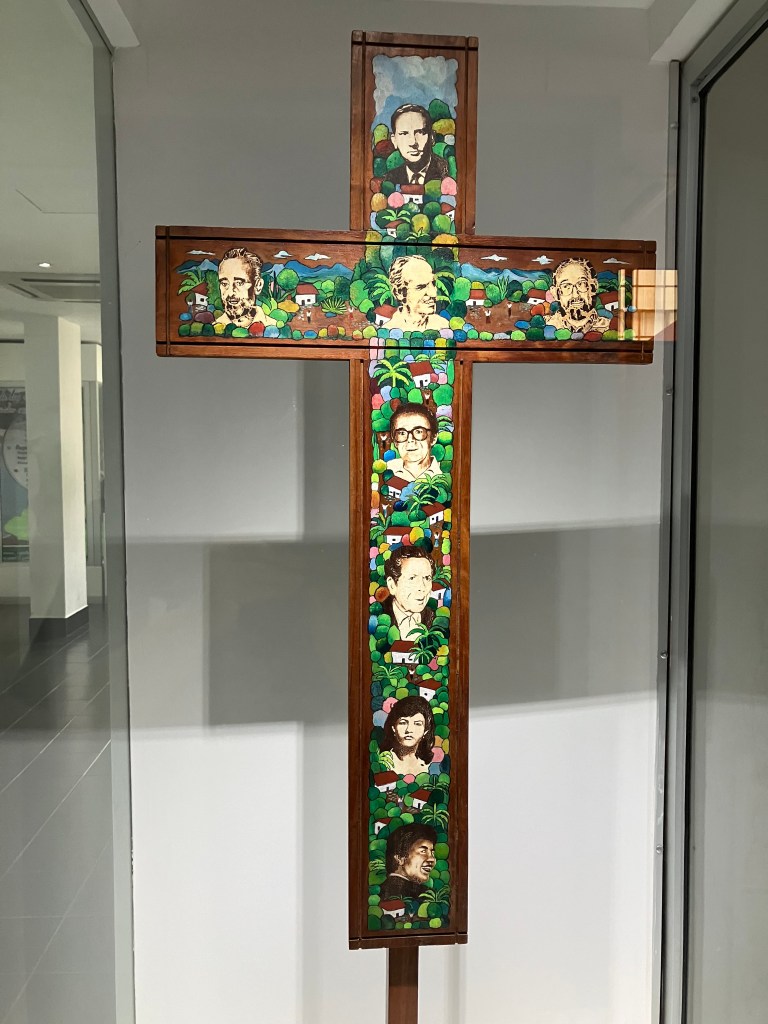
    One of the most notorious episodes of the Civil War was the murder of six Jesuit priests at the School of Theology on the campus of Universidad Centroamericana. It is now the Centro Monsenor Romero, with a small graphic museum that depicts Oscar Romero’s life and death, the murder of the priests, and the 1980 murder of three nuns and a laywoman, which was depicted in the movie Salvador. The military killed the priests along with their maid and her daughter because of their outspoken advocacy for the poor. A rose garden was planted on the site where four of the priests’ bodies were found. I found the garden peaceful as it was graced by flowers in bloom and eery.

    The most famous victim of the Civil War was Archbishop Oscar Romero who was assassinated at the chapel of the Hospital Divina Providencia, also known as El Hospalito. On the day I visited a staff member showed me the chapel and Romero’s simple home across the driveway. The Toyota Corona that he drove was on display. His bedroom was simple, with a narrow single bed and the typewriter he used. In an adjacent room, the blood-stained robes he died wearing were displayed. It stunned me to see them.

    Spiritual heart of San Salvador

    Archbishop Romero is buried in San Salvador’s Catedral Metropolitana. 250,000 people attended his funeral, about 5% of El Salvador’s population in 1980. It was a convulsive event though the war had many more years to run. His tomb is covered by a somber brass sculpture created by Italian artist Paolo Borghi on the 30th anniversary of his death.

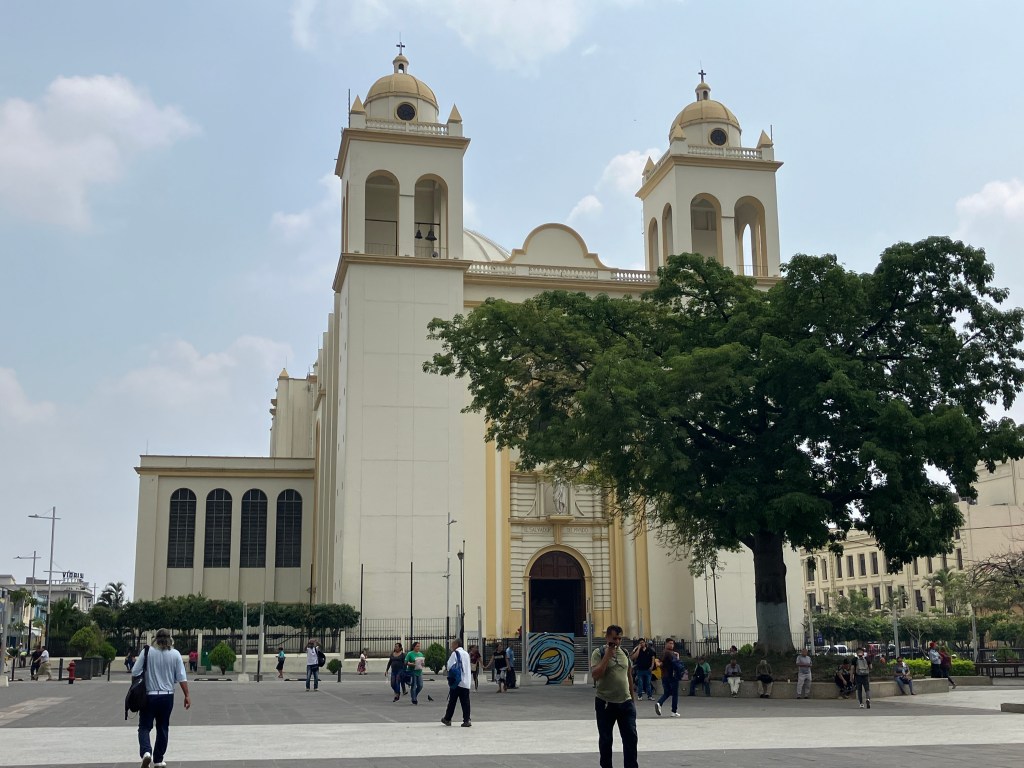
    When I stepped outside the cathedral onto the Plaza Barrio I could sense the energy of a city that has moved away from a divisive past to an energized present. Construction scaffolding, hammering, drilling, and attendant sounds of work enveloped me.

    The new Biblioteca Nacional occupies one side of the plaza in a gleaming white building that the government described as a “cathedral of knowledge and learning”. Open 24 hours a day it is the largest library in Central America.

    Latin American version of Singapore?

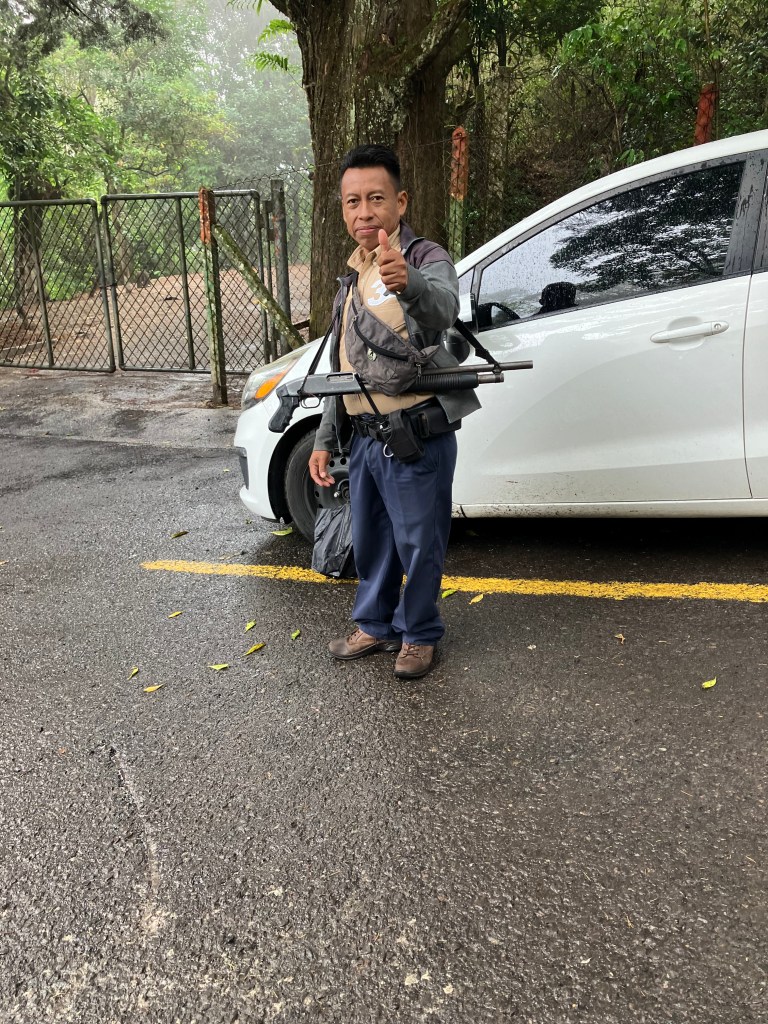
    The Palacio Nacional is President Nayib Bukele’s residence. Taxi drivers, shopkeepers, and people I chatted with said the same thing about him: his strict anti-crime policies have led to a safe environment for the first time in anyone’s memories. Crime is way down and people are enjoying the freedom from that fear. The president has indicated a goal of turning El Salvador into a Latin American version of Singapore.

    At the stylish Museo Nacional de Antropologia de David J. Guzman, I got an overview of the country’s progress from Maya times through the colonial period to modern times. The murals on the ground floor didn’t hold back: scenes of torture, murder and rape were depicted. On the second floor is a life-sized Maya sculpture of Xipe Toltec, the flayed one, so named because he wears the skin of a sacrificial victim. It dates from around 1000 AD. Nearby is a Maya stone disk of jaguar head from 250-900 AD.

    Hearty, robust cuisine

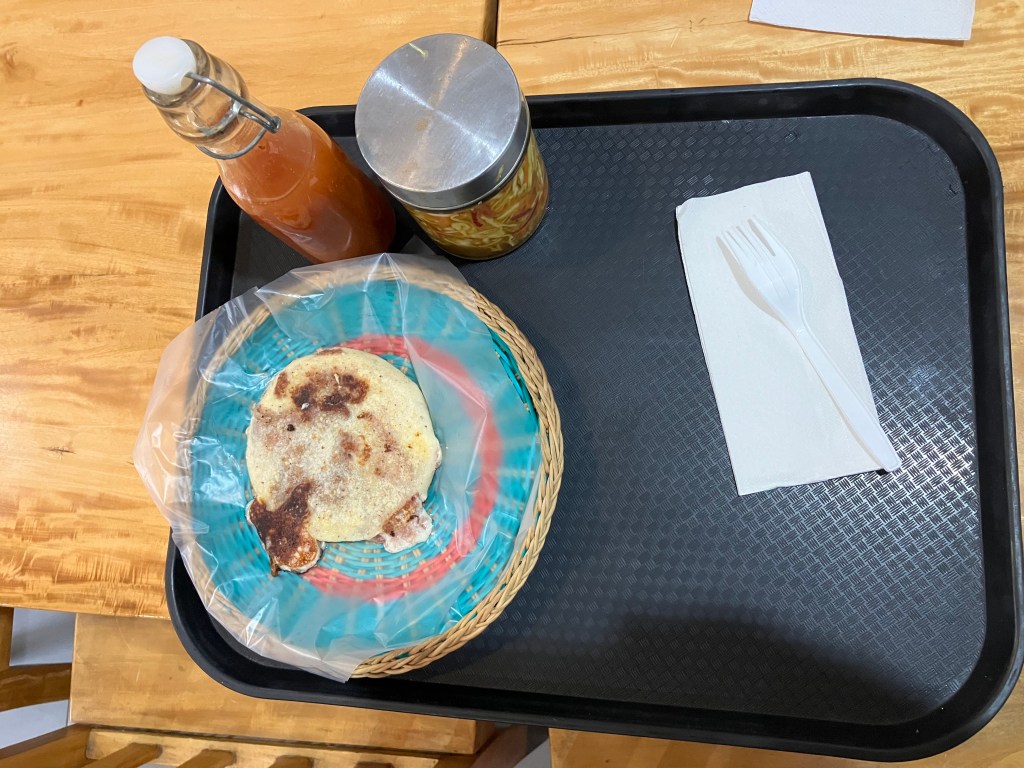
    I loved Salvadoran cuisine. The national dish of El Salvador is pupusas, grilled flour and corn meal mixed with cheese and refried beans.  They are served with a pickled cabbage relish and a tomato sauce. I enjoyed watching them being made, women’s hands slapping them into shape and onto hot grills. At Tipicos Margoth restaurant I feasted on pupusas, chorizos, empanadas, and quesadillas, which is a sweet cheese cake. I washed it down with a refreshing cinnamon horchata.

    Music to chill by in a now chilled city

    One evening I visited a popular jazz bar, The Balance, in the Colonia Escalon district. The music alternately soothed and seethed and the open-air bar was packed. A couple invited me to join them at their table and soon I was in a spirited conversation. They told me about El Salvador’s journey away from a divisive civil war and a country where gangs ran rampant. Things are so much better now, they said. Safe streets with companies like Google setting up operations. They added that costs are high and they have to worry about inflation and affording the good things in life that we all aspire to. In El Salvador, daily choices are not life and death anymore.

    As I listened to the persistent rhythms of the music with a gentle breeze wafting through the bar of energized, gregarious patrons, I thought of how things had changed so much for the better here and how much Salvadorans deserved the brighter future that now seemed more certain than ever.

    Pocket Guide

    Where to stay: Hilton San Salvador excelled: large rooms, friendly staff, a short walk to numerous restaurants.

    Where to eat: Tipicos Margoth for a wide selection of great Salvadoran food for a reasonable price.

    Where to listen to music: The Balance has jazz bands playing on its terrace. The food is great too.

    What to buy: Sopresas, miniature scenes hidden within clay eggs. I bought some for myself.

    Best tour company: Grupo 3 Tours is one of the best tour companies I’ve used in the world. Helpful, friendly, punctual, top-notch.

    Published in August/September 2024 Asian Journeys magazine

  • Dine at SEEN and Be Seen at SIN

    Dine at SEEN and Be Seen at SIN

    Avani+ Riverside Bangkok Hotel’s elevated dining, drinking, and views defined my stay there  

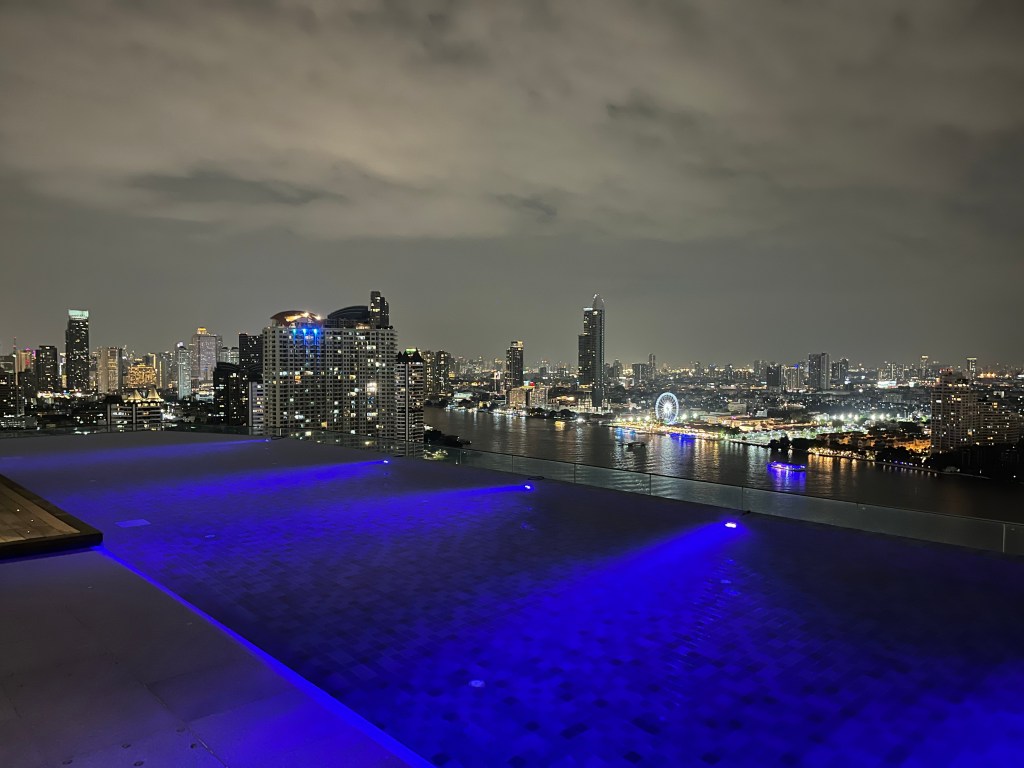
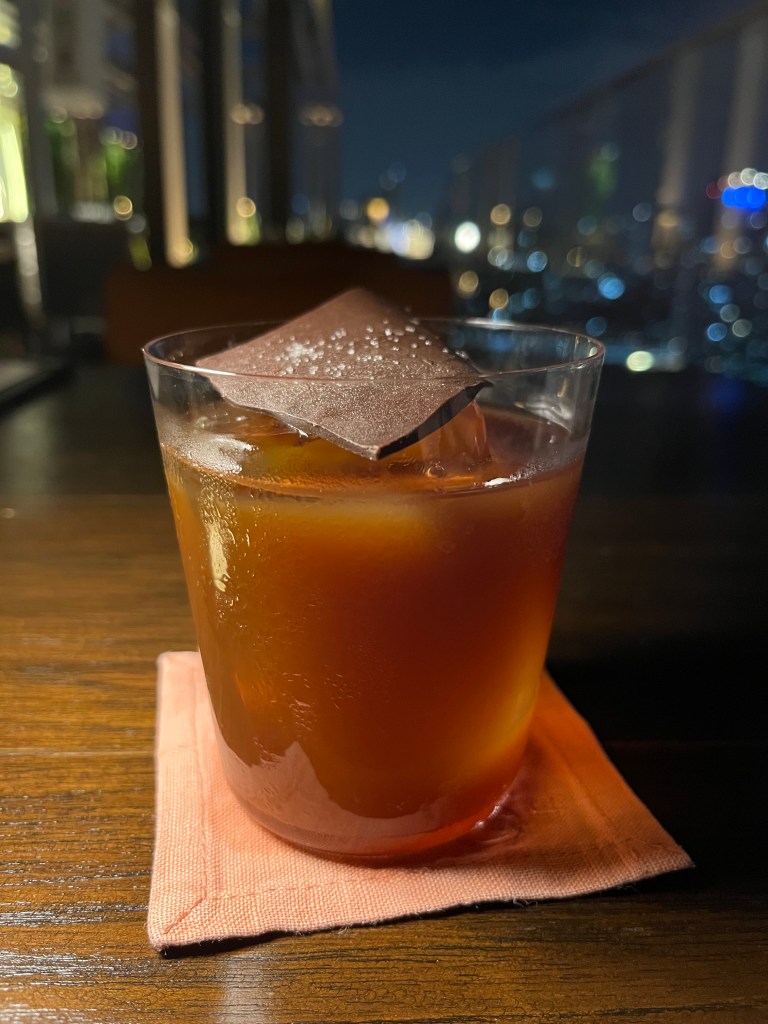
    My dinner at SEEN started with the appropriately named cocktail, Shaman. More magical portion than a cocktail, it mixed Remy Martin 1738, Michter’s US 1 Kentucky Straight Rye, Cinzano Rosso, Cacao, Cynar, Sandalwood, and tobacco. I sipped it while drinking in the view of the Chao Praya River and Bangkok’s jewel-like nighttime skyline.

    Necklace of lights visible from SEEN

    Bangkok is known for its street-level delights: from Chinatown food stalls to shops and shopping malls that invite you to step in from the sweltering heat of the sidewalks to the cooling comfort of air-conditioned retail therapy.

    The Avani+ Riverside Bangkok Hotel, though, defines itself with its views of Bangkok’s nighttime necklace of lights. My 26th-floor meal was an aerial tour of uplifting South American and Asian cuisine by star chef Oliver da Costa. The SEEN group of restaurants started in Sao Paulo, followed by outposts in Lisbon, Rome, and Nice, and now Bangkok and Koh Samui.

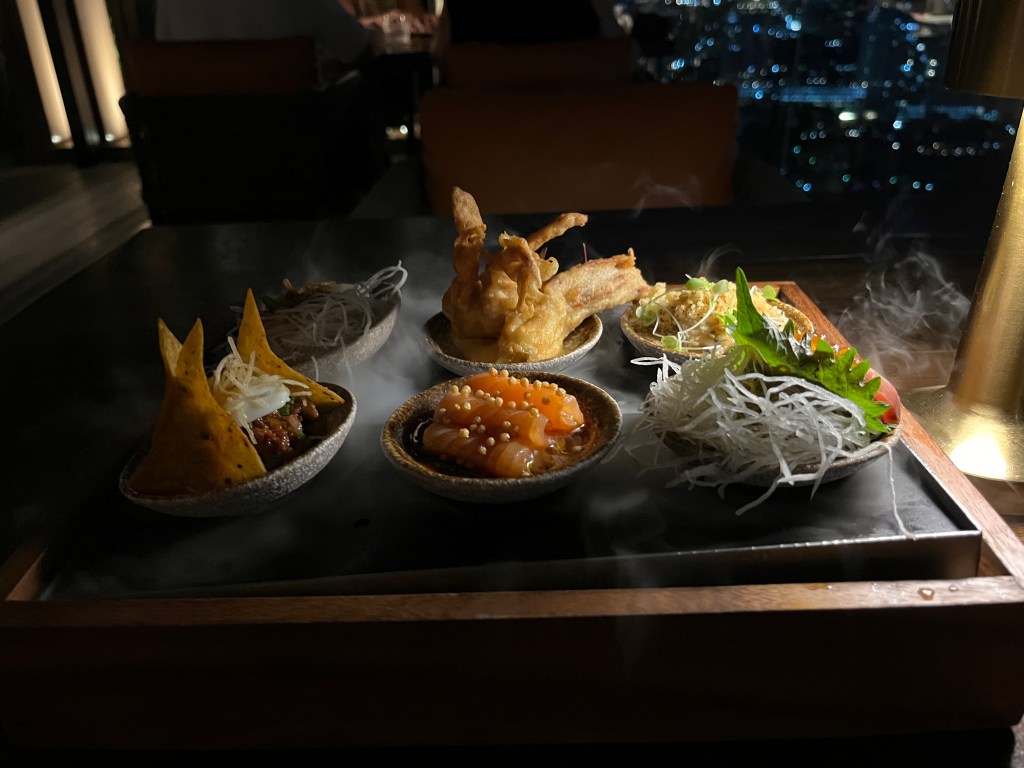
    My meal landed on my palate with a delectable wagyu beef carpaccio with arugula, pesto sauce, and pecorino. Bewitching mussels in a spicy bisque sauce, with scallions and a lemon wedge, followed. I took a well-needed breather before being served the Japanese Mystery Box with dry ice providing a veil of mist that gradually revealed its treasures, from salmon sashimi to tempura to Hamachi with fish eggs. The dishes were so layered and nuanced that I found myself pulled from the view of the river to the equally compelling view of the food I was eating. I finished with chocolate caviar: Belgian chocolate mousse, cherry compote, and chocolate crunchy with hazelnut ice cream.

    To recover, I sauntered over to the infinity pool with the infinite view of the city. The pool’s startling sapphire blue colour jumped from the water to my consciousness. Yes, that Shaman cocktail was well into my bloodstream by now.

    Found Lost & Found

    Too young a night to retreat to my room, I sauntered over to the Lost & Found Club. Located on the third floor of the next-door Riverside Plaza, it’s also part of the Avani +.

    Designed by Australian Ashley Sutton, who created Bangkok’s atmospheric Iron Fairies in Sukhumvit and Maggie Choo’s in Silom, Lost & Found looks like a decrepit spaceship from a high-concept sci-fi movie. Think of the spacecraft in Aliens. High-energy drag performers ignited the club’s vibe.

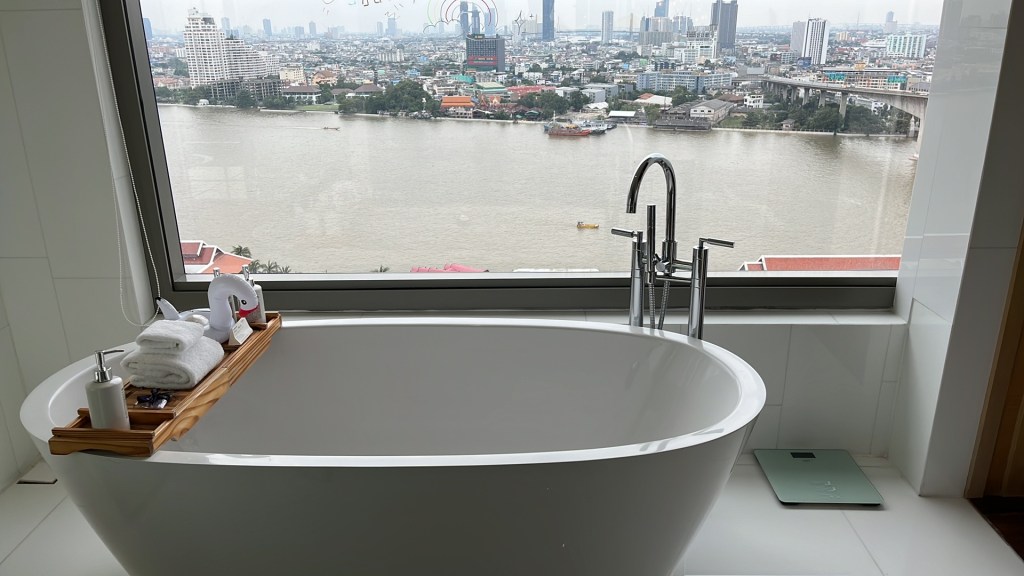
    I retreated at last to my riverside suite with a panoramic, almost IMAX-like view of the Chao Praya River. Even the bathtub has a view and the hotel-provided bath bomb was a bomb along with the MALIN+GOETZ toiletries. A good soaking sent me off on a long, deep sleep.

    Memorable AM to PM meals

    Breakfast at Avani+’s Skyline restaurant is a mixture of dishes that are good for you and those that aren’t. To recover from the night before, I started with a healthy avocado toast with a revitalizing shot of orange, carrot, and ginger juice. But that soon gave way to Thai noodles. And who can resist coconut ice cream in the morning? I couldn’t. And didn’t.

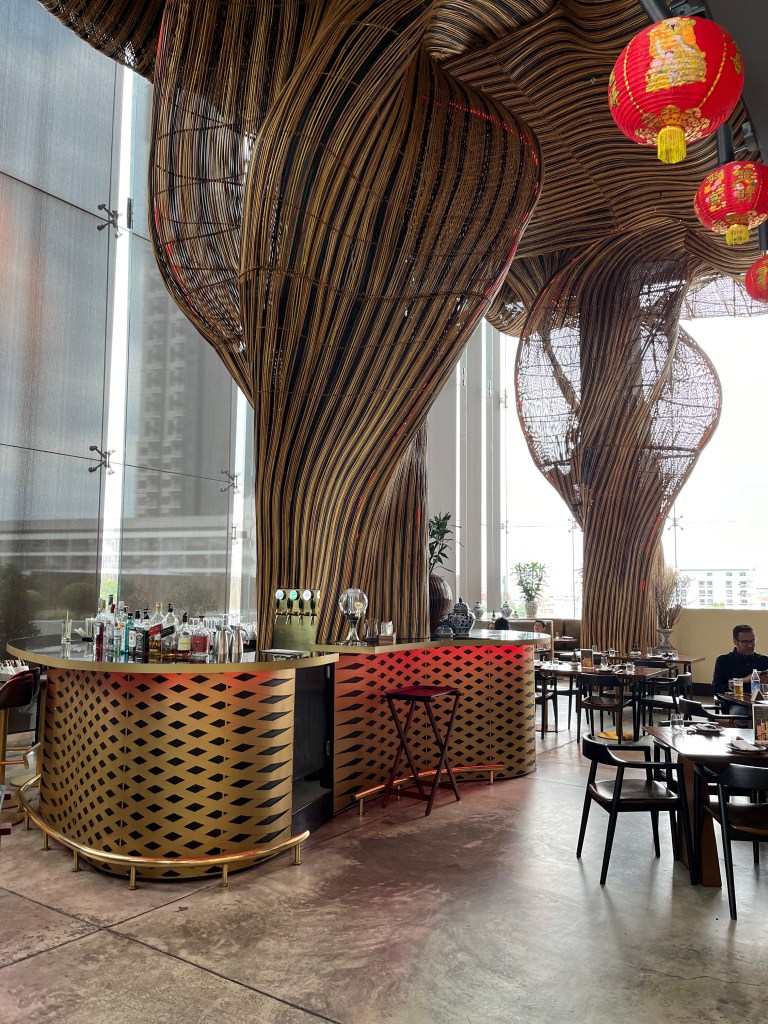
    For lunch, I dined at the Spice & Barley restaurant. Avani+’s Chinese restaurant was awarded best-designed restaurant in the brasserie category at the LIV Design Hospitality Awards. The Patrick Keane and Enter Projects Asia space uses swirling floor-to-ceiling rattan sculptures, a giant mural of an imperial concubine, and a gold-tinted color scheme to communicate a luxurious visual embrace. My chicken clay pot lived up to the high expectations of the setting.

    After lunch, I had a pastry pick-up at The Pantry. The tarty lemon tart with coffee in the light, airy space was a chilled way to spend part of an afternoon and gather steam for what promised to be a long evening ahead.

    On Bangkok’s Thon Buri side

    The Avani+ Riverside Bangkok Hotel is located on the Thon Buri side of the Chao Praya River. Getting to the main part of Bangkok is easy: an hourly ferry runs from the next-door Anantara Riverside Hotel to the Saphan Taksin Skytrain station, where all of the city is accessible. On the Thon Buri side is the ICONSIAM mall — massive with literally all you could ever want. There’s also Wat Arun, the Royal Barges National Museum, and the Thonburi Canals that give a glimpse into an all-but-vanished traditional Bangkok life.

    Experiencing SIN was sublime

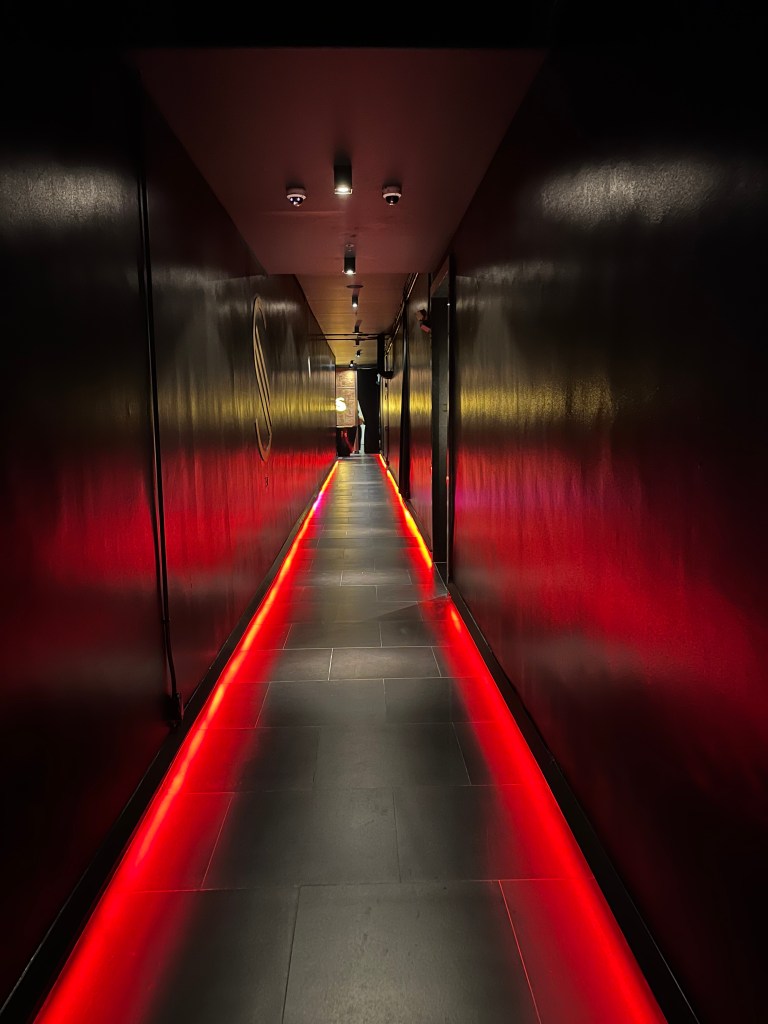
    In the evening, I strolled down a long, narrow corridor flanked by ribbons of red light to be greeted by a hostess who escorted me into the theatrically expansive 27th-floor rooftop bar and club, SIN. The effect of emerging from the narrow corridor into the outdoor area gave me a sense of “Wow.” I found out later that was the design intention. As someone who loves Frank Lloyd Wright’s architecture, it’s a technique he frequently used in the homes he designed. I may have dined at SEEN the evening before, but now it was time to experience SIN.

    With a table overlooking the river but not far from the bar, I was able to savor the view and experience the bar. For a kick-off, I had the Forbidden Nectar cocktail: Michter’s Kentucky Straight Bourbon, miso, caramel yogurt, carrot, and creamy bourbon. The drink was so complicated I imagined that the mixologist needed a chemistry degree to make it. With a cocktail that sublime I didn’t need rose-colored glasses to see the world in a more optimistic light.

    Sinfully good dishes at SIN

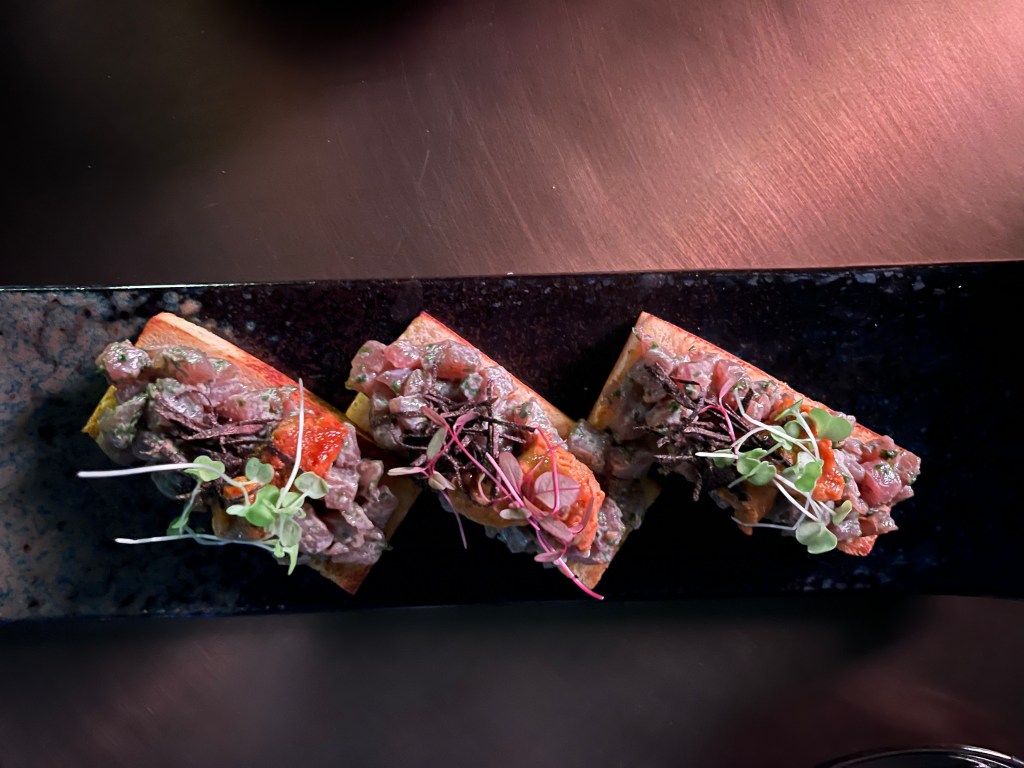
    My dishes soon followed. The starter piqued my tastebuds: scallop crudo with yuzu vinaigrette, yuzu gel, coriander oil, and Kaluga caviar. Following that was a more substantial open-faced sandwich — bluefin tuna, smoked tuna, fresh summer truffle mayonnaise, shaved truffle, and Uni from Hokkaido on a crispy brioche. Just one more dish to round out the meal: wagyu Miyazaki beef A5 grade, bulldog sauce, and a sprinkling of Kaluga caviar on a brioche. No exaggeration: the best food I’ve had in a bar ever. It’s not only the view that is stellar at SIN.

    SIN’s atmosphere is somewhat otherworldly. Overlooking the elliptical-shaped bar and expansive terrace in an immense oval-shaped alcove with a giant golden “S,” a headphone-wearing DJ in a sleeveless purple gown presided over the eclectic, pulsating music and stylish crowd like a Mount Olympus goddess.

    Sip to savor cocktails at SIN

    Which brought me to my evening’s second cocktail. Given the bar’s name, the Midnight Sin was that moment’s go-to cocktail: Remy Martin 1738, Jameson Black Barrel, cacao nibs, cacao husk, coconut cold brew, PX. I like to sip to savor my cocktails, and this was a drink that I hoped would never end.

    Bangkok is a hot and humid city. But at that hour and that elevation, I was cooling down fast. A few sips from a cocktail at SIN and Bangkok is transformed into a serendipitous and serene place. A cocktail bar doesn’t get better than that. And neither does a hotel stay like the one I had at Avani+ Riverside Bangkok Hotel.

    Published in February/March issue of Asian Journeys magazine

  • Goose Stepping Down Memory Lane: A Museum for those who feel Nostalgia for the Soviet Empire

    Goose Stepping Down Memory Lane: A Museum for those who feel Nostalgia for the Soviet Empire

    Do you miss those Cold War days when the world was divided into two camps, each with their finger hovering over the nuclear trigger? Do you miss Brezhnev, Gromkyo, the KGB and the specter of Soviet military domination? How about those goose-stepping soldiers, looking like they could march across Europe and win World War III? Well, now there’s a place to relive those fond memories — and it’s in China. To be more specific, it’s in Shenzhen, the bustling, hustling city just across the border from Hong Kong known mostly for producing fake Gucci handbags.

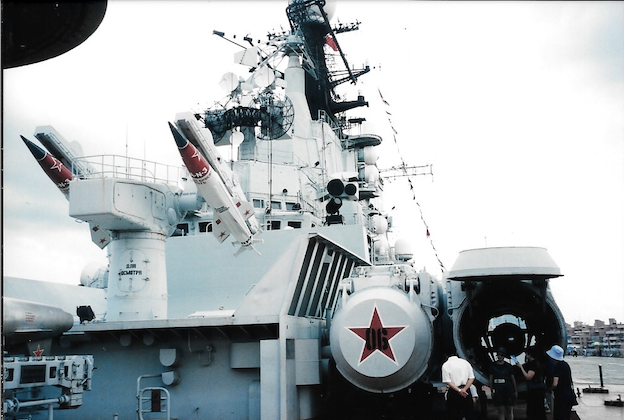
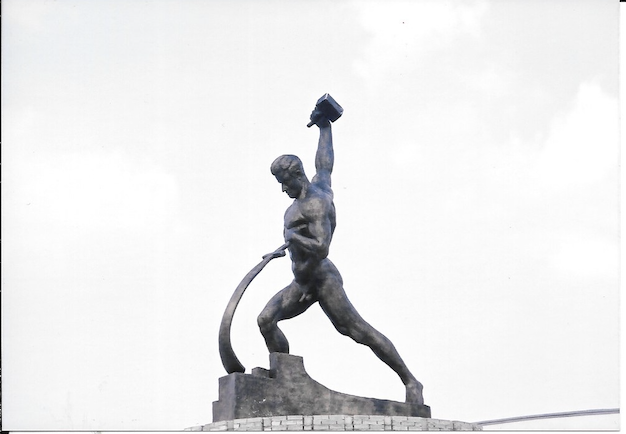
    A half-hour taxi drive from Shenzhen is Minsk World, a Soviet military theme park surrounded by a combination of mountains, dense sub-tropical foliage and tall apartment blocks. Minsk World has everything you could want from the glorious days of the Soviet empire, including its own showpiece exhibit, the aircraft carrier Minsk. To enter Minsk World you pass by camouflaged watchtowers, which succeed at setting a martial mood. Then there is a giant Stalinesque statue of a Herculean comrade beating a sword into a plowshare with a massive hammer, no doubt hearkening all back to the pride of being in a communist superpower.

    Statue of man beating sword into plowshare

    After the ticket booth one enters a characterless shell of a building where you are hit with a bicultural experience: a real Soviet space capsule with the USSR in Russian painted on its side surrounded by the souvenir shops that are ubiquitous at Chinese tourist sites. The only thing Russian about these shops are the Russian dolls that are sold there. Next to the space capsule is a giant photo of the cosmonauts who rode in it — one of them a stern-looking comrade-ette.

    This theme park holds everything to make Russians and Russophiles feel positively pumped up — even though it is in China. You can take rides on Russian tanks, barreling down a hill and crashing through water. If you close your eyes you feel as if you’re smashing through NATO lines in the former West Germany. You can also feel the steel of Russian artillery batteries as they squat beneath green netting behind protective sandbags. Or perhaps you would like to slide into the carriage of an anti-aircraft gun and pretend that you have a U.S. F-16 fighter in your sights. There is a squadron of Sukoi fighters, painted camouflage green, and even Sam missiles which would give pause to any American top gun.

    Before entering the main exhibit of the enormous Minsk aircraft carrier you are invited to watch a propaganda film extolling the “invincibility” of the Soviet navy. The images of Soviet missiles and naval guns always hitting their marks are very impressive. But, needless to say, the film’s a little bit dated.

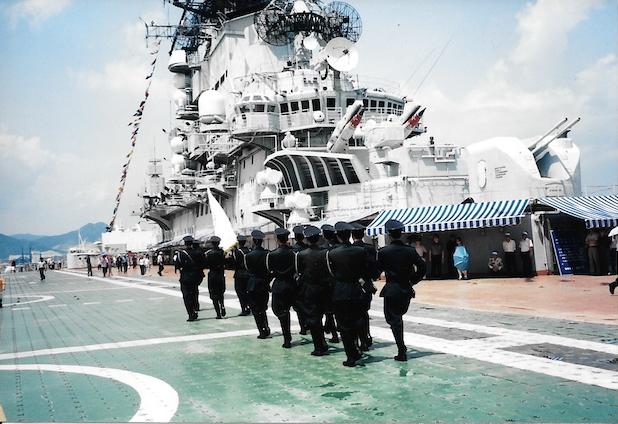
    On the huge flight deck of the Minsk are MiG fighter jets. There’s a full collection of naval guns and missiles pointed at the unseen enemy and a radar-laden control tower where the ship’s control room is located. The armaments are so impressive you wonder why the Soviets ever lost the Cold War. In fact, what’s striking about the exhibits at Minsk World is that the weaponry is in mint condition, which no doubt makes them very different from the bedraggled Russian army of today, and perhaps even the Soviet military at its peak.

    Minsk, Shenzhen

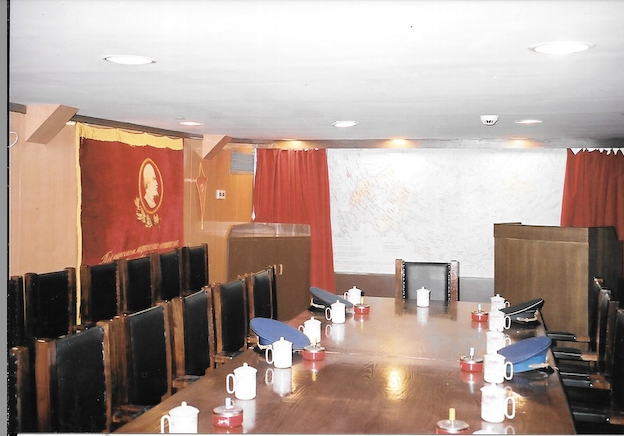
    In case you want to cool off there’s a bar just off deck, with camouflage netting on the ceiling to give you the ambiance of a military outpost and a pleasant wall collection of Soviet small arms: knives, submachine guns, handguns and a bazooka. Russian vodka isn’t served. Beneath the deck you can see the crew’s quarters, complete with bunk beds and a guitar for a bored sailor to play. There’s a conference room with officers’ caps on the table and a huge map of the Soviet Union at one end. A particularly nice touch is the red and gold wall hanging featuring Lenin’s profile.

    Down the hall is the captain’s quarters, with a flag of the Soviet Union and a huge globe, which the former residents of this ship had to believe they would dominate one day. Across from the captain’s quarters are stored all those missiles and torpedoes made to destroy the U.S. Navy.

    In case visualization is a problem, there’s a museum which highlights the greatest hits of the Soviet era. There’s an extensive collection of military medals and a large exhibit devoted to the Soviet space program. Displayed here are vintage satellites, space suits, models of rockets and a photo of a Soviet chimp that flew into space. Most touching is a stuffed dog which, before being mounted, was one of the first mammals to orbit Earth. Near the end of the exhibit is a familiar looking-satellite, essentially a metallic sphere with a long antennae streaming behind it. The description informs that it was the back-up for Sputnik, I guess in case somebody dropped the original on the way to the launching pad.

    Aircraft carrier Minsk

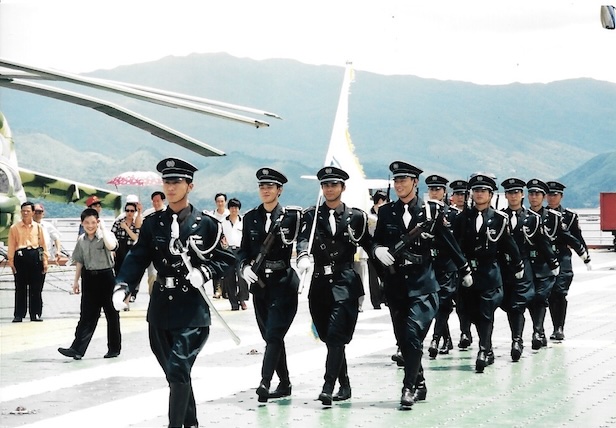
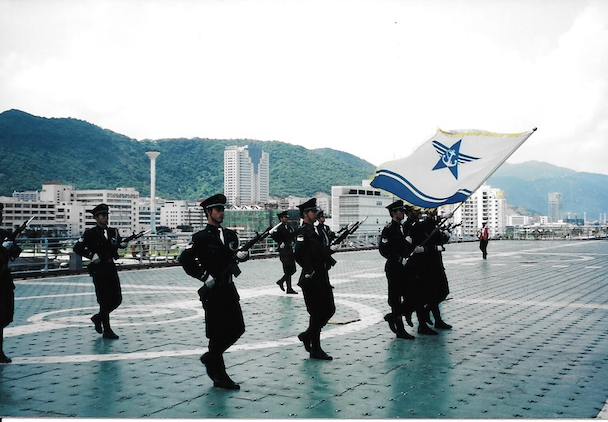
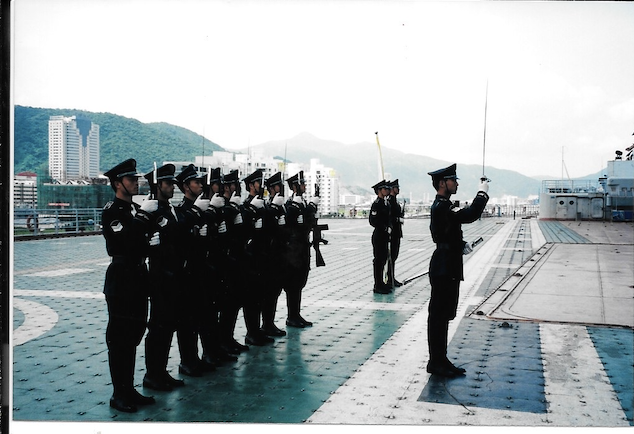
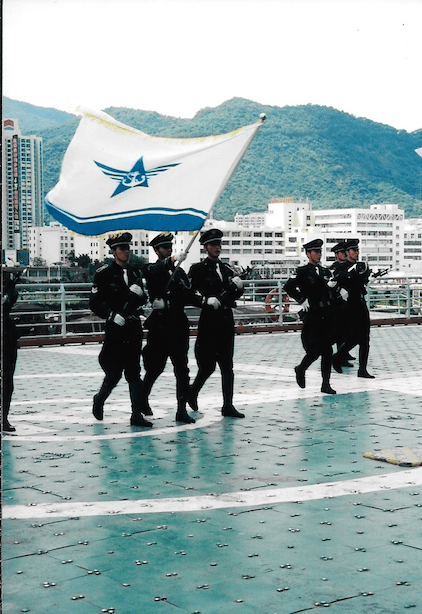
    During the day I visited Minsk World I was the only foreigner, the rest of the visitors being Chinese. The Chinese staff at Minsk World add to its already unusual atmosphere. Wearing khaki uniforms with white ties, they are surly and never smile, which no doubt would make many a Russian feel right at home. Every hour a troop of Chinese men dressed in immaculate uniforms do a marching routine. They goosestep, wave battle flags, present sabers, and twirl and point Kalashnikovs with fixed bayonets as well as any Soviet regiment protecting the motherland.

    Upon closer inspection you realize that, no, these dancing soldiers aren’t seconded from the Russian military. The tags on their uniforms say, in English, “Minsk Army.” For those who don’t believe China sees itself as the next check to American power, it isn’t a bad idea to consider Minsk World, the fact that it is in China — and that the Chinese love the place.

    Published in The Wall Street Journal, August 24, 2001